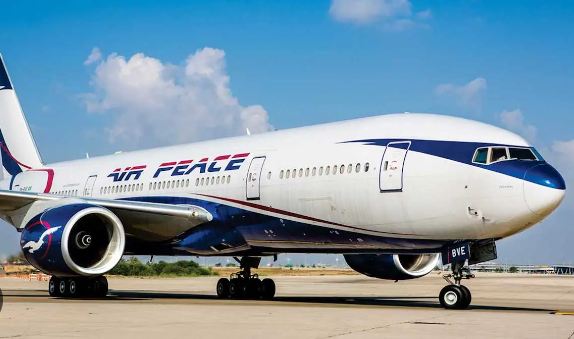

Chairman and Chief Executive Officer of Air Peace, Allen Onyema, has warned that Nigeria’s domestic aviation industry faces severe financial distress following the introduction of new tax provisions that could drive airfares beyond ₦1 million and force airlines to suspend operations.
Onyema raised the alarm during an interview on ARISE NEWS, stressing that urgent policy intervention is required to prevent a collapse of the sector, with far-reaching consequences for passengers, financial institutions and the broader economy.
According to him, Nigerian airlines are already weighed down by numerous taxes, levies and charges, leaving operators with only a fraction of ticket revenues.
He explained that from an average ticket priced at about ₦350,000, airlines receive roughly ₦81,000 after deductions, disputing the widespread perception that airlines are making excessive profits.
Onyema criticised what he described as multiple and overlapping charges imposed on operators, citing the mandatory five per cent deduction on every ticket paid to the Nigerian Civil Aviation Authority.
He said such charges erode passenger demand and run contrary to international best practices, noting that the International Civil Aviation Organisation advocates cost recovery rather than revenue generation in aviation regulation.
The Air Peace boss contrasted the new tax regime with the 2020 aviation tax reforms, which removed customs duties and value-added tax on imported aircraft, engines, spare parts and ticket fares, providing much-needed relief to airlines.
Under the newly enacted law, however, aircraft purchases and spare parts have once again been subjected to 7.5 per cent VAT.
Onyema illustrated the burden using an aircraft acquisition valued at $80 million, warning that the added tax, combined with bank lending rates of between 30 and 35 per cent, makes operations unsustainable.
He cautioned that these rising costs would inevitably be passed on to passengers, resulting in sharp fare increases.
According to him, once the new VAT on ticket fares takes effect, economy-class tickets could rise to about ₦1 million, while continued implementation of the policy could cripple airlines within months.
Onyema disclosed that the Airline Operators of Nigeria had repeatedly engaged the National Assembly and the tax reform committee, presenting data on the risks posed by the new law.
He said lawmakers acknowledged the gravity of the situation and expressed concern about its potential impact on the economy and banking sector.
Describing aviation as a strategic driver of economic growth and national integration, Onyema noted that governments in many countries actively support their airlines rather than burden them with excessive taxation.
He called for a return to the 2020 tax framework, including the removal of VAT on ticket fares and imported aircraft, and urged the government to explore alternative financing and procurement options for aviation equipment.
Despite his concerns, Onyema commended the federal government and President Bola Ahmed Tinubu for showing willingness to listen to industry stakeholders, expressing hope that the aviation sector’s appeals would once again be considered.