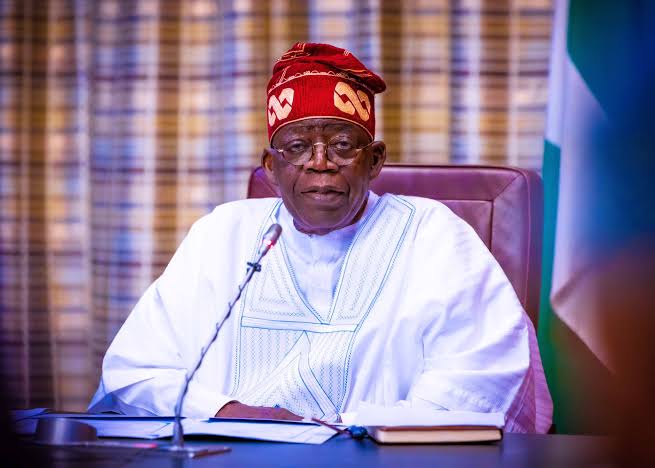

President Bola Tinubu has signed the Electoral Act, 2022 (Repeal and Re-Enactment) Bill 2026 into law following its passage by the National Assembly of Nigeria after months of deliberation and intense debate.
The legislation, which comes ahead of the 2027 general elections, has stirred controversy over provisions relating to the transmission of election results, particularly the balance between electronic and manual methods.
The Senate of Nigeria passed the bill after a heated session that saw lawmakers clash over Clause 60.
Senator Enyinnaya Abaribe demanded a division on the clause, questioning provisions that allow manual transmission if electronic transmission fails.
Senate President Godswill Akpabio initially suggested the demand had been withdrawn, a position challenged by opposition lawmakers.
Deputy Senate President Barau Jibrin argued it would be out of order to revisit an issue already ruled upon, triggering further tension on the floor.
The disagreement escalated into a brief face-off involving Senator Sunday Karimi, while Senate Leader Opeyemi Bamidele maintained that earlier decisions had been nullified through a motion for rescission, making Abaribe’s demand valid.
A division was eventually conducted, with 55 senators voting to retain the proviso allowing manual transmission in the event of network failure, while 15 opposed it.
At the House of Representatives of Nigeria, lawmakers also disagreed over a motion to rescind an earlier amendment supporting compulsory real-time electronic transmission of results.
The motion, moved by Francis Waive, was put to a voice vote by Speaker Tajudeen Abbas.
Although dissenting voices appeared louder, the Speaker ruled in favour of the motion, prompting protests from lawmakers and forcing the chamber into a closed-door session.