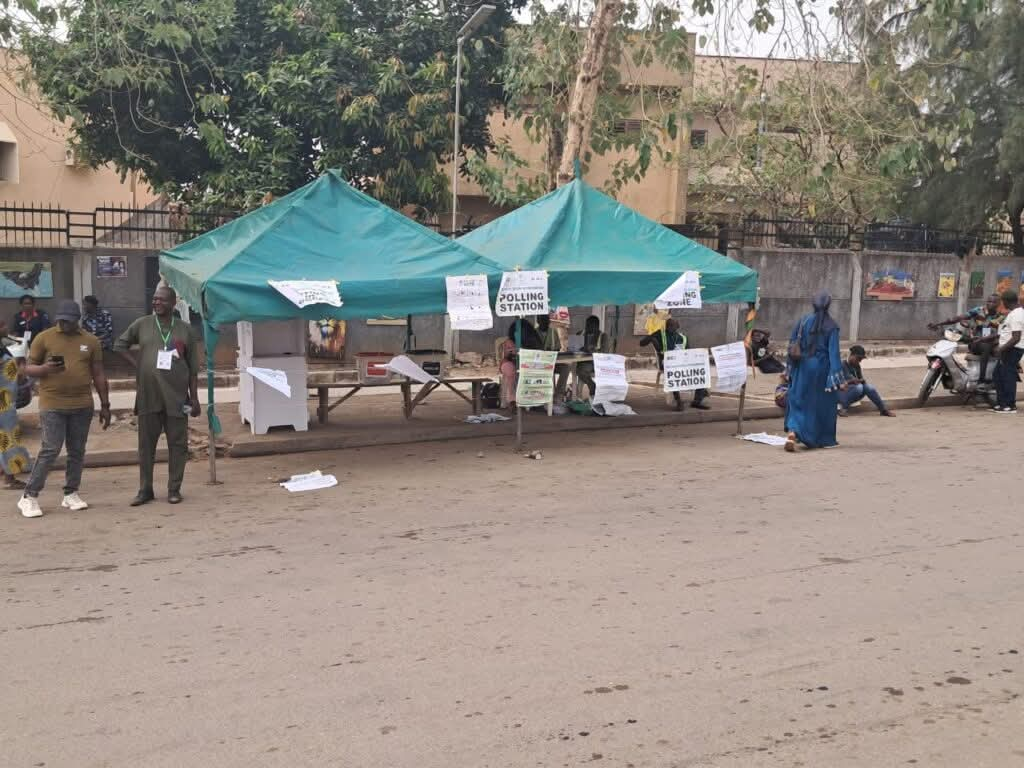

Agents of the Peoples Democratic Party and the African Democratic Congress on Saturday accused members of the ruling All Progressives Congress of attempting to induce voters with cash at Polling Unit 035 in Nyanya during the ongoing Federal Capital Territory Area Council elections.
The allegation triggered a brief commotion at the polling unit as opposition agents confronted individuals they described as APC intermediaries allegedly distributing ₦1,000 to voters waiting in line.
One opposition agent, who spoke anonymously, claimed that certain persons approached voters on the queue and offered them cash in exchange for support.
According to him, the agents openly challenged the move, leading to tension before calm was restored.
An ADC representative at the unit also condemned the alleged inducement and questioned the role of security personnel present at the scene, arguing that such actions should not be tolerated during an election.
The confrontation temporarily disrupted the voting process, with heated exchanges among voters along party lines.
At a point, a voter appealed to the protesting agents to de-escalate the situation, warning that further disturbance could result in the cancellation of results from the polling unit.
Order was eventually restored following the intervention of operatives of the Nigeria Police Force and the Nigeria Security and Civil Defence Corps, who reinforced security and monitored proceedings to ensure normal voting resumed.
Commercial activities around the area were largely suspended due to the elections, with only essential services such as Nyanya General Hospital remaining open.
Vote buying has remained a persistent concern in Nigeria’s electoral process.
Despite provisions in the Electoral Act criminalising voter inducement, enforcement has continued to pose challenges.
Analysts attribute the practice to economic hardship, weak monitoring mechanisms, and intense political competition, particularly in closely contested local elections.
Stakeholders have repeatedly urged stronger enforcement of electoral laws, enhanced voter education, and improved accountability measures to safeguard the credibility of the country’s democratic system.