
The Chairman of the Independent National Electoral Commission (INEC), Professor Joash Ojo Amupitan, has said the commission cannot guarantee a completely perfect election in 2027, particularly with regard to the electronic transmission of results.
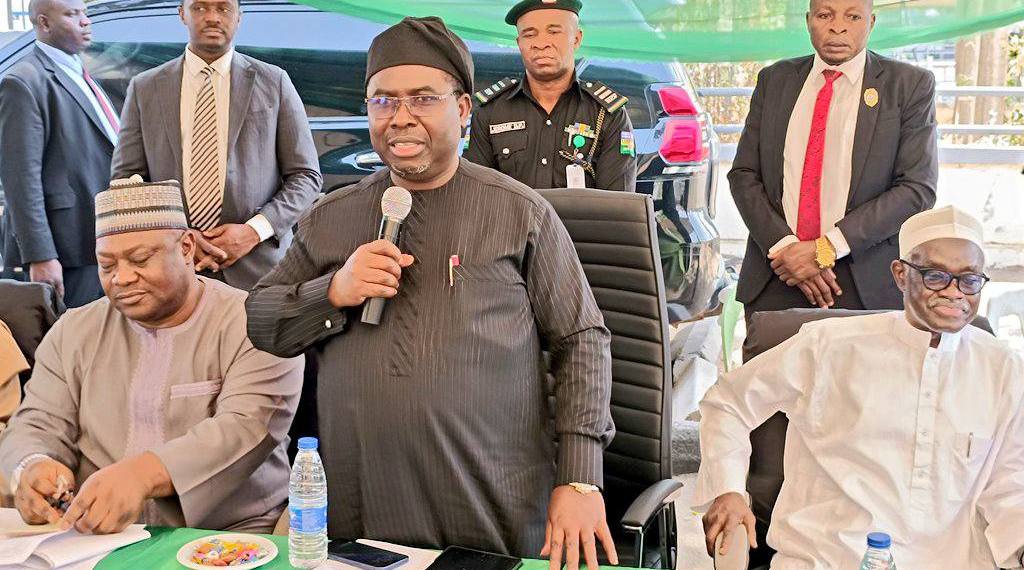
Amupitan made the remarks during a Citizens’ Townhall Meeting organised by the Civil Society Network on Election Integrity at Abuja Continental Hotel.
The event brought together civil society organisations, academics, election observers and members of the public to deliberate on issues surrounding Nigeria’s electoral process.
Despite acknowledging potential challenges, the INEC chairman expressed optimism that the 2027 presidential election would be the best the country has ever conducted.
He explained that the success of an election should be measured by several key factors, especially logistics, peaceful conduct and the proper management of results.
Amupitan said, “Number one, if you want to measure whether an election is successful, you have to determine whether the election started as advertised. And we advertised the election for 8.30. So if we’re able to start the election at 8.30.
“Number two, if the election is peaceful; number three, if we’re able to manage the result very well, that is result management, and then declaration of results, then you can say you have a successful election.
“As a regulatory body, we were determined to achieve all this.
“But nonetheless, we have to admit that there was some logistics issues, some were purely human, which we are trying to address. And let me just appeal to Nigerians, because I have noticed now that what Nigerians desire is a perfect election. And I will strive as much as possible to give this country the best election.
“However, we may not be able to achieve a 100% perfect election for now. But as far as electronic transmission of results is concerned, I said it before FCT Area Council that we have the capacity to transmit the results. And that we’re going to transmit the results.”
He further explained that the concept of “real-time” transmission does not always mean results will appear instantly due to possible delays in digital systems.
“The only concern was real time. What is real time? For instance, if you go, you use your app to make a transfer from your account. Even in Abuja town, you are transferring 50,000 to Mr. B, and from your app, the amount has gone.
“But the person may not receive the alert until another 30 minutes, another hour, or even in the evening. So those are some of the things. And when you say it is real time, as soon as it is done, it must be received.”
Amupitan said INEC is working to improve logistics and result management in order to strengthen transparency and credibility in future elections.
“So result management and logistics are two basic issues that, from our own end, we are trying to see how best we are able to manage it very well, so as to enhance the transparency and credibility of the system.
“Glitch is eliminated. The glitch, by God’s grace, will not surface in Nigeria and when I even look at the provision to Section 63 of the Electoral Act, during the last FCT election, apart from that delay, we didn’t have any transmission failure, meaning that it is just a provision, a safety if it fails. And during my tenure, it will never fail. That is the determination.”
He added that even if technical issues arise, the commission is determined to ensure results are eventually transmitted.
“Even if it fails, the result must be transmitted. But the only problem is if it fails to do real-time transmission, as we had in that ward.
“That is the major problem. Now, talking, addressing about the glitch, election now, anyway, is about technology. But before you deploy any technology, it is important for you to test that technology very well.”
Reflecting on the 2023 general election, the INEC chairman said one of the lessons learned was the need for broader testing of election technology before nationwide deployment.
“So my own audit of the 2023 election was that while the device was tested within the states, for instance Osun election, Ekiti election, however, when it came to the federal election, especially the presidential election that now became interstate, it was not properly tested.
“So one of the things we are trying to do before the election is to ensure that this transmission across the state must not fail.”
He concluded by assuring Nigerians that improvements would be made ahead of the next general election.
“By the grace of God, election of 2027 will be the best election that Nigerians will have. Because Nigerians of 2023 is different from what you have in 2027. People are much more aware.”