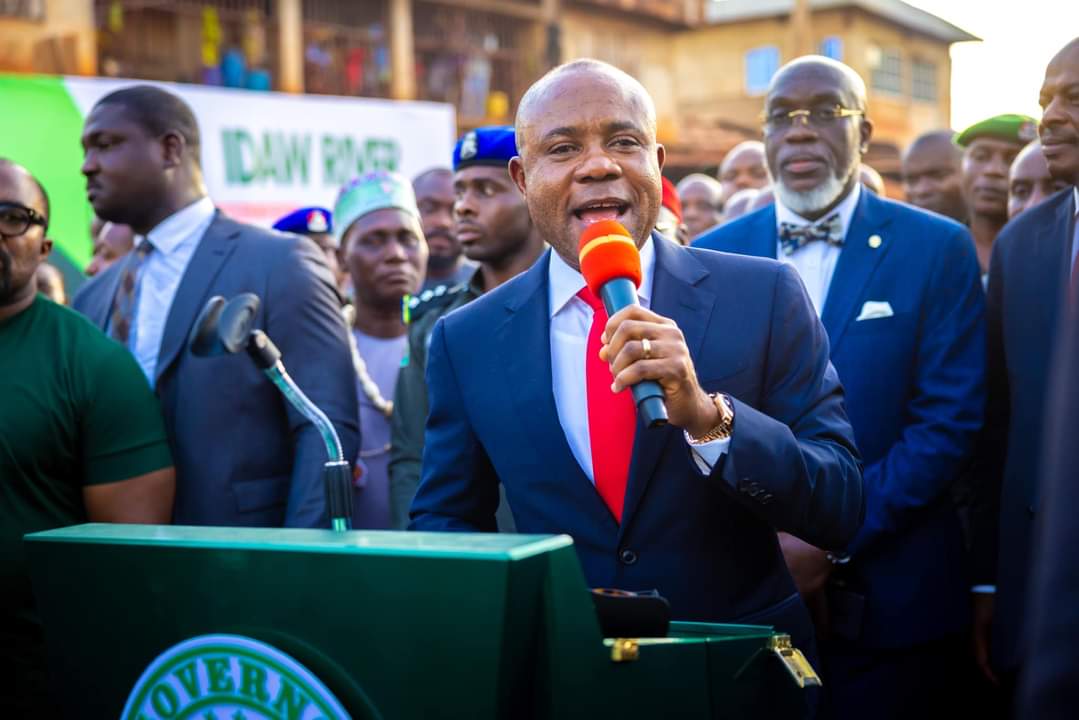

By Dr. Malachy Chuma Ochie
Let me begin by stating that Gov. Peter Mbah’s bid for a second term in office stands on a principle that is often promised but rarely delivered in governance, and that is: performance as the true basis for political continuity.
In an environment where electoral outcomes are frequently shaped by rhetoric, patronage, and short-term political calculations, a performance-based mandate offers a more rational and sustainable path to leadership renewal.
The logic behind a second term for Mbah is rooted in measurable outcomes rather than political theatrics. Governance, at its core, is about improving the lived realities of citizens through infrastructure, economic growth, education, healthcare, and security.
When a leader demonstrates tangible progress in these areas, the argument for continuity becomes not just persuasive but compelling. It shifts the conversation from personalities to policies, from promises to proof.
A performance-driven administration builds credibility over time. Citizens are more likely to trust a government that delivers on its commitments, meets targets, and maintains transparency in its operations.
This trust becomes political capital, stronger than any campaign slogan. It also fosters civic confidence, encouraging public participation and investment in the state’s development trajectory.
Moreover, continuity based on performance ensures that long-term projects are not abandoned midway due to political transitions. Development is rarely instantaneous; it requires sustained effort, policy consistency, and institutional stability.
A second term provides the opportunity to consolidate gains, refine strategies, and scale successful initiatives. It allows governance to move beyond experimentation into maturity.
Another critical dimension is accountability. When a leader seeks re-election on the strength of performance, it sets a precedent that results matter. It signals to both current and future officeholders that the electorate values outcomes over optics.
This can gradually reshape the political culture, making governance more results-oriented and less driven by empty populism.
However, a performance-based mandate also raises expectations. Citizens who re-elect a leader based on past achievements will demand even greater results in the subsequent term.
This creates a healthy pressure on the administration to innovate, improve efficiency, and address gaps identified in the first term.
In this way, performance becomes both the justification for continuity and the standard for future evaluation.
Ultimately, the case for Peter Mbah’s second term is strongest when framed through this lens of demonstrable impact. It is not about political loyalty or strategic alliances, but about a social contract grounded in results.
When leadership is earned through performance, governance becomes more purposeful, and democracy more meaningful.