
By Dr. Malachy Chuma Ochie
In the marketplace of leadership, where promises are often louder than performance, a rare figure emerges from time to time, one whose record speaks so clearly that persuasion becomes unnecessary.
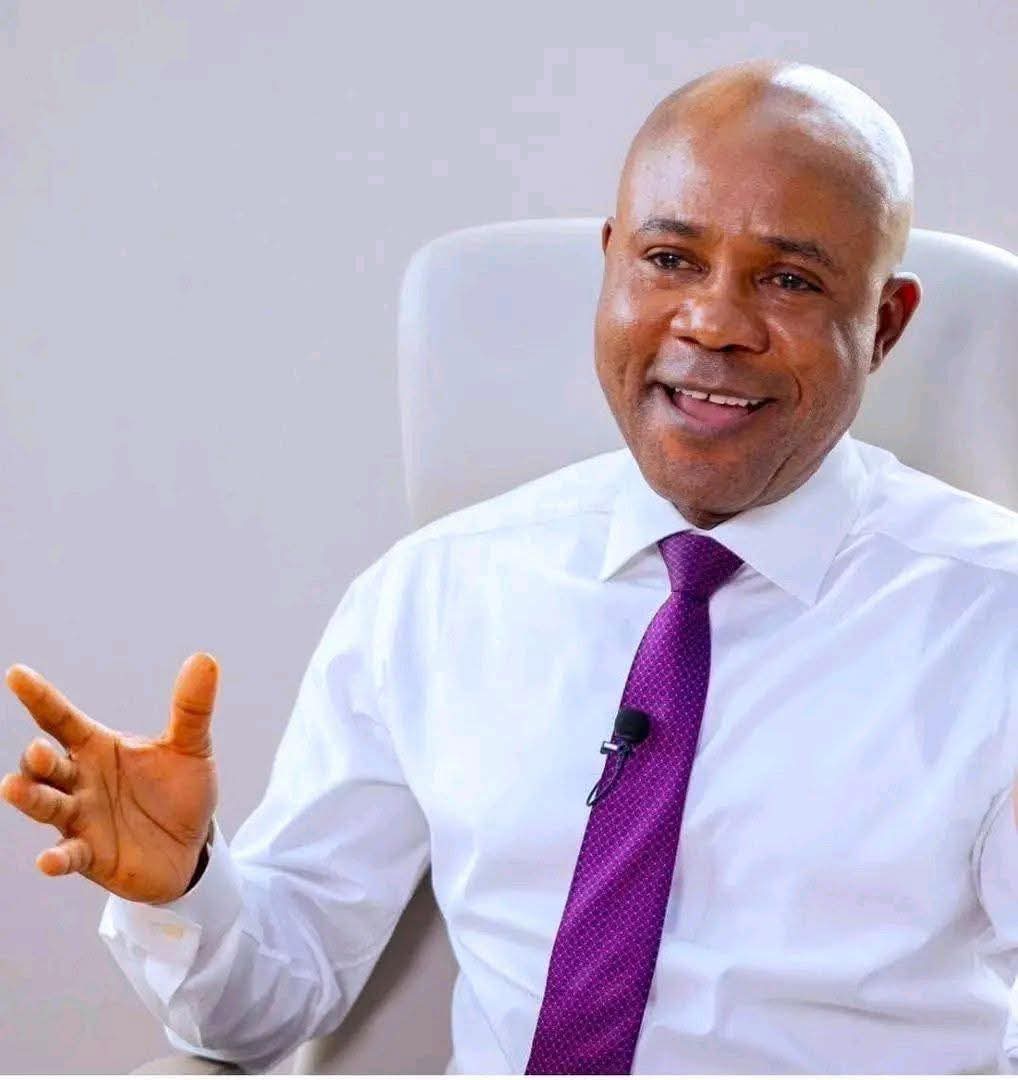
In Enugu State today, Governor Peter Mbah has come to embody that rare “good commodity” our people speak of; one that sells itself not through noise, but through undeniable value.
What distinguishes Mbah is not merely the speed of his actions, but the clarity of his vision. From the outset, his governance has projected a decisive break from the inertia that once defined public administration in the state.
Rather than conforming to the slow grind of bureaucracy, he has re-engineered governance into a results-driven enterprise; one where timelines matter, outcomes are measurable, and citizens are not distant observers but active stakeholders.
His leadership style carries the urgency of a man who understands both the weight of expectation and the brevity of opportunity.
Like a prairie fire sweeping across dry land, his reforms have moved with intensity, touching critical sectors such as infrastructure, education, security, and economic development.
Roads are not just being constructed; they are being strategically deployed to unlock commerce. Schools are not merely standing; they are being reimagined as centers of excellence.
Governance is no longer a closed circuit; it is an open bridge connecting policy directly to the people.
Beyond physical development, perhaps his most profound transformation lies in institutional rebirth. Systems that once resisted change are being recalibrated to serve with efficiency and transparency.
This is where true leadership reveals itself, not just in projects that can be seen, but in processes that endure.
Equally important is the psychological shift he has inspired among Ndi-Enugu. Confidence in government, once fragile, is steadily being restored.
There is a growing belief that leadership can indeed be purposeful, that public office can be a platform for measurable progress rather than mere political survival. This renewed trust is the invisible currency fueling his rising political value.
Mbah’s “commodity value” is therefore not manufactured; it is earned. It is built on consistency, reinforced by delivery, and sustained by a governance philosophy that places people at its core. In political terms, he has reduced the distance between promise and proof; and that is a rare achievement.
As 2027 approaches, the conversation in Enugu is shifting in tone. It is less about speculation and more about continuity.
The electorate is not merely being persuaded; they are responding to evidence. And in a democratic marketplace, evidence is the most powerful campaign tool.
Indeed, a good commodity does not beg for buyers; it attracts them. Peter Mbah’s governance has positioned him not just as a participant in the political future of Enugu, but as a defining force within it.
The people, having seen, felt, and measured the impact, are not just observers of his journey; they are investors in it. And that, ultimately, is why the market is responding.