
As the political era of Donald Trump gradually winds down, attention within the Republican Party is shifting toward a pressing question: who will take the reins next?
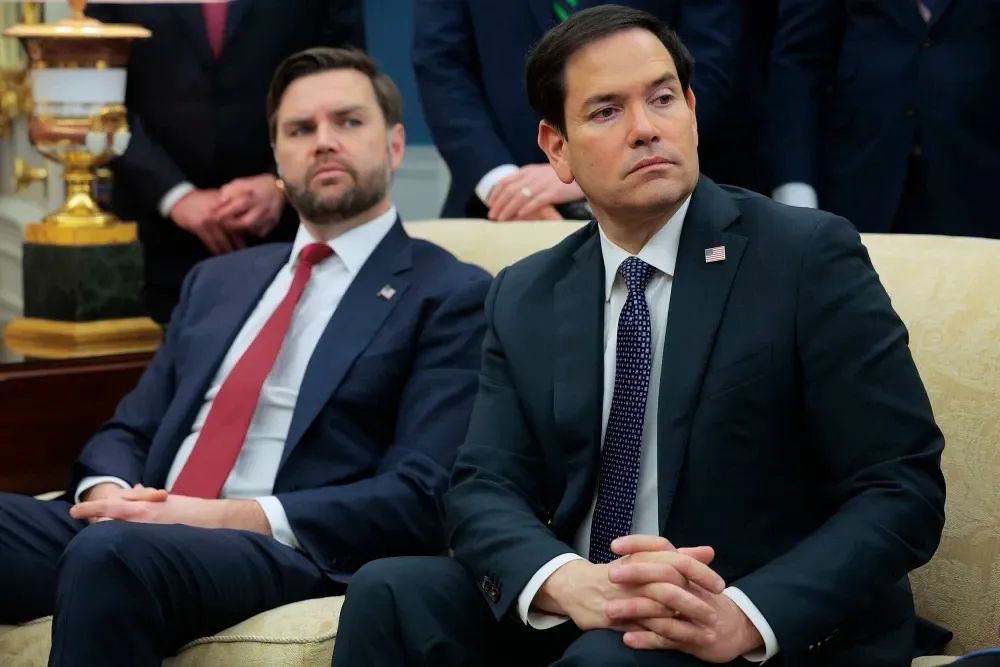
At the Conservative Political Action Conference (CPAC) in Texas, the conversation was dominated by two leading figures — Vice President JD Vance and Secretary of State Marco Rubio — both widely seen as frontrunners in a post-Trump political landscape.
For the first time in years, Trump, 79, was absent from the influential conservative gathering, creating space for emerging leaders to step forward and test their appeal among party loyalists.
While national polls suggest Vance holds a lead among Republican voters, sentiment on the ground appeared more divided, with strong backing also evident for Rubio.
Many party supporters view the contest as a choice between continuity and experience.
Vance’s appeal lies in his close alignment with Trump’s political ideology and his compelling personal story — rising from a difficult upbringing in an Appalachian community to national prominence.
Supporters also point to his communication skills and ability to articulate conservative ideas with clarity.
On the other hand, Rubio’s camp highlights his depth of experience, particularly in foreign policy and diplomacy.
Admirers describe him as a steady hand with a clear global vision, capable of navigating complex international challenges.
Despite their differences, both men are widely perceived not as departures from Trumpism but as potential heirs to the movement he built.
Their standing within the party continues to be measured largely by their loyalty to Trump and their ability to carry forward his political legacy.
A few party faithful floated alternative names, including Florida Governor Ron DeSantis, though such prospects currently appear to have less traction.
Still, Trump’s influence looms large. Even as Republicans begin to contemplate the future, many supporters remain reluctant to fully turn the page, with some still expressing hope for his continued political relevance despite constitutional limits.
The unfolding contest signals the early stages of a leadership transition — one defined not by a break from the past, but by a battle over who best represents the future of Trump’s Republican Party.