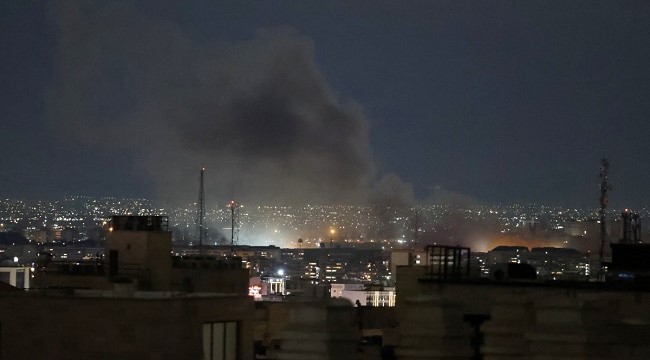

Tensions in the Middle East escalated sharply on Saturday as Israel launched fresh strikes on key military-linked facilities in Iran, triggering powerful explosions across the capital, Tehran.
The Israeli military confirmed it had targeted a major naval research facility linked to Iran’s Marine Industries Organisation, describing it as a hub for the development of advanced naval weaponry, including both manned and unmanned systems.
Residents reported multiple blasts that shook the city, with thick plumes of smoke rising into the night sky.
The strikes are part of an intensified campaign, with Israeli officials indicating that operations against Iran’s military infrastructure are far from over.
The conflict took a dangerous new turn as Yemen’s Houthi movement declared its entry into the war, launching a missile towards Israel—reportedly intercepted.
Their involvement raises fresh concerns about the security of Red Sea shipping routes, already under strain from earlier attacks.
The broader regional fallout is deepening. The effective shutdown of the strategic Strait of Hormuz has disrupted global oil and gas flows, sending energy prices soaring and forcing shipping companies to seek costly alternatives.
Diplomatic efforts are now gathering pace. Pakistan is set to host key regional powers—including Saudi Arabia, Turkey, and Egypt—for crisis talks, while signals have emerged of possible direct engagement between Washington and Tehran.
Meanwhile, the humanitarian toll continues to mount. Airstrikes and missile attacks have damaged infrastructure across the region—from industrial facilities in Iran to airports in Iraq and Kuwait.
In the United Arab Emirates, an Iranian strike hit a major economic zone in Abu Dhabi, leaving several injured and causing significant damage.
Iran has vowed retaliation, warning it could target economic assets across the region if hostilities persist.
Its leadership also cautioned neighbouring countries against allowing their territories to be used as staging grounds for attacks.
Beyond the battlefield, the war is fuelling widespread anxiety.
In Tehran, civilians speak of sleepless nights and a longing for normalcy, while protests have erupted in Tel Aviv and other Israeli cities, with demonstrators demanding an end to the conflict.
With more actors drawn in, critical trade routes threatened, and no clear off-ramp in sight, the crisis is fast evolving into one of the most volatile confrontations the region has seen in years.