In a development set to energize opposition politics ahead of the 2027 general elections, former Kano State governor Rabiu Musa Kwankwaso resigned yesterday from the New Nigeria Peoples Party (NNPP).
This move clears the way for him to join the African Democratic Congress (ADC) and align with other major opposition figures.
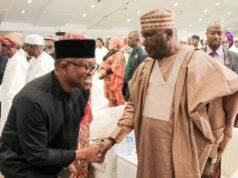
Former Vice President Atiku Abubakar (PDP), ex-presidential candidate Peter Obi (Labour Party), former Senate President David Mark, and former governors Rauf Aregbesola (Osun) and Rotimi Amaechi (Rivers) are already associated with the ADC.
Analysts suggest that this coalition raises hope for a more viable opposition in 2027.
Observers note that the lack of a similar alliance in 2023 contributed to the opposition’s inability to clinch the presidency.
In that election, Atiku (PDP) polled 6,984,520 votes, Obi (Labour Party) 6,101,533 votes, and Kwankwaso (NNPP) 1,496,687 votes, while Bola Ahmed Tinubu (APC) won with 8,794,726 votes.
Analysts contend that had these votes been combined under one platform, the ruling party might have been defeated.
Despite these calculations, the opposition now faces a more challenging landscape. Over the past three years, the ruling APC has consolidated power across Nigeria, sweeping the nucleus of major and minor parties.
For the first time since 1999, Lagos, Kano, Kaduna, and Rivers all have APC governors, while resource-rich states like Lagos, Rivers, Akwa Ibom, and Delta remain under APC control.
Kano, previously resistant due to Kwankwaso’s influence, remained outside APC’s full control. Efforts to woo him failed, and as negotiations lingered, Kwankwaso opted to move independently, creating new concerns for both APC leaders and NNPP stalwarts.
For APC members, including Deputy Senate President Barau Jibrin, Kwankwaso’s defection could mean adjusting governorship ambitions to accommodate the new political entrant.
For Kwankwaso, it entails rebuilding a support base and forming new alliances loyal to his vision.
Political analysts see this as a strategic step capable of energizing opposition politics in Nigeria. Kwankwaso, a former governor, ex-minister, and presidential candidate, now positions Kano as a renewed center of opposition ahead of 2027.
Why Kwankwaso left NNPP
In a statement, Kwankwaso cited “strategic realignment” as the reason for leaving NNPP. He emphasized that the move reflects the broader challenges smaller parties face in translating regional strength into national success.
Though NNPP performed well in Kano and pockets of other regions in 2023, it lacked the organizational depth and nationwide reach of dominant parties like APC and PDP.
His departure leaves NNPP with a leadership vacuum, and party officials are cautiously assessing the situation.
Kwankwaso’s choice to join the ADC reflects a strategic preference for coalition-building rather than political isolation.
The ADC has emerged as a platform uniting fragmented opposition forces, offering credibility and national reach. With figures like Atiku Abubakar and Rotimi Amaechi on board, ADC becomes a viable vehicle for opposition consolidation.
The move grants Kwankwaso multiple advantages: expanding his political arena, enhancing negotiating power, and positioning him as a key stakeholder in national politics.
Importantly, it allows him to remain relevant in a landscape where alliances often determine electoral outcomes.
According to the Kwankwasiyya Movement’s spokesperson, Mansur Kurugu, the decision prioritizes national interest over personal ambition.
“The focus is the ‘Save Nigeria Project,’ a broad initiative to address systemic national challenges,” he said.
Kurugu stressed that the coalition aims to provide Nigerians a credible alternative to the current administration.
On questions about arrangements with ADC leaders or ambitions for 2027, Kurugu indicated a flexible, collective approach: if calculations call for Kwankwaso to contest the presidency, he will; if it calls for him to serve as vice president, he will do so.
The 2019 experience, when Atiku, Obi, and Kwankwaso worked together in PDP, supports the feasibility of such coordination.
Recent engagements with Atiku Abubakar and other opposition figures signal renewed willingness to set aside past rivalries.
Discussions focused on building a unified front, power-sharing arrangements, and avoiding fragmentation that weakened past opposition efforts.
ADC officials confirmed that Kwankwaso joined without conditions, aiming to build the party and opposition ranks while ensuring a level playing field for all aspirants.
Analyst Kabiru Sufi believes Kwankwaso’s defection could reshape Nigeria’s political trajectory. With alignment alongside Atiku, Obi, and Amaechi, the opposition may mount a competitive challenge to APC, creating a potential two-bloc system.
However, internal party dynamics and candidate calibre will influence how strong Kwankwaso’s impact will be.
Kano as the backbone of Kwankwaso’s influence
Kano remains central to Kwankwaso’s political relevance. With strong grassroots support through the Kwankwasiyya Movement, Kano could provide a crucial electoral advantage.
In 2023, Kwankwaso secured nearly one million votes in the state.
Despite past conflicts with his former political godson, Governor Abba Kabir Yusuf, Kwankwaso could still challenge APC dominance in Kano, depending on whether his supporters follow him to ADC.
Historically, Kano has been a decisive battleground, influencing northern political outcomes. Kwankwaso’s ability to mobilize voters there could tilt national calculations.
His defection mirrors past shifts that reshaped Nigerian politics, such as the 2013 PDP-to-APC defections that contributed to APC’s 2015 victory.
While defections in Nigeria often revolve around survival, coalition-building, and access to winning structures rather than ideology, Kwankwaso’s strategy adds a twist: he aims not just to join a larger party but to transform a smaller one into a national force.
Kwankwaso’s defection accelerates opposition consolidation, intensifies competition, and reshapes regional dynamics.
If managed well, it could make the 2027 elections Nigeria’s most competitive since 2015.
Mismanagement, however, risks fragmenting the opposition and handing APC another easy victory.