
Iran has warned the United States to brace for what it described as “unforgettable lessons” as hostilities between the two countries intensify, with Washington confirming its first military casualties since the latest phase of the conflict began.
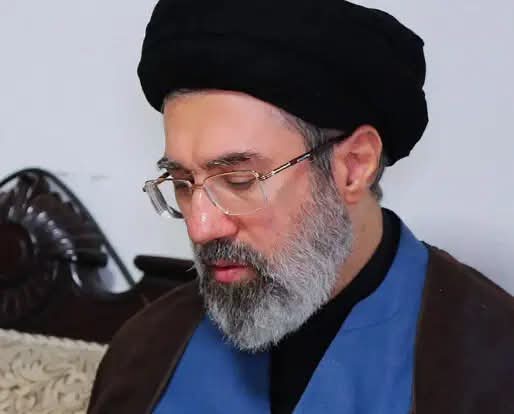
The warning came on Saturday from Iran’s Supreme Leader, Mojtaba Khamenei, who accused the United States of abandoning previous commitments and pursuing a path of aggression.
Speaking in a statement broadcast on Iranian state television, Khamenei said the renewed attacks on Iran had exposed what he called the “worthlessness” of the American president’s promises.
“Now that the American enemy seeks to fuel war and bear its consequences, it should know that the Iranian nation and the axis of resistance have unforgettable lessons to offer,” he declared.
The latest escalation follows a week of intense US strikes that Tehran said targeted key civilian infrastructure, including an airport, railway station and several bridges, despite a preliminary peace agreement reached barely a month ago that has since collapsed.
In retaliation, Iran launched attacks across the Gulf region.
Kuwaiti authorities confirmed that an oil installation, as well as a power and water facility, were struck, while Bahrain said its air defence systems intercepted multiple Iranian missiles and drones.
Iran also expanded its operations into Jordan, where the US Central Command announced that two American service members were killed while defending against Iranian missile and drone attacks. Another soldier remains missing.
Iranian military adviser Major General Mohsen Rezaei warned that Tehran would abandon its policy of proportional retaliation if US attacks persisted.
He said future operations would involve full-scale offensive action rather than limited responses.
The widening conflict has heightened anxiety across Gulf states. Residents in Kuwait reported panic buying of bottled water and canned food amid fears of prolonged disruption to essential services.
Iranian forces also claimed responsibility for attacks on a US-linked air base in Bahrain and fuel storage facilities at Jordan’s Al-Azraq military base.
Jordan’s military said it intercepted several incoming missiles over the past two days.
Diplomatic efforts to halt the fighting have made little progress. Although international mediators continue to push for renewed negotiations, both Washington and Tehran have hardened their positions.
Iran’s Deputy Foreign Minister, Kazem Gharibabadi, accused the United States of violating every commitment under the earlier memorandum of understanding, insisting that Iran was no longer bound by the abandoned agreement.
Meanwhile, Iranian officials reported mounting civilian casualties and widespread damage from US strikes.
Authorities said attacks in Hormozgan Province killed three people and injured eight, while dozens more were killed or wounded in Khuzestan Province over the past 10 days.
The damage has also affected critical infrastructure. Iranian officials said power facilities and desalination plants in the country’s south were hit, disrupting drinking water supplies to several communities.
The government has urged citizens to reduce electricity consumption as the national grid comes under increasing pressure.
According to Iran’s Health Ministry, at least 50 people have been killed and more than 500 injured since the latest round of fighting erupted.
Middle East analysts warn that the conflict is increasingly targeting strategic infrastructure across the region, raising fears of a broader regional war.
They note that while neither Tehran nor Washington appears to benefit from prolonged confrontation, both sides currently view compromise as a sign of weakness.
The latest escalation traces its roots to Iranian attacks on vessels in the Strait of Hormuz, one of the world’s most critical oil shipping routes.
Iran subsequently closed the strategic waterway following the outbreak of war in late February after coordinated US-Israeli strikes, turning control of the passage into a key bargaining tool as tensions continue to rise.