
Plans by the United States Department of Defense to livestream the execution of a convicted mass shooter have triggered widespread condemnation, with the United Nations, religious leaders and lawmakers from both major political parties describing the proposal as cruel and unacceptable.
Nidal Hasan, who killed 13 people and wounded 30 others during a shooting at Fort Hood, Texas, in 2009, is scheduled to be executed by firing squad on December 3 at the same military installation.
The execution would be the first by firing squad in the US military since 1945, when soldier Eddie Slovik was executed for desertion during World War II.
However, the plan to broadcast the execution live has generated controversy, with critics warning that it could turn the death penalty into a public spectacle and provide a platform for extremist propaganda.
Republican Representative Austin Scott, a member of President Donald Trump’s party, said he supported Hasan’s execution but opposed making it available for public viewing.
“Livestreaming executions is what jihadists do. America is better than that,” Scott said.
Similarly, Senator Jack Reed, the leading Democrat on the Senate Armed Services Committee, described the proposed broadcast as a “barbaric spectacle”.
Reed argued that livestreaming the execution could give Hasan additional publicity and an opportunity to amplify his anti-American views.
“This is a gift to anti-American terrorist recruiters,” the senator said.
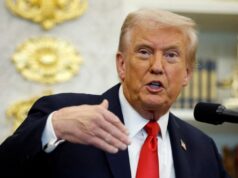
President Trump on Friday expressed support for Hasan’s execution, saying the convicted killer deserved the punishment and describing him as a “maniac”.
However, he did not directly address the controversy surrounding the planned livestream.
A Pentagon official reportedly confirmed the broadcast plan to AFP on Thursday, following comments by US Defence Secretary Pete Hegseth that the public would be able to watch the execution.
Hegseth subsequently reinforced the position by endorsing a media report about the planned livestream on social media platform X.
In a video shared on official Pentagon accounts, the defence secretary also invoked the military’s wartime tradition of confronting enemies, arguing that serious consequences must follow such attacks.
The United Nations High Commissioner for Human Rights condemned the proposal, warning that broadcasting an execution would amount to a public execution and violate the absolute prohibition of torture.
Archbishop Paul Coakley, president of the US Conference of Catholic Bishops, also criticised the plan, describing it as a “barbaric promotion of a culture of death” and urging the authorities to reconsider it.
Amnesty International equally opposed the proposal, with the organisation’s Justin Mazzola arguing that the death penalty itself violates human rights.
Mazzola warned that livestreaming Hasan’s execution would “only compound the cruelty”.
According to Amnesty International, at least 17 public executions were reported worldwide in 2025, including six in Afghanistan and 11 in Iran.
Hasan, a former US Army psychiatrist, carried out the deadly shooting at Fort Hood in November 2009. Twelve of the 13 people killed were soldiers, while 30 others sustained injuries.
He was shot by a civilian police officer who responded to the attack, leaving him partially paralysed.
During his trial, Hasan chose to represent himself but called no witnesses and gave no testimony.
He did not attempt to deny the charges and was sentenced to death by a military jury in 2013.
Court-appointed defence lawyers had previously expressed concerns that Hasan was seeking the death penalty.
The trial also heard evidence concerning his opposition to US military operations in Iraq and Afghanistan, as well as his online communications with Anwar al-Awlaki, an American-born radical cleric linked to Al-Qaeda who was later killed in a US drone strike in Yemen.
The planned execution would mark a significant moment in the history of military capital punishment in the United States.
Although Hegseth described it as the military’s first firing squad execution since World War II, the last US military execution took place in 1961, when John Bennett was hanged for rape and attempted murder.
The Death Penalty Information Center estimates that 135 soldiers have been executed by the US military since 1916.
The controversy has also emerged amid renewed scrutiny of capital punishment following the recent case of Christa Pike, a convicted murderer who survived a botched execution in Tennessee.