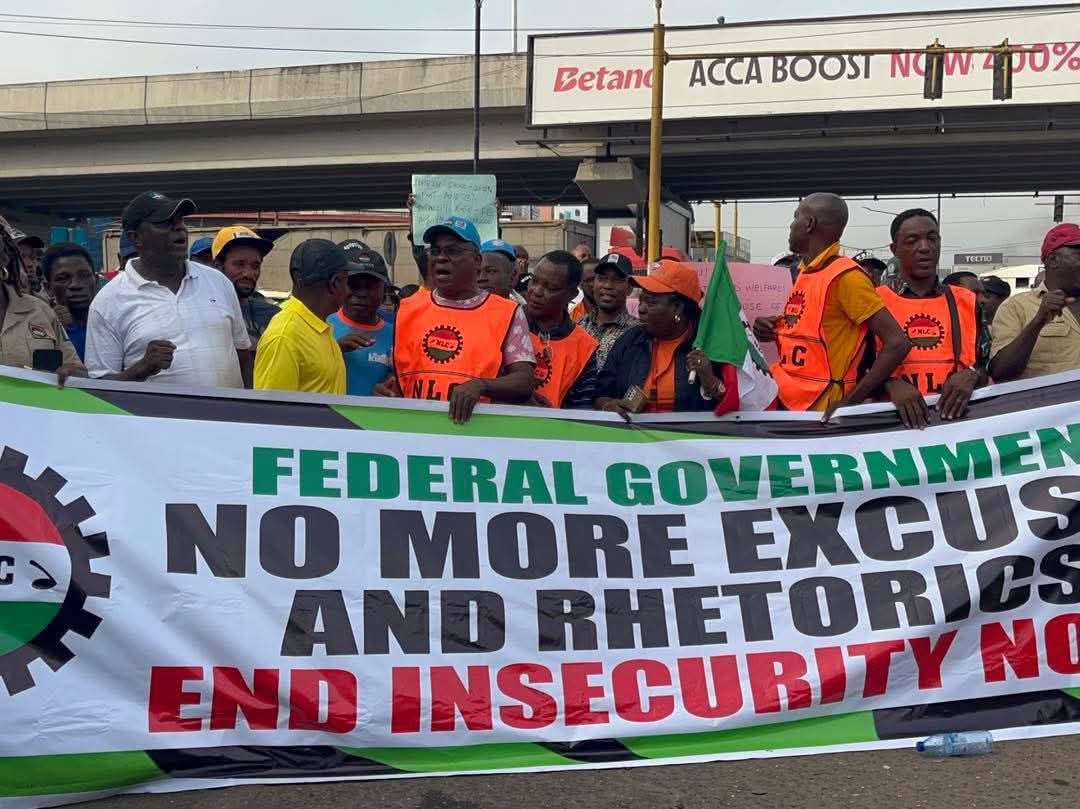

The Nigeria Labour Congress (NLC) has called on Nigerians to reject what it described as distorted and falsified tax laws, warning that flawed fiscal policies undermine public trust and worsen economic hardship.
The call was made by the NLC President, Joe Ajaero, in his 2025 Christmas message to Nigerians, where he stressed the need for inclusivity, transparency, and fairness in tax policy formulation.
Ajaero said any tax system tainted by distortion or alleged forgery lacks legitimacy and should not be accepted by the public.
He urged Nigerians to insist on tax justice, noting that a fair tax regime must ensure the wealthy pay their fair share while regressive taxes that burden ordinary citizens are eliminated.
According to him, sustainable economic reform cannot be achieved through hurried legislation driven by political interests, but through carefully crafted laws that enjoy broad public ownership.
He added that workers’ rights must be protected and that all citizens should have access to quality healthcare, education, and security as part of a just social contract.
Ajaero called on Nigerians to remain united in demanding equitable governance and reaffirmed the NLC’s commitment to mobilising workers against policies that deepen poverty and inequality.
The NLC’s position follows recent concerns raised by a member of the House of Representatives, Abdulsamad Dasuki, who alleged discrepancies between tax laws passed by the National Assembly and the versions later gazetted by the executive.
Dasuki claimed that the content of the gazetted laws differed from what lawmakers debated and approved, describing the situation as a breach of legislative procedure.
President Bola Tinubu had on June 26, 2025, signed four major tax reform bills into law.
The laws include the Nigeria Tax Act, the Nigeria Tax Administration Act, the Nigeria Revenue Service (Establishment) Act, and the Joint Revenue Board (Establishment) Act, collectively known as the Nigerian Tax Reform Acts.
The reforms are aimed at modernising Nigeria’s tax system, expanding the tax base, and improving revenue efficiency, including replacing the Federal Inland Revenue Service with the Nigeria Revenue Service.
However, the reforms have faced growing resistance amid allegations of forgery and concerns over their economic impact.
The House of Representatives has since set up a committee to investigate the claims, while civil society organisations and some state governors have raised objections over possible revenue-sharing and cost-of-living implications.