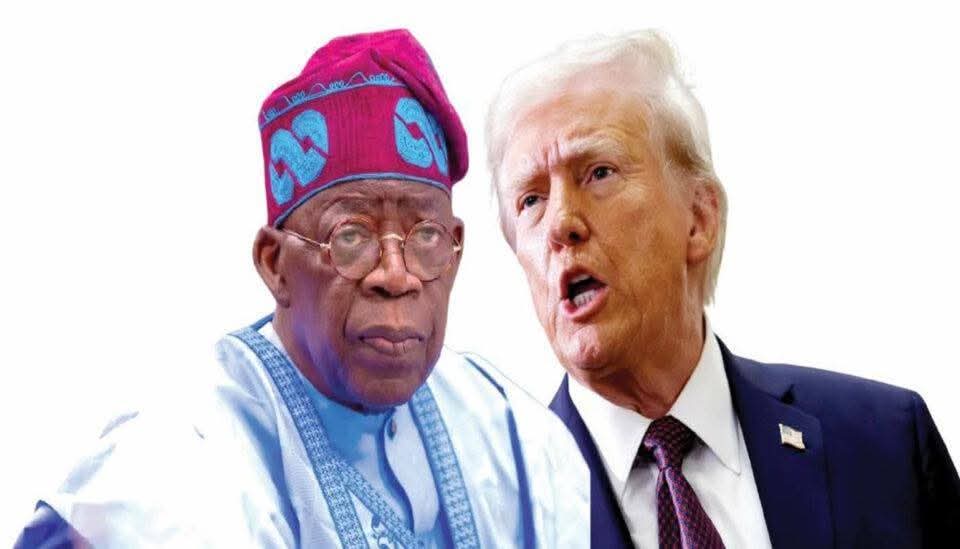

The United States’ Christmas Day airstrikes on suspected Islamic State enclaves in Sokoto State have reignited diplomatic tensions between Abuja and Washington, exposing sharp differences over how Nigeria’s security crisis is framed and addressed.
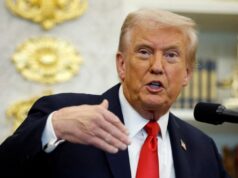
While U.S President Donald Trump described the strikes as a decisive response to militants “viciously killing innocent Christians,” Nigerian authorities insist the country’s insecurity cannot be reduced to a religious conflict.
Officials maintain that terrorism and banditry affect both Christian and Muslim communities and are rooted in long-standing insurgency, weak governance, and transnational criminal networks.
Despite Nigeria’s ongoing military cooperation with the United States, diplomatic efforts by Abuja to counter the “Christian genocide” narrative and Nigeria’s designation as a Country of Particular Concern have so far yielded limited results.
Analysts say Washington’s insistence on a faith-based framing reflects deeper ideological and strategic disagreements between the two allies.
Political analyst Tobi Adetunji argued that Nigeria must first confront its internal security failures rather than focus on foreign narratives.
According to him, external intervention often follows domestic weaknesses that allow insecurity to escalate beyond national control.
He added that Nigeria’s diplomatic engagements with U.S officials have not been sufficiently transparent to shift international perceptions.
Others, however, see deeper military cooperation as inevitable.
Pan-African commentator, Ndu Okoh, said partnership with the United States offers Nigeria the fastest route to weakening Boko Haram, ISWAP and allied groups that have inflicted devastating losses across the country.
She cited data showing that insurgent-related deaths in the first half of 2025 exceeded those recorded in all of 2024.
Legal experts are divided on the implications of the airstrikes.
Lawyer Chinwike Ezebube described terrorism as a global crime that often attracts cross-border responses justified under international conventions, arguing that such actions may not necessarily violate Nigeria’s territorial integrity.
In contrast, Evans Ufeli warned that any foreign military action without explicit Nigerian consent constitutes a breach of sovereignty under the United Nations Charter and could attract sanctions.
Another senior lawyer, Akeem Aponmade, described the strikes as a face-saving compromise for both governments, following earlier threats of unilateral U.S action.
He urged Nigeria to clearly define rules of engagement in any joint counterterrorism operation, including responsibility for civilian casualties, duration of foreign involvement, and target selection.
From the religious sphere, Islamic cleric Sheikh Ahmad Gumi condemned U.S military involvement, warning that foreign intervention could worsen insecurity, deepen religious polarisation, and turn Nigeria into a battleground for global power struggles.
He argued that airstrikes alone cannot defeat terrorism and called for stronger, better-organised ground operations led solely by Nigerian forces.
The Peoples Democratic Party also faulted the Federal Government’s communication strategy, criticising what it described as a delayed and reactive response that allowed U.S officials to announce the operation before Nigerian authorities.
The opposition party urged more transparent public engagement and Nigerian-led security strategies supported by international intelligence and capacity building.
In contrast, the pan-Yoruba group Afenifere threw its weight behind the strikes, describing them as timely and necessary after years of unchecked violence.
The group argued that true sovereignty lies in a state’s ability to protect its citizens, even if that requires external support.
Security analyst Kabir Adamu questioned the choice of Jabo in Tambuwal Local Government Area as a strike location, noting that it is not among known terrorist strongholds.
While confirming the absence of civilian casualties, he called for better public education on safety during air operations.
U.S-based counterterrorism expert, Dolapo Oyedokun described the strike as a precision operation that sent a strong signal to terrorist groups, while human rights activist Emmanuel Onwubiko said many Nigerians view the intervention as long overdue given the scale of killings across religious and ethnic lines.
Former MNJTF spokesman Timothy Antigha and security scholar Muhammad Bello both argued that the strikes reflect a shift toward intelligence-driven warfare, stressing that lasting peace will depend not only on military force but also on community trust, governance reforms, and sustained political will.