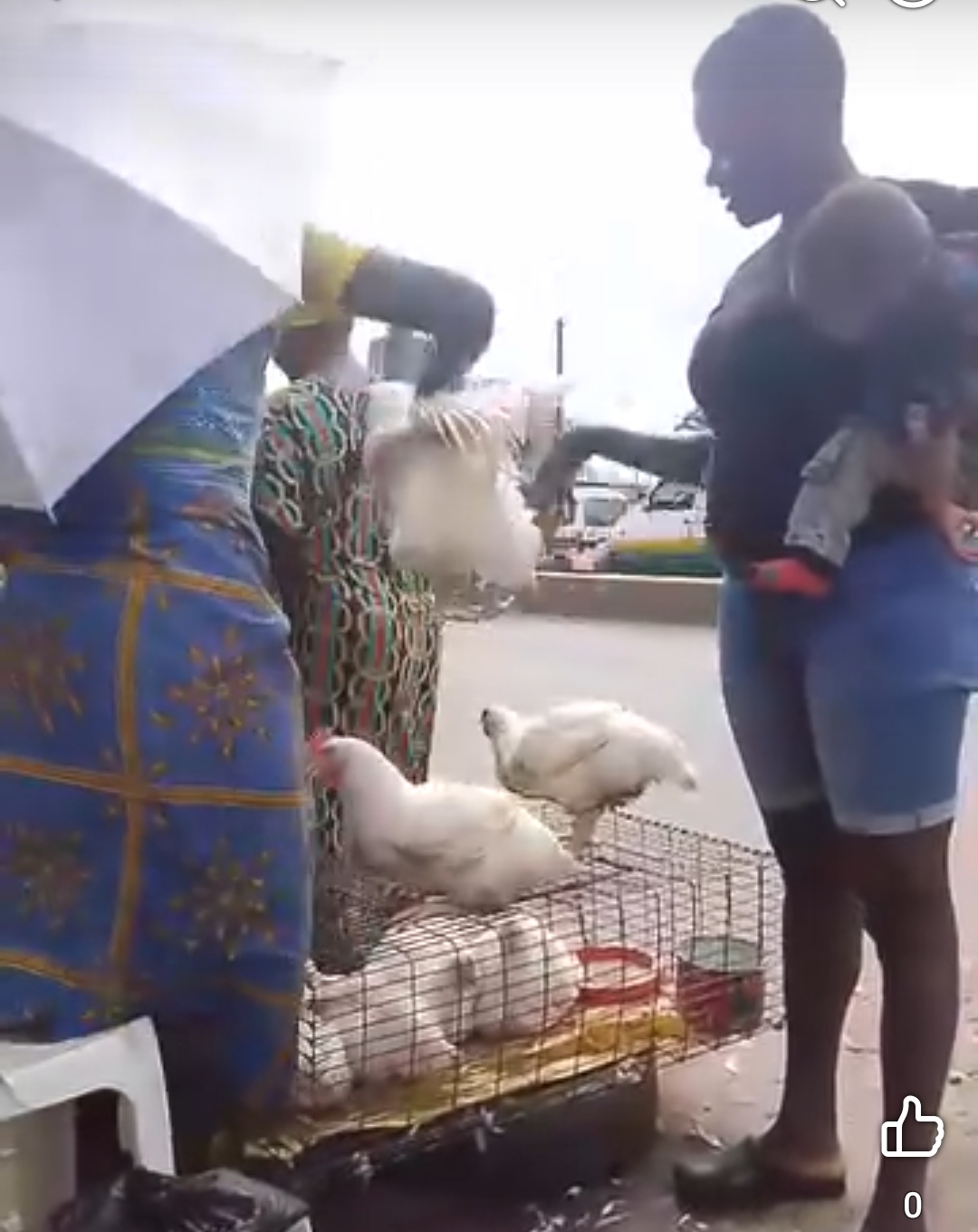

Poultry farmers across Nigeria are grappling with an unusual crisis this festive season: an oversupply of live chickens amid dwindling customer turnout.
Across major markets, roadside stalls and hawking points, chickens were seen in abundance during the Christmas period, yet buyers were scarce.
This trend persisted despite a noticeable reduction in prices, a development that has deepened concerns within the poultry sector.
The industry has endured a turbulent year marked by rising feed costs, escalating fuel prices, inflationary pressures and policy-induced economic challenges.
These factors forced many poultry farms to shut down or operate at minimal capacity, while others exited the business entirely.
The sustained hardship triggered repeated price adjustments for eggs and poultry products.
A crate of eggs that sold for between N1,500 and N1,700 in January 2024 now costs between N6,000 and N7,000.
Similarly, the price of live chickens surged from about N10,000 to over N30,000 within the same period.
However, a recent market survey by The Guardian revealed a reversal of this trend.
While prices had continued to climb as recently as two weeks ago, when mature broilers sold for N30,000 to N35,000, noilers for N20,000 and old layers for N12,000 to N14,000, poor patronage forced traders to slash prices.
In Fagba, Lagos, for instance, broilers that previously sold for up to N35,000 are now going for about N25,000. Similar price reductions were observed in other major cities across the country.
Yet the price cuts have failed to stimulate demand.
Traders attribute this to the shrinking purchasing power of Nigerian households.
Visits to markets in Enugu, Lagos and Ogun states, including Oko-Oba Abattoir in Agege, Oja-Oba, Ile-Epo, Iyana-Ipaja, Oshodi, Sango, Arigbajo and Ifo, revealed cages and car trunks filled with unsold chickens of various breeds.
A poultry farmer in Ikorodu, Lagos, Mr Samson Mathew, described the situation as distressing.
According to him, expectations that the festive season would help offset the year’s losses were dashed.
He noted that despite reducing prices, customer turnout remained extremely low.
He recalled that last year, when chickens sold for as high as N40,000 to N45,000, patronage was still reasonable. This year, despite lower prices, many Nigerians simply lack the financial capacity to buy.
Mathew warned that the persistent rise in feed costs could drive more farmers out of the industry if conditions do not improve.
Similarly, a live chicken vendor at Oja-Oba market, Alhaja Bukunmi Odeyemi, said patronage had been only moderate and far below expectations.
She lamented the additional cost of feeding unsold birds daily while waiting for buyers.
She explained that although old layers, which sell for between N12,000 and N15,000, usually attract better patronage due to their affordability, even these remain largely unsold this season.
Odeyemi added that many traders have been unable to restock as they normally would during the festive period and expressed hope that sales would pick up before the New Year.