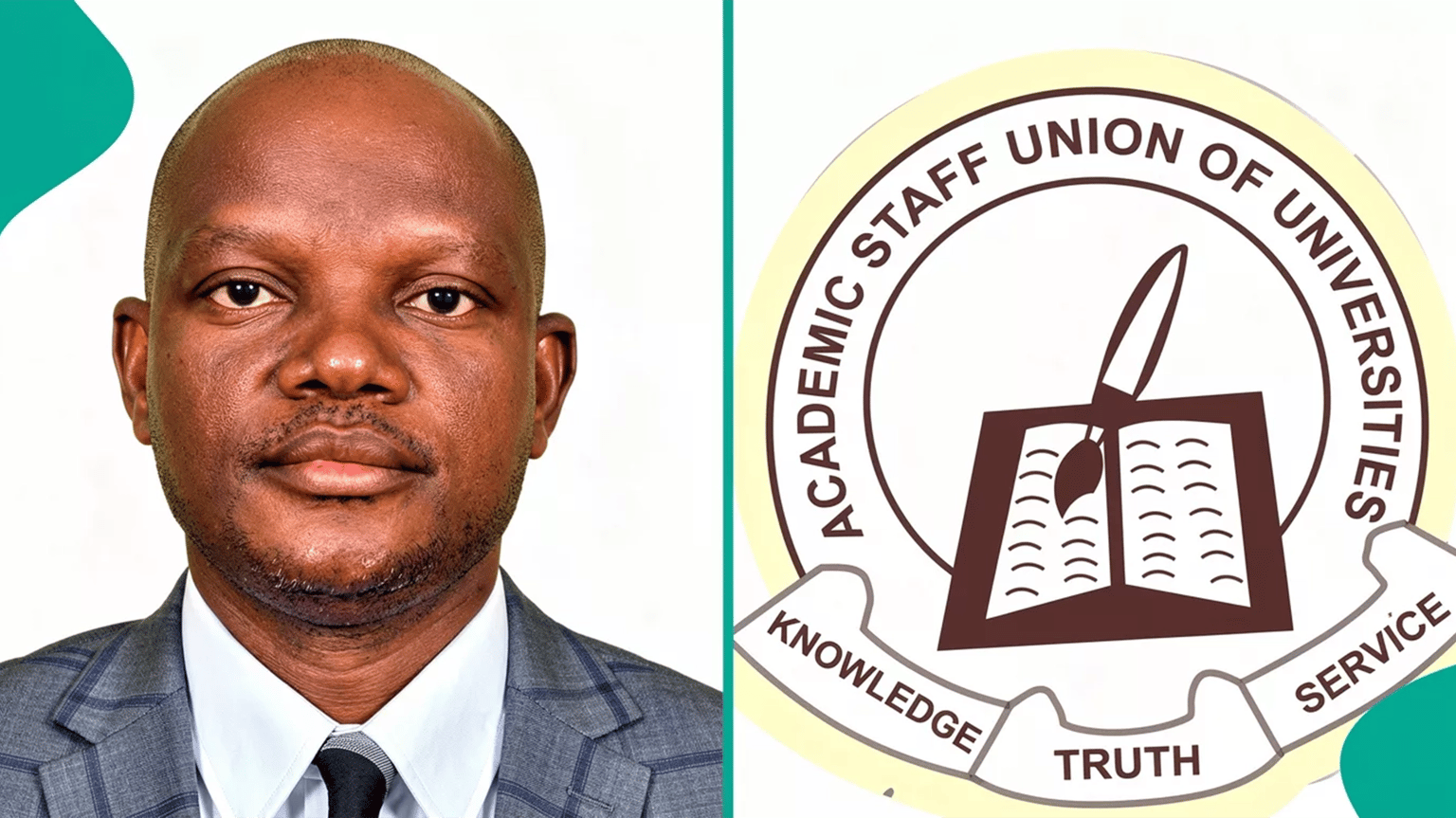

President of the Academic Staff Union of Universities (ASUU), Professor Chris Piwuna, has described the newly signed 2025 renegotiated agreement between the Federal Government and ASUU as a major milestone in efforts to revitalise Nigeria’s university system, while warning that persistent government interference and weak accountability structures continue to threaten the sector.
Speaking at the signing ceremony of the agreement in Abuja, Piwuna said the deal marked the end of a 16-year struggle that followed the 2009 FGN–ASUU agreement, which was due for review in 2012 but stalled for over a decade due to what he described as a lack of sincerity on the part of successive governments.
He traced the long negotiation journey through several committees inaugurated between 2017 and 2022, none of which succeeded in producing a collective bargaining agreement, until the current administration set up the Yayale Ahmed-led Renegotiation Committee in October 2024.
According to him, the agreement, reached after about 14 months of negotiations, addresses key issues such as conditions of service, funding, university autonomy, academic freedom and broader systemic reforms aimed at reversing decay, curbing brain drain and repositioning universities for national development.
Piwuna commended the chairman of the renegotiation committee, Mallam Yayale Ahmed, the Minister of Education, Dr Tunji Alausa, and President Bola Tinubu for what he described as commitment and perseverance throughout the negotiation process.
He also praised ASUU negotiators and union members for their resilience during the prolonged struggle.
Despite welcoming the agreement, the ASUU president warned that deep-rooted challenges remain, particularly government encroachment on university autonomy.
He noted that although autonomy is recognised in law, its implementation remains weak, with governing councils frequently dissolved or overridden by political authorities.
He cited repeated interference in the appointment of vice-chancellors, rejection of council recommendations, and the imposition of preferred candidates as practices that undermine meritocracy and fuel internal crises within universities.
Piwuna also raised concern over the growing reliance on acting vice-chancellors, warning that such practices weaken institutional stability.
On research funding, Piwuna stressed that universities cannot be globally competitive without sustained investment in research and development.
He welcomed the inclusion of research funding in the renegotiated agreement and disclosed that the National Research Council Bill, which proposes allocating at least one per cent of GDP to research and innovation, would be forwarded to the National Assembly.
He urged lawmakers to expedite action on the bill, describing it as critical to Nigeria’s aspiration for a knowledge-driven economy.
Piwuna also addressed concerns over accountability, rejecting the common narrative that funds released to universities are given to ASUU.
He noted that while the union fights for improved funding, weak institutional oversight often leads to inefficient use of resources.
He alleged that cases of financial mismanagement, contract irregularities and excessive use of consultants have become widespread in the university system, with governing councils often too politicised to serve as effective watchdogs.
The ASUU president further criticised developments in newly upgraded universities of education, where, according to him, chief lecturers are being converted to professors without due process or established promotion guidelines.
He warned that such practices could erode academic standards and urged vice-chancellors of the affected institutions to review recent promotions.
Beyond university governance, Piwuna painted a grim picture of Nigeria’s broader socio-economic situation, citing rising inflation, naira devaluation, fuel price hikes, insecurity and declining purchasing power as factors worsening access to higher education.
He noted that despite initiatives such as NELFUND, many middle- and working-class families are struggling to afford public university education, while unemployment continues to shut the traditional pathway of social mobility offered by higher education.
Piwuna said ASUU was ready to work with the Federal Government to address Nigeria’s economic and social challenges, describing the union as a willing ally in efforts to rebuild the country.
He also reaffirmed the union’s cautious optimism that the 2025 agreement would be fully implemented, expressing hope that ASUU would not have to resort to industrial action to secure compliance.