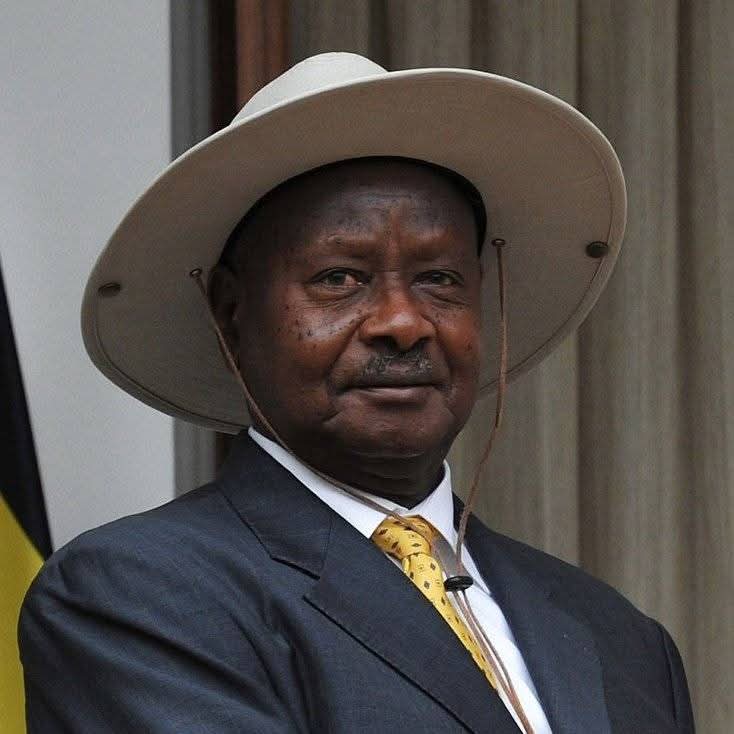

Ugandan President Yoweri Museveni has been declared the winner of the country’s presidential election, securing a seventh term in office amid reports of violence, arrests, and an internet shutdown that drew criticism from observers.
The Electoral Commission announced on Saturday that Museveni, 81, polled 71.65 per cent of the votes cast in Thursday’s election, defeating his closest challenger, opposition leader Bobi Wine, who secured 24.72 per cent.
The victory extends Museveni’s rule of the East African nation to nearly 40 years, having first taken power in 1986.
The election was conducted under tense conditions, with reports of at least 10 deaths, intimidation of opposition supporters, and restrictions on civil society.
African election observers said arrests and abductions during the process “instilled fear” and undermined public confidence.
Bobi Wine, a 43-year-old former musician turned politician, rejected the results, describing them as fraudulent.
He said he went into hiding after security forces raided his residence on Friday night.
In a post on X on Saturday, Wine said he narrowly escaped arrest and was no longer at home, although his wife and other family members remained under house arrest.
“I know these criminals are looking for me everywhere and I am trying my best to keep safe,” he wrote.
Security was visibly heightened in and around the capital, Kampala, as authorities sought to prevent protests similar to those seen recently in neighbouring Kenya and Tanzania.
Police denied raiding Wine’s home but admitted restricting access to areas they described as security hotspots.
Police spokesperson Kituuma Rusoke said the measures were necessary to prevent gatherings that could incite violence.
Residents near Wine’s residence told journalists they observed heavy security activity, including drones and helicopters, prompting many people to flee the area out of fear.
Wine, whose real name is Robert Kyagulanyi, has emerged in recent years as Museveni’s strongest political challenger, branding himself the “ghetto president” in reference to his upbringing in Kampala’s slums.
He accused the government of widespread ballot stuffing and attacks on his party officials during the internet blackout imposed ahead of the polls.
While African election observers said they found no evidence of ballot stuffing, they condemned reports of intimidation, arrests, and abductions targeting opposition figures and civil society groups.
Former Nigerian president Goodluck Jonathan, who led observer missions from the African Union, COMESA, and IGAD, said the internet shutdown disrupted effective monitoring of the election and heightened public suspicion.
Jonathan noted, however, that voting on election day was largely peaceful despite the pre- and post-election concerns.
Museveni’s ruling National Resistance Movement also recorded a strong showing in parliamentary elections, according to provisional results, with vote counting still ongoing.
Analysts have widely described the election outcome as predictable, citing Museveni’s firm control of state institutions and the security apparatus. Over the years, his government has consistently suppressed opposition figures.
Another prominent opposition leader, Kizza Besigye, who contested the presidency four times against Museveni, was abducted in Kenya in 2024 and returned to Uganda, where he is currently facing a treason trial before a military court.
There were further reports of election-related violence, with a legislator from Wine’s party alleging that security forces killed several campaign agents during an operation in central Uganda.
Police disputed the claim, saying an unspecified number of individuals were neutralised after allegedly attempting to attack a tally centre and police station.