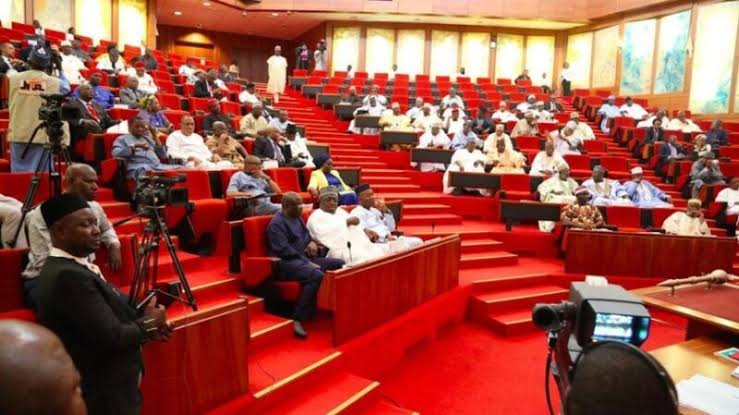

Nigerians have expressed strong disapproval following the 10th Senate’s handling of the Electoral Act (Amendment) Bill 2026, with civil society groups, election monitors, political activists, and opposition parties warning that the move could undermine transparency and credibility in the 2027 general elections.
The controversy centers on the Senate’s decision to reject mandatory real-time electronic transmission of polling unit results, a provision widely seen as crucial for ensuring transparent and trustworthy elections.
Critics argue that the rejection erodes public confidence and leaves the electoral process vulnerable to manipulation.
The African Democratic Congress (ADC) condemned the Senate, describing the decision as a deliberate attempt to weaken electoral safeguards.
“Foremost among these is the rejection of electronic transmission of election results, a move that clearly signals yet another attempt by the APC to undermine the will of the Nigerian people and manipulate future elections,” the party stated.
The debate intensified after reports circulated that the Senate had rejected Section 60(3) of the Electoral Bill 2026, which mandates the presiding officer to electronically transmit polling unit results to the Independent National Electoral Commission’s (INEC) IREV portal in real time.
Some senators later clarified that the provision had not been rejected, but public confidence was already shaken.
Senator Enyinnaya Abaribe (PDP, Abia South) insisted: “We came out to correct the wrong impression. The Senate did not, I repeat, did not reject electronic transmission of results.”
He added that the provision would be monitored closely through to presidential assent.
Concerns over the Senate’s amendments have also been raised by civil society organisations.
Kimpact Development Initiative (KDI) highlighted that the removal of mandatory e-transmission, shortening of election notice periods, and weakening of sanctions for vote buying could all weaken Nigeria’s electoral integrity ahead of 2027.
Yiaga Africa labelled the Senate’s decision “a betrayal of public trust,” warning that compressed election timelines would heighten logistical risks and undermine election credibility.
Samson Itodo, Executive Director of Yiaga Africa, said: “The Senate’s position sharply contrasts with the progressive stance taken by the House of Reps. We hope the conference committee will reject the Senate’s position and restore the progressive provisions that will make votes count in 2027.”
Former PDP Deputy National Chairman, Bode George, urged President Tinubu to withhold assent to the bill until electronic transmission is reinstated, calling the Senate’s action “an aberration that Nigerians must collectively reject.”
Other prominent voices, including Afenifere chieftain Femi Okurounmu, PDP South-West Vice Chairman Ajisafe Toyese, and the Yoruba Ronu Leadership Forum President Akin Malaolu, condemned the Senate for undermining transparency and warned that the stance could compromise the 2027 elections and threaten democratic stability.
Connected Development (CODE) also criticised the amendments, highlighting that leaving electronic transmission discretionary and compressing timelines without safeguards could perpetuate manipulation and post-election disputes.
The African Democratic Congress (ADC) accused the Senate of plotting to rig future elections, calling for Nigerians to reject the move and urging the Conference Committee to restore reforms aligned with democratic principles.
Similarly, Advocacy for Knowledge and Civic Engagement Foundation (AdvoKC) described the bill as a major setback to Nigeria’s democracy and a betrayal of public trust.
As the bill moves to the Conference Committee for harmonisation between the Senate and House versions, civil society groups are calling for transparency, proper safeguards, and measures that will strengthen public confidence in Nigeria’s electoral process.