President Bola Ahmed Tinubu held a high-level meeting yesterday with Kwara State Governor AbdulRahman AbdulRazaq at the State House in Abuja, following the deadly assault on Woro community in Kaiama Local Government Area, which claimed at least 160 lives.
Authorities have linked the attack to suspected jihadist fighters, sparking nationwide concern over security in the North-Central region.
Sources close to the presidency said the discussions focused on immediate federal interventions, including humanitarian and security measures to protect residents and bring the perpetrators to justice.
Meanwhile, in the United States, former President Donald Trump addressed concerns over religious freedom, vowing to confront what he described as a militant campaign against religious believers in public life.
Trump stressed the protection of religious liberty as a priority for his administration but offered no specific policy details.
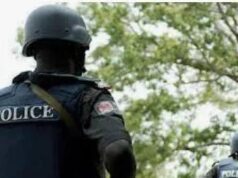
Following the attack, President Tinubu approved the deployment of a battalion to Kaiama and the creation of a new military command structure to coordinate Operation Savannah Shield, aimed at dislodging armed groups and safeguarding vulnerable communities.
The President condemned the killings as “cowardly and inhumane” and directed stronger collaboration between federal and state agencies to track down the attackers.
The Northern States Governors’ Forum also condemned the spate of attacks across Kwara, Katsina, and Benue, calling the killings “barbaric and senseless.”
Chairman and Gombe State Governor Inuwa Yahaya extended condolences to victims’ families and urged security agencies to intensify intelligence gathering, surveillance, and coordinated operations to bring perpetrators to justice.
“These crimes must not go unpunished,” Yahaya said, commending affected state governments for supporting victims and collaborating with federal authorities.
The Defence Headquarters (DHQ) in Abuja described the Woro massacre as a “cowardly terrorist attack” carried out by extremists angered by villagers’ refusal to accept ideological indoctrination.
According to the military, the attackers had initially sought permission to conduct preaching sessions, which the villagers rejected.
The DHQ praised residents for their resilience, urged Nigerians to remain steadfast in constitutional loyalty, and called for stronger cooperation between communities and security forces to prevent future attacks.
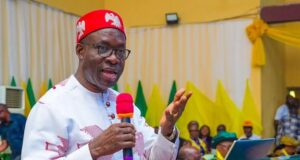
Governor AbdulRahman AbdulRazaq directed the State Emergency Management Agency to provide urgent relief to victims of the Woro and Nuku attacks.
Visiting affected communities with state officials, he assured residents that federal troops deployed under Operation Savannah Shield would reinforce security.
“These victims were massacred because they refused to succumb to a strange doctrine,” AbdulRazaq said, praying for the repose of the deceased and praising President Tinubu for immediate action.
Obi, Gani Adams, and Civil Society Speak Out
Former presidential candidate Peter Obi condemned the killings as a tragic reflection of Nigeria’s worsening security crisis, calling for decisive nationwide action against insecurity.
Gani Adams, Aare Ona Kakanfo of Yorubaland, demanded urgent establishment of state police, arguing that decentralized security could have prevented the tragedy.
The Yoruba Youth Socio-Cultural Association warned that insecurity is spreading to the South-West and urged intelligence-led strategies and coordinated security measures.
Amnesty International also decried the surge in killings and abductions, labeling February 3, 2026, a “Bloody Tuesday” and criticizing authorities for failing to protect citizens across Kwara, Katsina, and Benue states.