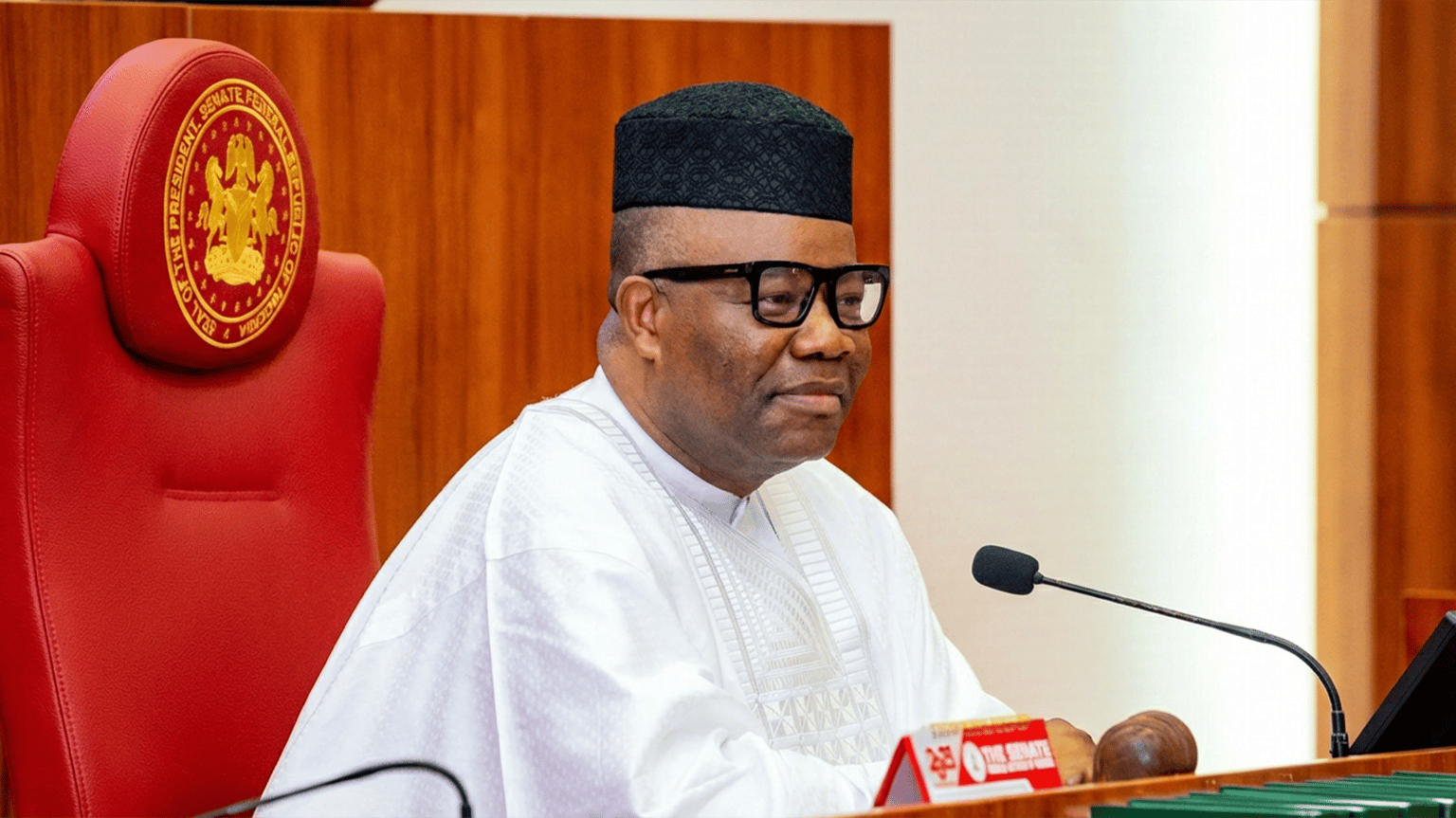

Senate President Godswill Akpabio has clarified that the National Assembly did not reject the electronic transmission of election results but retained the existing provision in the 2022 Electoral Act.
Akpabio made the clarification on Saturday in Abuja at a book presentation on the challenges faced by lawmakers, noting that the controversy stemmed from the removal of the phrase “real-time” from the proposed amendment.
He said, “All we said during discussion was that we should remove the word ‘real-time’ because if you say real-time, then there is a network or grid failure and the network is not working. When you go to court, somebody will say it ought to have been real-time. That was all we said.”
According to him, the decision was intended to give the Independent National Electoral Commission flexibility to determine how and when election results should be transmitted, taking into account technological limitations and security concerns.
The Senate President added that the upper chamber would continue to enact laws that align with the aspirations and expectations of Nigerians.
Reacting to the development, former Senate President David Mark maintained that INEC should be allowed to decide whether or not to transmit election results electronically.
He also disclosed that the African Democratic Congress supports the electronic transmission of results.
The clarification comes amid public outrage that followed the Senate’s passage of the Electoral Act 2022 (Repeal and Reenactment) Amendment Bill 2026 through a third reading last week.
While passing the bill, lawmakers declined to approve a proposal that would have made electronic transmission of results mandatory, particularly the clause requiring presiding officers to upload polling unit results to the IREV portal in real time after due documentation.
Instead, the Senate retained the existing provision in the Electoral Act, which states that presiding officers are to transfer election results “in a manner as prescribed by the Commission.”