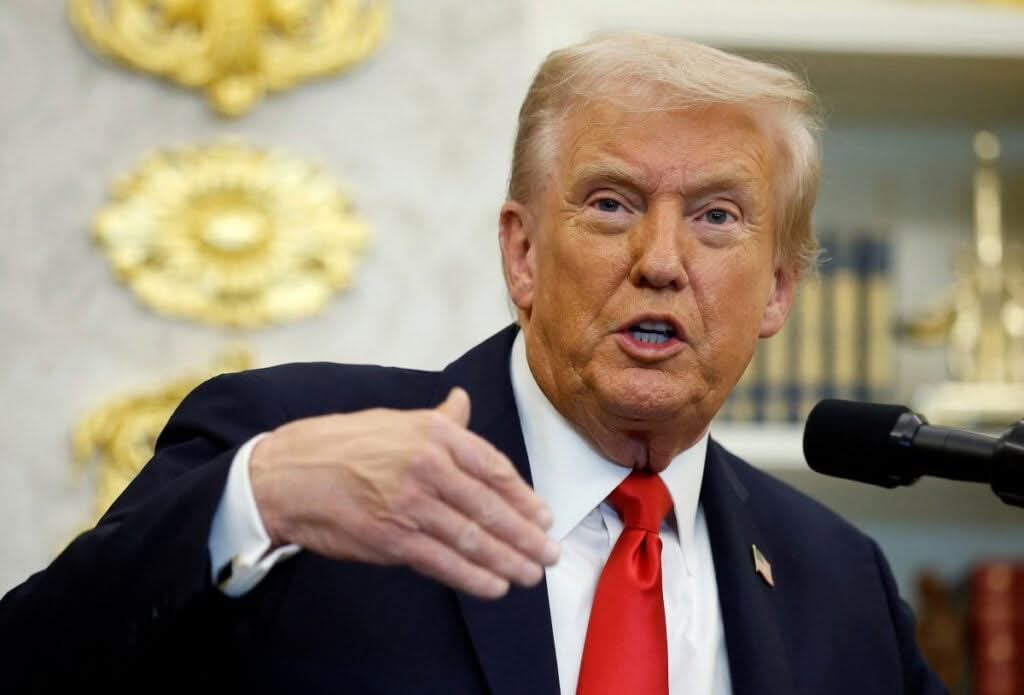

The intensifying conflict between the United States and Iran took a cautious diplomatic turn as President Donald Trump announced a fresh delay in planned strikes on Iran’s energy infrastructure.
Trump said negotiations to end the war were “going very well,” even as Israel launched a new round of strikes targeting key sites in Tehran early Friday.
The US leader disclosed that he had extended the deadline for possible military action by 10 days, now set for April 6, following what he described as a request from Iranian authorities.
“As per the Iranian government’s request, I am pausing the period of energy plant destruction,” Trump stated, signaling a potential opening for diplomacy despite ongoing hostilities.
The crisis, now nearing its second month, has significantly disrupted global energy flows, particularly through the Strait of Hormuz, a vital corridor that accounts for roughly one-fifth of global oil and gas shipments.
US Secretary of State Marco Rubio urged G7 nations to intensify efforts to reopen the strait, warning of prolonged global economic fallout if disruptions persist.
Washington’s envoy, Steve Witkoff, revealed that the US had forwarded a 15-point proposal to Tehran through diplomatic channels, describing “strong signals” that Iran may be willing to negotiate.
Iranian state-linked media confirmed that Tehran had responded to the proposal, demanding war reparations, recognition of its sovereignty over the Strait of Hormuz, and an end to US and Israeli military actions in the region.
Despite these diplomatic exchanges, the conflict continues to escalate on multiple fronts.
Israel reported conducting large-scale strikes on Iranian infrastructure in Tehran, while also targeting positions linked to Hezbollah in Lebanon.
In response, Iranian forces launched missile and drone attacks against Israeli targets and US-linked military facilities in the Gulf.
The war, which began on February 28 following joint US-Israeli strikes on Iran, has triggered a de facto closure of the Strait of Hormuz, sending global oil prices soaring and unsettling financial markets.
Countries worldwide are now scrambling to mitigate the impact of the energy crisis.
Japan is considering easing restrictions on coal-fired power plants, while Vietnam has temporarily lifted fuel taxes to cushion rising petrol costs.
The World Bank has warned that prolonged damage to critical infrastructure could deepen the crisis, pledging readiness to respond if conditions worsen.
Even as Trump alternates between threats of force and optimism about negotiations, concerns are mounting within Israel over the sustainability of the war effort.
Opposition leader Yair Lapid warned that the military is overstretched, criticizing the government for pursuing a multi-front war without a clear strategy or sufficient manpower.
Meanwhile, tensions along Israel’s northern border continue to rise, with Hezbollah launching rockets into northern Israel and air raid sirens sending residents scrambling for safety.
With diplomacy hanging in the balance and military actions intensifying, the coming days are expected to be critical in determining whether the conflict moves toward de-escalation or further escalation.