
By Justice Chidi PhD
The government of Enugu State is setting a precedent that is unsettling the old narrative of one thing-at-a- time.
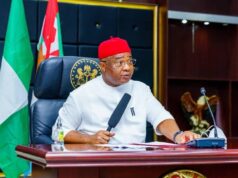
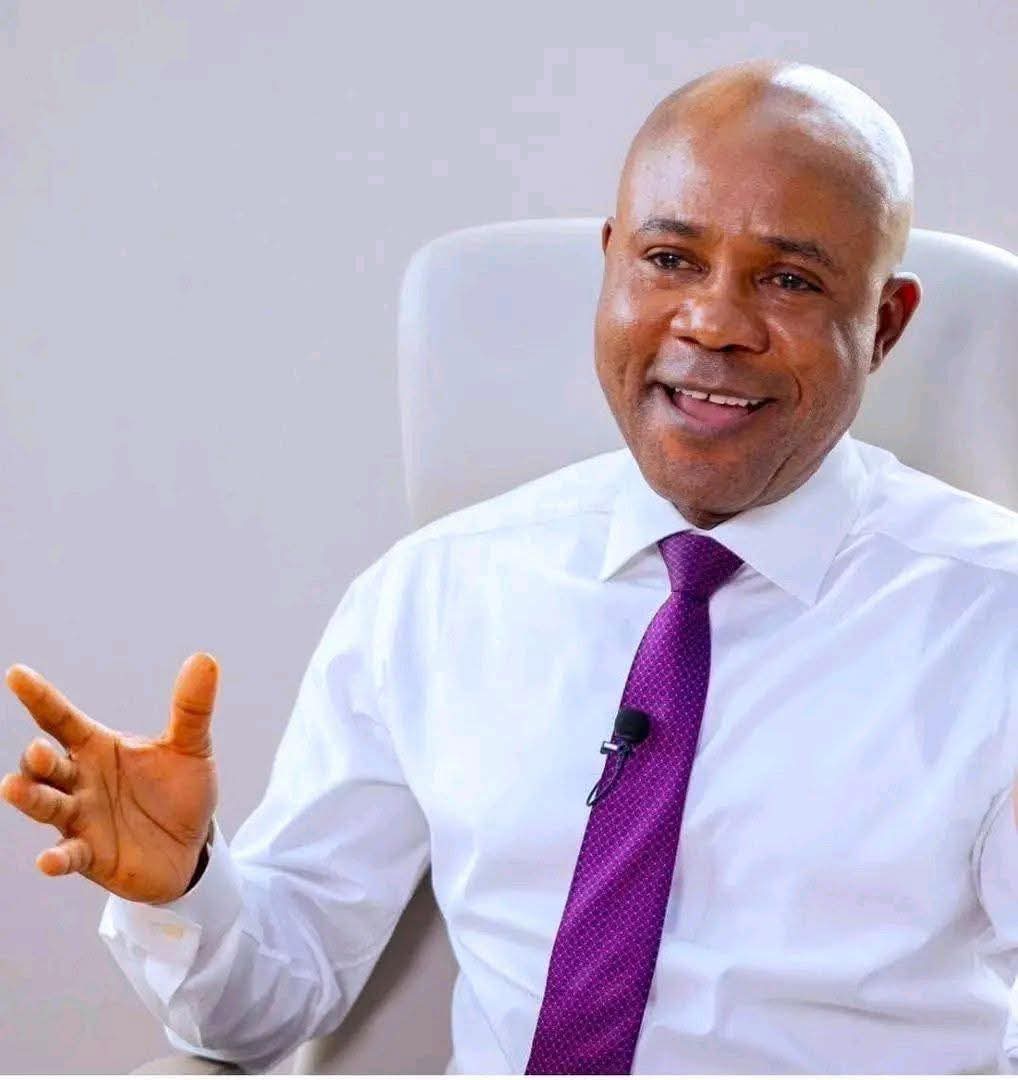
When Governor Mbah said that he was in a hurry to develop Enugu during the presentation of his manifesto at the Peter Mbah auditorium at Godfrey Okoye University Enugu, many thought it was the usual political rhetoric synonymous with politicians.
Time and events have actually proven that Mbah meant his words and wasn’t embarking on mere play on words.
At the heart of this transformation lies Mbah’s refusal to be bound by the incrementalism that has long characterized public sector project delivery.
Rather than subscribing to a linear strategy where one project must end, and reluctantly so,before another begins, the Mbah approach embraces simultaneity.
Roads rise while schools are taking shape; digital infrastructure expands even as healthcare systems are recalibrated.
Simply put, Enugu has become a construction site of ideas translated to concrete realities. Each initiative reinforcing the other in a carefully orchestrated pattern of progress.
We must point out that driving multiple projects at once demands not only resources but also coordination, discipline, and an unwavering clarity of purpose.
It requires a leader willing to stake political capital on the belief that citizens can see beyond temporary disruptions to grasp long-term gains.
In the above sense, Governor Mbah is the man. Ndi Enugu should be broad-minded enough to see the future gains.
For the simpleton, as you would hear a number of them muse while relieving a bottle of beer of its content, the governor should have just renovated the existing school blocks and discarded the idea of smart green schools.
For such thinkers, Enugu is not an institution of higher learning and there was no need for international conference centre; for them, the governor should have left transportation in the hand of private individuals because Enugu citizens have adapted to traumatising journeys.
Some even argue that such velocity risks overextension, that too many moving parts could strain institutional capacity.
Yet, such concerns often underestimate the power of urgency and the audacity of vision. When systems are compelled to operate at higher efficiency, dormant potentials are activated.
Civil servants adapt, contractors innovate, and timelines shrink.
Again, another deeper motivation is the governor’s recognition of the interconnectedness of development. A road is not merely a strip of asphalt; it is an artery for commerce, a bridge between rural productivity and urban markets.
A smart school is not just a building; it is a recalibration of the future workforce. By pursuing multiple projects concurrently, governance becomes holistic rather than fragmented.
Ultimately, Governor Mbah’s vision of multitasking is not merely about speed. He has effectively collapsed the distance between promise and proof. In all honesty, our dear governor should take his flowers.