
By SKC Ogbonnia
The historic passage of the 2026 Nigerian Electoral Act brought a wave of democratic optimism. It offers a framework where strict adherence to legal processes ensures the masses truly choose their leaders. The Act aims to provide a level playing ground for all–particularly for women and the youths. Yet, the unfolding crisis within the Enugu State chapter of the Nigeria Democratic Congress (NDC) threatens to derail this progress, setting a dangerous precedent of institutional lawlessness.
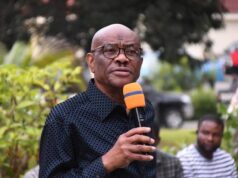
This crisis has produced two factions within the Nigeria Democratic Congress (NDC) in Enugu State. On the one side is the NDC State Working Committee led by Dr. JohnPaul Anih, a 32-year-old former University student union leader with a massive youth following. This group emerged through a valid congress monitored by the Independent National Electoral Commission (INEC) and the NWC.
On the other side is a rival faction led by Comrade Ibuchukwu Obeta and backed by Dr. Okwy Nwodo—a former Governor of Enugu State and former National Chairman of the People’s Democratic Party (PDP). This group claims national backing from the NDC leadership but has faced pushback from party stakeholders who insist on constitutional, congress-based leadership.
This scenario highlights a classic clash between internal party democracy and top-down political maneuvering. It begs the following two contending legal questions:
First, does a candidate nominated by a party structure which did not emerge through a valid congress from a state but is endorsed by the National Working Committee (NWC) qualify for Nigerian elections?
The answer is a resounding, legally fortified, and unequivocal no. The truth is that the Supreme Court has firmly established that the National Working Committee (NWC) does not possess the legal authority to arbitrarily bypass a valid, INEC-monitored state congress to impose or recognize a parallel executive.
Second, does a political party organ that emerged from a valid congress have the locus standi to sponsor candidates in a Nigerian election without NWC authorization?
The answer is a resounding, legally fortified, and unequivocal no. Under Nigerian electoral law and Supreme Court jurisprudence, the NWC is the only body legally empowered to execute and submit the official nomination forms (such as INEC Forms EC9 and EC9B) to the (INEC).
There goes the dilemma! The objective fact is that the NDC Enugu State Chapter currently has no valid candidates for the 2027 elections.
Under the Electoral Act 2026, the statutory rules governing the nomination of candidates are ironclad. In Enugu State, the NDC has been rocked by an explosive split that highlights the deep structural rot threatening to consume not only the party’s electoral fortunes, but also attempts to ridicule the new electoral law.
The Genesis of Discord: A Repeat Playbook of Hostile Takeovers
As a primary stakeholder and firsthand witness to this unfolding political drama, the root of this crisis traces back to a highly aggressive, unconstitutional power grab. The problem ignited when party leaders from the Enugu African Democratic Congress (ADC)—operating under Prof. Uche Akubue—moved alongside Peter Obi into the NDC. By then Dr. JohnPaul Anih had emerged as the Chairman of the NDC with his executive through a congress monitored by the party’s national body as well as the INEC.
The smoking gun of this entire crisis occurred in my very presence during the very first meeting of the defecting ADC executives under the NDC banner. In that assembly, Prof. Akubue openly and brazenly declared that his incoming team would completely take over the structure of the NDC, from the state executive level down to the localized ward levels. Prof. Akubue, a close ally of Dr. Okwy Nwodo, positioned his team to execute what resembles a hostile political coup against the existing leadership, bypassing all democratic party channels and local cadres. Today, as promised, with the sole exception of Comrade Ibuchukwu Obeta—the protem Chairman of the Enugu NDC who was retained by the Nwodo group for ‘interesting’ reasons—virtually all defecting ADC executives have kept their respective positions in the new party.
This is a carbon-copy repeat of a highly specific political playbook. Exactly the same way the Akubue/Nwodo alliance previously hijacked the ADC structure under Comrade Stella Chukwuma is precisely the same way they have attempted to dismantle and takeover the NDC structure under Dr. JohnPaul Anih.
Furthermore, the propaganda narrative following the Akubue/Nwodo hostile maneuvers is always identical. They mask their own illegality by falsely alleging that their victims are sponsored by the Enugu State Government. Next is the twin prejudice of sexism and ageism. In the case of Mrs. Stella Chukwuma, it was said that a female chairperson could not deliver Enugu State for a political party. Similarly, Dr. Anih, a 32-year-old PhD holder, was viewed as too young to lead a strong opposition party.
As an uncompromising advocate for electoral integrity, I invested heavily to determine if any outside forces were involved, only to find zero evidence. The deceptive strategy all along aims to gaslight the public and divert attention away from their raw assault on internal democracy.
It is necessary to state here that neither Nwodo nor Akubue had any personal malice against Dr. JohnPaul Anih. Having successfully maneuvered the chairmanship of ADC from Enugu West to their home zone of Enugu North, the Nwodo/Akubue alliance sought to replicate same in NDC, as Dr. Anih hails from the Enugu East, the zone widely expected to produce the governorship candidate of the party. Yet, even as the decision might have made sense socially and politically, it was legally and ethically untenable, setting the stage for a profound crisis.
A House Divided: Legitimacy vs. Imposition
As a result of this hostile entry, the Enugu NDC has splintered into two fiercely competing factions, each locked in a war of attrition over the soul of the party:
The De Jure Structure (The Valid Congress Faction): This authentic faction is led by Dr. JohnPaul Anih, who was elected alongside 28 other executives at a widely recognized state congress. While local Enugu stakeholders and delegates have overwhelmingly passed a vote of confidence in the Dr. JohnPaul Anih-led State Working Committee, he tragically lacks the desired backing of the national party hierarchy.
The Imposed Structure (The Hijacked Faction): Standing in direct opposition is the artificial, parallel structure led by Akubue’s ally, Dr. Okwy Nwodo, and Comrade Ibuchukwu Obeta. Despite fierce local resistance and widespread outcries of severe manipulation and the presentation of a handpicked candidate list, the Nwodo/Obeta group–which a legal luminary referred to simply as “Committee of Friends”–used its star power to influence the party’s central administrative machinery to endorse it.
The G80 Outcry: A Voice for Founding Visions and Integrity
Adding fuel to this raging political inferno is the recent, explosive outcry by the G80—a formidable, independent forum of over 80 aggrieved Enugu NDC aspirants who refuse to let the soul of the party be traded away. Far from being a mere faction, the G80 operates as an unyielding watchdog, fiercely insisting on strict adherence to electoral integrity. Their mission is explicitly aligned with the core founding visions of Senator Henry Seriake Dickson and the widely celebrated standpoint of the party’s presidential ticket of Mr. Peter Gregory Obi and Dr. Musa Rabiu Kwankwaso.
In a scathing public indictment, the G80 openly criticized the process taking place under the umbrella of the Nwodo-led parallel structure. Taking their grievance a step further, the coalition of aspirants formally passed a ringing vote of no confidence on the triad of Dr. Okwy Nwodo, Major-Gen. Azinta (Retd), and Mr. John Nwokeabia for their central roles in engineering this undemocratic saga. By rejecting the legitimacy of this triad, the G80 has signaled that frontline political aspirants will no longer tolerate backroom operations that violate the party’s foundational ethical pillars.
The Double Jeopardy of the Nwodo Faction: A Twin Legal Fatality.
The legal challenges facing the Nwodo faction do not merely represent a minor procedural misstep; they constitute a textbook case of double jeopardy under Nigerian electoral law, delivering a two-fold fatal blow to their candidates:
1. The Structural Fatality (No Valid Congress):
First, the Nwodo group is completely detached from the authentic state congress. Because their foundational structure was built on parallel, unconstitutional air to forcefully install the Akubue-Nwodo alignment rather than following local party guidelines, they lack the legitimate party executives required by law to administer any internal processes. They are structurally dead.
1. The Procedural Fatality (No Valid Primaries): Second, even if their structure were somehow recognized, the group has fundamentally failed to execute the next mandatory legal step. They have not conducted any valid direct primary, indirect primary, or consensus arrangement as strictly ordered by the Electoral Act 2026.
This is where the trap snaps shut. Because the Nwodo faction bypassed the legal congress, they do not possess genuine, card-carrying delegates to cast votes in an authentic primary.
Simultaneously, because they completely excluded the G80 and other local stakeholders, they cannot legally claim a consensus-candidate path. By failing both to build a lawful party structure and to execute a lawful voting exercise, the Nwodo group has violated every single candidate nomination process provided by the law.
The Limbo of Ambiguity: Why No Aspirant is a Candidate
Because of these compounding irregularities, not a single aspirant within the Enugu State NDC can lawfully claim candidate status today. Under Nigerian electoral jurisprudence, a “candidate” is not merely someone who wins a contested room or receives a factional blessing; a candidate is a legal entity born from a flawless, statutory process. Today, the Enugu NDC exists in a state of absolute legal paralysis:
The De Jure Trap: While Dr. JohnPaul Anih’s faction boasts the only validly conducted local congress, the national party hierarchy’s refusal to fully back his leadership means any candidate list he generates risks facing steep bureaucratic resistance at the gates of the INEC headquarters.
The Imposed Delusion (“Nwodo Committee of Friends”) :
Conversely, while the national leadership fully embraces the structure endorsed via the star power of Dr. Okwy Nwodo and Comrade Ibuchukwu Obeta, their foundational congress lacks the required legal compliance, and their failure to hold a valid primary completely dismantles their claims. Any candidate produced by this parallel machinery is merely carrying a placeholder ticket—a ticket that the courts will inevitably shred.
The Judicial Artillery: Firepower of Supreme Court Precedents
Desperate politicians who believe they can short-circuit the rule of law should read the legal handwriting on the wall. Nigerian jurisprudence provides an unforgiving antidote to candidate imposition through four landmark judgments:
The Ultimate Trap: APC v. Marafa (2019) 11 NWLR (Pt. 1681) 1
This stands as the most catastrophic precedent in Nigerian political history regarding internal party lawlessness. Following deep factional warfare and parallel primaries in the Zamfara State chapter of the APC, the Supreme Court delivered a merciless ruling. The apex court held that since the party failed to conduct a legally valid, unified primary in accordance with the law, it technically had no candidates in the election. The court famously voided all votes cast for the APC, stripping winners of their mandates and handing over every single elected position in Zamfara State—including the Governorship—to the runner-up party.
The Hijacked Organ: Emeka v. Okadigbo (2012) 18 NWLR (Pt. 1331) 55
Rogue state factions and imposed structures often falsely believe they hold the keys to candidate nomination. In this historic case, the Supreme Court firmly established that only the National Working Committee (NWC) or the authentic national executive organ of a political party possesses the constitutional power to conduct congresses and submit valid names to INEC. Any congress, delegate list, or parallel primary arranged by an unauthorized state-level splinter group or hijacked local executive committee is treated by the law as an absolute nullity.
The Fruit of a Poisoned Tree: Ugba v. Suswam (2014) 14 NWLR (Pt. 1427) 264
This judgment reinforces the classic legal maxim ex injuria jus non oritur—you cannot build a legitimate structure on an illegal foundation. The Supreme Court ruled that if the foundational ward and local congresses that produced the party delegates were structurally illegal, fraudulent, or conducted in violation of party guidelines, those “delegates” lack any legal capacity. Consequently, any subsequent primary election where these illegal delegates vote is toxic, and any candidate produced by them is disqualified by extension.
The Jurisdictional Shield: Lado v. CPC (2011) 18 NWLR (Pt. 1279) 689
While courts generally avoid meddling in a political party’s internal affairs, this precedent carved out a strict exception based on the rule of law. The apex court ruled that where a party flagrantly violates its own internal constitution, excludes statutory stakeholders, or willfully breaches its electoral guidelines during a congress, the courts retain full jurisdiction to step in, protect disenfranchised aspirants, and strip the resulting fraudulent candidates of their recognition.
A Call to Order: Saving the Mandate
The Enugu NDC crisis serves as a sensational and blazing warning to the Nigerian political class. It proves that the era of political impunity is facing a brutal legal reckoning. While political godfathers and incoming defectors may attempt to ignore Dr. JohnPaul Anih’s validly established congress in order to force an unconstitutional structure down the throats of the electorate, the law remains an unyielding executioner of fraudulent mandates.
To avert a self-destructive crisis, all party faithful, national executives, and the independent advocates of the G80 must urgently halt this drift into illegality. The only viable path forward is to dismantle the transactional, imposed structures of the defecting faction and rally behind the authentic, legally compliant state structure led by Dr. JohnPaul Anih.
Engaging with Dr. Anih reveals an exceptional intellectual brilliance and strategic foresight capable of steering the Enugu NDC to greater heights and guaranteeing a legitimate victory at the polls. In the high-stakes arena of Nigerian elections, process dictates legitimacy. Attempting to build a structure on a non-existent congress invalidates the party’s mandate long before the first ballot is cast.
Fortuitously, the law provides a clear escape route. By leveraging the statutory window for the submission and substitution of candidates, the party can still achieve critical harmonization. We must act now to align our official INEC submissions with internal party democracy, choosing legal compliance over judicial annihilation.
SKC Ogbonnia, Enugu West Senate Aspirant, writes from Ugbo, Enugu State, Nigeria.