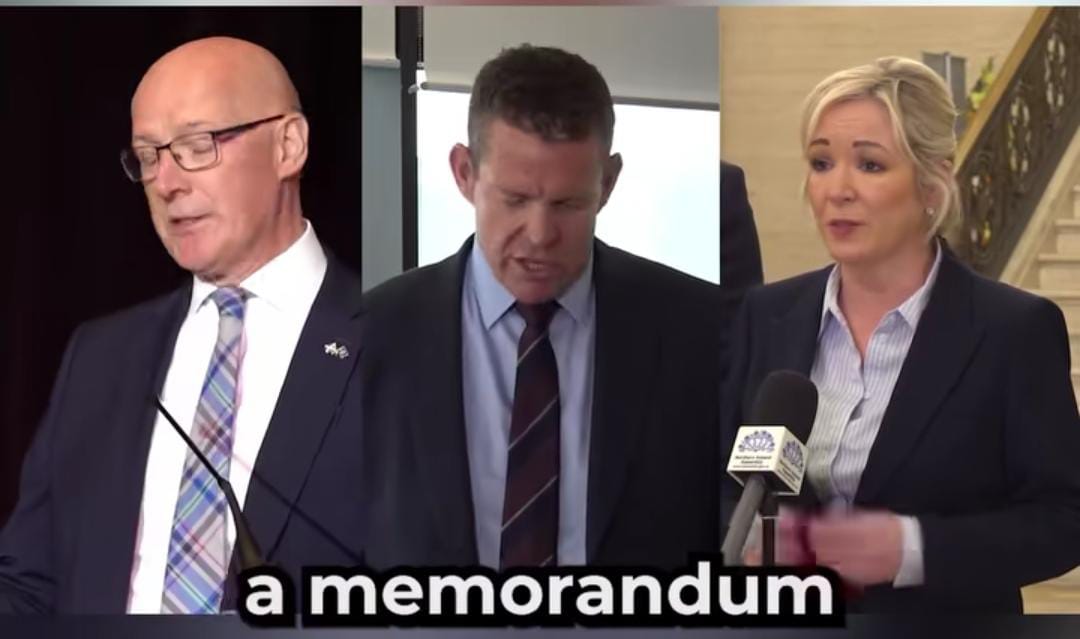

Plaid Cymru, the Scottish National Party (SNP) and Sinn Féin have signed a memorandum of understanding aimed at strengthening cooperation among the three parties and advancing their respective nations’ right to determine their constitutional futures.
The agreement brings together the political parties representing nationalist movements in Wales, Scotland and Ireland, with the parties pledging closer collaboration on economic development, energy, international relations and other areas of mutual interest.
In the memorandum, the parties reaffirmed their commitment to working together in the shared interests of their respective peoples, while recognising the distinct histories, identities and political traditions of Scotland, Wales and Ireland.
They argued that each nation should have the democratic right to determine its own constitutional future in accordance with the wishes of its people.
The parties said their nations and communities deserved “greater ambition, greater economic opportunity and a stronger voice” in deciding their future.
They also pointed to what they described as a changing political landscape across the islands, saying First Ministers in Scotland, Wales and Northern Ireland were now committed to independence from the United Kingdom.
“For the first time ever, people across these islands have First Ministers in Scotland, in Wales and in the North of Ireland who are all committed to independence from the United Kingdom,” the memorandum stated.
The parties described the development as evidence that constitutional change was gathering momentum, declaring that “Westminster’s time is coming to an end.”
They said they envisaged an alternative political arrangement in which the nations would work together as equals, sharing expertise and ideas while building relationships founded on mutual respect and common interests.
“Momentum is behind our movements; we believe that constitutional change is coming,” they said.
Under the agreement, Plaid Cymru, the SNP and Sinn Féin committed to identifying practical areas of cooperation capable of producing tangible benefits for their respective populations.
Economic development was identified as one of the key areas of collaboration.
The parties said they would exchange ideas and experiences on building productive and prosperous economies capable of creating quality jobs, reducing inequality and ensuring a fairer distribution of wealth and opportunity.
They criticised what they described as “Whitehall’s broken economic model” and said they would pursue economic policies centred on social justice and reducing inequality.
The parties also pledged to cooperate on developing renewable energy resources, arguing that Scotland, Wales and Ireland possess significant energy potential that should primarily benefit families and businesses within their nations.
“The energy wealth of our nations should serve the needs of our people,” they said.
Europe and Brexit
European relations also featured prominently in the memorandum.
The three parties argued that Brexit had harmed their economies and reduced opportunities available to their people.
Describing Europe as their “common home,” they said they wanted their nations to have a future within the European Union.
“We believe the future of our nations belongs in the European Union,” they said, adding that they intended to work together to rebuild and strengthen European relationships in areas including trade, investment, culture and wider cooperation.
However, the parties acknowledged that they hold different constitutional positions and stressed that each nation would determine its own political future independently.
“We recognise that our parties have different constitutional positions and that each nation will determine its own future in its own way and in its own time,” they said.