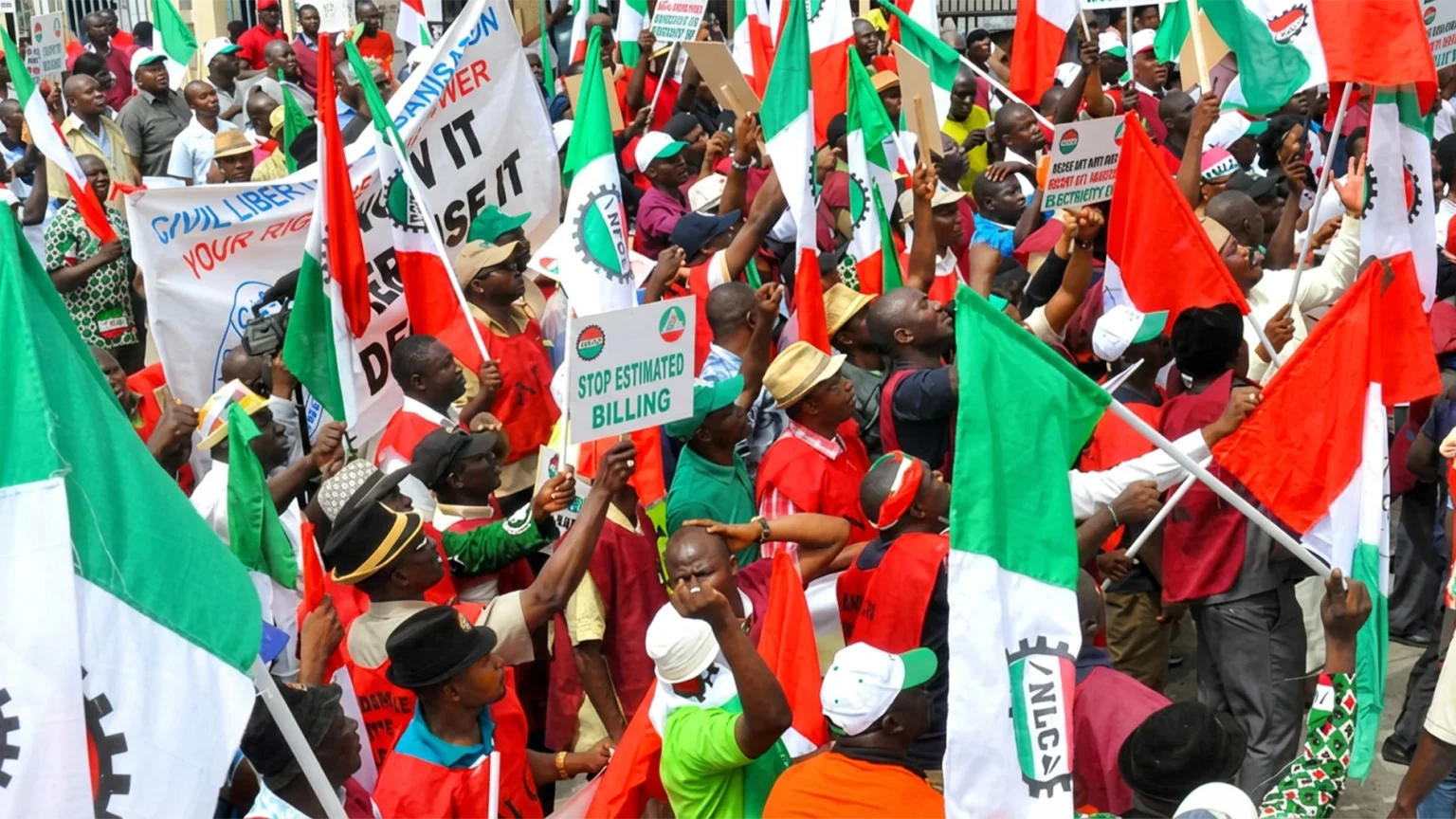

The Trade Union Congress of Nigeria (TUC) has rejected the Federal Government’s ₦70,000 transport allowance for workers, insisting that an immediate salary increase is necessary to cushion the effects of rising living costs.
The congress also called for the full implementation of the agreement reached between the government and the Joint Health Sector Unions (JOHESU), warning that temporary financial relief measures were insufficient to address workers’ economic challenges.
The position was contained in a statement signed by the TUC President-General, Comrade Festus Osifo, and its Secretary-General, Comrade N. A. Toro.
The labour body said its demand for an immediate salary review was conveyed to the government in a letter dated October 8, 2026, following a meeting of its National Administrative Council in Abuja.
According to the congress, subsequent engagements with government officials, including the Secretary to the Government of the Federation, failed to resolve its concerns over the proposed transport allowance.
The TUC maintained that the government did not need to wait for negotiations on a new national minimum wage before increasing workers’ salaries, arguing that no law imposed a maximum limit on wages.
It proposed raising the salary of the lowest-paid federal worker from the current ₦70,000 to ₦300,000, with corresponding adjustments across other salary grades.
The congress cited states that had raised their minimum wages above ₦100,000, arguing that the Federal Government could adopt a similar approach to improve workers’ earnings while broader minimum wage negotiations continued.
“Negotiations of a new national minimum wage must not become an excuse for postponing urgent pay increment,” the statement said.
The TUC further criticised the alleged failure to fully implement the ₦40,000 wage award agreed upon by the government and organised labour on October 2, 2023.
It claimed that some workers had gone for one or two months without receiving payments, while others had yet to benefit from the award.
The congress also alleged that payments were irregular and that more than 80 per cent of states, alongside the informal sector, had not implemented any form of wage award.
Beyond salary increases, the labour organisation urged governments at all levels to introduce practical measures to reduce the cost of essential goods and services, ensure timely payment of salaries and pensions, protect jobs and tackle exploitative labour practices.
It also called for the revitalisation of the productive sector to generate decent employment opportunities and improve workers’ welfare.
On the dispute involving JOHESU, the TUC accused the Federal Government of failing to honour its agreement with the health sector unions seven months after they suspended their industrial action.
The congress said the agreement followed a conciliation meeting convened by the Minister of Labour and Employment, Dr Muhammad Maigari Dingyadi, with the participation of other senior government officials.
According to the TUC, the agreement provided for the prompt resolution of outstanding issues relating to adjustments to the Consolidated Health Salary Structure (CONHESS).
However, it said the adjustment remained outstanding despite JOHESU’s decision to suspend its strike in good faith.
The congress described the delay as a breach of trust that undermined collective bargaining and demanded immediate implementation of the agreement, a clear timetable, adequate budgetary provisions and consultations with the affected unions.
“While the workers have kept their side of the bargain, the government hasn’t kept its side of the agreement,” the statement added.
The TUC warned that health workers should not be expected to continue providing essential services while the government failed to fulfil its commitments.
It pledged to stand with the affected unions and pursue all lawful and legitimate measures to ensure compliance.
The congress, however, said it was awaiting the outcome of a scheduled meeting with the government before determining its next course of action.
It reiterated that workers’ welfare must be prioritised and that agreements reached between the government and organised labour must be respected.