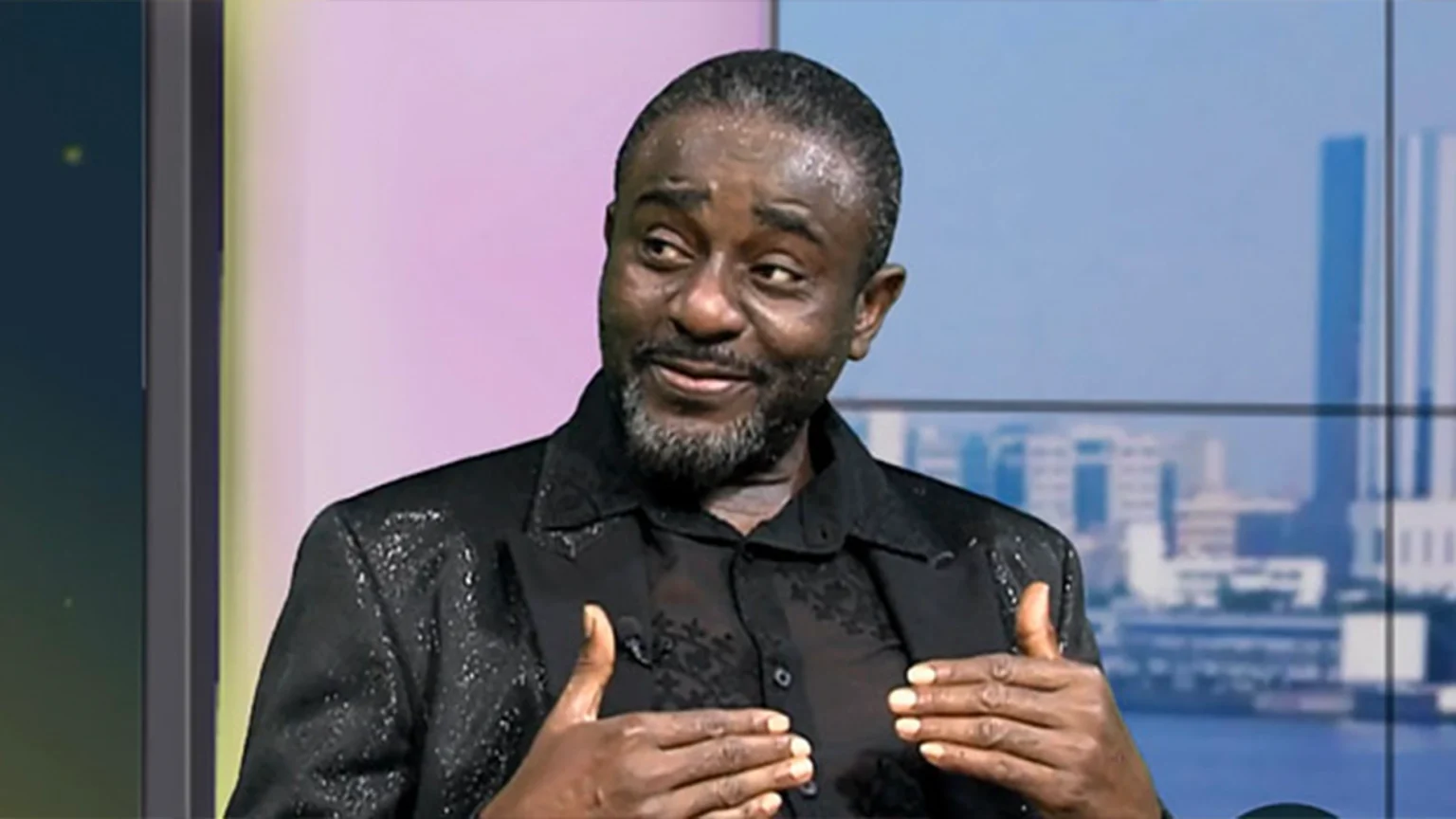

The Federal High Court in Abuja has dismissed a ₦10 billion fundamental rights suit filed by Nollywood actor Emeka Ike against Lere Olayinka, Senior Special Assistant to the Minister of the Federal Capital Territory, Nyesom Wike, and the Independent National Electoral Commission (INEC) over the alleged publication of his voter registration details on social media.
Justice Salim Ibrahim, in his judgment on Wednesday, upheld preliminary objections filed by the respondents, ruling that the suit was incompetent and improperly constituted.
The judge also dismissed the substantive suit for lack of proof.
Ike had instituted the action following an alleged social media post by Olayinka in May, which reportedly contained details of the actor’s voter registration transfer from Imo State to Abuja.
The actor alleged that the publication of his personal information on X, formerly Twitter, without his consent violated his fundamental right to privacy and the protection of personal data.
Ike, who contested for the House of Representatives seat representing AMAC/Bwari Federal Constituency in Abuja under the Nigerian Democratic Congress (NDC) ahead of the 2027 general elections, had lost the party’s primary election.
In the suit marked FHC/ABJ/CS/1272/2026, the actor sought a declaration that Olayinka’s publication of his voter registration details constituted a violation of his rights under Section 37 of the 1999 Constitution, Article 12 of the Universal Declaration of Human Rights, and Sections 24 and 39 of the Nigeria Data Protection Act, 2023.
He also asked the court to declare that INEC breached its statutory duty to protect the personal information of registered voters.
Among other reliefs, Ike sought ₦10 billion in general and aggravated damages against the respondents, jointly and severally.
He further requested an order compelling Olayinka to remove the alleged offending post from his X account and issue a written apology.
The actor also argued that INEC’s June 2 press statement responding to the circulation of his voter information amounted to an admission of liability.
However, both respondents urged the court to dismiss the case.
In its counter-affidavit, INEC maintained that the information in question was neither classified nor confidential, arguing that the publication and display of voter information were authorised under the Electoral Act, 2026.
The commission said its statutory responsibilities included compiling, maintaining, displaying and publishing the register of voters in accordance with the Constitution, the Electoral Act and applicable data protection laws.
INEC further denied breaching its duty to safeguard voters’ information, maintaining that it had not suffered an external security breach or unauthorised access to its information technology infrastructure.
Olayinka, on his part, argued that the information he shared consisted only of Ike’s name and passport photograph, which he claimed were already in the public domain.
He denied obtaining the information unlawfully and maintained that he did not owe the actor a duty of confidentiality regarding details that were publicly accessible.
The presidential aide also argued that Ike had made his name and photograph public by presenting himself for election, insisting that the publication did not warrant the damages being sought.
Olayinka further contended that the information was shared to draw attention to the actor’s voter registration transfer and the relevant provisions of the Electoral Act.
He denied responsibility for any alleged injury suffered by Ike, arguing that he was not a data controller under the Nigeria Data Protection Act, 2023, and therefore had no obligation to safeguard the actor’s voter registration records.
The respondents consequently urged the court to dismiss the suit in the interest of justice.
In its ruling, the court upheld their preliminary objections and dismissed the substantive case for lack of proof, bringing the ₦10 billion legal action to an end at the trial court.