
The Independent National Electoral Commission (INEC) has cautioned political actors against the use of the controversial slogan, “rig and die”, ahead of the 2027 general elections, warning that such rhetoric could trigger electoral violence and endanger innocent Nigerians.
The Commission also warned that electoral officials, including ad hoc staff, who compromise the integrity of elections would be prosecuted in accordance with the law.
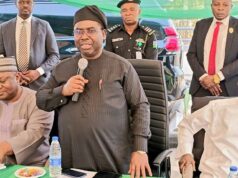
INEC National Commissioner and Chairman of its Information and Voter Education Committee, Mohammed Kudu Haruna, issued the warnings during a media engagement forum for journalists and media executives from the South-East, South-South and South-West geopolitical zones held in Enugu.
Haruna expressed concern over the growing use of inflammatory political statements and threats, noting that such utterances could put the lives of presiding officers, electoral ad hoc personnel, party agents and observers at risk.
He urged political parties and their supporters to embrace peaceful participation, stressing that grievances arising from election outcomes should be addressed through established legal channels, including INEC, security agencies and the courts, rather than resorting to violence.
The National Commissioner also called for stronger collaboration between INEC and the media to promote credible, peaceful and transparent elections in 2027.
He described the media as an indispensable partner in the electoral process, noting that public confidence in elections largely depended on accurate, balanced and professional reporting.
Haruna warned journalists against publishing unverified results, manipulated videos, misleading projections and sensational political narratives capable of misleading the public and undermining confidence in the electoral process.
He specifically cautioned against premature result announcements, insisting that only INEC, through its duly appointed returning officers, had the authority to declare election results.
“Results are declared only by the Commission through its duly appointed returning officers. Projections and unofficial figures must be clearly labelled as such,” he said.
He further advised media organisations to verify allegations against the Commission through appropriate channels before publication and to exercise caution when reporting electoral incidents.
Haruna also advocated inclusive election coverage, urging journalists to give adequate attention to women, youths and persons with disabilities, particularly the challenges confronting their participation in the electoral process.
He encouraged media organisations to intensify voter education on Permanent Voter Cards (PVCs), accreditation procedures, electronic transmission of results and peaceful participation.
Journalists urged to uphold professional ethics
In a separate presentation on Ethical and Professional Standards in Election Reporting, resource person, Mr Osaretin Imahheyierobo, urged journalists to familiarise themselves with the Electoral Act 2026, INEC’s election coverage guidelines and the Nigerian Broadcasting Code.
He expressed concern that some journalists covering elections were not sufficiently conversant with the legal and regulatory frameworks guiding electoral reporting.
Imahheyierobo urged media organisations to establish dedicated election desks, develop editorial guidelines and strengthen fact-checking mechanisms ahead of the 2027 polls.
He also stressed the need for journalists to understand INEC’s technological innovations, particularly the Bimodal Voter Accreditation System (BVAS) and the INEC Result Viewing Portal (IReV), to ensure accurate reporting of accreditation, voting and result-management processes.
He warned media practitioners against compromising professional ethics for financial inducements, commonly referred to as brown envelopes, and maintained that political candidates should be subjected to objective scrutiny rather than having their claims and manifestoes amplified without proper examination.
The resource person also called for equitable media coverage for all political parties and candidates, noting that voters relied on credible information to make informed electoral decisions.
Earlier, the Enugu State Resident Electoral Commissioner, Dr Chukwuemeka Chukwu, disclosed that INEC had received approximately 35,000 Permanent Voter Cards for distribution across the state’s 260 wards.
He appealed to journalists to support public enlightenment campaigns to ensure eligible voters collected their PVCs ahead of the 2027 general elections.
Chukwu described the media as a strategic partner in voter education, public opinion formation and institutional accountability, warning that misinformation could erode public confidence in the electoral process.
While acknowledging the media’s independence and watchdog responsibilities, the REC urged journalists to uphold accuracy, objectivity, fairness and professionalism in their coverage of electoral activities.
He assured stakeholders that the Commission remained committed to conducting credible, transparent, inclusive and peaceful elections in 2027, adding that it was open to constructive criticism and recommendations from media practitioners.
NUJ raises concerns over election logistics
In his remarks, the Chairman of the Nigeria Union of Journalists (NUJ), Enugu State Council, Comrade Obinna Ogbuka, commended INEC for organising the engagement but regretted that the initiative had not commenced early enough to accommodate more journalists before the election cycle gathered momentum.
Ogbuka also raised concerns over the apparent absence of adequate budgetary provisions for journalists’ logistics during election assignments, stressing that media practitioners required sufficient support to perform their duties effectively.
He further called on INEC to take deliberate steps to rebuild public confidence in the Commission ahead of the 2027 elections.
Participants at the engagement commended INEC’s preparations but urged it to address weaknesses observed in previous elections, particularly the technical challenges that affected the electronic transmission of results during the 2023 presidential election.
They also called on the Commission to recognise journalists as critical stakeholders in the electoral process and involve them more meaningfully in its preparations for the 2027 general elections.