
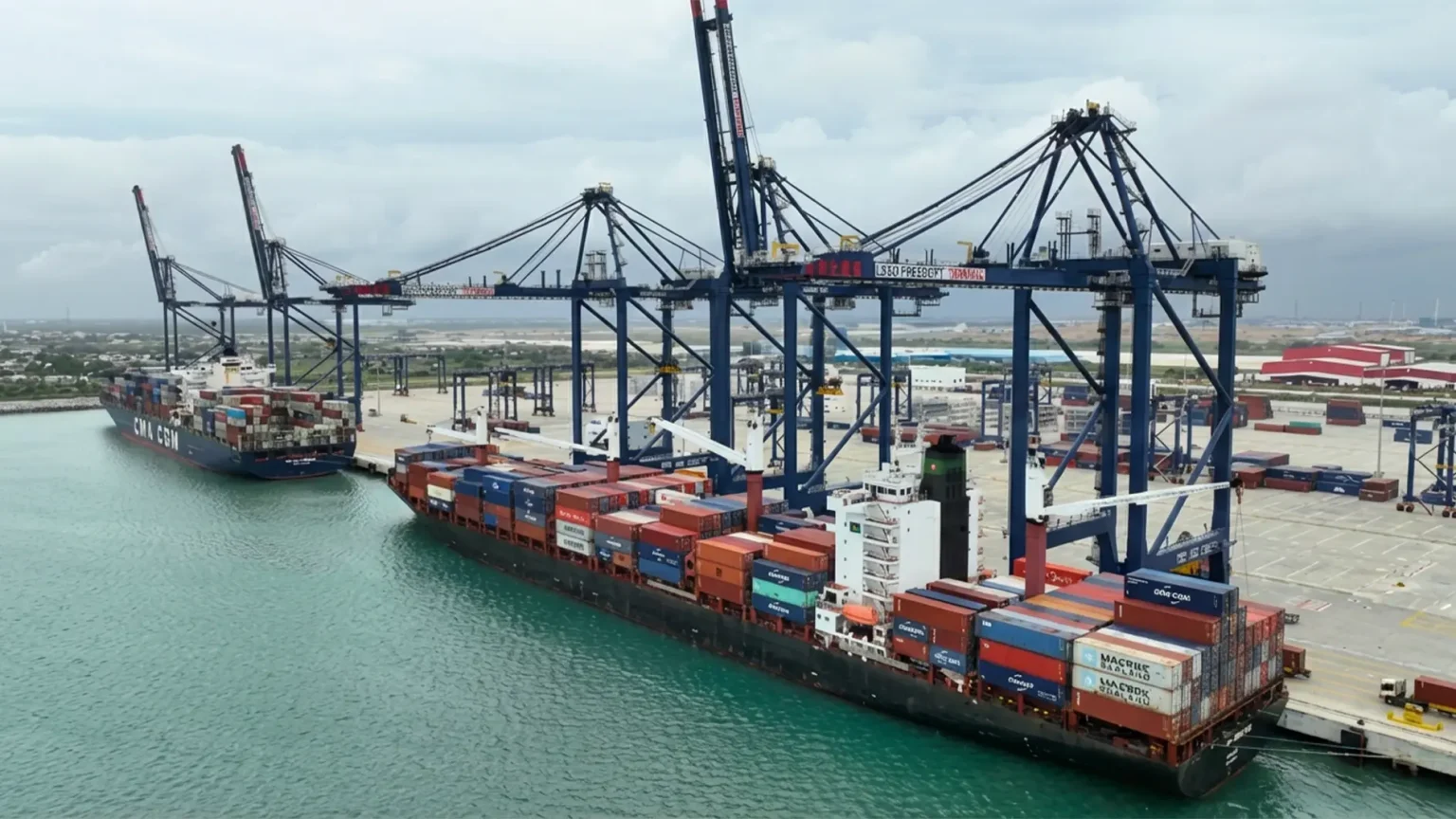

More than a decade after several port concession agreements expired, terminal operators across Nigeria’s major seaports are still managing the facilities, raising concerns over regulatory lapses, lost government revenue and the uncertain future of the country’s maritime industry.
The prolonged delay by the Federal Government in reviewing and renewing the agreements has created uncertainty in the sector, with industry stakeholders warning that the situation could undermine investor confidence, discourage fresh investments and worsen the infrastructural challenges confronting Nigerian ports.
Investigations revealed that several terminal operators whose concession licences expired between 2016 and 2021 have continued operations, paying service charges to the Nigerian Ports Authority (NPA) pending the conclusion of the government’s review of their agreements.
The arrangement, according to industry sources, is intended to prevent disruptions to maritime activities while the authorities determine whether to renew, restructure or terminate the existing contracts.
However, stakeholders have questioned why the Federal Government has taken between five and 10 years to resolve the outstanding issues surrounding the concessions, despite the provisions of the Infrastructure Concession Regulatory Commission (ICRC) Act requiring fresh competitive bidding after the expiration of concession agreements.
The port concession programme was introduced in 2006 under the landlord port model, with 20 private operators awarded agreements to manage terminals across Apapa, Tin Can Island, Port Harcourt, Onne, Warri and Calabar ports for periods ranging from 10 to 25 years.
Among the operators whose agreements have expired are ENL Consortium Limited, Josepdam Port Services Limited, Ports and Cargo Handling Services Limited, Tincan Island Container Terminal, Ports and Terminal Operators Limited, Ports and Terminal Multiservices Limited and Five Star Logistics Limited.
Some of the operators initially secured 10-year agreements that expired in 2016, with subsequent five-year extensions that were also due for renewal in 2021.
Other concessionaires operating under 15-year agreements saw their contracts expire in 2021.
Meanwhile, agreements covering Apapa Bulk Terminals Limited, APM Terminals Nigeria, West Africa Container Terminal, Brawal Oil Services Limited’s Federal Ocean Terminal and Julius Berger Nigeria Services are expected to run until 2031.
BUA Ports and Terminals Limited and Intels Nigeria Limited’s Calabar operation have 20-year agreements due to expire in 2026, while Ecomarine Nigeria Limited, Addax Logistics Nigeria Limited and Green Leigh Nigeria Limited have contracts running until 2027.
The delay in resolving the expired agreements has been attributed to legal and structural deficiencies in the original contracts, disagreements over the responsibilities of the NPA and terminal operators, and outstanding contractual obligations.
The government is also yet to conclude a comprehensive terminal-by-terminal performance audit or publicly release the applicable key performance indicators and aggregate performance assessments.
The outstanding issues reportedly include concession fees, cargo throughput obligations, capital expenditure, equipment maintenance, infrastructure rehabilitation, security, electricity supply and service delivery standards.
An industry source disclosed that some terminal operators had failed to meet their infrastructure obligations under the agreements, citing disagreements over which party should undertake specific rehabilitation projects.
The source specifically referred to the reconstruction of Berths 5, 6, 7 and 8 at Rivers Port, where four existing berths are being merged into two longer facilities to accommodate bigger vessels and increase cargo-handling capacity.
The source alleged that BUA had been under pressure from the NPA to rehabilitate the facilities for years but failed to do so until the berths collapsed.
Responding to the concerns, NPA Managing Director, Dr Abubakar Dantsoho, said the authority was reviewing the existing agreements to address outstanding obligations on the part of both the government and terminal operators.
He explained that the review was necessary to identify areas requiring adjustment before concluding long-term concession renewals.
Dantsoho maintained that operators who satisfy the revised operational, financial and infrastructure investment requirements would have their renewals finalised.
He also assured that the authority was committed to establishing a transparent legal framework for the renewal process, stressing that it was better to get the agreements right than rush into arrangements that could face legal challenges.
The NPA chief further warned that operators who fail to meet agreed performance benchmarks or whose contracts lapse without renewal could lose their positions, adding that the authority remained open to competitive bidding from reputable international port management companies.
The uncertainty surrounding the concession agreements comes amid growing concerns over the deteriorating state of Nigerian ports, which have continued to struggle with inadequate infrastructure, obsolete equipment, congestion and lengthy cargo clearance processes.
Poor port facilities have also discouraged some international shipping companies from using Nigerian ports, with cargo dwell times reportedly exceeding 15 days in some instances.
Consequently, some Nigerian-bound cargoes have been diverted to neighbouring countries, including Ghana, Togo and the Republic of Benin, where modernised facilities offer more efficient cargo handling and vessel turnaround.
Industry data from the Sea Empowerment and
Research Centre (SEREC) estimated that port inefficiencies, infrastructure deficiencies, policy gaps and delayed reforms cost Nigeria between N3 trillion and N5 trillion annually.
The Federal Government has meanwhile intensified efforts to attract foreign investments into the maritime sector, including discussions with international port management companies.
One of the emerging developments is the Olokola Deep Seaport project, for which the Ogun State Government signed a fresh $7 billion agreement with DP World in Paris, France, in the presence of President Bola Tinubu.
The development has raised questions over the project’s existing Memorandum of Understanding with Dangote Industries Limited, which had already commenced preliminary activities towards its development in 2025.
The Dangote Group holds an 80 per cent stake in the Olokola Free Trade Zone Company, while the Ogun and Ondo State Governments jointly own the remaining 20 per cent.
Another major project facing prolonged delays is the $2.59 billion Badagry Deep Seaport, being promoted by Badagry Port Development Limited under a 45-year Build-Own-Operate-Transfer concession.
Despite securing an ICRC Full Business Case Compliance Certificate in April 2022 and Federal Executive Council approval in August of the same year, the project has struggled to advance through its pre-construction and financing stages.
However, the Federal Government secured an agreement with APM Terminals in Copenhagen, Denmark, on September 7, 2026, for the company to sign an MoU with Badagry Port Development Limited to facilitate the project’s development.
These engagements have reportedly heightened concerns among existing concessionaires, particularly indigenous operators, who fear that their contracts may not be renewed despite the investments already committed to the sector.
Some local operators have also expressed fears that the concession renewal process could be influenced by political considerations, arguing that foreign companies generally enjoy better access to international financing and government-backed credit facilities.
Industry operators, however, insist that their contributions to the development of Nigerian ports should be recognised in any decision concerning the future of the concession programme.
Managing Director of Ports and Terminal Multiservices Limited (PTML), Ascanio Ruso, disclosed during the second-quarter 2026 Citizens and Stakeholders’ Engagement organised by the Federal Ministry of Marine and Blue Economy that terminal operators had invested more than $1 billion in Nigeria’s port industry over the past two decades.
He said PTML alone had committed over $250 million to infrastructure and operational development, with plans to invest an additional $50 million in its terminal.
Similarly, West Africa Container Terminal and APM Terminals have invested $115 million in capacity expansion and modernisation, while the company has pledged a further $600 million investment in Nigeria’s maritime and logistics infrastructure.
Co-founder and Head of Research at SEREC, Eugene Nweke, acknowledged that the 2006 concession programme brought private capital, modern equipment, management expertise and improved operational discipline into the country’s port system.
He noted that official records had recognised improvements in vessel turnaround time, cargo dwell time and operational efficiency following the introduction of private terminal operators.
However, Nweke cautioned that the success of the concession programme did not automatically entitle existing operators to perpetual contract renewals.
He argued that the government must assess operators based on measurable contractual obligations, including concession payments, cargo throughput, capital investments, equipment replacement, maintenance, safety standards and service quality.
According to him, the decision to renew existing agreements or conduct fresh competitive bidding should be based on a comprehensive assessment of the financial and operational benefits of each option.
He warned that poorly managed transitions could result in additional transaction costs, rehabilitation expenses and temporary disruptions to port operations.
Nweke also advised the government against overlooking the investments and expertise already contributed by existing operators, noting that a balanced assessment was necessary to protect both public interests and private capital.
He cited previous ICRC estimates indicating that terminal operators invested approximately N200 billion in the ports over 10 years after the 2006 concession programme, compared with the initial investment projection of about N50 billion.
Also speaking, Director of International Trade at the Maritime Researchers and Authors Association of Nigeria (MARASSON), Sunday Ademuyiwa, called for a transparent and predictable concession renewal framework.
He said the government should recognise existing investments while ensuring that renewed agreements contain stronger obligations on infrastructure rehabilitation, technology, service delivery and operational efficiency.
Ademuyiwa further recommended regular performance assessments rather than waiting until concession agreements expire before identifying structural deficiencies.
He maintained that where fresh competitive bidding becomes necessary, the government must ensure a smooth transition that protects port operations, attracts credible investors and safeguards Nigeria’s long-term maritime interests.