Home Blog Page 1031

El-Rufai Petitions Chief Judge, Alleges Bias In N423 Billion Probe Case
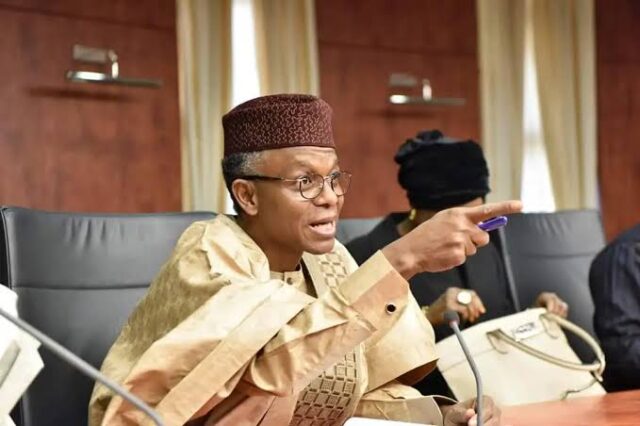
Former Kaduna State Governor, Nasiru Ahmad El-Rufa’i, has filed a petition with the Chief Judge of the Abuja Federal High Court, alleging bias against Justice Rilwan M. Aikawa, who is presiding over his case against the Kaduna State House of Assembly.

El-Rufa’i’s counsel, Abdulhakeem Mustapha (SAN), submitted the petition at the Federal High Court in Abuja, citing bias, injustice, and denial of a fair hearing.

El-Rufa’i’s petition requests the transfer of his case to another judge to ensure justice.

The document outlines several grievances with Justice Aikawa’s handling of the case, which El-Rufa’i filed to enforce his fundamental human rights to a fair hearing.

The case concerns accusations by the Kaduna State House of Assembly that El-Rufa’i and other officials misappropriated ₦423 billion.

Advertorial

The petition details events that transpired during the hearings.

On July 8, 2024, El-Rufa’i’s representative, S.S. Umoru, and the respondents’ counsels appeared in court.

The case was adjourned to July 17, 2024, by mutual agreement. However, on July 17, the court did not sit, and El-Rufa’i’s principal counsel, A.U. Mustapha, SAN, had to return to Lagos.

Advertorial

Unexpectedly, the court rescheduled the hearing for July 18, 2024. El-Rufa’i’s legal team was informed of this new date late on July 17, prompting them to request an adjournment due to the short notice.

Despite this, the court proceeded with the hearing on July 18 without El-Rufa’i’s representation, during which the respondents adopted their processes and further argued their case.

Advertorial

El-Rufa’i’s petition argues that the lack of notice for the July 18 hearing denied him a fair chance to respond to the respondents’ counter affidavit and written address.

The petition highlights that the respondents filed their processes late and applied for an extension of time, which was granted on July 18.

According to Order 11 Rule 7 of the Fundamental Human Rights (Enforcement Procedure) Rules 2009, El-Rufa’i should have been allowed five days to respond.

El-Rufa’i initially filed the case in June 2024, challenging the Assembly’s report on the grounds of unfair hearing.

He requested the court to declare the report null and void.

El-Rufa’i’s petition underscores his belief that the court’s actions display extreme bias and injustice, thereby undermining his right to a fair hearing.

Google search engine

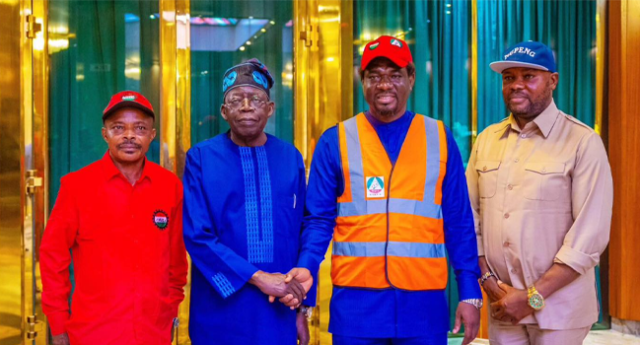
Why We Agreed To N70,000 Minimum Wage – NLC, TUC

The Nigeria Labour Congress (NLC) President, Joe Ajaero, and the Trade Union Congress (TUC) President, Festus Osifo, have explained their decision to accept ₦70,000 as the new minimum wage for Nigerian workers.

They cited a significant change in the frequency of wage reviews from every five years to every three years as the primary reason for their agreement.

Speaking after a meeting with President Bola Tinubu at the State House in Abuja, Ajaero emphasized the importance of the new review timeline.

“The ₦70,000 figure reflects our current agreement, but the key aspect is that we no longer have to wait five years for a wage review. We can now negotiate at least twice within that period, with the next review scheduled in three years,” he said.

Advertorial

Ajaero also mentioned other issues brought up during the meeting, such as concerns from the Senior Staff Association of Nigerian Universities (SSANU) and the Non-Academic Staff Union (NASU).

President Tinubu directed relevant agencies to address these issues, particularly the payment of university workers.

Osifo noted, “President Tinubu’s announcement of the ₦70,000 minimum wage will soon be finalized and sent to the National Assembly.

Advertorial

“This decision aligns with our push for more frequent wage reviews, as economic conditions can change rapidly. The agreement to review wages every three years is a significant achievement.”

This development follows extensive discussions between labour leaders and the President, succeeding months of stalled negotiations involving a tripartite committee formed in January.

The committee, which included representatives from state and federal governments and the Organized Private Sector, had proposed ₦62,000, while labour demanded ₦250,000, arguing that the current ₦30,000 minimum wage was unsustainable amid rising inflation and living costs following the removal of petrol subsidy.

Information Minister Mohammed Idris confirmed that the ₦70,000 minimum wage agreement would be communicated to the National Assembly in the coming days.

Google search engine

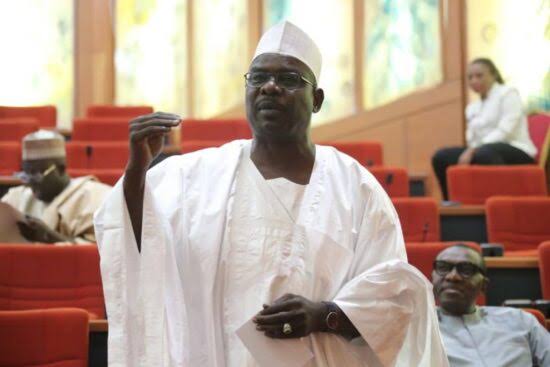
CUPP Condemns Ndume’s Sack, Warns Of Threat To Democracy

The Conference of United Political Parties (CUPP) has condemned the recent punitive actions taken against former Senate Majority Whip, Senator Ali Ndume, by the ruling All Progressives Congress (APC) and Senate leadership, labeling it a suppression of dissent and a threat to democracy.

Advertorial

Chief Peter Ameh, National Secretary of CUPP, voiced these concerns in Abuja on Thursday.

Ameh emphasized that a healthy democracy must encourage and respect dissenting voices as they are crucial for informed decision-making.

“In a democracy, the separation of powers is essential to ensure checks and balances among the legislative, executive, and judicial branches. This prevents any single branch from abusing its power and promotes the protection of individual rights,” Ameh stated.

Advertorial

He warned that the current trend in Nigeria’s 10th National Assembly, where dissent is being stifled, could lead to authoritarian rule.

Ameh further highlighted that the separation of powers supports the rule of law, ensuring equal treatment under the law, and strengthens public trust.

“Each branch must be able to make decisions independently, free from undue influence, to maintain constitutional integrity and preserve democratic foundations,” he added.

Advertorial

He criticized the weak legislative leadership of the 10th National Assembly, arguing that it poses significant risks to Nigeria’s development and democratic health.

According to Ameh, it is troubling that a Senator could be reprimanded by his party and the Senate leadership for merely expressing widely held public concerns.

Senator Ndume, Ameh noted, was simply voicing the frustrations of many Nigerians affected by poor policy choices of the current administration.

“Instead of facing censure, Ndume should be commended for attempting to bring these issues to the attention of party leaders.”

“By stifling such critical voices, the government undermines the principles of democracy and risks eroding public trust and confidence,” Ameh concluded.

Google search engine

Nigerian Agency Highlights Inferior Quality Of Dangote Refinery Products, Advocates For Import Continuation

Farouk Ahmed, the Chief Executive of the Nigerian Midstream and Downstream Petroleum Regulatory Authority (NMDPRA), has warned against over-reliance on products from the Dangote Refinery.

Advertorial

He raised concerns about the consistency and standardization of the refinery’s output, noting that its products currently fall short in quality compared to imported alternatives.

Addressing concerns about the national supply of petroleum products, Ahmed refuted claims that the NMDPRA is attempting to undermine the Dangote Refinery.

Advertorial

He clarified that the refinery is still in the pre-commissioning stage and has not yet been licensed, with completion standing at approximately 45%.

“We cannot rely heavily on one refinery to meet the nation’s demands, especially given Dangote’s request to suspend imports of AGO and DPK and direct all marketers to his refinery,” Ahmed stated.

“Such a monopoly is detrimental to energy security and market competition.”

Advertorial

Ahmed also highlighted that Dangote’s AGO does not meet West Africa’s sulfur content requirement of 50 parts per million (PPM), instead ranging between 650 and 1,200 PPM. “In terms of quality, their products are inferior to imported ones,” he concluded.

Google search engine

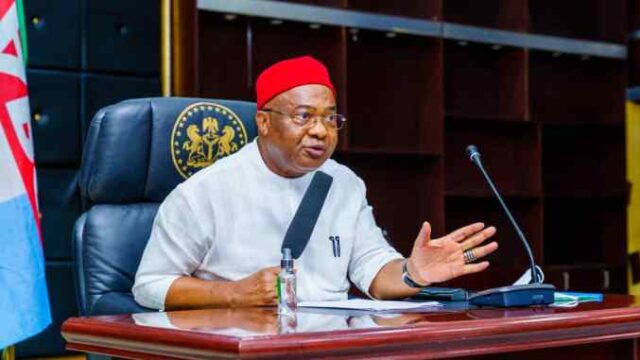
Uzodimma Urges Promotion Of Merit, Patriotism To Combat ‘Japa Syndrome’

Imo State Governor, Hope Uzodimma, has criticized the lack of a merit-driven system in Nigeria, emphasizing the need for the country to celebrate and promote merit.

Speaking on Thursday at a Yoruba Tennis Club event in Lagos State, where he delivered a lecture on patriotism and citizenship, Uzodimma highlighted the importance of creating an environment where merit is recognized and rewarded.

Advertorial

Uzodimma attributed the decline in patriotism among Nigerians to systemic failures and the numerous disappointments citizens have experienced.

He called on stakeholders to address these issues to restore the spirit of patriotism.

“The wave of ‘japa syndrome,’ where Nigerians seek better opportunities abroad, is driven by the desire for a functional system and a better life,” Uzodimma noted.

Advertorial

He stressed that purposeful leadership and accountability are essential to building trust and fostering patriotism.

He further emphasized the importance of national unity and inclusivity in promoting patriotism, urging leaders to strengthen national symbols and traditions.

“Reviving patriotism is a collective task. We must work together to rekindle the flames of patriotism in our country by promoting unity,” Uzodimma concluded.

Google search engine

Universities Set Admission Benchmarks

On Thursday, education sector stakeholders set the minimum benchmark score for university admissions at 140.

This announcement was made during the ongoing policy meeting in Abuja by the Registrar of the Joint Admissions and Matriculation Board (JAMB), Prof. Ishaq Oloyede.

Advertorial

Prof. Oloyede clarified that the benchmark score is not a universal cut-off mark for all universities.

Instead, it serves as the lowest acceptable score for admission consideration.

Various institutions had submitted their minimum benchmark scores to JAMB.

Advertorial

Notably, universities such as Pan-Atlantic University in Lagos, Covenant University in Ogun state, Obafemi Awolowo University in Osun state, and the University of Lagos were among the few that set their benchmark scores at 200 and above.

“JAMB does not set cut-off marks. What we establish is a minimum benchmark score that universities cannot go below. Each university has its own specific benchmark score,” Oloyede explained.

Google search engine

JAMB Exempts Persons With Disabilities, Overseas Applicants From Post-UTME

The Joint Admissions and Matriculation Board (JAMB) has announced specific categories of candidates who will be excluded from the Post-UTME screening process.

This decision was disclosed by JAMB Registrar, Prof. Ishaq Oloyede, during a recent announcement.

According to Prof. Oloyede, candidates who fall under certain criteria will not be required to undergo the Post-UTME screening.

These include candidates from outside Nigeria who applied through UTME/DE modes, who will instead be screened after admission.

Additionally, candidates with disabilities are exempt from the Post-UTME screening.

Advertorial

This category encompasses individuals who are blind, deaf, mute, autistic, amputees, lame, paralyzed, have Down syndrome, Dyslexia, Attention Deficit Hyperactivity Disorder, albinism, cerebral palsy, and those with other disfigurements.

Prof. Oloyede emphasized that all institutions must clearly state this exemption in their advertisements for the Post-UTME screening tests and strictly adhere to the policy.

Advertorial

Earlier discussions among stakeholders had also established minimum benchmark scores for university admissions at 140, while polytechnics and colleges of education set theirs at 100 respectively.

Google search engine

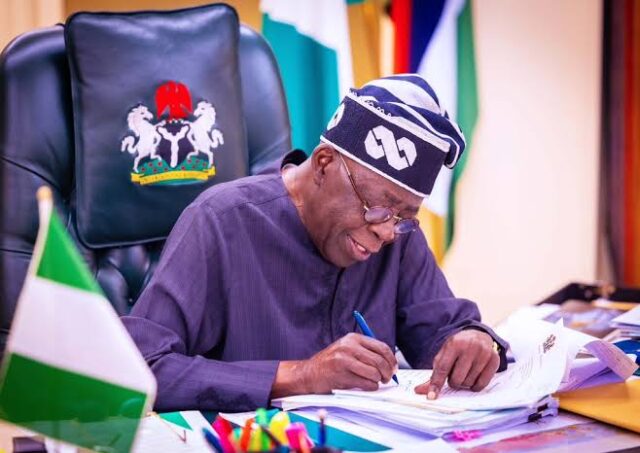
Just In: President Tinubu Approves New Minimum Wage

President Bola Ahmed Tinubu has approved a new minimum wage of N70,000 following discussions with organized labor.

This decision was announced by the Minister of Information and National Orientation, Mohammed Idris, after a crucial meeting between the government and labor representatives.

Advertorial

The meeting saw the participation of key labor leaders, including Joe Ajaero, President of the Nigerian Labour Congress (NLC), and Festus Osifo, President of the Trade Union Congress (TUC).

Arriving around 2:15 PM in a white 32-seater Coaster bus, the labor leaders proceeded directly to the President’s office on the first floor for the discussions.

Google search engine

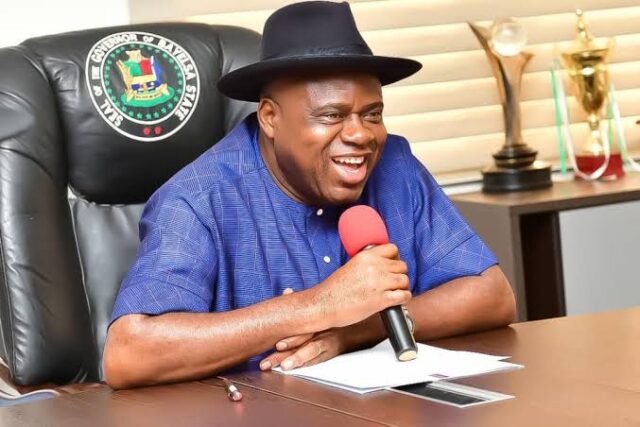
Court Of Appeal Upholds Governor Diri’s Election, Dismisses APC’s Petition For Lacking In Merit

The Court of Appeal in Abuja has upheld the re-election of Governor Douye Diri of Bayelsa State.

The three-judge panel dismissed the appeal filed by the All Progressives Congress (APC) and its candidate, Timipre Sylva, as incompetent and an abuse of court process.

Advertorial

The appeal challenged the decision of the Bayelsa State Governorship Election Petition Tribunal, which had previously dismissed the petition against Diri’s re-election.

The tribunal found that the APC and Sylva failed to provide credible evidence to support their claims of irregularities in the November 11, 2023 election.

The court affirmed the tribunal’s ruling that the additional evidence and witness statements submitted by the petitioners were inadmissible due to late filing, which violated the legal requirement that all evidence must be submitted within 21 days of the election results being declared.

Advertorial

The tribunal also rejected allegations that Deputy Governor Lawrence Ewhrudjakpo had submitted forged academic and NYSC certificates to INEC, stating that these were pre-election issues that should have been addressed earlier in a different court.

Sylva and the APC’s plea for the court to declare them the rightful winners was contradicted by their request for the election to be annulled, further weakening their case.

The tribunal emphasized that the petitioners did not meet the burden of proof to substantiate their claims of electoral irregularities.

Ultimately, the tribunal upheld the results announced by INEC, which declared Governor Diri the winner with 175,196 votes against Sylva’s 110,108 votes.

Google search engine

Just In: Bill To Establish Federal Agency, LG Electoral Commission Passes First Reading On The Floor Of The Senate

On Thursday, July 18, the Senate advanced a bill aimed at establishing a federal agency responsible for conducting local government elections in Nigeria.

The “Local Government Independent Electoral Commission (Establishment) Bill, 2024,” sponsored by Senator Sani Musa (APC – Niger East), successfully passed its first reading.

Advertorial

This legislative move follows a recent Supreme Court ruling that granted financial autonomy to local governments across the country.

Senator Musa, who also serves as the Chairman of the Senate Committee on Finance, is leading the initiative to ensure a more structured and independent electoral process for local government elections.

Advertorial

The bill’s introduction marks a Significant step toward enhancing the democratic framework and governance at the local level in Nigeria.

Google search engine

MOST COMMENTED

- Advertisement -
Google search engine