Home Blog Page 11

2027: We Have Crossed A Major Hurdle, Completed 9 Of 14 Activities – INEC Chairman
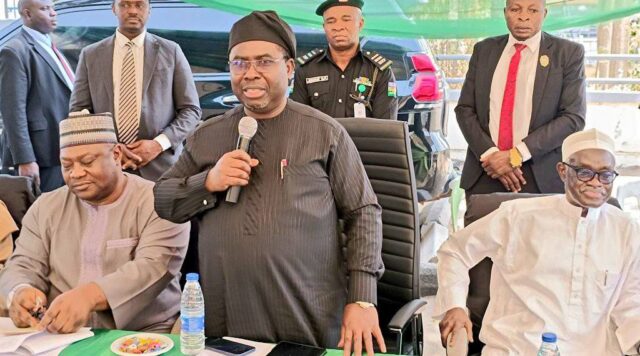
The Independent National Electoral Commission (INEC) says it has completed nine of the 14 activities outlined in its timetable for the 2027 general elections, as preparations for the nationwide polls continue.

The INEC Chairman, Prof. Joash Amupitan, disclosed this through the National Commissioner in charge of Information and Voter Education, Dr Mohammed Haruna, during a youth engagement programme in Abuja on Wednesday.

The programme, tagged “The Electorate: A Youth Dialogue with INEC,” was organised by Yiaga Africa, the Global Shapers Community Abuja and Enough is Enough Nigeria under the theme, “Let’s Talk About the 2027 Elections.”

Haruna said the commission had made considerable progress in implementing its electoral schedule, which covers key activities, including the announcement of election dates, political party primaries, publication of the voters’ register and release of candidates’ lists.

He described the voters’ register as a vital component of the electoral process, noting that it would serve as the basis for accrediting eligible voters on election day.

The national commissioner also identified the publication of candidates nominated by political parties for elective positions as one of the activities already completed.

However, he acknowledged that the initial publication of the candidates’ list had attracted complaints from some political parties over alleged omissions and discrepancies.

According to him, INEC had invited the affected parties to submit petitions and was working to address the concerns before finalising the list.

Haruna added that the commission had increased the frequency of its meetings to review preparations, evaluate progress and take decisions necessary for the successful conduct of the elections.

He also explained INEC’s administrative structure, comprising a chairman and 12 national commissioners responsible for policy decisions, alongside resident electoral commissioners operating across the 36 states and the Federal Capital Territory.

On the appointment of national commissioners, he said the process involved nomination by the President, consideration by the Council of State and confirmation by the Senate.

Meanwhile, the Programme Manager for Governance at Yiaga Africa, Yetunde Bakari, called for stronger measures to guarantee the safe and meaningful participation of young Nigerians in the 2027 elections.

Bakari said young people were central to the country’s democratic process, serving not only as voters but also as candidates, community mobilisers and stakeholders in shaping Nigeria’s political future.

Citing findings from Yiaga Africa’s voting intention survey, she disclosed that 84 per cent of respondents indicated that they were likely or very likely to vote in the 2027 elections.

She, however, raised concerns that 61 per cent of those surveyed feared electoral violence could prevent them from exercising their voting rights.

Bakari further revealed that only 40 per cent of young respondents said they were very likely to participate in the elections, describing the figure as a warning sign that electoral stakeholders needed to address.

She stressed that voter mobilisation alone would not guarantee meaningful participation unless the electoral environment was safe, accessible and credible.

The Yiaga Africa official welcomed INEC’s early preparations, including online voter registration, printable Permanent Voter Cards (PVCs), planned nationwide mock accreditation exercises and efforts to strengthen the governance of electoral technology and artificial intelligence.

She nevertheless maintained that the commission must demonstrate its readiness through transparency, effective communication and credible electoral procedures.

Bakari urged INEC to promptly inform the public whenever technical or operational challenges arise, ensure transparency in the deployment of artificial intelligence and make adequate arrangements for eligible voters in remote and hard-to-reach communities.

She also called on young Nigerians to rely on verified information, shun electoral violence and misinformation, and sustain their engagement with elected officials beyond election day.

The engagement brought electoral officials and civic organisations together to discuss preparations for the 2027 polls, with particular emphasis on youth participation, public confidence and the need to protect the integrity of the electoral process.

Google search engine

2027: APC Denies Alliance With Bala Mohammed, Urges Governor To Join Party

The Bauchi State chapter of the All Progressives Congress (APC) has denied reports of a political alliance with Governor Bala Abdulkadir Mohammed ahead of the 2027 general elections, challenging the governor to formally join the ruling party if he intends to work with President Bola Tinubu’s administration.

The party said it had no knowledge of any political agreement with the governor outside the APC platform, urging members of the public to disregard unsubstantiated claims of an alliance.

The position was contained in a statement issued on Wednesday by the Bauchi State APC Publicity Secretary, Hon. Shehu Dauda Muhd Udubo.

According to the party, rumours of a political understanding between Governor Mohammed and the APC had been circulating among the governor’s associates, making it necessary to clarify its position.

“The All Progressives Congress (APC), Bauchi State Chapter, wishes to categorically state that it is not aware of any political agreement or alliance with the Bauchi State Governor, H.E. Senator Bala Abdulkadir Mohammed, outside the platform of the APC,” the statement said.

Udubo maintained that no formal agreement of the nature being speculated about had been established, advising the public to demand credible evidence before accepting such claims.

The party also questioned the alleged alliance, citing Mohammed’s continued association with candidates of the Allied Peoples Movement (APM), including its presidential candidate.

“Furthermore, Governor Bala Mohammed has continued to associate with and campaign alongside candidates of the Allied Peoples Movement (APM), including its presidential candidate,” the statement added.

The APC said the governor’s political activities had raised questions about claims of an understanding between him and the ruling party, stressing the need for clarity on the matter.

Despite dismissing reports of an alliance, the Bauchi APC welcomed Mohammed’s reported commendation of Tinubu’s leadership, economic reforms and interventions in the health sector.

The party, however, urged the governor to abandon his association with the APM and formally defect to the APC, describing his political engagement with the opposition party as an “ill-fated sojourn.”

“The APC Bauchi State Chapter welcomes Governor Bala Mohammed’s appreciation of President Bola Ahmed Tinubu’s leadership, economic reforms, health sector interventions, and invites him to abort his ill-fated sojourn in the APM by formally joining the All Progressives Congress,” Udubo said.

The party argued that Mohammed’s entry into the APC would establish a clearer political framework for cooperation between the Bauchi State Government and the Federal Government.

It maintained that aligning with the ruling party would improve coordination between both levels of government and potentially expand the state’s access to federal development programmes and opportunities.

“If the Governor genuinely wishes to align Bauchi State with the federal government’s development agenda, joining the APC would provide a clear and consistent political platform for cooperation, coordination, and the advancement of the interests of the people of Bauchi State,” the statement said.

The party further described Bauchi as a strategically important state that should not remain outside what it called Nigeria’s mainstream political platform.

It reaffirmed its support for Tinubu’s Renewed Hope Agenda, saying closer collaboration with the Federal Government was necessary to advance development, improve residents’ welfare and ensure the state benefits from federal policies and initiatives.

The Bauchi APC also called on residents to remain calm and prioritise governance, development and unity over political speculation.

“We call on the people of Bauchi State to remain calm, discerning, and focused on the issues that matter most: good governance, development, unity, and the well-being of our people,” Udubo said.

The statement comes amid political realignments ahead of the 2027 general elections, with parties and political leaders positioning themselves for the contests.

However, the Bauchi APC maintained that no political alliance with Governor Mohammed had been established outside its party platform.

Google search engine

APM Crisis Deepens As Six South-South Chairmen Reject Makinde, Pass Vote Of No Confidence

The internal crisis rocking the Allied Peoples Movement (APM) has deepened ahead of the 2027 general elections following a boycott of a presidential campaign town hall meeting organised by the party’s candidate, Seyi Makinde, by chairmen of its six South-South states.

The party chairmen also passed a vote of no confidence in Makinde, accusing the Oyo State governor of disregarding established party structures and excluding recognised officials from the coordination of his presidential campaign.

The development followed a South-South presidential campaign town hall meeting held by Makinde in Uyo, Akwa Ibom State, on Tuesday.

The chairmen announced their decision in a statement titled, “South-South Chairmen of APM/Governorship Candidates/National Assembly Candidates Boycott South-South Presidential Town Hall Meeting, Pass a Vote of No Confidence on Our Presidential Candidate, Seyi Makinde.”

They said the decision was reached after deliberations on the state of the party and its relationship with the presidential candidate, insisting that internal democracy, accountability and respect for established leadership structures must be upheld.

While acknowledging the importance of the 2027 elections and the need for unity among party members, the officials accused Makinde of failing to consult existing party leaders in matters relating to his campaign.

“We have realised that our Presidential candidate, Seyi Makinde lacks substance, the political will and focus to lead us aright as a Presidential candidate,” the statement read.

The chairmen further accused the governor of dishonesty and political compromise, questioning his suitability to lead the party into the 2027 presidential election.

They also described him as a “political deadwood” and alleged that he joined the APM from a faction of the Peoples Democratic Party (PDP) that had lost political relevance.

Another major grievance raised by the party officials was the alleged appointment of campaign coordinators across the 36 states from outside the APM, instead of relying on the party’s existing structures.

According to them, the alleged appointments disregarded party members who had invested time and resources in building the organisation at the grassroots.

“All of whom are not card carrying members of our Party APM. It thus appears that Seyi Makinde came to our Party, only to make merchandise of us, whereas APM is not a trading company,” the statement said.

The chairmen maintained that Makinde’s emergence as the party’s presidential candidate did not place him above its constitution or established procedures.

They insisted that the party’s national, zonal, state, local government and ward structures must be respected, warning against allowing individual political ambitions to undermine the organisation.

The officials said their decision was taken in consultation with the zone’s governorship candidates, National Assembly candidates and state House of Assembly candidates.

They stressed that their grievances were directed at Makinde’s alleged handling of his presidential campaign and his failure to adequately recognise the party’s leadership structures across the South-South region.

“We have invested our time, resources and political capital in building the party structures across the South-South zone and we will not allow political hoodlums to destabilise a party we all laboured to build,” they added.

Despite their opposition to Makinde’s campaign leadership, the six chairmen reaffirmed their support for the party’s National Working Committee (NWC), led by National Chairman Alhaji Yusuf Mamman Dantalle, who also heads the Inter-Party Advisory Council (IPAC).

They passed a vote of confidence in Dantalle and the NWC, urging the national leadership to continue strengthening the party ahead of the 2027 elections.

The chairmen also expressed confidence in the party’s National Leader and Bauchi State Governor, Senator Bala Mohammed, commending what they described as his exemplary and focused leadership.

However, they said they would reconvene at an appropriate time to determine their position on the presidential election, insisting that political interests must not be allowed to undermine the South-South region’s role in the party.

The statement was signed by the six state chairmen: Dagogo Whyte of Rivers State, Peace Oruama of Bayelsa State, Uduak Edet of Akwa Ibom State, Ugiagbe Ogieriakhi of Edo State, Henry Eze of Delta State, and Ntami Nkanu Esege of Cross River State.

Google search engine

2027: Atiku, Obi, Duke, Adebayo In Talks For Single Opposition Candidate

Opposition parties seeking to unseat President Bola Tinubu in the 2027 general election have intensified discussions on the emergence of a single presidential candidate, with former Vice President Atiku Abubakar, Peter Obi, Donald Duke and Adewale Adebayo among those being considered.

The G-100 coalition disclosed in Abuja that negotiations among opposition leaders and presidential hopefuls had recorded significant progress, expressing optimism that outstanding issues would be resolved ahead of the election.

The coalition made this known during the inauguration of its legal and media committees, which are expected to provide the institutional framework for negotiations and cooperation among the participating parties.

The parties involved in the initiative include the African Democratic Congress (ADC), Nigeria Democratic Congress (NDC), Peoples Redemption Party (PRP), Social Democratic Party (SDP), Peoples Democratic Party (PDP) and Allied Peoples Movement (APM).

The presidential hopefuls being considered include Atiku Abubakar of the ADC, Peter Obi of the NDC, Donald Duke of the PRP and Adewale Adebayo of the SDP, among others.

Speaking at the event, the National Chairman of the SDP, Prof. Sadiq Umar Abubakar Gombe, who inaugurated the committees, said the coalition was moving beyond political declarations to establish concrete structures for achieving its objective.

He disclosed that party leaders had been engaging the presidential hopefuls, adding that the candidates themselves had commenced discussions on possible cooperation before the end of the year.

“Our ambition is to present a candidate that can defeat APC and form the next government. And we’re making very good progress,” Gombe said.

He described the feedback from participating parties and presidential aspirants as encouraging, expressing confidence that the coalition would overcome the challenges associated with selecting a common candidate.

Although the coalition has yet to announce a formula for choosing its flag bearer, Gombe emphasised the need for discipline, precision and unity throughout the negotiation process.

“Today, we take a deliberate step from intention to structure. The work of this coalition will be judged not only by the strength of our convictions, but by the discipline, precision and unity with which we carry it out,” he said.

The legal committee, comprising national legal advisers of the participating parties and other senior legal representatives, will examine the constitutional and legal implications of the proposed alliance.

Its responsibilities include reviewing outstanding legal disputes involving the parties, assessing relevant actions of the Independent National Electoral Commission (INEC) in light of Supreme Court judgments, and advising the coalition on lawful options for cooperation.

The committee will also scrutinise draft agreements, identify potential legal risks, recommend safeguards and develop mechanisms for resolving disputes before any coalition agreement is adopted.

Gombe warned that overlooking legal details could jeopardise the negotiations, urging members to approach their assignments with diligence, transparency and independent judgment.

“We cannot afford surprises. A single overlooked clause can undo months of honest negotiation,” he said.

The media and publicity committee, on its part, will coordinate public communications, joint media engagements and official announcements by the participating parties.

It is also expected to establish procedures for approving joint statements, maintain consistency in the coalition’s public positions and consult the legal committee on sensitive constitutional and legal issues.

Gombe urged both committees to work within their respective mandates, maintain effective coordination and regularly report their progress to the coalition leadership.

He said the initiative was driven by the need to provide Nigerians with a credible political alternative amid persistent economic and security challenges.

According to him, insecurity, rising living costs, unemployment and declining purchasing power have continued to weigh heavily on citizens, while concerns over public accountability and institutional effectiveness require urgent attention.

He maintained that the performance of the Tinubu administration must be assessed based on its record, policy outcomes and capacity to address the country’s pressing challenges.

Gombe added that political office should be regarded as a responsibility entrusted to leaders by the electorate rather than an entitlement beyond public scrutiny.

He said the coalition remained committed to offering credible alternatives, protecting constitutional democracy and ensuring that political engagement remained peaceful and focused on the national interest.

The SDP chairman urged participating parties to place the collective interests of Nigerians above personal ambitions and partisan differences, warning that the success of the initiative would depend on their ability to sustain a common purpose.

“The strength of this coalition will not be measured by the number of parties represented here, but by our unity of purpose, discipline, credibility, and commitment to the Nigerian people,” he said.

Google search engine

Burkina Faso Reinstates Death Penalty For Fake Foods, Terrorism, Treason


Burkina Faso’s transitional legislature has unanimously approved the reinstatement of the death penalty for offences including terrorism, treason and espionage, marking a major shift in the country’s criminal justice policy.

The revised penal code was passed on Tuesday, October 20, with all 71 members of the transitional legislature voting in favour of the legislation following its presentation by Justice Minister Edasso Rodrigue Bayala, according to the Associated Press.

Meanwhile, armed groups, including Jama’at Nusrat al-Islam wal-Muslimin, an al-Qaida-linked organisation, have also been accused by rights groups of committing war crimes and crimes against humanity.

Burkina Faso, a landlocked West African country with a population of approximately 23 million, has been under military rule since a coup in 2022.

The junta has repeatedly postponed a return to civilian government, citing the need to address the insurgency and restore security.

The latest parliamentary decision is expected to intensify international scrutiny of the country’s human rights record as the military authorities pursue more stringent measures against terrorism and other serious offences.

Google search engine

Gov Soludo Seeks N70bn Federal Bailout To Tackle Insecurity, Erosion

The Anambra State Government has asked the Federal Government for N70bn from the Stabilisation Fund to address insecurity, erosion and other infrastructure challenges affecting economic activities and public services in the state.

The request was presented to the Revenue Mobilisation, Allocation and Fiscal Commission (RMAFC) during a technical session at the commission’s headquarters in Abuja on Tuesday.

In a statement issued on Wednesday, the commission’s Head of Information and Public Relations Unit, Maryam Yusuf, said the proposed funding would support security operations, environmental protection, healthcare, education and other priority development projects.

The presentation was led by the Secretary to the Anambra State Government, Chiamaka Nnake, who explained that the intervention would complement existing government investments, protect livelihoods, sustain essential services and strengthen investor confidence.

Nnake identified insecurity, erosion, flooding, inflation and the rising cost of public services as major challenges putting pressure on the state’s finances.

She said sit-at-home orders and restrictions on movement had disrupted commercial activities, reduced government revenue and weakened investor confidence, particularly in major economic centres such as Awka, Onitsha and Nnewi.

To address the security challenges, the SSG said the state government had enacted a Homeland Security Law, established a security outfit and strengthened cooperation among security agencies through a joint task force.

She added that the proposed N70bn intervention would help provide operational vehicles, surveillance and communication equipment, personnel training and improved coordination among security agencies.

On environmental concerns, Nnake disclosed that the state had more than 1,000 erosion sites affecting 146 communities to varying degrees.

She estimated that tackling the identified critical erosion sites would cost approximately N170bn, significantly exceeding the amount being sought from the Stabilisation Fund.

According to her, the state government is already implementing several interventions, including erosion control, flood management, road rehabilitation, land reclamation, waterway clearance and tree planting.

Restrictions on sand mining in vulnerable locations have also been introduced.

Presenting the state’s economic profile, Nnake put Anambra’s estimated population at 8.9 million across 21 local government areas and 179 communities, with a gross domestic product of approximately $12.7bn and a projected 2026 budget of N766bn.

She also reported an increase in internally generated revenue from about N2.2bn to N7.2bn, although the statement did not specify the periods covered by the figures.

On healthcare and education, the SSG said the state’s free antenatal care and delivery programme had supported more than 206,000 deliveries, including 642 Caesarean sections, at no cost to beneficiaries.

She further disclosed that the government had recruited 8,415 teachers and introduced free education from nursery school through Senior Secondary School Three.

However, she noted that these initiatives had increased demand for healthcare personnel, medicines, medical equipment, classrooms and instructional materials.

Nnake also identified agriculture, solid minerals and tourism as sectors with significant potential to expand economic opportunities and attract investment.

She said the state had distributed more than 2.3 million coconut and oil-palm seedlings but required additional support for processing facilities, irrigation, storage, cold-chain infrastructure and improved market access.

The SSG listed kaolin, bentonite, lignite, silica sand, gypsum and laterite among the mineral resources that could support economic growth, alongside petroleum-related opportunities.

In tourism, she identified Agulu Lake and other attractions as potential revenue sources requiring improved access roads and visitor facilities.

Responding to the presentation, the Chairman of RMAFC’s Indices and Disbursement Committee, Prof. Olusegun Adekunle Wright, said the request would undergo a detailed assessment before any recommendation could be made.

Wright, who represents Lagos State on the commission, explained that the Stabilisation Fund was designed to provide financial assistance in deserving circumstances, subject to established guidelines, available resources and the requisite approval processes.

He said the committee would scrutinise the state’s financial records, project costs, feasibility studies, implementation requirements and anticipated socioeconomic benefits.

The committee chairman emphasised that receiving the presentation did not amount to approval of the N70bn request.

He added that the commission’s procedures required states seeking assistance to make formal submissions, followed by on-the-spot assessments of the proposed projects.

According to him, the outcome of the review could be forwarded to the commission’s plenary for further consideration, subject to verification and compliance with the relevant procedures.

The RMAFC commissioner representing Anambra State, Dr Enefe Ekene, thanked the committee for its observations, saying the feedback would help the state delegation strengthen its submission ahead of the proposed assessment visit.

The commission maintained that any recommendation on the request would depend on the credibility of the supporting financial documents, the viability of the proposed projects, implementation costs and their expected benefits to residents.

Google search engine

INEC Violates Electoral Act, Fails To Publish Voter Register 90 Days Before Election

The Independent National Electoral Commission (INEC) has come under criticism for failing to publish the preliminary voters’ register on its website within the statutory deadline ahead of the 2027 general elections.

The failure has raised concerns about compliance with the Electoral Act 2026, which requires the commission to make the register available online and at designated registration areas for public scrutiny.

Section 19(1) of the Act stipulates that INEC must, not later than 90 days before a general election, designate a seven-day period for displaying or publishing copies of the voters’ register for each local government area, area council or ward.

With the presidential and National Assembly elections scheduled for January 16, 2027, the deadline for announcing the period for the register’s display fell on October 18, 2026.

Although INEC conducted a nationwide display of preliminary voters’ registers at registration areas between October 9 and 15, the commission had yet to upload the registers to its website as of Wednesday, October 21, according to a report by Premium Times.

The online portal for the preliminary register reportedly continued to display a notice stating that no preliminary registers were available and advising visitors to check back later.

However, INEC spokesperson Mohammed Haruna told Premium Times that the commission had published the register at registration areas for claims and objections and was compiling the submissions ahead of the publication of a clean copy.

“We published the voter register for claims and objections at our registration areas between October 9 & 15,” Haruna said.

He added that the commission was working towards publishing the finalised register by December 15, 2026, in line with the Electoral Act.

When the newspaper pointed out that the law also required online publication within the prescribed period, the spokesperson had yet to respond to a subsequent request for clarification.

A Lagos-based legal practitioner, Mujeeb Abdulwasiu, described the failure to publish the register online within the statutory period as a breach of the law.

Abdulwasiu explained that Section 19 imposed obligations on INEC to make the register available both physically and online, within the stipulated timeframe.

He stressed that the requirement was not limited to displaying the register at local government offices or registration areas, noting that the law specifically provided for online publication.

The Electoral Act also prescribes penalties for officials who fail to display or publish the register as required.

Under Section 19(5), an INEC official found guilty of the offence is liable to imprisonment for up to six months, a fine of N100,000, or both.

The preliminary voters’ register is an important component of the electoral process, allowing registered voters to verify their personal information and identify errors before the register is finalised.

Section 19 also provides for the consideration of claims and objections concerning omitted names, the inclusion of unqualified persons and other necessary corrections within 14 days following the relevant display or publication.

The process is intended to help prevent errors that could disenfranchise eligible voters or compromise the integrity of the electoral register.

Meanwhile, the commission’s failure to publish the register online by the deadline has attracted criticism from Nigerians on social media, with some calling for greater transparency and accountability ahead of the 2027 polls.

One social media user, identified as @mundus01, accused INEC of disregarding the Electoral Act by failing to make the register available online despite the expiration of the statutory deadline.

Another user, @MallamJabeer, expressed concern over the development, arguing that Nigerians deserved transparency and accountability in the management of the electoral process.
The presidential and National Assembly elections are scheduled for January 16, 2027, while the governorship and state Houses of Assembly elections are slated for February 6, 2027.

Google search engine

UTME: FG Clears Only 108 Of 39,000 Underage Candidates For Possible Admission

Only 108 out of approximately 39,000 underage candidates who sat the 2026 Unified Tertiary Matriculation Examination (UTME) have satisfied the Federal Government’s stringent requirements for possible admission into tertiary institutions.

The Minister of Education, Dr Tunji Alausa, disclosed this on Wednesday in Abuja while receiving the two highest-scoring candidates and six other outstanding underage candidates in the examination.

The candidates were presented to the minister by the Registrar of the Joint Admissions and Matriculation Board (JAMB), Prof. Segun Aina.

Alausa explained that the screening exercise was introduced to ensure that exceptionally gifted children seeking admission before the stipulated minimum age of 16 possessed not only outstanding academic abilities but also the emotional, psychological and intellectual maturity required for university education.

He disclosed that 2,244,149 candidates registered for the 2026 UTME, while 2,174,396 eventually sat the examination. Of those who participated, approximately 39,000 were below the minimum admission age.

According to the minister, candidates seeking admission before turning 16 were subjected to a series of rigorous assessments to determine their eligibility.

The requirements included scoring a minimum of 320 out of 400 in the UTME, representing 80 per cent, as well as attaining at least 80 per cent in their post-UTME examinations.

They were also required to meet the prescribed 80 per cent threshold in the assessment of their O-level results and undergo screening to establish their psychological, emotional and intellectual readiness for higher education.

Alausa revealed that only 391 underage candidates scored at least 320 marks in the UTME.

Further assessments subsequently reduced the number that met all the requirements to 108.

He described the successful candidates as exceptionally gifted, noting that they represented approximately 0.005 per cent of all candidates who sat the examination.

“You are the geniuses in our society,” the minister told the students, stressing that the government had a responsibility to identify and nurture exceptional talents capable of developing innovative solutions to Nigeria’s challenges and those of the wider world.

The minister clarified that the minimum admission age of 16 was not intended to punish gifted children or prevent them from advancing academically.

Rather, he said the policy was designed to ensure that younger candidates seeking early admission could cope with the academic demands and social realities of university life.

He expressed satisfaction with feedback from the screening exercise, particularly the candidates’ confidence, intellectual capabilities and responses to questions designed to assess their preparedness for tertiary education.

According to him, academic brilliance alone was insufficient to justify early admission, as university education also demands emotional stability and the ability to navigate complex social and intellectual environments.

Alausa urged the successful candidates to see their abilities as a responsibility to society rather than merely an avenue for personal advancement or early admission.

“You are the ones who will change Nigeria and change the world with your innovations,” he said.

He linked the recognition of exceptional young Nigerians to the country’s broader development aspirations, describing its youthful population as a valuable resource that must be properly educated and harnessed.

The minister estimated Nigeria’s population at 220 million, with an average age of 18.5 years, adding that approximately 70 per cent of the population was below 30.

He said the Federal Government’s education reforms were aimed at expanding opportunities for young Nigerians and strengthening the country’s capacity to translate their talents into innovations capable of improving lives.

Alausa congratulated the candidates on behalf of President Bola Tinubu and the Federal Ministry of Education, expressing confidence that their abilities could produce breakthroughs with far-reaching benefits.

The eight recognised candidates, including the two highest scorers in the 2026 UTME, received plaques and certificates from the minister.

Owoeye Daniella Jesudunsin emerged as the examination’s highest-scoring candidate with 372 marks, while Enwere Kingsley Ikenna came second with 370 marks.

Google search engine

Kano Assembly Suspends Minority Whip For Three Months Over Social Media Post

The Kano State House of Assembly has suspended its Minority Whip, Yusuf Bello Aliyu, for three months over a viral social media video allegedly containing derogatory remarks against Governor Abba Yusuf.

The suspension was announced on Wednesday after lawmakers adopted the report of the House Committee on Ethics and Privileges, which investigated the allegation.

The committee’s report was presented by its chairman, Garba Shehu Fammer, during plenary presided over by the Speaker, Ismail Falgore.

Fammer said the investigation commenced after the Assembly referred the matter to the committee on Monday, October 19, following a motion moved by Abdulhamid Abdul, who represents Minjibir Constituency.

According to him, the committee invited Aliyu to respond to the allegation and reviewed the video as part of its investigation.

Although the lawmaker denied making abusive comments against the governor, the committee concluded that the conduct established by the evidence violated the ethical standards and dignity expected of members of the Assembly.

Consequently, the committee recommended that Aliyu be barred from participating in all activities of the House for three months, effective Wednesday, October 21, 2026.

It also directed that he submit a formal written apology to the Assembly and appear before lawmakers during plenary to read the apology.

In addition, the committee urged the Assembly to consider enacting legislation to regulate social media conduct while safeguarding the rights and dignity of Kano residents.

Following the adoption of the report, Speaker Falgore formally announced the suspension of the lawmaker.

“Yusuf Bello Aliyu, Minority Whip and member representing Nasarawa Constituency, is hereby suspended for three months,” the Speaker declared.

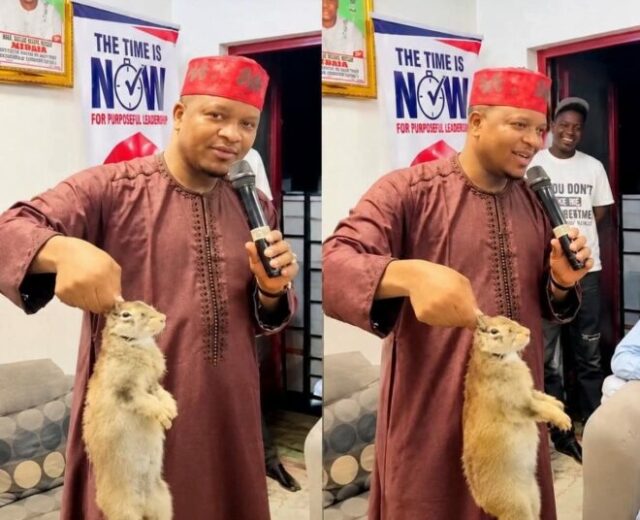
The development followed Monday’s plenary, during which lawmakers resolved to investigate the viral video allegedly showing Aliyu holding a rabbit by its ears while making remarks considered disrespectful to the governor.

While moving the motion, Abdul expressed concern over the conduct expected of elected representatives, arguing that the alleged incident warranted investigation and appropriate disciplinary action if the allegations were established.

Google search engine

Confusion As NDC Chairman’s Name Finds Its Way Into APC Campaign Council List

The Nigeria Democratic Congress (NDC) in Cross River State has protested the inclusion of its state chairman, Goddie Archibong Akpama, in an online directory of the All Progressives Congress (APC) State Campaign Council, describing the listing as misleading.

The party, through its State Publicity Secretary, Mr Cletus Amawu, made its position known in a statement made available to Vanguard in Calabar on Wednesday.

According to the NDC, Akpama’s name appeared under the Chieftaincy Affairs category of the purported APC campaign council directory, a development it said could create confusion about his political affiliation.

The party categorically denied that its chairman belonged to the APC or had any affiliation with the party’s campaign council.

It also clarified that his correct name was Goddie Archibong Akpama, rather than “Goddy Akpama” as displayed in the online directory.

The NDC maintained that Akpama remained firmly committed to his responsibilities as the party’s state chairman and continued to pursue its political objectives under the NDC platform.

Expressing concern over the possible implications of the publication, the party said the listing could mislead the public, confuse political stakeholders and damage the chairman’s political standing.

It consequently called on those responsible for compiling, hosting and circulating the directory to explain how Akpama’s name found its way into the list.

The party further demanded the immediate removal of the disputed entry and the issuance of a public clarification to correct what it described as a misrepresentation of its chairman’s political identity.

The NDC also appealed to journalists, political stakeholders and members of the public not to interpret the appearance of Akpama’s name in the directory as evidence of his membership of, or allegiance to, the APC.

Reaffirming its position, Amawu said Akpama’s political activities remained exclusively within the NDC, stressing that political disagreements should be addressed through legitimate engagement rather than the circulation of information capable of creating confusion.

The party reiterated its demand for an explanation and a public correction, insisting that the disputed listing should not be allowed to cast doubt on its chairman’s political affiliation.

Amawu added that Akpama remained focused on his responsibilities within the NDC and would not be distracted by what the party described as attempts to misrepresent his political identity.

Google search engine

MOST COMMENTED

- Advertisement -
Google search engine