Home Blog Page 149

LP Crisis: Otti, Obi Camps Deny Rift, Insist Party Remains United
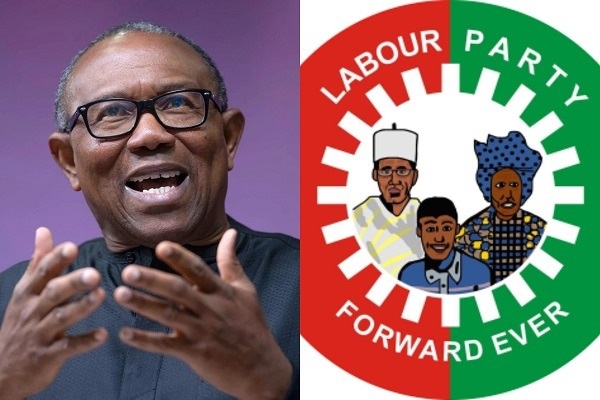
 

The Labour Party factions aligned with Abia State Governor, Alex Otti, and former presidential candidate Peter Obi have dismissed claims of division within the Senator Nenadi Usman–led interim national leadership.

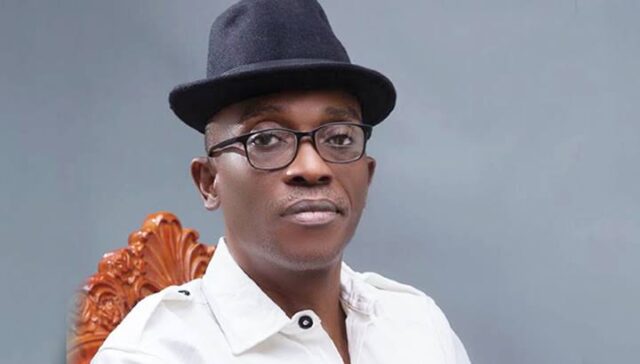
Speaking with DAILY GAZETTE, the party’s Interim National Publicity Secretary, Prince Tony Akeni, described reports of arbitrary changes within the party’s interim National Working Committee (NWC) as baseless.

“We wish to use this opportunity to allay rumours in some circles claiming that there are cracks in the Senator Nenadi Usman council of the Labour Party due to alleged arbitrary removal and replacement of some key officers,” Akeni said.

He stressed that the Labour Party’s foundation, as an institution birthed by the Nigeria Labour Congress (NLC), distinguished it from other political parties created by individuals.

“The public and our supporters nationwide are reminded that the Labour Party is the only political party founded by an institution, the NLC, and not by individuals who can wake up from a hangover any day and act unilaterally against the constitution and ethos of the party,” he said.

Akeni maintained that the party’s operations do not permit “totalitarian hallucinations,” insisting that fairness, justice and equality define its internal governance.

He also addressed concerns from some states alleging infiltration of their congress lists and interim councils by loyalists of former National Chairman Julius Abure, as well as individuals linked to rival parties.

“We assure all true Labour Party members nationwide that such assaults against the sensibilities of our party faithful, which will promote crises and sabotage the party’s progress towards the 2027 elections, will not see the light of day. Time will see off such political herdsmen,” he said.

Akeni further referenced the Supreme Court ruling of April 4, which affirmed the removal of the former leadership and said the party had moved beyond what he described as an era of “mega corruption.”

The Political Commission of the Nigeria Labour Congress, which oversees the Labour Party, announced advanced talks with political parties, humanitarian groups and civil society organisations to launch a major charity project for internally displaced persons across the country.

The initiative, titled WENFOY, “We’ve Not Forgotten You,” will feature local and international fundraising concerts modeled after global charity campaigns like the 1985 “We Are the World” project.

According to the Commission, the programme aims to support an estimated 8.18 million Nigerians displaced by insurgency, banditry, and communal conflict, particularly in the North and Middle Belt.

Funds raised will be directed towards Education, Healthcare, Livelihood training, Low-cost container housing and Other essential needs.

The project will also assist government efforts in strengthening transparency in security management, conducting credible IDP headcounts, creating a comprehensive resettlement blueprint, and helping Nigeria avoid external military intervention.

The NLC added that WENFOY and its partner programme, IPAC-CHRRESS (Inter-Party Committee for Census, Homeland Return, Resettlement & Sustainable Security), will work with UNHCR, the Red Cross, interfaith groups, and other international bodies.

Beyond the northern states, the initiative will extend support to Bakassi returnees, noting that over 400,000 displaced people from the ceded peninsula were still classified as refugees as recently as 2022.

The Commission said the project aims to complement government interventions and help displaced Nigerians “regain their lives back.”

Google search engine

Kaduna Govt Denies Paying Bandits N1bn, Asks El-Rufai To Retract Statement


The Kaduna State Government has rejected allegations by former Governor Nasir Ahmad El-Rufai that the administration of Governor Uba Sani paid ₦1 billion to bandits.

The state described the claims as false, politically motivated, and devoid of any credible evidence.

In a statement signed by the Commissioner for Internal Security and Home Affairs, Dr. Sule Shu’aibu (SAN), the government said El-Rufai’s comments, made during a Channels Television interview, were “a fabrication devoid of context, substance, or credibility.”

According to the Commissioner, El-Rufai’s remarks amount to “recklessly weaponising a sensitive security matter for political grandstanding,” behaviour he said falls short of what is expected from a former governor.

The government reaffirmed that Governor Uba Sani has never approved, negotiated, or released funds to any criminal group.

“Not one naira, not one kobo,” the statement insisted, noting that the governor has consistently maintained this stance in public engagements.

Shu’aibu also reminded the public that the Office of the National Security Adviser (ONSA) had earlier dismissed similar allegations by El-Rufai, saying they were unfounded and inconsistent with national security protocols. “ONSA affirmed that neither the Federal Government nor state governments pay ransom to criminal elements,” he said.

The state government emphasized that its security approach is anchored on community engagement, reinforced military operations, and socio-economic improvements such as expanded access to education, healthcare, and economic opportunities.

“The State engages communities, not bandits,” the statement stressed.

Shu’aibu added that local watchdog groups, such as the Birnin-Gwari Vanguard for Security and Good Governance, which witnessed severe insecurity during El-Rufai’s tenure, have publicly debunked the former governor’s claims as misleading.

He further noted that some senior officials who served under El-Rufai previously accused him of releasing public funds to appease certain groups, making his current allegations “deeply paradoxical.”

Since assuming office, Governor Sani has focused on reopening markets, schools, and farmlands, and restoring trust across communities that suffered years of insecurity, the statement said.

The Kaduna State Government has challenged El-Rufai to provide concrete evidence, such as bank records, internal memos, or official security documents, if he possesses any.

It also pointed out that similar allegations he made in September 2025 were never substantiated.

Consequently, the government has demanded a full retraction and an unreserved public apology within one week.

Failure to comply, it warned, would force the state to initiate legal proceedings to “safeguard public order and institutional integrity.”

Reaffirming its commitment to transparent governance, the administration stated that it would not allow itself to be distracted by “politics of bitterness, fearmongering, or orchestrated falsehoods.”

Google search engine

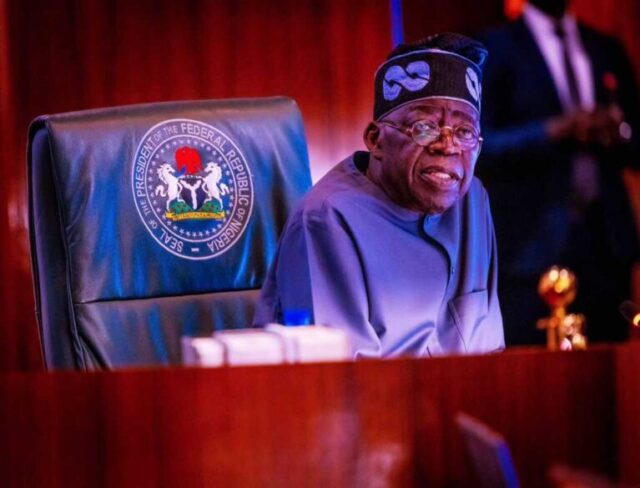
Tinubu Orders Immediate Withdrawal Of Police Officers From VIP Duties, Approves Recruitment Of 30,000 Additional Officers


President Bola Tinubu has directed that all police personnel assigned to guard Very Important Persons (VIPs) across the country be withdrawn and redeployed to core policing functions.

The directive was issued during a high-level security meeting at the State House in Abuja, attended by top security chiefs, including Chief of Army Staff Lieutenant General Waidi Shaibu; Chief of Air Staff Air Marshal Sunday Kelvin Aneke; Inspector General of Police Kayode Egbetokun; and Director-General of the Department of State Services (DSS), Tosin Adeola Ajayi.

The announcement was made through a statement by the President’s Special Adviser on Information and Strategy, Bayo Onanuga, who noted that the decision aims to strengthen police presence nationwide and redirect manpower to essential law enforcement tasks.

According to Onanuga, “President Bola Ahmed Tinubu has ordered the withdrawal of police officers currently providing security for Very Important Persons in the country. Henceforth, police authorities will deploy them to concentrate on their core police duties.”

The new directive comes amid rising security threats and frequent cases of abductions across the country.

The presidency emphasised that VIPs who still require armed escorts will now obtain such protection from the Nigeria Security and Civil Defence Corps (NSCDC).

Onanuga added that many police stations, particularly in rural areas, suffer from inadequate staffing, which has weakened their capacity to protect the public.

Strengthening police visibility, he said, is crucial in addressing the nation’s security challenges.

He further disclosed that President Tinubu has approved the recruitment of 30,000 additional police officers, and the federal government is partnering with state governments to upgrade police training institutions across the country.

Google search engine

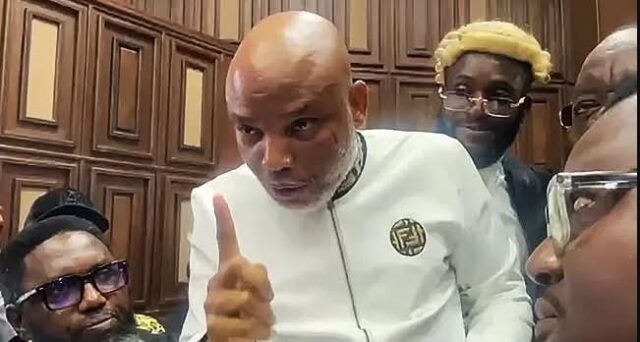
Nnamdi Kanu Breaks Silence From Sokoto Prison, Makes Fresh Declarations


Mazi Nnamdi Kanu, leader of the Indigenous People of Biafra (IPOB), has spoken publicly for the first time since he was sentenced to life imprisonment, breaking his silence through a statement conveyed by his younger brother.

Kanu was convicted of terrorism by Justice James Omotosho of the Federal High Court, Abuja, and handed a life sentence earlier in the week.

By the next day, it was confirmed that he had been transferred to the Sokoto Medium Security Prison, a development that sparked national reactions and widespread criticism.

Among those who condemned the verdict was former Labour Party presidential candidate, Mr. Peter Obi.

DAILY GAZETTE reports that Kanu’s first response to the judgement was delivered through his brother, Prince Emmanuel Kanu, who visited him in Sokoto in the company of lawyer, Dr. Maxwell Opara.

Prince Emmanuel, in a statement issued on Sunday, said the IPOB leader insisted he was denied the chance to present his final written address, a key component of his defence.

He emphasized that Kanu considered his conviction to be legally unsound.

The statement began:
“I Prince Emmanuel Kanu and Dr Maxwell Opara have had a meeting with Mazi Nnamdi Kanu, the leader of the Indigenous People of Biafra, at the Sokoto medium security prison.

It continued:
“He has instructed me to inform the public that his conviction was without legal basis, as no individual can be convicted under a repealed law.

Kanu also maintained that his right to fair hearing was violated:

“His final written address which anchored on fair hearing was also denied, emphasized that the evidence relied upon by the court was not included in the charge sheet or presented as evidence against him.”

“Additionally, the court’s reliance on struck-out charges from Justice Binta Nyako was a significant issue.”

The statement further noted:
“Upon reviewing the judgment, he identified numerous errors that undermined the validity of his trial.”

Kanu urged members of the judiciary and legal profession to scrutinize the judgement:

“He urged well-meaning Nigerian justices, magistrates, and lawyers to carefully examine the judgment and uphold the laws of the land and the Nigerian Constitution.”

He also raised concerns about the inconsistency between his conviction and earlier favourable rulings from various courts and bodies:

“He questioned the disparity between the favorable rulings in Umuahia High Court, Enugu, Appeal Court, United Nations, and Supreme Court, which stated that the laws under which he was charged are repealed and must be amended, yet were ignored.”

The statement concluded by noting that Kanu appreciated those who had spoken out against what they saw as injustice.

His message to supporters read:
“I am Mazi Nnamdi Kanu who will reject injustice, unfairness, and evil against anybody regardless of your tribe, faith, and ethnic background. Injustice to Mazi Nnamdi Kanu is injustice everywhere. I remain thankful for all your supports, prayers, and your good thoughts. Elohim, bless you all.”

Google search engine

INEC Upholds Abure As Authentic Labour Party National Chairman


The Independent National Electoral Commission (INEC) has reaffirmed Julius Abure as the legitimate National Chairman of the Labour Party (LP), putting to rest weeks of speculation and internal disputes within the party’s leadership.

A review of INEC’s official portal by DAILY GAZETTE on Sunday confirmed that Abure’s name remains boldly listed as the recognised national chairman of the party.

The listing, which is updated in accordance with Section 82 of the Electoral Act, reflects the commission’s official position on party leadership.

The confirmation comes amid ongoing leadership tussles within the Party, with Senator Nenadi Usman faction contesting Abure’s authority.

Some groups had earlier claimed that INEC had replaced Abure on its registry, an assertion the latest check has now disproved.

Google search engine

EEDC Denies Plans For Power Outage In Imo, South-East


The Enugu Electricity Distribution Company (EEDC) has dismissed claims by the Imo State Government that it intends to carry out a major power outage in Imo State or across the South-East.

In a statement released on Sunday in Enugu, the Group Head of Corporate Communications, Mr. Emeka Ezeh, described the allegation as “baseless, unfounded, and completely untrue.”

The statement was titled “EEDC Debunks Allegation by the Imo State Government.”

Ezeh said the company’s attention was drawn to an announcement issued by the Imo Commissioner for Information, Public Orientation and Strategy, Chief Declan Emelumba, who accused EEDC of planning a “massive electricity outage” to sabotage the state’s electricity projects.

According to Ezeh, the allegation has no merit.
“We advise our customers in Imo State and the general public to disregard this claim entirely. EEDC has no plan whatsoever to implement any major outage in the state,” he said.

He criticized the Imo Government for resorting to “propaganda” and attempting to divert attention from its own hostility toward EEDC operations.

Ezeh urged the state government to provide a conducive environment for licensed electricity operators rather than obstructing their work.

He cited an incident on Saturday, November 15, 2025, when armed policemen allegedly acting on the orders of the state government stormed the Egbu Station of the Transmission Company of Nigeria (TCN).

According to him, the officers forced the operator on duty, at gunpoint, to shut down all feeders, plunging customers into darkness.

“What greater act of sabotage could there be?” he asked.

For clarity, Ezeh outlined two key points:

  1. EEDC has no plan to initiate any major outage in Imo State.
  2. The company remains committed to improving supply reliability and service quality across the state.

He added that if any outage occurs going forward, “the responsible party is clear,” insisting that the Imo Government should be held accountable for raising false alarms and making unverified accusations.

Ezeh reaffirmed that EEDC remains dedicated to providing sustainable and improved electricity distribution across Imo State and the entire South-East.

Google search engine

BREAKING: 38 Kidnapped Kwara Church Worshippers Regain Freedom


Thirty-eight worshippers kidnapped from the Christ Apostolic Church (CAC), Oke-Isegun, Eruku, have been released, the Kwara State Government announced on Sunday, five days after the deadly attack that claimed three lives.

In a statement issued by his Chief Press Secretary, Rafiu Ajakaye, Governor AbdulRahman AbdulRazaq confirmed the release of the abducted church members but did not disclose the circumstances surrounding their freedom.

According to the statement, the governor credited the rescue to the “hands-on approach” of President Bola Tinubu, saying the President “personally led the efforts” and even cancelled his scheduled trip to the G20 Meeting in South Africa to address the security breaches in both Kwara and Kebbi states.

“The governor is immensely grateful to President Bola Tinubu for his direct initiative that made this happen,” the statement read, adding that the President ordered additional security deployments to Kwara as part of the rescue effort.

AbdulRazaq also expressed appreciation to the Office of the National Security Adviser, the DSS, the Nigerian Army, the Nigeria Intelligence Agency, and the Nigeria Police Force for their roles in securing the release of the victims.

He lauded religious leaders, community members, and security operatives for their support during the crisis.

The incident occurred last Tuesday when armed bandits stormed the CAC parish during an evening service.

The attackers shot indiscriminately, killing three people and abducting 38 worshippers.

Residents reported that many fled into the surrounding bushes to escape the gunfire.

Eyewitnesses described the invasion as sudden and overwhelming.

“They came at nightfall, heavily armed. Two people were killed instantly,” one resident said.

The kidnappers initially demanded a ransom of ₦3 billion, later reducing it to ₦760 million.

Following the attack, youths in Eruku blocked the Ilorin–Kabba highway in protest, accusing security personnel stationed in the community of failing to respond during the assault, which lasted nearly an hour.

Their demonstration caused significant traffic disruptions as they demanded greater protection and accountability from security agencies.

In the wake of the attack, President Tinubu also postponed his planned trips to Johannesburg and Luanda, awaiting further security briefings on both the Eruku attack and the kidnapping of schoolgirls in Kebbi State.

He directed security agencies to pursue the perpetrators.

Google search engine

Russia Claims Control Of Three Additional Ukrainian Villages


Russia announced on Sunday that its forces had captured three more villages in eastern Ukraine, as U.S, Ukrainian, and European officials met in Geneva to discuss a contentious peace proposal aimed at ending the conflict.

According to Moscow’s Defense Ministry, Russian troops seized Petrivske in Donetsk, as well as Tikhe and Otradne in Dnipropetrovsk.

Meanwhile, Kyiv has been struggling to maintain control over key positions along the eastern front, where Russian advances continue.

The announcement comes ahead of Geneva talks on a U.S-backed 28-point plan, proposed by President Donald Trump, intended to resolve the nearly four-year war.

Kyiv has until 27 November to respond but is requesting revisions to portions of the plan that would accommodate some of Russia’s demands.

The draft plan would require Ukraine to cede certain territories, reduce its military, and forswear NATO membership.

In exchange, it promises Western security guarantees to prevent further Russian aggression.

Russian President Vladimir Putin has expressed support for the plan, suggesting it could serve as a foundation for a final peace settlement, but warned of further territorial advances if Ukraine rejects it.

Norwegian Prime Minister Jonas Gahr Store, speaking to AFP from South Africa, described the U.S. plan as flawed.

“The plan is insufficient and has major flaws that need to be addressed,” he said, emphasizing the importance of involving Europe and Ukraine in negotiations. He also reiterated that changing borders by force is unacceptable.

In Geneva, officials from Ukraine, Europe, and Canada gathered to discuss the proposal.

U.S Secretary of State Marco Rubio also arrived to participate in the discussions, signaling Washington’s willingness to negotiate.

Store emphasized that any agreement must comply with international law, including the principles of the United Nations Charter.

He joined other international leaders attending the G20 summit in South Africa, while European leaders at a separate summit in Luanda, Angola, are scheduled to hold additional talks on the Ukraine plan.

Google search engine

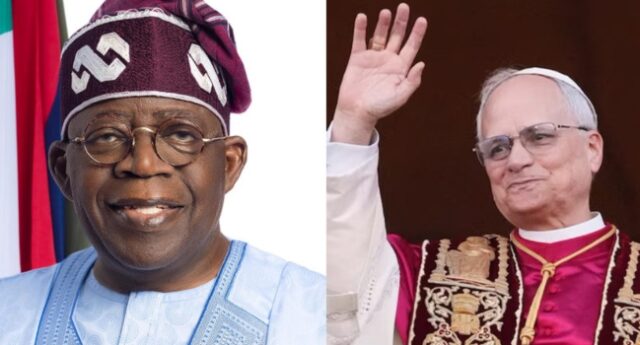
Pope Demands Immediate Release Of 315 Students, Teachers Kidnapped In Nigeria


Pope Leo XIV has urged for the immediate release of over 300 hostages abducted from Catholic schools in Nigeria, in what is being described as one of the country’s largest mass school kidnappings.

Speaking during his Angelus prayer on Sunday, the Pope expressed profound sadness over the kidnappings of priests, students, and church members in Nigeria and Cameroon.

“I make a heartfelt appeal for the immediate release of the hostages,” Pope Leo said, adding his “deep sorrow, especially for the many young boys and girls kidnapped and for their anguished families.”

He also called on the faithful to pray that churches and schools remain safe havens for all.

The Christian Association of Nigeria (CAN) reported that gunmen abducted more than 300 students and teachers during attacks on two schools in the country.

The first incident occurred on Monday when gunmen stormed a secondary school in Kebbi State, abducting 25 girls.

This was followed by an early Friday raid on St Mary’s co-educational school in Niger State.

These incidents coincided with an attack on a church in western Nigeria, where two people were killed and dozens more were abducted.

The spate of kidnappings has attracted international attention, including threats of military intervention from U.S President Donald Trump, citing the persecution of Christians in the country.

The kidnappings have revived painful memories of the Chibok abductions over a decade ago, when nearly 300 girls were kidnapped by Boko Haram in Borno State; some of those girls remain missing.

Meanwhile, former Minister of Information Prof. Jerry Gana warned that the recent surge in mass abductions may be a deliberate tactic by bandits anticipating international military action.

Speaking at an event in Abuja honoring the Comptroller-General of the Nigeria Customs Service, Bashir Adewale Adeniyi, Gana suggested that schoolchildren and villagers are being used as human shields to evade potential aerial strikes.

Gana explained that most of the recent kidnappings occurred near forested corridors, which bandits perceive as safe zones if military interventions escalate.

He added that intelligence suggests the attacks may be a direct reaction to President Trump’s recent warnings regarding the killings in Nigeria.

“These kidnappings are alarming for all Nigerians, especially elders and statesmen, as young people continue to be targeted across various regions,” Gana said.

“There are credible indications that the bandits are responding to external pressure by mobilizing human shields, targeting schools and villages in forested areas.”

Google search engine

Nigeria Logs Over 24 Million Malaria Cases In First Three Quarters Of 2025


The Federal Ministry of Health and Social Welfare has revealed that more than 24 million Nigerians tested positive for malaria between January and September 2025, reflecting a steady rise in infections across the country.

Figures contained in the 2025 National Health Statistics Report, obtained by DAILY GAZETTE, show consistent increases in both testing and confirmed cases over the three quarters.

According to the document, 10,517,416 people underwent malaria testing between January and March, with 7,301,279 found to be positive.

Testing rose further in the second quarter to 11,449,804 individuals, producing 7,841,483 confirmed cases.

The trend peaked between July and September when 12,878,508 Nigerians were tested and 9,324,470 were diagnosed with malaria.

Altogether, the nation recorded 24,467,232 cases within nine months.

Health analysts note that the surge aligns with Nigeria’s seasonal malaria pattern, particularly during the rainy months when mosquito breeding intensifies.

Experts warn that without stronger interventions, infection numbers could climb even higher before the end of the year.

Treatment numbers also followed an upward curve. In the first quarter, 7,144,538 patients received Artemisinin-based Combination Therapy (ACT).

This increased to 7,663,106 in the second quarter and 9,043,786 in the third, bringing the total number of treated persons to 23,851,430.

Speaking at the 2025 Joint Annual Review in Abuja, Minister of State for Health and Social Welfare, Dr. Iziaq Salako, said the National Malaria Eradication Programme has continued to strengthen malaria-control strategies but acknowledged that challenges remain.

Delays in seeking treatment and infrastructural gaps across the healthcare system still contribute significantly to the country’s heavy malaria burden.

The report calls for sustained public health action, improved access to treatment, and greater community involvement if Nigeria is to reduce malaria incidence in the coming years.

In related developments, world leaders have pledged $11.34 billion to support the Global Fund’s fight against AIDS, tuberculosis, and malaria, a figure that falls below the organisation’s $18 billion target for the 2027–2029 cycle.

The announcement was made during the Global Fund’s Eighth Replenishment Summit in Johannesburg, held ahead of the G20 meeting.

Executive Director Peter Sands admitted that the shortfall presents challenges to global health financing.

“Money will be tight, so we must be smarter,” he said, stressing the need for countries to transition towards greater self-reliance while warning that abrupt funding cuts could jeopardize essential programmes.

The Fund plans to reduce operational costs by 20 percent in 2026.

The United States remains the largest contributor with a pledge of $4.6 billion, although some commitments from previous administrations are yet to be fully released.

Based in Geneva, the Global Fund cautioned that the funding gap could force reductions to existing grants through late 2026.

Since its creation in 2002, the organisation estimates that it has helped save around 70 million lives by supporting national efforts to combat infectious diseases through measures such as malaria nets, HIV treatment, and tuberculosis therapy.

Previous replenishment cycles have also struggled to meet targets — in 2022, the organisation raised $15.7 billion out of a projected $18 billion.

The summit highlighted the ongoing tension between dwindling global contributions and growing expectations for countries to scale up domestic healthcare investments.

Google search engine

MOST COMMENTED

- Advertisement -
Google search engine