Home Blog Page 151

Bandits Afraid Of Possible U.S Airstrikes, Using Abducted Children As Human Shields – Gana
 

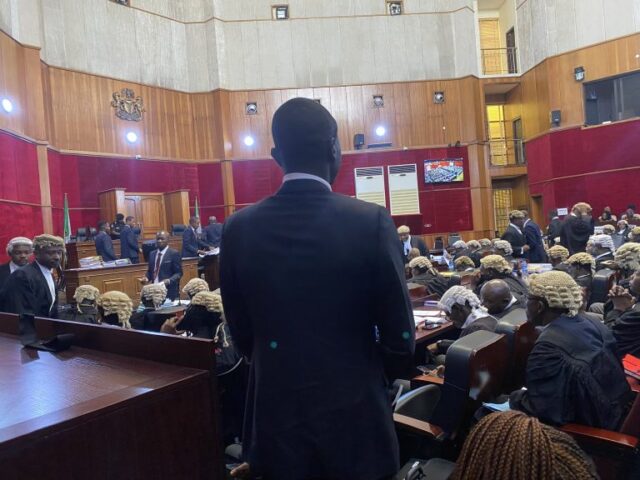
Former Minister of Information, Prof. Jerry Gana, has raised alarm over a troubling trend in the recent mass abductions across northern Nigeria, suggesting that bandits may be kidnapping children and villagers to shield themselves from potential international military action.

Speaking on Saturday during a reception in Abuja held in honour of the Comptroller-General of the Nigeria Customs Service (NCS), Bashir Adewale Adeniyi, who was recently appointed Chairman of the World Customs Organisation, Gana warned that the surge in kidnappings may be strategic.

The event also doubled as a fundraising dinner for the Nigerian Institute of Public Relations (NIPR).

Gana linked the pattern of attacks to reactions within bandit groups following remarks by U.S. President Donald Trump, who criticised rising violence in Nigeria and hinted that the United States might intervene militarily if the situation deteriorates further.

According to him, emerging intelligence suggests that the criminals now believe they may be targeted by airstrikes, prompting them to seize schoolchildren and residents in forested areas that could serve as defensive zones.

His concerns come amid a spike in mass kidnappings.

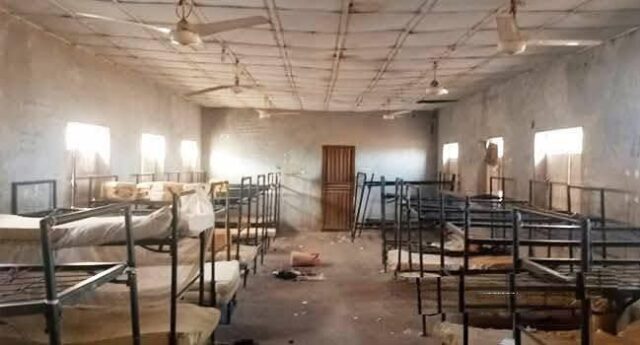
Within the past week, gunmen abducted 25 female students from Government Girls Comprehensive Secondary School in Maga, Kebbi State, while another 315 students, teachers, and pupils were taken from St. Mary’s Private School in Papiri, Agwara, Niger State. Similar attacks have also been reported in Zamfara.

Gana said he received a phone call shortly before Saturday’s ceremony, reinforcing these fears.

His words: “It should become extremely worrying, especially for elders, statesmen, and fathers of the nation, to see younger ones being abducted here and there in various parts of the Federal Republic of Nigeria.

“Somebody phoned me just before I came here to say that it would appear that the bandits and others who are causing this trouble are taking the threat from the President of the United States seriously.

“Therefore, it would appear that they are now mobilising human shields to protect them from wherever they are. In various places, they are just going ahead to pick up young people. And it would appear that maybe that person really has a point.

“Therefore, those of you who are very close to security agencies here should tell them they (bandits) know that they are being targeted.

“Their fear is that they are going to be targeted from the air and therefore felt the need to grab a few people to be human shields. In that, they would also fail. But those of you in security should kindly help us because I think there is tremendous wisdom in what that person has said.

“This is because if you look at the geography of the places they are now, most of the areas are close to forests if you see the location. I’m a geographer and I have seen that many of the areas they are picking people to hide are in those forests and they know they’ll be targeted.”

Gana urged security agencies to immediately investigate the pattern and advised the Federal Government to deepen collaboration with international partners to curb the escalating crisis.

He said: “I think the Nigerian government will need all the wisdom to liaise with whoever can help us. They don’t have to really come to the Federal Republic of Nigeria. Technology has gone to a point where you can be targeted from the air. And I think these people need to be targeted now from the air.”

Responding, Minister of Information and National Orientation, Mohammed Idris, noted that the kidnappings have gained global attention, with international media constantly requesting updates.

He stressed that the government’s primary concern is the safe recovery of the abducted victims.

He said foreign media outlets had already contacted him for confirmation of casualty figures from the Agwara abduction, but he assured them that security forces were working to ensure the students’ rescue, saying:

“My response to them is that while we are counting those who are kidnapped, I’m telling them that by God’s grace, we are already working for them to get released. And they will be released in God’s name very, very soon.”

Idris also rejected claims that insecurity is confined to a particular region, adding that Nigeria’s macroeconomic indicators are improving, including GDP growth, declining inflation, and rising investor confidence.

He cautioned citizens against portraying the country negatively on the international stage.

Minister of State for Finance, Dr. Doris Uzoka-Anite, praised the Customs boss Bashir Adewale Adeniyi for his leadership and his new role as World Customs Organisation chairman, describing it as proof of Nigeria’s reform success.

NIPR President, Dr. Ike Neliaku, commended Adeniyi’s humility and dedication, noting that he initially resisted public celebrations before finally agreeing to attend the event.


Google search engine

BREAKING: 50 Kidnapped Students From Catholic School Escape


Fifty out of the more than 300 children kidnapped from a Catholic school in Niger State have managed to break free from their abductors.

The Christian Association of Nigeria (CAN) announced the development in a statement released on Sunday, describing it as encouraging news amid the ongoing security crisis in the state.

According to the organisation, “We have received some good news as fifty pupils escaped and have reunited with their parents,” noting that the children found their way to safety sometime between Friday and Saturday.

Detail shortly…

Google search engine

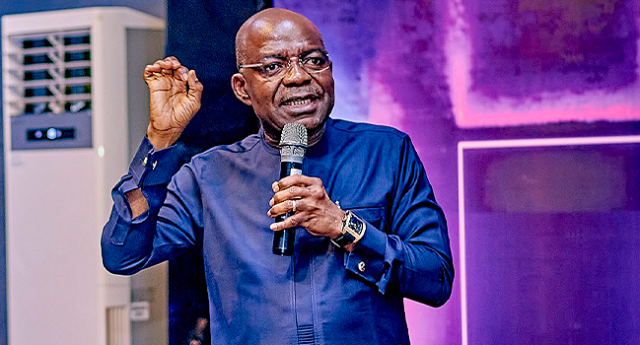
Strategy Already In Motion To Secure Nnamdi Kanu’s Release – Governor Otti


Abia State Governor Alex Otti says he has begun implementing measures aimed at ensuring the release of Nnamdi Kanu, leader of the proscribed Indigenous People of Biafra (IPOB), who was recently convicted.

According to Otti, the approach to securing Kanu’s freedom was crafted earlier during the IPOB leader’s trial.

Nnamdi Kanu was on Thursday handed a life sentence by the Federal High Court in Abuja after Justice James Omotosho found him guilty of terrorism-related offences, including incitement, association with a proscribed group, and issuing threats against both Nigerian and international targets.

In a statement endorsed by his Special Adviser on Media and Publicity, Ferdinand Ekeoma, Otti explained, “While Mazi Nnamdi Kanu is free to appeal his conviction, I am pleased to inform you that I have activated, and will continue to implement, the agreed strategy until his freedom is secured.”

He went on to say that he had already updated key national authorities on the agreements previously reached during his visit to Kanu while the IPOB leader was in the custody of the Department of State Services (DSS) in Abuja.

The governor reiterated his position that the early response to IPOB’s concerns was poorly handled, stressing the need for calm while advocating a political resolution to the long-standing dispute.

As he noted, “The poor management of the IPOB issue in its early stages created the challenges we face today. We cannot allow it to fester and escalate into a larger, more dangerous crisis.”

Otti also cautioned political actors against capitalizing on the situation for their own benefit.

He stated, “I urge those seeking to play petty politics with Mazi Nnamdi Kanu’s plight to abandon that approach and instead work with us to secure his freedom.”

He added that he is willing to collaborate with any Nigerians genuinely committed to resolving the issue, saying, “I am also happy to work with other well-meaning Nigerians who genuinely want this problem resolved, pushing for his release through the same diplomacy and dialogue with the federal government, which, though not responsible for creating the problem, has the courage and capacity to resolve it and take the credit.”

The governor noted the emotional toll that the case has taken on Abia State residents and others across the region.

He also recalled the September 2017 military operation at Kanu’s family residence, which led to casualties and the destruction of properties. Reflecting on the incident, he stated, “I strongly condemned that avoidable act and appealed that dialogue be pursued as the most effective means to resolve the IPOB issue.”

Google search engine

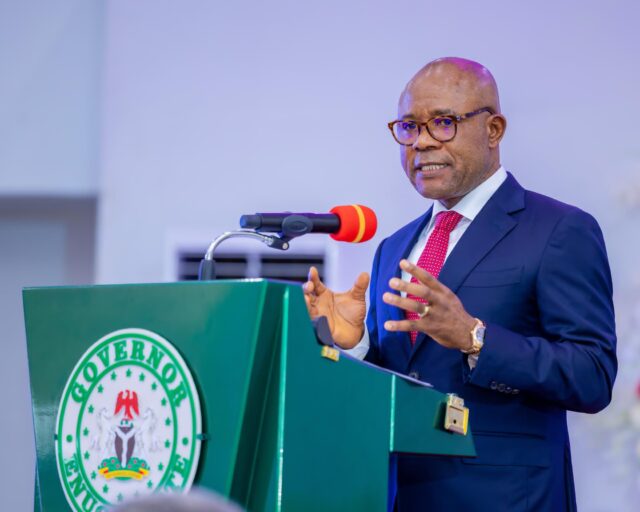
Gov. Peter Mbah’s 15,000 Housing Units: A Bold Step Towards Fairer Living In Enugu By Dr Jeff Ejiofor


Governor Peter Ndubuisi Mbah’s promise to deliver 15,000 housing units for civil servants by 2026 stands as one of the most socially meaningful commitments of his administration.

In a nation where affordable housing has remained out of reach for millions, this singular initiative has the potential to reshape not only the physical landscape of Enugu State but also its social and economic fabric.

At its core, the scheme is an act of magnanimity and an intentional intervention aimed at easing the cost of shelter, which is one of the heaviest burdens borne by workers and low-income families.

For years, Enugu City has witnessed a steady rise in rent prices, driven largely by limited housing supply compared to the expanding population.

This has pushed many poor and middle-class families to the outskirts, away from their workplaces, opportunities, and the social life of the city.

By injecting 15,000 new housing units into the system, Mbah is effectively tackling the problem at its root, supply.

When housing supply expands significantly, the ripple effect is unmistakable.

Rent prices naturally begin to decline. More available homes mean landlords can no longer arbitrarily hike prices because tenants now have choices.

The city becomes more competitive, fairer, and more accessible.

For the poor and indigent who have long been priced out of central Enugu, this development could very well be their ticket back into the urban space, restoring their dignity, reducing their transportation costs, and giving their children better access to schools, healthcare, and opportunities.

But beyond the economic benefits, Governor Mbah’s housing programme speaks to a deeper philosophy of governance, a governance that sees, cares, and responds.

Providing affordable homes for civil servants is not merely an infrastructural achievement; it is an expression of compassion and social responsibility.

Mbah understands that poverty is not just the absence of money; it is also the absence of stability.

A family that has secure housing can plan, work, and dream.

A worker who sleeps in a safe environment will wake up more motivated and productive. A child living in a comfortable home is far more likely to thrive.

This is why the 15,000-unit scheme is not just a government project; it is a social equaliser.

Through this initiative, the governor demonstrates a genuine sensitivity to the plight of the less privileged.

He is not beautifying Enugu at the expense of the poor. He is lifting the poor so they too can enjoy the emerging beauty of the Coal City.

Housing is not a luxury, it is a right, and Mbah’s approach aligns with that conviction.

The overall impact on society will be transformative.

Job creation during construction, improved urban planning, healthier communities, and a reduction in slum expansion are just a few of the long-term benefits.

As the city grows, it will grow with its people, not at their expense.

In conclusion, as Enugu marches toward its rebirth, the general public must rally behind Governor Mbah’s efforts.

Reviving the glory of the Coal City is not the responsibility of government alone, but it is a collective mission. With initiatives like these, it is clear that beauty can be restored without suffocating the poor.

The people of Enugu should, therefore, support and encourage this vision, a vision that seeks to build not just structures but lives, dignity, and hope.

Indeed, Tomorrow is Here

Google search engine

Enugu Rises: Inside Gov Mbah’s Game-Changing Healthcare Revolution By Dr. Malachy Chuma Ochie


Governor Peter Ndubuisi Mbah is spearheading one of the most ambitious and transformative healthcare revolutions in contemporary Nigeria, redefining what is possible in a public health system and positioning Enugu State as the emerging heartbeat of medical excellence in West Africa.

At a time when countless Nigerians are forced to embark on emotionally draining and financially crippling journeys abroad to access medical procedures that should be available at home, Governor Mbah is building a system that restores dignity, expands opportunities, and inspires renewed confidence in what government can achieve when guided by vision and determination.

At the center of this historic transformation is the Enugu International Hospital, a world-class medical institution currently rising as the signature symbol of his administration’s forward-thinking innovation.

This is not just another public hospital renovation or expansion; it is a groundbreaking project designed from the onset to meet global standards and to reverse decades of medical tourism that have drained billions from Nigerian families.

The hospital, engineered to offer kidney transplants, brain surgery, advanced cardiology, oncology care, and a spectrum of complex medical interventions, represents a bold declaration that sophisticated healthcare is no longer the exclusive privilege of citizens in faraway countries.

Governor Mbah’s message is clear: the people of Enugu deserve the best, and they will have it.

What distinguishes his approach is the clarity of purpose that underpins every step of this transformation.

From the beginning of his administration, Governor Mbah made it evident that healthcare would not be treated as an isolated sector but as a cornerstone of human capital development; an investment into the lives, productivity, and long-term prosperity of the people.

His “Tomorrow Is Here” mantra captures this philosophy, emphasizing practical, immediate, and measurable change. In Enugu, tomorrow is not a promise; it is unfolding in real time through the introduction of digital medical records, telemedicine capabilities, modern diagnostic technologies, and the revitalization of general hospitals and primary health centres across the state.

Mbah’s leadership stands out for its audacity. He does not merely upgrade; he reimagines.

He does not merely set targets; he pursues what many once considered impossible.

At a time when skepticism frequently shadows political promises, he has shown an uncommon courage to undertake projects that require deep commitment, technical expertise, and a long-term vision.

The Enugu International Hospital is a testament to this courage; a facility built with the same level of sophistication, infrastructure, and medical architecture one would expect in Dubai, India, South Africa, or the United Kingdom.

It is conceived not just for residents of Enugu but as a destination for all Nigerians seeking quality medical treatment without leaving the country.

Beyond infrastructure, Governor Mbah’s innovations reflect his understanding of healthcare as a holistic ecosystem.

He has worked to boost the morale and capacity of healthcare workers, initiated partnerships with international medical institutions, and laid the foundation for sustained, technology-driven healthcare delivery.

This systems-oriented approach ensures that the transformation is not temporary but enduring, resilient, and capable of adapting to future medical demands.

Governor Peter Mbah remains a pathfinder because he leads from the future; imagining it fully, then building it boldly.

His initiatives in the health sector are not cosmetic adjustments but structural reinventions aimed at making Enugu State the epicentre of medical tourism, research excellence, and clinical innovation in Nigeria.

In every sense, he is proving that leadership anchored in vision, courage, and accountability can change narratives, redefine expectations, and uplift entire populations.

As construction continues and as the new health infrastructure begins to reshape the lived experience of the people, the verdict becomes hard to contest: Enugu State is stepping into a new era of healthcare advancement, and Governor Mbah’s visionary leadership is the engine powering this transformation.

The future is no longer a distant dream. Under his administration, tomorrow is truly here.

Google search engine

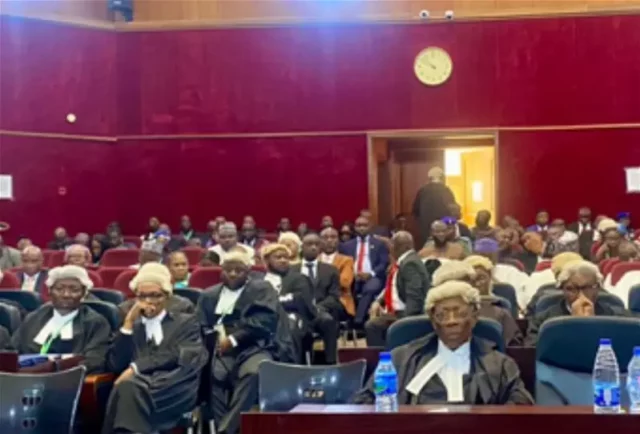
Reports Of Attack On Justice Omotosho Fake, Misleading – Federal High Court


The Federal High Court (FHC) has dismissed claims that Justice James Omotosho narrowly escaped an assassination attempt following his sentencing of Nnamdi Kanu to life imprisonment, describing the reports as false.

The court clarified that a post by a blogger on Facebook, suggesting that Justice Omotosho was attacked early Saturday morning, is completely unfounded.

In a press release issued on Sunday, FHC Chief Registrar Sulaiman Hassan stated:

“The Federal High Court firmly and unequivocally declares that the alleged assassination attempt on Justice James Omotosho is entirely false and baseless. Members of the public are urged not to circulate this misinformation, as it is capable of causing unnecessary panic and undermining confidence in the judiciary.”

The statement further noted the potential of the false report to intimidate judicial officers and stressed the importance of investigating the source.

“We call on security agencies and regulatory authorities to thoroughly investigate this matter, identify those responsible, and prosecute them under relevant Nigerian laws, including those on cybercrime, defamation, and public misinformation,” the statement read.

The court’s clarification comes just days after Justice Omotosho sentenced Nnamdi Kanu, leader of IPOB, to life imprisonment for acts classified as terrorism.

Google search engine

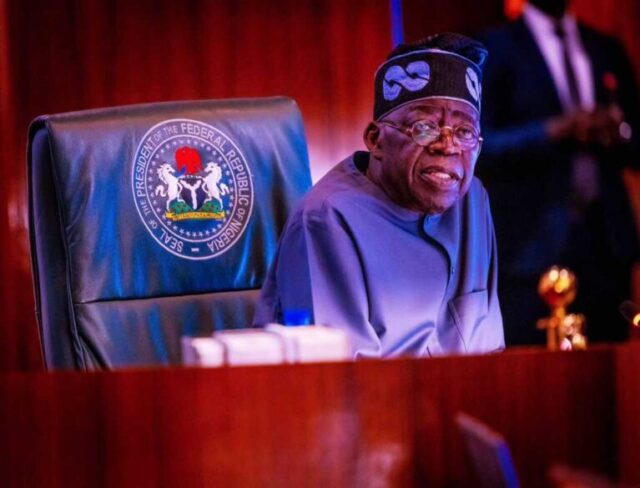
Tinubu Reads Riot Act To Terrorists


President Bola Ahmed Tinubu has reaffirmed his administration’s commitment to tackling terrorism and banditry in Northern Nigeria, emphasizing that no region will be left to suffer while the federal government acts.

Speaking at the 25th Anniversary of the Arewa Consultative Forum (ACF) in Kaduna, Tinubu, represented by House of Representatives Speaker Tajuddeen Abbas, described the North as facing one of the gravest tests in its history, marked by insecurity, erosion of communal ethics, and weakened social cohesion.

He warned that Nigeria cannot thrive if key parts of the country remain destabilized, stressing that the North’s stability is critical for national peace and progress.

Highlighting the ACF’s role over 25 years, Tinubu praised the forum as a platform of patriots, thinkers, and moral leaders that has safeguarded the region’s dignity and interests.

He urged leaders to prioritize institutional strength over individual prominence, asserting that the North’s success depends on robust institutions rather than strong personalities.

Tinubu also pledged to reverse the North’s economic decline, noting optimism over new oil prospects, including the upcoming rollout from the Kolmani fields.

He listed key development initiatives, including accelerated road, rail, and river transport projects, with the Abuja–Kaduna–Kano Superhighway slated for completion in the coming months.

The President called on Northern leaders to embrace selflessness, moral responsibility, and unity, warning that failure begins when leaders ignore hunger, insecurity, and fear faced by their people.

He said rebuilding trust across communities is essential, as insecurity, economic stagnation, and educational deficits will worsen if social harmony is not restored.

Tinubu highlighted the proposed ACF Endowment Fund as a bold initiative to secure the region’s future, focusing on girl-child education, youth skills development, peacebuilding, and conflict resolution.

Concluding his address, he urged the North to continue acting as a moral compass, asserting that with unity, the region can overcome insecurity, rebuild its economy, and remain a central pillar of Nigeria’s progress.

Google search engine

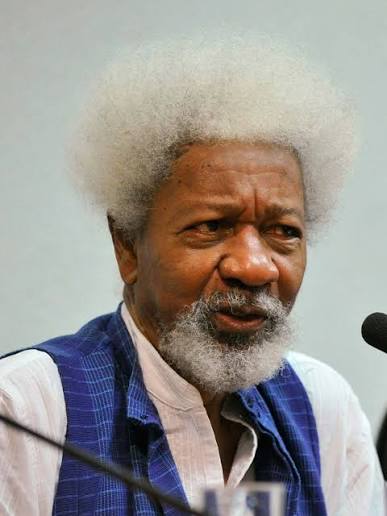
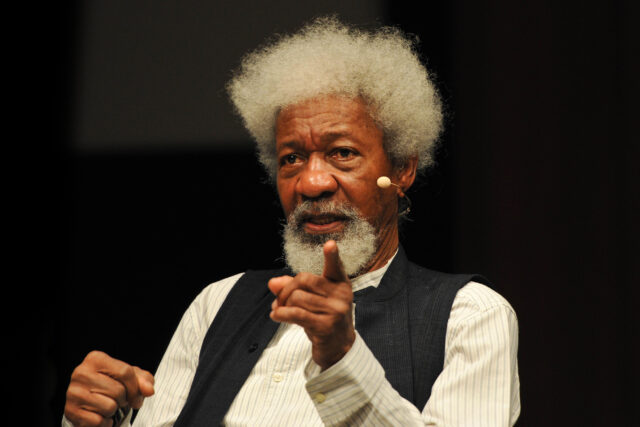
Foreign Involvement Could Aggravate Nigeria’s Insecurity, Soyinka Warns


Nobel Laureate Prof. Wole Soyinka has advised Nigerian authorities to be cautious in embracing foreign intervention, warning that external involvement could further complicate the country’s worsening security situation.

Soyinka gave the caution on Friday during a media briefing at the Government House, Makurdi, shortly after a private meeting with Governor Hyacinth Alia, which formed part of his visit to Benue State.

The internationally acclaimed writer praised Alia for the developmental projects underway in the state but recalled that Benue had become a haven for terrorists under the previous federal administration.

He faulted former President Muhammadu Buhari for failing to curb the killings in the state, noting that he was among the few who consistently challenged the administration at the time.

Soyinka said his visit also included a follow-up on educational materials he previously donated for displaced children.

He inspected several ongoing projects in Makurdi and visited internally displaced persons (IDP) camps, where he sympathised with affected families.

Governor Alia, while addressing journalists, dismissed claims that he denied the killings in the state.

He insisted that his comments were misinterpreted and taken out of context.

He stressed that discussions about genocide must align with the United Nations’ definition and historical framework, noting that the term is often misused in public discourse.

According to him, his remark that attackers were executing their plans “religiously” was misunderstood and was meant only to describe consistency and determination, not religious motivation.

“I have never denied that our people were killed,” he said.

“We have bandits and terrorists who are organised and determined to destroy, maim, and kill. I have repeatedly, yes, religiously  stated that their aim is land grabbing, not religion.”

Alia explained that the crisis in Benue originated from farmer–herder clashes but later evolved into full-blown banditry and terrorism, affecting people across different ethnic and religious backgrounds.

He warned against pushing narratives that falsely portray the violence as religiously driven.

The governor also urged journalists to avoid politicising the tragedy, advising them to seek clarification when issues arise rather than amplifying misinterpretations.

“You are not weapons of mass destruction,” he told reporters.

“One phone call for clarification can prevent confusion and unnecessary tension.”

Alia emphasised that every life lost deeply concerns his administration and called on the public to avoid trivialising the suffering of displaced persons.

He said the scale of displacement in Benue underscores the severity of the attacks, which have forced many communities from their ancestral homes.

On infrastructure, the governor disclosed that contracts for major arterial roads in Makurdi had already been awarded.

Full construction, he said, would commence next week following the completion of preliminary work.

Alia commended Prof. Soyinka for his sustained interest in the welfare of the people of Benue and for taking time to visit the state to assess ongoing developments.

Google search engine

Foreign Involvement Could Aggravate Nigeria’s Insecurity, Soyinka Warns


Nobel Laureate Prof. Wole Soyinka has advised Nigerian authorities to be cautious in embracing foreign intervention, warning that external involvement could further complicate the country’s worsening security situation.

Soyinka gave the caution on Friday during a media briefing at the Government House, Makurdi, shortly after a private meeting with Governor Hyacinth Alia, which formed part of his visit to Benue State.

The internationally acclaimed writer praised Alia for the developmental projects underway in the state but recalled that Benue had become a haven for terrorists under the previous federal administration.

He faulted former President Muhammadu Buhari for failing to curb the killings in the state, noting that he was among the few who consistently challenged the administration at the time.

Soyinka said his visit also included a follow-up on educational materials he previously donated for displaced children.

He inspected several ongoing projects in Makurdi and visited internally displaced persons (IDP) camps, where he sympathised with affected families.

Governor Alia, while addressing journalists, dismissed claims that he denied the killings in the state.

He insisted that his comments were misinterpreted and taken out of context.

He stressed that discussions about genocide must align with the United Nations’ definition and historical framework, noting that the term is often misused in public discourse.

According to him, his remark that attackers were executing their plans “religiously” was misunderstood and was meant only to describe consistency and determination, not religious motivation.

“I have never denied that our people were killed,” he said.

“We have bandits and terrorists who are organised and determined to destroy, maim, and kill. I have repeatedly, yes, religiously  stated that their aim is land grabbing, not religion.”

Alia explained that the crisis in Benue originated from farmer–herder clashes but later evolved into full-blown banditry and terrorism, affecting people across different ethnic and religious backgrounds.

He warned against pushing narratives that falsely portray the violence as religiously driven.

The governor also urged journalists to avoid politicising the tragedy, advising them to seek clarification when issues arise rather than amplifying misinterpretations.

“You are not weapons of mass destruction,” he told reporters.

“One phone call for clarification can prevent confusion and unnecessary tension.”

Alia emphasised that every life lost deeply concerns his administration and called on the public to avoid trivialising the suffering of displaced persons.

He said the scale of displacement in Benue underscores the severity of the attacks, which have forced many communities from their ancestral homes.

On infrastructure, the governor disclosed that contracts for major arterial roads in Makurdi had already been awarded.

Full construction, he said, would commence next week following the completion of preliminary work.

Alia commended Prof. Soyinka for his sustained interest in the welfare of the people of Benue and for taking time to visit the state to assess ongoing developments.

Google search engine

TikTok Content Creator Arraigned For Faking Own Kidnap To Attract Views


The Edo State Police Command has arraigned a 24-year-old TikToker, Osarobo Omoyemen, popularly known online as “Madam Oil Rice,” for allegedly staging her own kidnapping to boost traffic and gain followers on her social media page.

According to police reports, Omoyemen released a viral video claiming she had been abducted along Upper Sakponba Road in Benin City and later rescued by officers who allegedly detained her at Akpata Police Station and extorted ₦10,000 as bail.

The video also featured a background voice urging viewers to follow her TikTok page—an element police say was key to uncovering her motive.

Police spokesperson CSP Moses Yamu said investigators reviewed the video and found inconsistencies, prompting a deeper probe that revealed the story was entirely fabricated.

“During interrogation, the suspect confessed to orchestrating the incident to drive online traffic and attract more followers,” Yamu said.

He described the act as dangerous misinformation capable of inciting public hostility toward the police and causing needless tension in the state.

He also noted that Omoyemen deleted an earlier version of her video where an accomplice was heard encouraging viewers to follow her page, further confirming the deliberate nature of the stunt.

The TikToker has since been arrested and charged to court, while police say efforts are underway to track down and prosecute her accomplices.

The Command warned the public against spreading false information or creating content that could compromise peace and security in the state.

Google search engine

MOST COMMENTED

- Advertisement -
Google search engine