Home Blog Page 177

Senate In Turmoil Over Reno Omokri’s Ambassadorial Nomination As Old ‘Drug Baron’ Comment On Tinubu Resurfaces
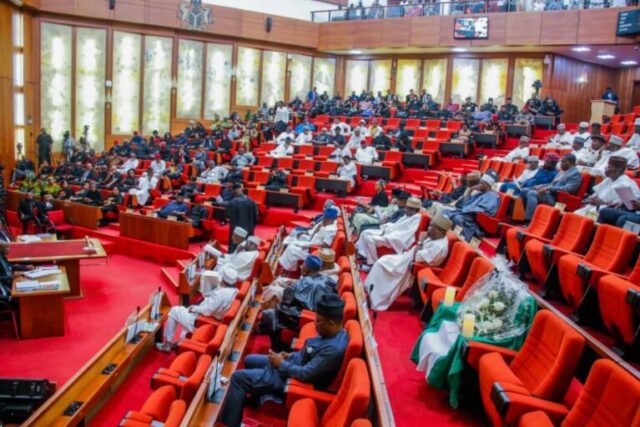
 

The Nigerian Senate has been thrown into confusion following the nomination of former presidential aide and social media commentator, Reno Omokri, for an ambassadorial position, an appointment that has reopened old political wounds, triggered factional clashes, and even led to the shutdown of the senators’ WhatsApp platform.

Omokri was listed among 32 ambassadorial nominees sent to the Senate for screening, but his inclusion has sparked intense controversy, particularly because of his past public criticisms of President Bola Ahmed Tinubu, including a widely discussed instance in which he referred to the President as a “drug baron.”

Multiple parliamentary insiders revealed that Senate President Godswill Akpabio initially championed Omokri’s nomination, allegedly as a reward for political work Omokri had done on his behalf.

However, in a dramatic turnaround, Akpabio is said to be coordinating efforts to block the same nominee.

“The Senate President nominated Omokri for the role as compensation for certain political jobs he carried out for him,” one source claimed.

“But he is now mobilising senators to reject the nomination on the grounds that Omokri once attacked Tinubu and called him a drug baron.”

One of the loudest voices opposing the nomination is Senator Osita Ngwu of Enugu West, who has reportedly been rallying colleagues to vote against Omokri.

Ngwu’s argument is that an individual who publicly made such damaging allegations against a sitting President cannot credibly represent Nigeria abroad.

Sources further disclosed that tensions reached new heights when heated exchanges over Omokri’s nomination erupted in the senators’ WhatsApp group, prompting administrators to restrict comments.

Senator Ngwu, said to be one of the group’s admins, allegedly disabled responses to prevent the conflict from escalating.

This action angered many lawmakers.

Senator Natasha Akpoti-Uduaghan openly confronted Ngwu, demanding that he restore comment access and reinstate messages that were deleted during the argument.

In a post directed at Ngwu, she wrote:
“Dear Senator Osita Ngwu of Enugu West Senatorial District, you will open responses in the Senators’ WhatsApp forum and repost my deleted comments. Else I’ll bring the discussion to the public domain.”

Ngwu maintained his stance, insisting that anyone who once accused the President of being a drug baron, and has not withdrawn the statement, should not be entrusted with representing Nigeria internationally.

“It’s about the office of the President, not the individual,” he said.

The development has deepened divisions within the Senate, even as the chamber is expected to begin screening the nominees on Tuesday.

DAILY GAZETTE recall that Omokri had long insisted he would never accept any appointment under President Tinubu.

Before the 2023 election, he was one of Tinubu’s fiercest critics, frequently challenging his academic background, past record, and integrity.

Though he later softened his opposition after confirming records linked to Tinubu’s Chicago education, he still maintained publicly that he would not work for the President.

During an episode of the Mic On podcast with Seun Okinbaloye, Omokri was asked whether he would ever accept an appointment from Tinubu. He firmly responded:

“It will never happen.”

Pressed further, he claimed that someone from Tinubu’s camp had already approached him, but he declined.

“I told the person it cannot happen. It’s against my principles… I can never work with him.”

Despite his past declarations, Omokri now finds himself at the centre of a major political storm as the Senate prepares to decide his fate.

Google search engine

2027: I Won’t Settle For VP Slot, Amaechi Tells Atiku


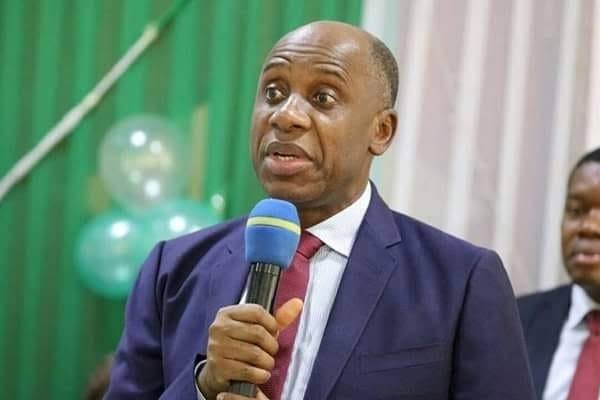
Former Minister of Transportation, Rotimi Amaechi, has firmly rejected speculations that he may accept a vice-presidential slot alongside former Vice President Atiku Abubakar or join any coalition ticket ahead of the 2027 presidential election.

Amaechi made it clear that his focus is on contesting for the nation’s top office and that he has no intention of serving as anyone’s running mate.

The clarification follows comments by Atiku’s ally and media personality, Dele Momodu, who hinted that Atiku could consider partnering with Amaechi if Peter Obi decides not to team up with him.

In an interview with DAILY GAZETTE, Momodu praised Amaechi’s political influence, noting that “Amaechi single-handedly helped deliver power to Buhari,” adding that his political mobilisation exceeded even that of President Bola Tinubu at the time.

But in a response issued by his media aide, David Iyofor, Amaechi dismissed the idea entirely, emphasizing that his sole ambition is to become President.

“Amaechi is not seeking to be anybody’s running mate. He has no intention whatsoever to serve as vice president,” Iyofor said.

He further noted that Amaechi believes the presidency should return to Southern Nigeria in 2027, which is why he is pursuing the presidential ticket of the African Democratic Congress (ADC).

Iyofor added, “Amaechi is not part of, and will not participate in, any discussions about making him a running mate. For clarity, he is running for President, not Vice President. Politicians should kindly stop including his name in such talks.”

Amaechi, who previously ran for the APC presidential ticket in 2023, defected to the ADC earlier in the year and has since announced his intention to seek the party’s nomination for the 2027 presidential race.

Google search engine

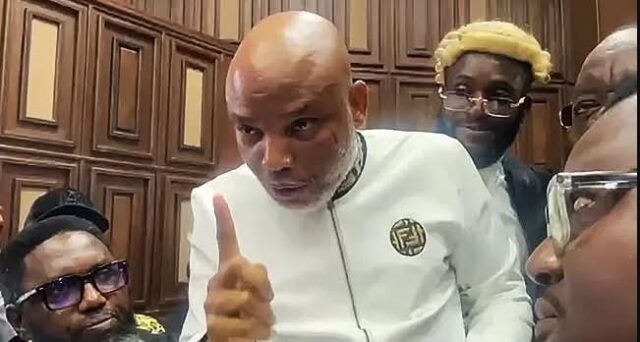
Medical Report: NMA Begins Defence In Nnamdi Kanu’s N50bn Suit


The Nigerian Medical Association has begun preparing its defence in the N50bn lawsuit filed against it by the detained leader of the Indigenous People of Biafra, Nnamdi Kanu.

NMA President, Prof. Bala Audu, confirmed to DAILY GAZETTE that the association’s legal team had already commenced work on the formal response to the suit.

“Our response is with our lawyer,” Audu briefly stated.

Kanu, who is serving a life sentence following his conviction on terrorism-related charges, had raised alarm during his trial before Justice James Omotosho of the Federal High Court in Abuja, alleging that his health had deteriorated while in the custody of the Department of State Services.

He cited medical reports indicating liver and pancreatic complications, the presence of a lump under his armpit, and critically low potassium levels.

Kanu insisted that the DSS medical facilities were inadequate to manage his condition and sought access to the National Hospital.

The prosecution, however, disputed his claims, arguing that his health challenges were not as severe as portrayed and could be properly handled by DSS medics.

Following the conflicting positions, Justice Omotosho directed the NMA to set up an independent medical panel to assess Kanu’s condition.

The panel’s report, read in open court, downplayed the seriousness of his health concerns and declared him fit to stand trial.

Unconvinced, Kanu, through his former counsel-turned-consultant, Maxwell Opara, instituted a N50bn suit against the NMA, its president, and members of the medical panel.

The panel members listed in the suit include Benjamin Egbon, Emem Abraham, Ajibare Adeola, Temitope Farombi, Sunday Samson Owolade, Mustaoha Said Salihu, Yarima Suleiman Yusuf, Nwosu Ekeoma, and Benjamin Oluwatosin Olowojebutu.

Kanu alleges that neither the NMA president nor the panel visited, interviewed, or medically examined him as ordered by the court.

Instead, he claims the association “forged, prepared and submitted a false medical report dated September 23, 2025.”

He accuses the defendants of professional misconduct, perjury, and deliberate misrepresentation with the intention of misleading the court.

According to the suit, the allegedly falsified report led to his continued detention, denial of adequate medical care, and further deterioration of his health.

Kanu is seeking multiple reliefs, including:

– A declaration that the defendants violated his rights to fair hearing and human dignity under Sections 34 and 36 of the 1999 Constitution.

– An order compelling the withdrawal and retraction of the disputed report.

– An injunction preventing the issuance of any false or unverified medical report about him.

– A directive for a fresh, independent medical examination by specialists unaffiliated with the defendants.

– N50bn in general damages and an additional N500m in exemplary damages for alleged malice and abuse of authority.

The case is expected to move forward once the NMA formally submits its defence, which, according to the association’s president, will commence soon.

Google search engine

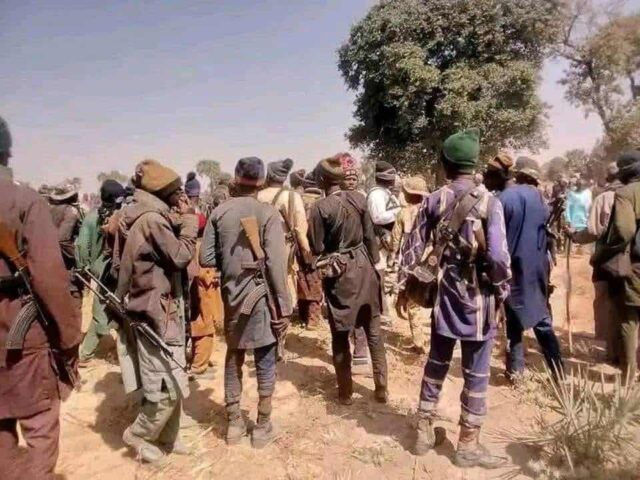
Rampaging Bandits Murder Elderly Woman, Kidnap Three In Night Attack On Kano Community


An elderly woman has been killed and three people abducted after gunmen suspected to be bandits attacked Yankamaye village in Tsanyawa Local Government Area of Kano State late Saturday night.

The assailants reportedly rode into the community on motorcycles, abandoning the bikes at the outskirts before advancing on foot to avoid detection.

Their arrival threw the quiet farming village into chaos as most residents were already asleep.

Confirming the incident, the Police Public Relations Officer, Abdullahi Haruna Kiyawa, said officers had been deployed to track the attackers and rescue the abducted victims.

“We are doing everything possible to rescue the kidnapped victims and restore calm to the area,” Kiyawa said.

Eyewitnesses recounted that the elderly woman was shot after pleading with the attackers not to take her son.

They ignored her cries, killed her, and abducted the young man.

The gunmen later moved to another home, where they kidnapped two women, one of whom is said to be the sister-in-law of the village’s ward councillor.

As of press time, security operatives were searching surrounding forests as part of efforts to locate the victims and apprehend the perpetrators.

Google search engine

2027: Our Presidential Ticket Not Reserved For Kwankwaso – NNPP Chair


National Chairman of the New Nigeria People’s Party (NNPP), Ahmed Ajuji, speaks on the party’s internal tensions, its strategy for 2027, insecurity in the North, and his evaluation of President Bola Tinubu’s leadership.

Your party has recently been embroiled in factional disputes. What exactly is happening?

There is no faction in the NNPP. Those parading themselves as a faction are individuals who were invited to appear before a disciplinary committee for anti-party activities.

They refused, so the National Working Committee suspended them, and the suspension was later ratified by the National Executive Committee.

The matter was then moved to the National Convention, which eventually expelled them.

These individuals have no standing in the party, yet they began filing cases in various courts, at one point, 18 cases.

They secured an unusual ruling from an obscure court in Abia State without properly serving the real NNPP. The judge even ordered the party to be handed over to them.

We appealed in the same court, and the judgment was set aside due to improper service. That is where the matter currently stands.

We also approached a court in Abuja to stop them from parading themselves as NNPP officials, but the judge declined jurisdiction, describing it as an internal party matter. They falsely claim this as a victory.

Anyone seeking clarity should check INEC records, we remain the legally recognised leadership of the NNPP.

There are suggestions that the NNPP congresses are controversial. What is your response?

The noise is coming from the same expelled individuals. They claim the party belongs to one person simply because they say he registered the party. That is false.

No political party belongs to any individual. Once INEC registers a party, any Nigerian can join and contest.

Despite their antics, no court stopped our congresses, and we successfully conducted ward congresses nationwide.

People say the NNPP is controlled by the Kwankwasiya movement. Is this true?

No. Various groups joined the NNPP over time, the National Movement, Kwankwasiya, and others. That doesn’t make any group the owner of the party.

I am the National Chairman, and I don’t belong to any bloc. The claim is baseless.

The party is widely seen as revolving around Rabiu Kwankwaso. Are you trying to reduce his dominance?

Kwankwaso is just a member of the party. If he violates party rules, the NWC has the power to discipline him, including suspension or expulsion.

Every party has influential figures; that doesn’t make the party theirs.

Funding doesn’t come from individuals, but from membership dues. The more members you have, the stronger your finances.

Kano seems to be your stronghold. Can you retain it in 2027?

We are confident we will retain Kano in 2027. In fact, in the last election, we believe we won Taraba and one other Northeastern state.

We aim to win more states across the country because you cannot win the presidency without broad national support.

What about the lawmakers who have defected to the APC?

Defection is a personal choice. People leave parties for various reasons.

While a few may leave, tens of thousands join us from other parties. We hold no grudges. We remain focused on winning elections.

Is NNPP considering alliances or mergers ahead of 2027?

Yes. We have several options:
– contest independently,
– join a coalition,
– adopt a strong presidential candidate, or
– even consider an alliance with the APC.
Nothing is off the table.

Are these discussions already happening?

Of course. If you have options, you must explore them. We are in discussions with many individuals and groups, and many are also talking to us.

Will you reveal the blocs you’re talking to?

It’s too early for that. In the coming weeks or months, we will announce our decision.

Is Kwankwaso guaranteed the 2027 presidential ticket?

No. The NNPP presidential ticket is open to any Nigerian. Anyone can contest.

Unlike some parties that centre everything around one individual, the NNPP is open and democratic.

What unique policies is the NNPP proposing to address economic hardship?

Anyone who emerges as presidential candidate must embrace our core principle: protecting the common man.
We aim to:
– democratise education,
– provide universal access to quality healthcare,
– eliminate medical tourism within four years,
– strengthen national security through better funding and coordination.

Other parties had similar opportunities but failed. Our focus is national welfare and territorial integrity.

What is driving the resurgence of kidnappings and school abductions in the North?

Poverty and lack of opportunities push youths toward criminality, though this never justifies crime.
Government failure to decisively confront insurgents and bandits has worsened insecurity.

It’s not just the North; nowhere in Nigeria is safe.

I recently visited Guinea-Bissau and saw Nigeria’s military securing the country. If we can secure another nation, why can’t we secure our own? Nigeria should prioritise internal security before engaging in external peacekeeping.

Why can’t the Nigerian Armed Forces end insecurity?

The military is capable. What’s missing is political will.

The armed forces act on directives from the government. If the government prioritises defeating insurgents, it will happen. Troops should be withdrawn from foreign missions and focused on domestic threats.

How do you assess President Bola Tinubu’s administration so far?

The administration has brought hardship, hunger, and insecurity.

Government says current suffering is necessary for future economic stability. But sound policy must balance the present and the future.
You cannot destroy the present in the hope of a better tomorrow.

Some argue that northern elements are sabotaging Tinubu by fuelling insecurity. Is this true?

That theory is illogical. No one destroys his own home to spite a neighbour.
Most victims of banditry are northerners.
The real causes are:
– unemployment,
– poverty,
– lack of educational opportunities.
If these issues are addressed, youth will not turn to crime.

Google search engine

University Disowns Fake Lecturer Who Raped Student On Campus


The Lagos State University of Education (LASUED) on Saturday decried rape and disowned one Mr Kolawole Muyiwa, who was convicted of rape, as a staff member of the institution.

The LASUED Vice Chancellor (VC), Prof. Bilkis Lafiaji-Okuneye, who described rape as debasing to humanity, told the News Agency of Nigeria (NAN) in Lagos that the school maintained a zero-tolerance stance toward the act.

Lafiaji-Okuneye, speaking on the conviction of Muyiwa, said the convict was never a staff member of the university.
She explained that the clarification became necessary to discourage such behaviour and to put the records straight for public awareness.
She described Muyiwa as an intruder to the university community, brought in by Mr Sunday Fawowe, a lecturer who allowed his friend to use his office where the rape of a female student occurred.

The culprit exploited the opportunity to violate the student, who was a minor at the time the crime was committed in 2021.

According to her, the school reported the incident, after which Muyiwa was prosecuted and later convicted.

“But the court’s judgment of Feb. 27, 2025, which convicted Muyiwa, pronounced him a staff member of the institution, contrary to his real status as an intruder who was never employed by the school,” she said.

“The university hereby unequivocally states that he was never in the employment of the institution.”

Contacted, Fawowe, who was linked in the judgment, declined to comment

Google search engine

NECO Approves Burkina Faso Schools To Host SSCE, BECE As Council expands International Reach


The National Examinations Council (NECO) has accredited schools in Burkina Faso to conduct its key examinations, the Senior School Certificate Examination (SSCE) and the Basic Education Certificate Examination (BECE), marking another significant step in its international expansion.

This was announced in Abuja on Sunday through a statement released by NECO’s Acting Director of Information and Public Relations, Azeez Sani.

According to Sani, the accreditation followed a comprehensive assessment mission to selected schools in Burkina Faso.

During the evaluation, NECO officials inspected facilities such as classrooms, laboratories, libraries, computer centres, workshops, examination halls, sports areas, and overall security arrangements.

The team also reviewed Continuous Assessment records, teacher strength, and the general quality of the learning environment.

After what NECO described as a thorough and meticulous review, the institutions were granted full approval to host the examinations.

Sani explained that the expansion reflects NECO’s growing commitment to providing quality assessment services across borders.

“With its expanding global presence, NECO is on track to becoming one of Africa’s leading examination bodies, giving Nigerian and foreign students broader access to its internationally recognised assessments,” he said.

He noted that this development comes shortly after NECO opened a new examination centre in London, United Kingdom, adding to its existing centres in Togo, Benin Republic, Niger Republic, Equatorial Guinea, Côte d’Ivoire, and Saudi Arabia.

Nigeria’s Ambassador to Burkina Faso, Amb. M.D. Galadima, welcomed the accreditation, saying it brings major relief to Nigerian families living in the country.

He said parents had long struggled with the differences in educational systems, particularly with the shortage of English-language schools.

“Before now, many parents were forced to take their children to Saki, Oyo State, just to register and sit the examination. This exposed families to security risks and imposed heavy financial burdens,” he noted.

He added that NECO’s latest move would eliminate these challenges and significantly reduce costs.

Galadima encouraged Nigerians living in Burkina Faso to take full advantage of the opportunity.

Similarly, the leader of the accreditation team, Uche Ezenwanne, said the approval will allow Nigerian students in Burkina Faso to sit for SSCE and BECE without travelling back to Nigeria, reinforcing NECO’s position as a pioneering examination body on the continent.

Google search engine

When Sculptures Tell A People’s Story: The Enugu Example By Dr. Justice Chidi


In recent times, the administration of Governor Peter Mbah has taken deliberate steps to deploy public art as a living canvas of Igbo heritage.

Through a thoughtful investment in monumental sculptures, the government is anchoring culture, memory, and identity in the very landscape of Enugu.

These artistic expressions do more than decorate the city; they stand as markers of history and symbols of aspiration.

From Otigba to Okpara Square and down to the UNEC gate, one encounters the same compelling narrative: sculptures functioning as silent chroniclers of a people’s journey. Their imposing forms tell the story of a society whose past is as layered and enduring as the coal beneath Enugu’s soil.

They speak not only to residents but also to the countless visitors who encounter them, offering a visual archive of Enugu’s identity, triumphs, and struggles.

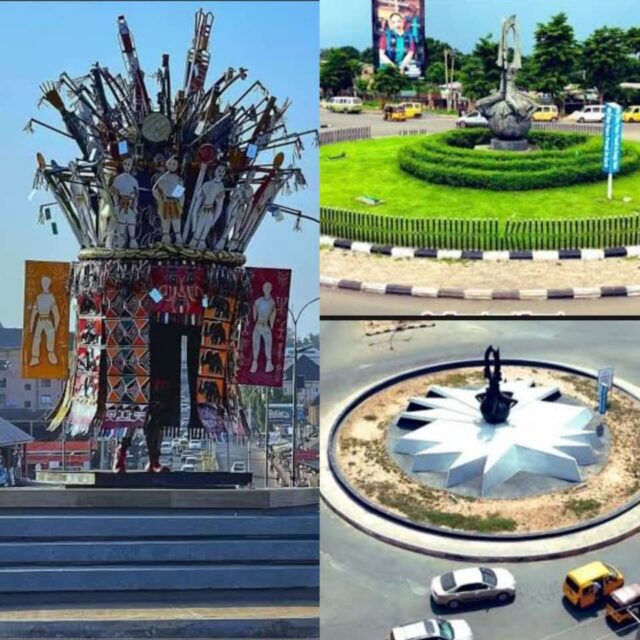
Among these installations, the metal Ijele masquerade sculpture at Onuasata Roundabout in Obiagu stands out as a masterpiece.

The Ijele is one of the most majestic masquerades in Igbo cosmology; an embodiment of royalty, grandeur, and sacred symbolism. By situating this sculpture at a bustling roundabout, the Mbah administration has positioned Igbo tradition at the crossroads of modern urban life.

This is more than aesthetics; it is a cultural declaration.

Significantly, the location itself carries historical weight. Onuasata Roundabout was once a natural gathering point during festive seasons, a place where masquerades graced the streets and communities converged.

By returning the Ijele to this symbolic space, the government has moved heritage out of the confines of museums and into the rhythm of daily living. It is a revival of memory, seamlessly woven into the city’s contemporary pulse.

Further along the city, at the popular “Monkey Junction” near the EFCC State Office, the newly reimagined “three monkeys” sculpture, expressing the ancient wisdom of see no evil, hear no evil, speak no evil, stands tall and refined.

These figures speak to a timeless moral philosophy deeply rooted in Igbo communal ethics.

They remind us of the virtues of restraint, mindfulness, and moral clarity. Their presence in a vibrant urban corridor suggests that values once taught in the village square continue to echo strongly across modern Enugu.

These sculptural interventions align with Governor Mbah’s broader developmental vision. Enugu is not only being positioned as an infrastructural and digital economic hub, but also as a cultural destination; alive with arts, memory, and meaning.

Through these creative projects, Gov Mbah’s administration is reframing the city’s narrative: from the familiar “Coal City State” to a dynamic centre where Igbo heritage, creativity, and community pride stand boldly in view.

In celebrating these sculptures, Enugu celebrates itself, its past, its present, and the cultural soul that binds its people together.

Well done Gov Peter Mbah !!!

Google search engine

SERAP Sues Akpabio, Abbas For Failing To Account For N18.6bn NASC Complex Funds


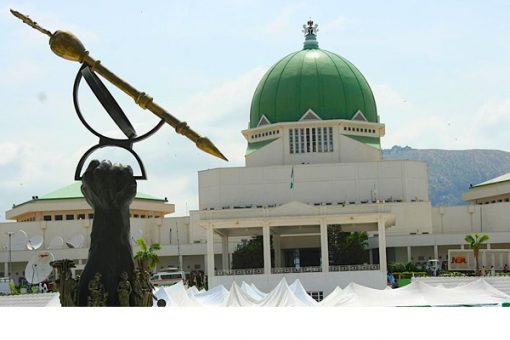
The Socio-Economic Rights and Accountability Project (SERAP) has filed a lawsuit against Senate President Godswill Akpabio and Speaker of the House of Representatives Tajudeen Abbas over their alleged failure to account for ₦18.6 billion intended for the construction of the National Assembly Service Commission (NASC) Office Complex.

The NASC itself is also named as a respondent in the suit.

The legal action, filed at the Federal High Court, Abuja (suit number FHC/ABJ/CS/2457/2025), follows allegations highlighted in the 2022 audited report by the Auditor-General of the Federation, released on 9 September 2025.

SERAP is seeking a mandamus order directing Akpabio, Abbas, and the NASC to account for the ₦18.6 billion allocated for the complex, Disclose the name of the alleged “fictitious construction company” that received the funds and Provide assessment reports, bid advertisements, quotations, contracts, Tender Board minutes, and Federal Executive Council (FEC) approvals relating to the project.

According to SERAP, the alleged diversion or misappropriation of the funds violates public trust, the Nigerian Constitution, and international anti-corruption standards.

The organization emphasized that Nigerians have the right to know how public money is spent and that enforcing transparency would strengthen democratic institutions and uphold the rule of law.

The 2022 audit report revealed that over ₦11.6 billion was paid to an unknown construction company between 2020 and 2023 for the construction of the NASC complex and conversion of a roof garden into office space.

The contracts reportedly lacked a Bill of Quantity, needs assessments, advertisements, bidding processes, contract agreements, and FEC approval.

There was also no Certificate of No Objection from the Bureau of Public Procurement.

SERAP argues that the alleged mismanagement of funds has serious social and economic consequences, particularly for vulnerable Nigerians, and undermines trust in public institutions.

The organization further cited sections of the Nigerian Constitution and the UN Convention against Corruption, which impose clear responsibilities on public institutions to manage resources transparently and for the common good.

The lawsuit, filed by SERAP lawyers Kolawole Oluwadare, Kehinde Oyewumi, and Andrew Nwankwo, asserts that granting the relief sought would promote accountability, recover misappropriated funds, and reinforce public confidence in the National Assembly.

No hearing date for the suit has been fixed.

Google search engine

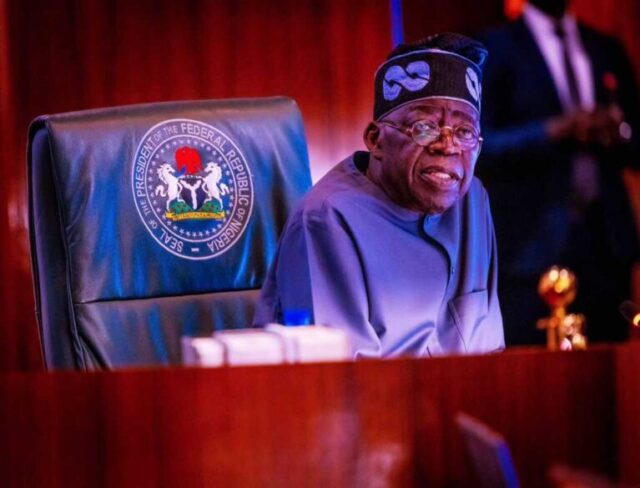
STATE POLICE: President Tinubu Takes Decisive Action


The issue of state police in Nigeria has long been a sensitive and contentious topic.

Last week, President Bola Tinubu finally took decisive steps to address the country’s escalating security challenges.

In a landmark announcement, he declared that states wishing to establish their own police forces are now free to do so, as part of a broader national security emergency initiative.

President Tinubu also directed the Armed Forces and Police to recruit additional personnel, while the State Security Service should deploy trained Forest Guards to counter terrorists, bandits, and other criminal elements.

Earlier, he ordered the Inspector-General of Police, Kayode Egbetokun, to withdraw over 11,000 officers from VIP protection duties to bolster police presence in security-challenged areas.

While increasing manpower is essential, state police remains the most significant reform.

By supporting this long-overdue initiative, President Tinubu is addressing one of the root causes of Nigeria’s insecurity.

Local police forces would leverage community knowledge, improving crime detection, prevention, and surveillance.

Concerns about potential abuse of state police are valid.

However, even federal police have been misused, as seen during the #EndSARS protests in 2020.

Proper training, oversight, and accountability will be critical to ensure state police serve public safety rather than political interests.

The President’s recent measures are part of broader silent restructuring efforts that have already yielded significant reforms.

These include: Power sector reform decentralizing generation, transmission, and distribution, Removal of FCT funds from the Treasury Single Account, allowing development projects in Abuja and Economic reforms, including fuel and foreign exchange subsidy removal and a new tax regime to streamline taxation without overburdening citizens.

These reforms are improving economic indicators, but their benefits cannot fully reach the populace without addressing insecurity.

President Tinubu emphasized that all Nigerians must contribute to national security, including reporting crimes and protecting vulnerable areas.

For state police to succeed, the National Assembly must enact enabling laws, and whistleblower protections should be strengthened to encourage citizens to provide actionable information.

The time to act is now, both for security and for the nation’s continued progress.

Rahman is Senior Special Assistant to President Tinubu on Media & Special Duties.

Google search engine

MOST COMMENTED

- Advertisement -
Google search engine