Home Blog Page 179

Obi Takes A Swipe At Reps For Failing To Criminalise Vote-Buying At Party Primaries
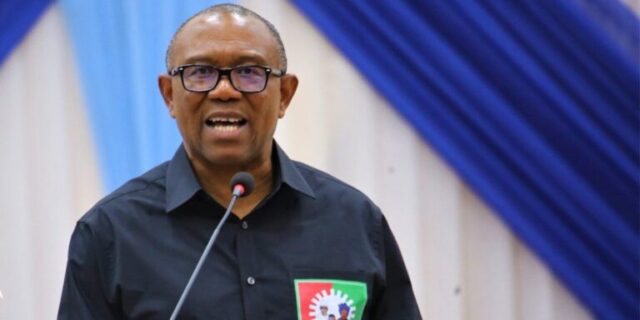
Former Anambra State governor and 2023 Labour Party presidential candidate, Peter Obi, has criticised the House of Representatives for declining to criminalise vote-buying during party primaries, calling the decision a serious blow to Nigeria’s democratic integrity.

Speaking in a post on X (formerly Twitter) on Sunday, Obi expressed disappointment that lawmakers did not take a firm stance against inducements at the foundational stage of the electoral process.

He described vote-buying as a “cancer” undermining credible elections and warned that the refusal to address it at the primaries level protects a broken system rather than safeguards the nation’s future.

“Just yesterday, Nigerians hoped that the House of Representatives would finally take a decisive stand against the cancer of vote-buying. By refusing to criminalise it at the foundational stage of party primaries, the House has chosen to protect a broken system rather than safeguard the nation’s future,” Obi said.

Obi stressed that any attempt to curb vote-buying must begin at the start of the electoral process.

He warned that democracy loses meaning when votes are exchanged for money and noted that the culture of vote-buying is no longer limited to politics but has seeped into other aspects of society, including town unions, student elections, and clubs.

“Any effort to stop vote-buying must begin at the primaries. Without addressing the problem at its roots, any measures taken later will lack the strength to endure,” Obi wrote.

He further emphasised that a democracy where votes are bought is not a true democracy but a criminal marketplace.

He called for bold reforms, insisting that Nigeria’s democratic future must not be compromised.

“The future of our democracy must not be for sale. A new Nigeria is possible, but only if we confront these practices boldly and insist that integrity begins at the very start of our electoral process,” Obi added.

Google search engine

Cabals Took Over Aso Rock, Turned Villa Into Surveillance Hub – Aisha Buhari

Former First Lady Aisha Buhari has given her most detailed account yet of life inside Aso Rock during her husband’s presidency, alleging that powerful cabals quietly seized control of access to President Muhammadu Buhari and transformed the Presidential Villa into a centre of manipulation and surveillance.

She claimed that unelected actors around the President planted listening devices in private quarters, enabling confidential conversations to be monitored and relayed to a narrow circle of power brokers who used the information to consolidate influence.

According to her, the practice had nothing to do with formal security operations and was driven instead by personal interests.

Aisha said the result was a breakdown of trust within the First Family and a gradual isolation of the President from voices outside the inner circle.

She alleged that even as First Lady, she found herself excluded from decision-making processes once Buhari assumed office in 2015.

Her revelations are contained in From Soldier to Statesman: The Legacy of Muhammadu Buhari by Dr Charles Omole, recently presented at the Presidential Villa in Abuja.

The book, she said, exposes how informal power networks shaped the presidency as much as constitutional authority.

According to her, individuals who had long anticipated Buhari’s rise moved swiftly to dominate access once power was secured.

Campaign allies disappeared, while new gatekeepers emerged, claiming exclusive insight into the President’s intentions and shielding him from dissenting views.

She dismissed suggestions that talk of a cabal was exaggerated, describing instead a coordinated group of relatives and associates who feared her assertiveness would weaken their grip.

Early advice to strike a compromise with them was rejected, she said, believing respect and professionalism would prevail.

Aisha further linked the internal power struggle to the deterioration of Buhari’s health, arguing that aides disrupted a long-established dietary and medical routine she supervised.

She said misinformation led the President to temporarily abandon prescribed supplements, contributing to visible weight loss and declining strength.

She recalled that when Buhari was eventually flown to London for treatment, doctors prescribed stronger nutritional supplements, which he initially resisted until she ensured he took them discreetly.

Within days, she said, his condition improved.

The former First Lady also addressed speculation surrounding Buhari’s prolonged medical absences, insisting that pneumonia and age-related complications, not conspiracy theories, defined his health challenges.

She blamed poor communication by the administration for allowing rumours to thrive.

Reflecting on Buhari’s final days, she described a quiet period marked by family presence and medical care rather than political intrigue.

She credited President Bola Tinubu with ensuring an orderly state burial and acknowledged the support of Vice President Kashim Shettima and officials of the Presidential Air Fleet.

Aisha said the death of her husband stripped the cabals of their influence, noting that their authority had rested solely on proximity to the President.

She insisted she and her children seek no retribution but warned that allowing unelected actors to dominate access to power remains a danger to Nigeria’s democracy.

Her account, she said, raises a broader question about governance in Nigeria: whether elected leaders truly wield authority or merely lend it to those who operate behind the scenes.

Google search engine

Ngige Denies N2.2bn Fraud Allegations, Insists His Hands Are Clean

Former Minister of Labour and Productivity, Chris Ngige, has denied any involvement in the alleged N2.2 billion fraud case filed against him by the Economic and Financial Crimes Commission (EFCC), insisting that his record in public service remains untainted.

Ngige, who served as labour minister between November 2015 and May 2023, was arraigned on December 12 before the High Court of the Federal Capital Territory on an eight-count charge bordering on abuse of office and acceptance of gifts.

He was briefly remanded at the Kuje Correctional Centre following the arraignment.

Justice Maryam Hassan, sitting in Gwarimpa, later granted him bail after his legal team perfected the bail conditions.

Shortly after his release, Ngige attended a caucus meeting of the National Working Committee of the All Progressives Congress at the Presidential Villa in Abuja.

The EFCC alleges that Ngige used his position to confer undue advantage on companies said to be linked to his associates through the approval of consultancy, training and supply contracts at the Nigeria Social Insurance Trust Fund.

According to the prosecution, seven contracts valued at N366.47 million were awarded to Cezimo Nigeria Limited, while eight contracts worth N583.68 million allegedly went to Zitacom Nigeria Limited.

The anti-graft agency further claimed that eight contracts valued at N362.04 million were awarded to Jeff & Xris Limited, four contracts worth N668.14 million to Olde English Consolidated Limited, and another four contracts amounting to N161.6 million through Shale Atlantic Intercontinental Services Limited.

All the companies, the EFCC said, were linked to Ngige’s associates.

The commission also accused the former minister of receiving monetary gifts from contractors between May and June 2022.

These included N38.65 million allegedly received through his campaign organisation, N55.003 million through a scholarship scheme, and N26.13 million from another contractor.

The offences are said to contravene Sections 17(a) and 19 of the Corrupt Practices and Other Related Offences Act, 2000, and carry a minimum sentence of five years’ imprisonment upon conviction.

EFCC counsel, Sylvanus Tahir (SAN), opposed Ngige’s bail application, arguing that the former minister had previously breached administrative bail conditions by failing to return his passport after being allowed to travel abroad for medical reasons.

However, defence counsel, Patrick Ikwueto (SAN), urged the court to grant bail, describing the charges as bailable and stressing that Ngige was a well-known public figure who posed no flight risk.

He also raised concerns about his client’s health, noting that the correctional facility lacked adequate medical infrastructure.

In granting bail, the court ordered that Ngige be released pending trial, which is expected to commence next year.

Speaking after securing his release, Ngige maintained that he served Nigeria with integrity throughout his career.

He thanked his supporters and insisted that the allegations did not amount to embezzlement or theft of public funds.

“In all my years of over three decades of public service, including my time as governor of a state, I have not been found wanting in the handling of public funds,” he said.

He further questioned how the companies mentioned in the charge could have been given unfair advantage, arguing that ministers do not preside over contract awards.

“My hands are clean, and it will be interesting to see where and how these companies were allegedly given unfair advantage in a process over which ministers neither participate in nor control,” Ngige stated.

According to him, Permanent Secretaries chair ministerial tenders boards, while the companies cited in the case were regular bidders that often lost out or were disqualified for failing to meet requirements.

“The companies mentioned competed like others and, in many cases, did not win bids. Some were even disqualified,” he added.

Google search engine

JUST IN: Akpabio Takes Natasha’s Suspension Battle To Supreme Court After Losing In Appeal Court


Senate President Godswill Akpabio has taken his legal dispute arising from the suspension of Senator Natasha Akpoti-Uduaghan to the Supreme Court, following a damaging ruling by the Court of Appeal that struck out his appeal on procedural grounds.

The move comes after the Abuja Division of the Court of Appeal dismissed the Federal Government’s brief of argument in the matter, holding that it was fundamentally defective and incompetent.

The appellate court ruled that the brief failed to comply with mandatory provisions of the Court of Appeal Rules.

In its ruling delivered on November 28, 2025, the court identified multiple violations, including the use of an unauthorised font size and line spacing, exceeding the prescribed 35-page limit, and failure to seek the court’s permission to regularise the defects.

The panel also found that the Notice of Appeal itself was flawed, describing the breaches as substantive rather than minor technical lapses.

Consequently, the court struck out the entire brief, dealing a major blow to Akpabio’s case.

The Senate President has since faulted the decision, describing it as unlawful.

However, certified court records and legal opinions indicate that the appellate court acted strictly in line with established procedure.

In his appeal to the Supreme Court, Akpabio argued that the Court of Appeal breached his constitutional right to fair hearing by refusing to grant leave to amend the defective brief or allow him exceed the page limit.

He is asking the apex court to set aside the appellate proceedings and permit him to refile his arguments in compliance with the rules.

Legal practitioners, however, have pointed out that the right to fair hearing does not absolve litigants from complying with procedural requirements, especially where such rules are applied uniformly.

They also note that Akpoti-Uduaghan’s legal team complied fully with the same rules, weakening claims of discrimination.

Beyond the legal arguments, Akpabio’s deep personal involvement in the case has attracted scrutiny.

Political and legal observers describe the Senate President’s posture as unusual for a presiding officer of the National Assembly, raising questions about the political undertones of the dispute.

Sources within the legislature say the case reflects longstanding tensions between Akpabio and Akpoti-Uduaghan.

The Kogi Central senator, a first-term lawmaker, has gained national prominence for her assertiveness and willingness to challenge Senate leadership, a profile that some insiders believe has unsettled the power structure within the chamber.

“This has gone beyond a legal disagreement,” a senior parliamentary source said. “It has become a struggle over authority and control.”

Analysts describe the Appeal Court ruling as a significant setback for the Senate President, noting that it stemmed from avoidable procedural errors rather than the substance of the case.

The loss has fuelled speculation that the Supreme Court appeal is aimed largely at containing political fallout.

Within ruling party circles, there are indications that pressure is mounting on Senate leadership to rein in Akpoti-Uduaghan’s growing independence and public influence, a factor observers believe may be driving the persistence of the legal battle.

Akpoti-Uduaghan has maintained a restrained response, expressing confidence in the judiciary and insisting that due process must be allowed to run its course.

Her legal team has described the Supreme Court appeal as a last-ditch attempt to overturn a decision reached strictly in accordance with the law.

Meanwhile, civil society organisations have cautioned that any effort by political office holders to influence judicial outcomes would undermine judicial independence and democratic governance.

As the Supreme Court prepares to hear the matter, the dispute has expanded beyond a procedural appeal, emerging as a broader test of the rule of law, separation of powers, and the limits of authority within Nigeria’s democratic system.

Google search engine

Claim Of Ceding Ette Community To Kogi Fake, Misleading – Enugu Govt

The Enugu State Government has dismissed as false a report claiming that Ette, a border community in Igbo-Eze North Local Government Area, has been ceded to Kogi State by the National Boundary Commission (NBC).

In a statement issued on Friday, the Secretary of the Enugu State Boundary Committee, Dr. Solomon Ejim, described the report as misleading and unfounded, insisting that the NBC has not taken any decision on the long-standing boundary dispute between Enugu and Kogi states.

Ejim said the attention of the state government was drawn to what he called a “fake online publication” alleging that Ette community had been administratively transferred to Kogi State.

He stated that the Director-General of the National Boundary Commission had been contacted on the matter and had outrightly disowned the report, stressing that no such decision had been reached or communicated by the commission.

According to the statement, “The Enugu State Government wishes to categorically state that the report is false. The Director-General of the National Boundary Commission has vehemently debunked and disowned it, confirming that it did not emanate from the Commission.”

The government urged residents of Ette, Igbo-Eze North Local Government Area, and Enugu State at large to disregard the report, describing it as the handiwork of mischief makers bent on causing unnecessary tension.

Ejim further appealed to the public to remain calm and go about their lawful activities, assuring them that no resolution has been taken by the NBC regarding the Enugu–Kogi boundary dispute.

“There is no cause for alarm. No such administrative action has been taken, and no report has been published by the National Boundary Commission on this matter,” the statement added.

Meanwhile, Governor Peter Mbah has reiterated his administration’s commitment to safeguarding lives, property, and economic activities across the state.

Speaking at the Southeast Business and Investment Summit 2.0 in Enugu late last month, the governor, represented by his deputy, Ifeanyi Ossai, said the state had invested significantly in strengthening its security architecture.

Mbah acknowledged the broader security challenges facing the country but noted that Enugu had recorded notable improvements due to sustained investments in technology and intelligence-driven security measures.

“In Enugu, we have made huge investments in security to protect lives and businesses. The number of incidents is dropping rapidly,” he said.

While noting that some security successes could not be disclosed publicly, the governor assured residents that government agencies remain vigilant and committed to ensuring their safety.

“We may not be where we want to be yet, but be assured that while you sleep, we are working tirelessly to keep you safe,” he said.

Google search engine

Housewife Who Faked Own Kidnap, Collected N2.5m Ransom From Husband Nabbed


The Lagos State Police Command has arrested a 26-year-old housewife and her 30-year-old accomplice for allegedly staging her own kidnapping and extorting N2.5 million from her husband.

The command’s spokesperson, Abimbola Adebisi, confirmed the arrest in a statement issued on Saturday in Lagos.

Adebisi said the command received a distress call on November 24 from the husband of the suspect through one of its emergency lines, reporting that his wife had been kidnapped by armed men.

She said the caller disclosed that the alleged kidnappers initially demanded a ransom of N10 million, which was later reduced to N3 million, adding that after he paid N2.5 million, the woman was still not released.

“Upon receipt of the complaint, the Command Special Squad immediately deployed human and technical assets to track the alleged kidnappers. The supposed victim was eventually released and reunited with her family,” Adebisi said.

According to the spokesperson, during police debriefing, the woman claimed she was abducted by six armed men in a silver Toyota Venza, taken to their hideout, and dispossessed of her iPhone 12 Pro Max.

“She further claimed that the ransom paid by her husband was first credited into her bank account before being handed over to the kidnappers,” she said.

Adebisi, however, explained that police investigations revealed several inconsistencies in her narrative.

She said that on December 3, operatives apprehended the accomplice in the Ede area of Osun State, adding that a SIM card used to register the WhatsApp account through which ransom negotiations were conducted was recovered from him.

“During interrogation, the accomplice confessed that the suspect requested the use of his SIM card to create the WhatsApp account used for the ransom negotiations.”

“He admitted providing the one-time password (OTP) sent to his line, which enabled her to operate the account,” Adebisi said.

She added that, following the confession, the suspect was confronted and admitted to faking her own kidnapping to extort money from her husband, who resides in South Africa.

“The phone was recovered from a 34-year-old man, who told investigators that he bought it from the suspect for N380,000 after being warned not to insert any SIM card into it,” Adebisi said.

Investigations are ongoing, and the suspect and her accomplice are expected to be charged to court upon conclusion of the probe.

Adebisi said the Commissioner of Police in Lagos State, Olohundare Jimoh, reiterated the command’s commitment to protecting lives and property, while warning the public against false reporting, criminal deception, and acts capable of diverting critical security resources.

The spokesperson urged residents to remain law-abiding and to promptly report suspicious activities through the command’s emergency numbers: 07061019374, 08065154338, 08063299264, and 08039344870.

Google search engine

‘Joke Taken Too Far’, Jigawa PDP Condemns Lamido’s Suspension, Demands Reversal

The Jigawa State chapter of the Peoples Democratic Party (PDP) has rejected the suspension of former Governor Sule Lamido from the party’s Board of Trustees (BoT), describing the decision as unjust, counterproductive, and damaging to party unity.

The BoT announced Lamido’s suspension on Friday, citing alleged anti-party activities and inflammatory statements during recent internal disputes.

The move has sparked controversy and heightened divisions within the party’s Jigawa chapter, raising concerns ahead of upcoming elections.

Reacting to the suspension, Jigawa PDP State Chairman Babandi Gumel, in a statement issued on Saturday in Dutse, said the action was a direct affront to justice, internal democracy, and reconciliation efforts championed by the party.

He noted that Lamido had sought judicial redress after being denied the opportunity to obtain a nomination form to contest the party’s national chairmanship.

“The Federal High Court in Abuja ruled in his favour, restraining the PDP from proceeding with its national convention until Lamido’s right to contest is determined,” Gumel said.

“Suspending him now is premature, prejudicial, and shows disrespect for the judicial process.”

He further highlighted Lamido’s loyalty to the party, noting that as a founding member, he has never defected to another party.

“Punishing such loyalty sends a chilling message to all dedicated members,” Gumel added.

The Jigawa PDP chairman emphasised that the party’s strength lies in inclusion rather than exclusion, and pointed out that the PDP constitution does not allow for the suspension of a “life member” like Lamido.

“The BoT must immediately and unconditionally withdraw the suspension, apologise to this elder statesman, and align its actions with recent calls for reconciliation.”

“The Jigawa PDP remains committed to a strong, united, and democratic party that respects the rule of law and the dignity of its members,” Gumel concluded.

Google search engine

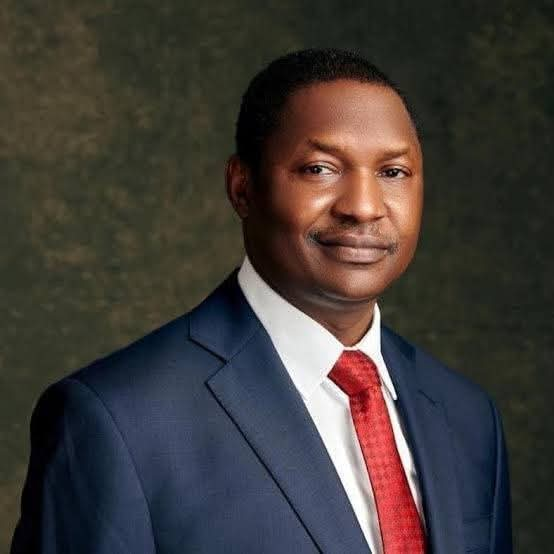
We Have No Hand In Malami’s EFCC Ordeal – Kebbi Government

Abubakar Malami,

The Kebbi State Government has denied any role in the ongoing Economic and Financial Crimes Commission (EFCC) investigation involving former Attorney General of the Federation, Abubakar Malami.

According to the state, the petitions prompting the EFCC probe did not originate from Kebbi, stressing that it has no connection to the matter.

Malami was first invited by the EFCC on November 28 over issues related to the recovery of the Abacha loot during his tenure as Attorney General.

On November 29, he tweeted that his interrogation was “productive” and described the allegations against him as “fabricated.”

However, after returning to the EFCC on December 8, he has remained in custody, reportedly for failing to meet bail conditions.

His arrest came shortly after he declared his intention to contest the Kebbi State governorship election in 2027, fueling social media speculation that his detention might be politically motivated.

Ahmed Idris, Chief Press Secretary to Governor Nasir Idris, dismissed such claims, saying “The Kebbi State Government has no hand in Malami’s case; it predates this administration.”

The petitions against him come from Abuja and some of his colleagues, not Kebbi. Anyone claiming otherwise is being mischievous and heartless, as the state government is not involved and is not fully aware of the developments in his case.”

Google search engine

$7m School Fees Scandal: ICPC Summons Dangote, Probes Ex-NMDPRA MD

The Independent Corrupt Practices and Other Related Offences Commission (ICPC) has invited billionaire businessman Aliko Dangote to provide additional details over his petition against the immediate past Managing Director of the Nigerian Midstream and Downstream Petroleum Regulatory Authority (NMDPRA), Alhaji Farouk Ahmed.

Dangote is expected to appear before the commission on Monday or be represented by his lawyer, Ogwu Onoja (SAN), as investigation into the petition formally begins.

Sources at the anti-graft agency disclosed that a special panel of investigators was constituted on Friday to handle the case.

The panel was reportedly directed by the ICPC Chairman, Dr. Musa Adamu Aliyu (SAN), to prioritise Dangote’s petition, underscoring the seriousness attached to the matter.

According to the sources, Dangote has been asked to formally adopt the petition and submit documentary evidence to substantiate the allegations.

The commission is expected to thereafter isolate the issues raised and invite Ahmed to respond.

Dangote had accused the former NMDPRA boss of corruption, abuse of office and economic sabotage, alleging that Ahmed spent over $7 million on the education of his four children in Switzerland without lawful means of income.

The petition reportedly detailed the names of the children, the schools attended and specific amounts paid.

The businessman further alleged that Ahmed undermined local refining by colluding with oil importers and international traders through the continued issuance of petroleum import licences, despite domestic refining capacity.

Although Ahmed has since resigned his position, ICPC officials maintained that the resignation would not halt the probe, describing the investigation as being in the public interest.

A source at the commission said the agency would be fair to all parties involved, noting that Section 19 of the ICPC Act criminalises the use of public office for personal or family benefit, with penalties including imprisonment.

Dangote, through his lawyer, had demanded Ahmed’s arrest, investigation and prosecution, alleging that the former regulator lived far beyond his legitimate earnings as a public servant.

The dispute between Dangote and petroleum regulators had earlier escalated into a N100 billion lawsuit filed by Dangote Petroleum Refinery and Petrochemicals FZE at the Federal High Court in Abuja, challenging import licences issued by NMDPRA and other agencies.

The suit was later withdrawn in July 2025.
Confirming the development, ICPC spokesperson John Okor Odey said the commission received a formal petition from Dangote on December 16, 2025, adding that the allegations would be thoroughly investigated.

Google search engine

CBN Directs Banks To Configure ATMs, POS For Foreign Card Transactions

The Central Bank of Nigeria (CBN) has instructed banks and non-bank acquirers to implement multi-factor authentication for foreign card transactions exceeding $200 per day, $500 per week, and $1,000 per month.

The move is aimed at strengthening security and improving user experience for international cardholders in Nigeria.

The directive, issued in a circular dated December 18, 2025, and signed by CBN’s Director of Financial Policy and Regulation, Rita Sike, also requires that ATMs, point-of-sale (POS), and virtual terminals be properly configured to accept international cards, comply with card association standards, and obtain the necessary certifications for seamless processing.

According to the apex bank, the measures are intended to ensure smooth local currency withdrawals, payments, and transfers, particularly for tourists and Nigerians in the diaspora.

The circular emphasizes that transactions should only be completed after users accept the terms, including applicable exchange rates and associated charges.

Banks and acquirers are also required to maintain sufficient liquidity, settle merchant transactions in naira, and monitor unusual transaction patterns to detect potential fraud.

Additionally, merchants must adhere to know-your-customer (KYC) and anti-money laundering controls, retain transaction documentation for at least 12 months, and provide contactless payment options for low-value transactions.

Any unresolved consumer complaints escalated to the CBN may attract sanctions.

The CBN also instructed banks and acquirers to train their merchant networks on dispute handling and chargeback processes, while suspicious transactions must be reported to the Nigeria Financial Intelligence Unit (NFIU).

The regulator said compliance with these directives will be closely monitored, and sanctions will be imposed on institutions found in violation.

Google search engine

- Advertisement -
Google search engine

MOST COMMENTED