Home Blog Page 189

Fresh Attack In Borno As Boko Haram Invades Community, Burns Houses, Vehicles


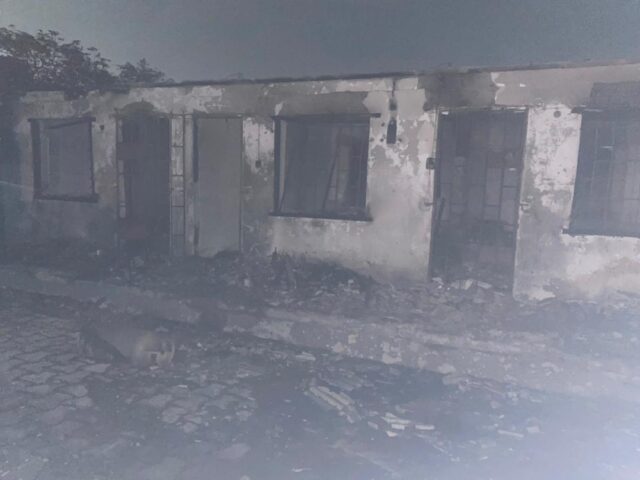
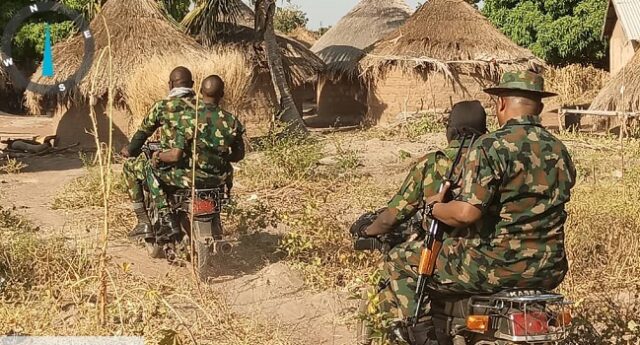
Boko Haram insurgents have launched fresh attacks on Magumeri, a community in Borno State, destroying dozens of houses and vehicles during a midnight assault.

The attacks occurred just as Governor Babagana Zulum declared Sunday and Monday as days of statewide prayers and fasting in response to the rising insecurity in the state.

Troops of the North-East Joint Task Force, Operation Hadin Kai (OPHK), however, were able to repel the terrorists, preventing loss of lives.

Magumeri, situated along the 85-kilometre Maiduguri–Gubio Road, suffered extensive damage, including the destruction of Civilian JTF patrol vehicles that were distributed by the governor only two weeks earlier.

A military source who confirmed the incident in Maiduguri said:

“No lives were lost in the foiled attacks by the terrorists. Unfortunately, the insurgents burst from Sasawa Forest in Yobe State, razing down the patrol vehicles of the Civilian JTF and other volunteers.”

The source added that the volunteer youths have been providing critical support to the military and other security agencies in ongoing operations in Sambisa Forest and the Lake Chad region.

“Our soldiers stood their ground and forced the insurgents to flee with gunshot wounds back toward the forest,” he said.

Google search engine

Insecurity: Fast-Track State Police Creation, South-West Governors Urge Tinubu


The South-West Governors’ Forum has renewed its call for the establishment of state police, describing it as an urgent national priority that can no longer be postponed in the face of growing security challenges across the region.

The position was contained in a communiqué issued after the Forum’s meeting held on Monday at the Executive Chamber of the Governor’s Office in Agodi, Ibadan.

In attendance were Ekiti State Governor Biodun Oyebanji, Oyo State Governor Seyi Makinde, Lagos State Governor Babajide Sanwo-Olu, Ogun State Governor Dapo Abiodun, Ondo State Governor Lucky Ayedatiwa, and Osun State Deputy Governor Kola Adewusi.

Reading the communiqué, Governor Sanwo-Olu said the governors deliberated extensively on security, agriculture and regional economic development, and agreed that decentralising policing would significantly enhance security operations.

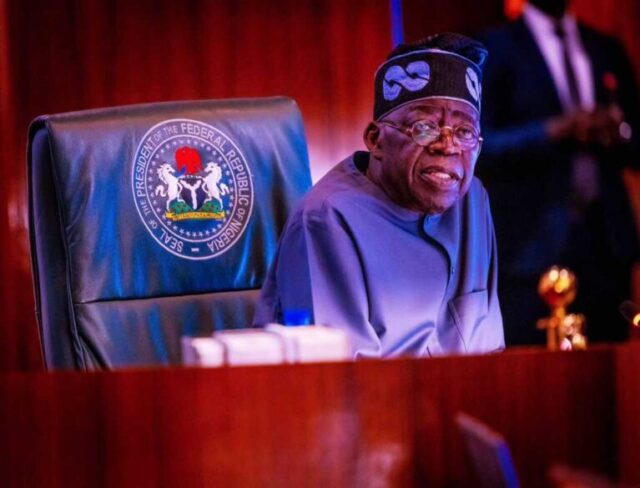
The Forum commended President Bola Ahmed Tinubu for what it described as his “decisive efforts” in combatting insecurity, and for his economic and developmental reforms.

It also expressed solidarity with the Federal Government over recent kidnapping incidents in Kebbi, Kwara and Niger States, acknowledging the swift rescue of abductees in the affected areas.

As part of measures to strengthen security coordination, the governors approved the creation of a South-West Security Fund (SWSF) to be domiciled at the DAWN Commission.

The fund will be jointly managed by Special Advisers on Security from all six states and reviewed monthly.

They also agreed to set up a digital intelligence-sharing platform to enable real-time communication among the states.

The system will facilitate the exchange of threat alerts, incident reports, and interstate rapid response coordination.

The communiqué highlighted concerns over growing criminal activities within the forests across the region and urged the Federal Government to increase surveillance capacity.

“The urgent need for enhanced forest monitoring cannot be overstated,” the governors said.

They also urged the Federal Government to deploy Forest Guards, while state governments provide the personnel required for the scheme.

Rising illegal mining activities also came under scrutiny. The Forum warned that the trend poses environmental, health and security threats.

It called for a more robust licensing framework, improved monitoring and strict punitive measures against defaulters.

Alarmed by what they described as unregulated interstate migration, the governors said the situation was contributing to rising insecurity.

They resolved to intensify border checks and partner with the National Identity Management Commission (NIMC) to strengthen migrant identification and verification.

Reaffirming their long-standing advocacy for decentralised policing, the governors declared:
“The time is now. State police can no longer be delayed.”

The Forum praised farmers within the region for improved agricultural yields, saying the recent stability in food prices is largely due to increased output.

It also thanked President Tinubu for establishing the South-West Development Commission (SWDC) and urged the body to fully deliver on its mandate.

The DAWN Commission was similarly applauded for its ongoing contributions to security coordination and regional integration.

Concluding the meeting, the governors called for unity, noting that the South-West remains “one, indivisible region committed to religious harmony and collective progress.”

Google search engine

Enugu Brimming With Innovation And Hope Under Governor Mbah’s Leadership By Ifeanyi Ogenyi


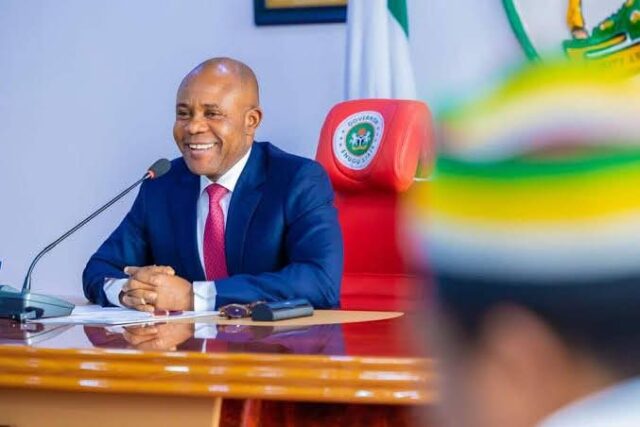
At the First Plenary Session of the 4th Synod of the Catholic Diocese of Enugu, the governor of Enugu State, His Excellency Barr. Dr. Peter Ndubuisi Mbah, declared that Enugu has experienced a quiet yet profound rebirth within the past two years.

His innovative leadership has indeed ushered in disruptive transformation across key sectors of the state.

From strengthening security through a well-structured, AI-enhanced Command and Control Centre to reviving moribund assets, modernizing the transportation system, boosting Internally Generated Revenue (IGR), and revitalizing long-abandoned industries, Governor Mbah has set Enugu on an unmistakable path of renewal.

Over 293 roads have been built or reconstructed across the state; significantly improving connectivity, reducing travel time, and enhancing socio-economic activities.

The Smart Schools and healthcare reforms are equally revolutionary, reshaping the dreams of our children and restoring dignity to our communities.

The facts speak for themselves, res ipsa loquitur. Without noise or theatrics, Mbah has proven to be a steady, responsible hand on the wheel of leadership.

With courage, resilience, and clarity of purpose, he has remained focused on the state’s long-term vision while embracing new ideas that reinforce his core values: excellence, innovation, and service to the people.

Leadership is best demonstrated when vision finds expression in governance.

In Enugu today, Governor Peter Mbah’s philosophy of Tomorrow Is Here has evolved from a hopeful slogan into a living reality; now the defining signature of his administration.

His approach reminds us that good governance is not rocket science; it is a disciplined art, woven with intent, foresight, and purposeful execution.

His unwavering commitment to infrastructure development, economic reform, modernization of agriculture, and transformation of education, transportation, and tourism is evident and inspiring.

The Smart School Programme, a forward-looking investment, makes one message unmistakable: every child in Enugu deserves affordable and high-quality education.

Reforms in curriculum oversight, school licensing, exam centralization, teacher verification, and a digitalized school portal are raising standards and fostering transparency.

Healthcare reform reflects the same vision. The upgrading of the State Teaching Hospital (Parklane), the adoption of electronic medical records across all levels of care, and the ongoing construction of a new 300-bed Enugu International Hospital, a project poised to make Enugu a hub for medical tourism,demonstrate a strategic, compassionate, and future-ready healthcare agenda.

Even the regulation of private medical outreaches now ensures safer interventions, qualified personnel, and improved collaboration.

Governor Mbah’s infrastructural strides paint a clear picture of purposeful leadership.

The statewide rehabilitation and construction of roads have restored productivity, reduced gridlocks, especially across New Haven, Trans-Ekulu, Abakpa, Emene, and Agbani Road, and supported commerce.

The provision of CNG buses signals a modern, cost-effective, and environmentally responsible transport system.

Major expansions such as the First Bus Stop Abakpa Nike–Ugwuogo–Opi Nsukka Road and the Pennoks–NOWAS–T-Junction Road will drastically cut travel time and open new trade corridors.

These are not prestige projects; they are the arteries of economic renewal.

As Governor Mbah rightly noted, these achievements are not isolated interventions but threads of a deliberate tapestry,an intentional effort to rebuild Enugu into a productive, modern, and competitive state.

At the heart of every decision is one priority: the people of Enugu. They are the very fabric upon which this rebirth is being woven.

Industrialization is taking shape. Public-private partnerships are reviving abandoned assets such as the Enugu Hotel Presidential, Niger Gas, and the Sunrise Flour Mill.

A new productive economy is emerging, one driven by innovation, efficiency, and opportunity.

What Enugu now requires is continuity: a disciplined, intentional, and consistent implementation of the governor’s policies, supported by a cooperative and forward-looking citizenry.

With competence at the helm and a clear vision lighting the way, Governor Mbah is keeping Enugu firmly on course, repairing past damages and building a future of shared prosperity.

Google search engine

Kogi Govt Denies Allegations Of Diverting Local Council Funds


The Kogi State Government has strongly rejected allegations that it diverted local government funds, describing the claims as false, politically motivated, and aimed at tarnishing the image of Governor Ahmed Usman Ododo.

Speaking to journalists in Abuja yesterday, the Commissioner for Information and Communications, Kingsley Femi Fanwo, said the petition submitted to the Economic and Financial Crimes Commission (EFCC) by a coalition of Civil Society Organisations (CSOs) was built on “fabricated assertions” and intended to mislead the public.

Fanwo insisted that the state runs “one of the most transparent and accountable local government financial systems in Nigeria,” stressing that claims of fraud were part of a coordinated attempt to smear the government.

The petition, submitted by African Transparency Initiative (ATI), Community Outreach for Development and Welfare Advocacy (CODWA) and Concerned Kogi State Citizens, alleged widespread diversion of local council funds through the so-called Lokoja Voucher Scheme.

Dated November 18, 2025, and copied to several federal oversight institutions, the petition accused officials of siphoning money using fake vouchers, inflated contracts and projects that allegedly never existed.

It further claimed that shell companies linked to Politically Exposed Persons (PEPs) were awarded questionable payments.

The groups also alleged that local council officials were pressured to approve documents without proper documentation such as Bills of Quantity, tender procedures or site verification.

They claimed fraudulent vouchers were processed monthly, draining funds meant for community development.

According to the petitioners, 95 per cent of the Local Government Service Commission’s statutory one per cent allocation was “re-looted” through non-tendered contracts.

The petitioners argued that the alleged violations breached provisions of the EFCC Act, ICPC Act and the Money Laundering (Prevention and Prohibition) Act, and called for a full forensic audit of council finances from January 2024.

They also demanded prosecution of implicated officials and recovery of stolen funds.

However, Fanwo dismissed all allegations, insisting that the state government does not interfere with council finances.

“Not a kobo of local government allocation is touched by the state,” he said.

“Every council in Kogi receives its complete federal allocation and independently manages its payroll, projects, contracts and development priorities in accordance with the constitution.”

Google search engine

Atiku’s Ward Registration Invalid, Exercise Carried Out By Unauthorised Individuals – ADC


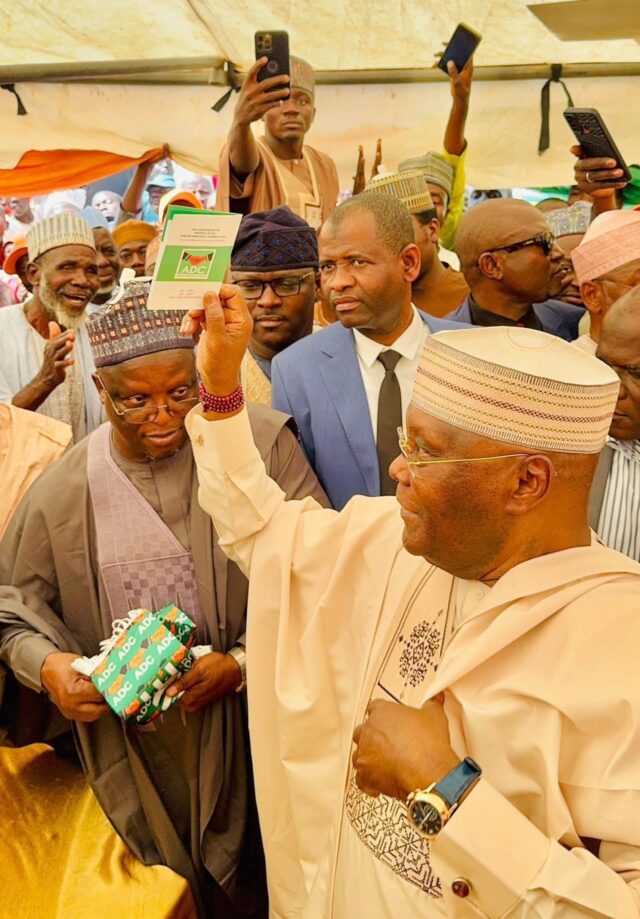
The national leadership of the African Democratic Congress (ADC) has distanced itself from the recent registration of former Vice President Atiku Abubakar, describing the process as irregular and carried out by individuals with no authority from the party’s headquarters.

In a statement issued on Monday by the ADC’s Director of Media and Public Affairs, Christopher O. Okechukwu, the party explained that Atiku’s registration at Jada 1 Ward in Adamawa State did not follow established procedures and was not conducted by officials recognised by the authentic ward executive committee.

According to the statement, the party has “on several occasions” advised Atiku to present himself for proper registration with the constitutionally recognised ward leadership in his locality, but he has yet to comply.

Okechukwu said:
“This registration exercise was handled by persons who are not acknowledged by the ADC’s National Headquarters and therefore lack the authority to admit new members. We have repeatedly urged Mr. Abubakar to complete his membership registration through the legitimate party executives, but this has not happened.”

He appealed to the former Vice President and his team to act in good faith and avoid actions that undermine the party’s internal processes, noting that the ADC is “not a tool for personal political ambition but a movement driven by democratic values.”

The party spokesman further suggested that the development might be linked to a broader political strategy, referencing what he described as a recurring pattern of leveraging the ADC while keeping options open for reconciliation with the Peoples Democratic Party (PDP).

He added:
“The ADC national leadership considers this action inconsistent with our constitution. We are concerned it may be part of a wider plan by Mr. Abubakar and his allies. We again call on him to regularise his membership with the officially recognised party structures.”

Okechukwu also highlighted that the ADC is currently dealing with an internal leadership dispute, now before the Federal High Court, concerning the legitimacy of David Mark’s leadership faction.

He noted that Atiku’s potential membership is being assessed within this context.

Despite the tensions, the ADC reiterated its commitment to transparency, due process and respect for party structures, expressing hope for constructive engagement aimed at strengthening unity and stability within its ranks.

Google search engine

Google, LinkedIn, TikTok Shut Down 28 Million Nigerian Accounts In One Year – NITDA DG


The Director-General of the National Information Technology Development Agency (NITDA), Kashifu Abdullahi, has revealed that three major global tech companies deactivated more than 28 million Nigerian-linked accounts within the last year due to fraud, impersonation, and harmful online activities.

Speaking on Monday at a symposium on digital innovations in crisis communication organised by the Centre for Crisis Communication, Abdullahi disclosed that:

Google disabled 9,680,141 accounts associated with online scams, impersonation and harmful content.

LinkedIn removed almost 16 million accounts, a figure he described as “alarming,” given the platform’s reputation as a professional networking space.

TikTok also carried out large-scale removals for similar violations.

According to him, the account deactivations were part of ongoing joint efforts between the Federal Government and global tech companies to curb digital threats and enhance crisis response mechanisms.

Abdullahi said the scale of impersonation and deception on professional platforms like LinkedIn was particularly troubling, noting that criminals now exploit even career-focused networks for fraud and social engineering attacks.

He added that digital platforms collectively took down over 58.9 million harmful content items during the period, while 420,000 posts were restored after user appeals or internal reviews.

The NITDA DG emphasised the need for a transparent and jointly agreed system for content removal and reinstatement that prevents misuse by authorities while ensuring that genuinely harmful content is swiftly addressed.

He noted, “If content does not violate Nigerian law, we have no basis to demand that it be removed,” stressing that the reinstatement process must protect minority voices from arbitrary censorship.

Abdullahi highlighted that collaborations with big tech firms have strengthened regulatory compliance and supported data protection initiatives, including the establishment of the Nigerian Data Protection Commission, which stems from the Nigeria Data Protection Regulation.

Over the last decade, social media has become central to communication in Nigeria but has also enabled the spread of misinformation, extremist messages and widespread digital fraud targeting individuals and institutions.

Federal agencies, including NITDA, the Nigerian Communications Commission (NCC), and the NDPC, continue to work with global platforms to enforce regulations that maintain national security without eroding free speech.

Speaking at the event, the Minister of Information and National Orientation, Mohammed Idris, represented by the Director-General of the Voice of Nigeria, Jibrin Ndace, said emerging technologies must be harnessed to strengthen crisis communication and protect national stability.

He noted that crises are not only shaped by events but by narratives surrounding them.

Also addressing the gathering, the Chairman of the Centre for Crisis Communication, Major General Chris Olukolade (retd.), described crisis communication as a critical national security function, warning that modern emergencies unfold in real time and require equally swift and credible communication from institutions.

He stressed that digital platforms now significantly influence how crises develop, and timely access to verified information has become essential for public safety and effective institutional response.

Google search engine

Insecurity: Military Strategy Ineffective, Says Kebbi Governor


Governor Nasir Idris of Kebbi State has criticised the current military strategy for tackling insecurity, insisting that the approach is ineffective and must be urgently reviewed.

Idris made the remarks on Monday while hosting the Speaker of the House of Representatives, Tajudeen Abbas, at the Government House in Birnin Kebbi.

The governor reiterated his earlier demand for a full investigation into the withdrawal of security personnel from Government Comprehensive Girls Secondary School, Maga, shortly before bandits abducted 25 schoolgirls.

The vice principal and a watchman were also killed during the attack.

Expressing frustration, Idris questioned how a large number of armed attackers could operate freely.

“How can over 500 bandits be moving on bikes on our highways without being checked?” he asked.

“We have fulfilled our obligations to the security agencies, providing logistics and purchasing more than 100 vehicles, yet the current security architecture is not working.”

He added that had the state known the security presence would be withdrawn moments before the attack, the government would have opted to shut down the school instead.

Idris said he suspected “enemies” were working to destabilise both the state and the federal government, urging the National Assembly to take decisive action on the worsening insecurity.

“Yesterday it was Kebbi, today it is Niger and Kwara. Who knows which state is next? We must ensure this insecurity is tackled once and for all.”

Earlier, Speaker Tajudeen Abbas said he and a delegation from the House were in the state to commiserate with Kebbi residents over the abduction and killings.

He announced a donation of ₦30 million to the families of the slain vice principal and watchman.

Abbas also encouraged the governor to rename the school in honour of the late vice principal, whom he described as a hero.

“We are with you, and we will continue to work towards securing the girls,” he said.

Google search engine

Self-Defence By Communities Fueling Crisis – Army


The Nigerian Army has cautioned that the growing practice of communities arming themselves for self-defence in Plateau State is deepening the crisis rather than helping to resolve it.

Major General MA Etsy-Ndagi, the Chief of Civil-Military Relations, made this known during a media briefing in Jos.

He said that while some groups have been advocating for community self-defence due to recurring attacks, the approach has only aggravated tensions and contributed to a cycle of retaliatory violence.

Plateau State has experienced persistent conflict since 2001, leading to numerous deaths, injuries and widespread destruction. Frustration over the repeated attacks has led some communities to demand permission to protect themselves.

But Etsy-Ndagi stressed that the violence involves ongoing clashes between farming and herding communities, with both sides accusing each other of attacks, farm destruction, and cattle rustling.

According to him, this back-and-forth has created a continuous chain of violence.

He explained that the military is focused on disarming all individuals, including those carrying locally fabricated weapons, to restore peace.

“To ensure the safety of lives and property, everyone must be disarmed. We cannot allow illegal weapons or local fabrication of arms,” he said.

He added that the military does not support the idea of communities defending themselves, noting that the Army’s role is to protect vulnerable and traumatized communities, not to permit parallel armed groups.

Etsy-Ndagi appealed to residents to promote peaceful coexistence and work closely with security agencies, emphasizing that sustainable development is impossible without peace.

He reaffirmed the Nigerian Army’s dedication to combating insecurity across the country and restoring stability to troubled regions.

Google search engine

Police Officers Killed In Bandit Ambush Buried


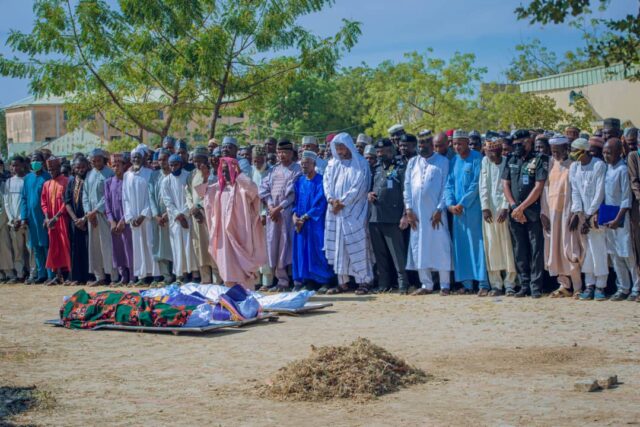
The police officers who lost their lives in an ambush by bandits in Bauchi State have been laid to rest.

The attack occurred in Sabon Sara village, in Darazo Local Government Area, where the officers were responding to a distress call before they came under heavy fire from the attackers.

On Monday, the Commissioner of Police, CP Sani Omolori Aliyu, alongside other senior officers, attended the burial ceremony in Bauchi.

As of the time of this report, details of the funeral were still limited.

The Bauchi State Police Command earlier confirmed that five officers were killed in the attack.

According to the Command’s spokesperson, CSP Ahmed Wakil, five personnel “paid the supreme price,” two others sustained injuries, and an unspecified number of bandits were neutralised during the confrontation.

The injured officers were identified as Inspector Isah Musa (SID) and Inspector Yusuf Gambo (SID).

Wakil explained that after receiving the distress report, the Divisional Police Officer (DPO), SP Auwalu Ilu, led a reinforcement team to the location.

They successfully recovered the injured officers and the bodies of the deceased, who were taken to the General Hospital in Darazo.

The remains of the fallen officers were later deposited in the morgue.

He added that aggressive efforts were underway to track down the perpetrators.

“The Command remains fully committed to ensuring that the criminals behind this heinous act are brought to justice,” Wakil stated.

Google search engine

Osun 2026: Acord Party A Better Platform For Adeleke’s Reelection – Former Governor Oyinlola


Former Osun State governor, Olagunsoye Oyinlola, says the political party Governor Ademola Adeleke will use for his 2026 re-election attempt will be confirmed after the governor returns from his current trip abroad.

Addressing speculations about Adeleke’s next political move, Oyinlola described the Accord Party as a credible and attractive alternative.

He stressed, however, that his decision to move with Adeleke, should the governor defect from the Peoples Democratic Party (PDP), will depend on how well the new party aligns with his own values.

Speaking on Rave FM’s “Oro Oselu” programme on Monday, Oyinlola recalled that he refused to join the All Progressives Congress (APC) when some Osun PDP stakeholders once considered that option, saying he had no confidence in the APC based on past experiences.

He explained that unresolved national crises within the PDP, including issues that may jeopardize nomination processes, are pushing stakeholders to weigh other possibilities ahead of the 2026 governorship race.

In his remarks, delivered partly in Yoruba, Oyinlola said:

The APC is not a trustworthy party and failed to reward his contributions during the merger that birthed the party.

His support for Adeleke’s potential move hinges on choosing a party he personally respects.

While joining APGA would offer only a short-term advantage, the Accord Party stands out as a balanced choice.

He noted his involvement in forming the African Democratic Congress (ADC) but said the party never lived up to expectations.

He added that consultations would resume once Governor Adeleke returns later in the week, after which a decision would be communicated to Osun residents.

On the lingering PDP disputes nationwide, Oyinlola said the committee he works with has resolved crises in four out of six troubled state chapters.

Turning to national issues, he expressed worry over the country’s deteriorating economy and worsening insecurity.

He questioned the effectiveness of the Federal Government, citing widespread hardship and security failures.

Reports continue to suggest Adeleke may leave the PDP to pursue a second term, though he has not publicly named his preferred party.

DAILY GAZETTE reports that INEC set December 15, 2025, as the deadline for political parties to submit candidates for the August 8, 2026 Osun governorship election.

Google search engine

MOST COMMENTED

- Advertisement -
Google search engine