Home Blog Page 210

Enugu Digitises Its Workforce To Boost Productivity, Trains Civil Servants
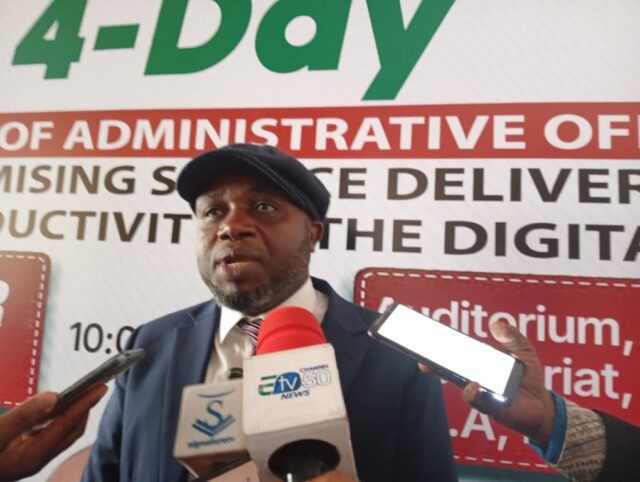
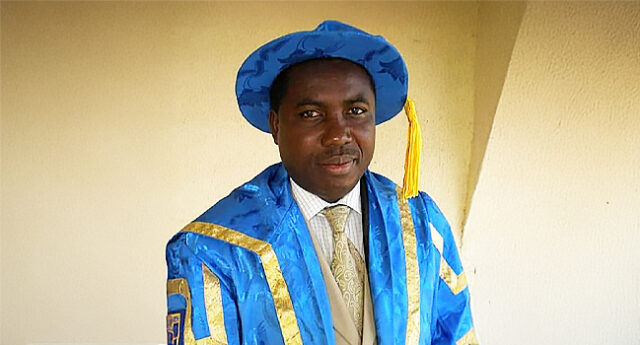
Picture of Enugu head of service

The Enugu State Government has reaffirmed its commitment to improving service delivery by embracing digitalisation and boosting the productivity of its civil servants.

This was highlighted by the Secretary to the State Government (SSG), Prof. Chidiebere Onyia, during the opening of a 4-day training for Administrative Officers held on Tuesday in Enugu.

The program, themed “Optimising Service Delivery and Productivity in the Digital Age,” is organized by the Office of the Head of Service.

Prof. Onyia emphasized that the state’s vision to grow its economy from $4.4 billion to $30 billion relies heavily on civil servants who adopt digital tools and ethical productivity in their work.

He added that dedication, adaptability to digital transformation, and consistent performance are key criteria for career progression, as the government does not condone laziness or absenteeism.

“I commend the Head of Service for organizing this critical training, which spans a 32-hour module aimed at enhancing proficiency in e-government tools.”

“The program will be highly interactive, bringing together top-tier resource persons and participants to co-create knowledge,” Onyia said.

Earlier, the Head of Service, Dr. Godwin Anigbo, stated that the training is designed to sharpen skills, improve service delivery, and enhance professionalism and efficiency among civil servants.

He highlighted that it will accelerate policy implementation and strengthen governance, as a capable civil service is central to systemic reforms.

Dr. Anigbo noted, “Governor Peter Mbah’s vision to build a smart, agile, and reform-driven public service for sustainable development is achievable.

The projected growth of our GDP depends on strong institutions and the capacity of the people driving policy implementation.”

He described the participants as key agents of change and stakeholders in the state’s development, stressing the importance of embracing digital transformation, innovation, and a modern work culture.

The training is structured around three core areas: E-Governance and Technology Adoption; Enhancing Communication and Presentation Skills; and Legal and Ethical Frameworks.

Dr. Anigbo also mentioned that the government plans to provide civil servants with digital tools to support their work and intends to make such training a routine for all staff by 2026.

Google search engine

Police To Deploy 45,000 Officers Ahead Of Anambra Governorship Election


The Nigeria Police Force (NPF) has announced plans to deploy 45,000 officers across Anambra State ahead of the governorship election scheduled for 8 November 2025, as security agencies intensify measures to ensure a peaceful poll.

Inspector-General of Police, Kayode Egbetokun, made the disclosure during a meeting of the Inter-Agency Consultative Committee on Election Security (ICCES) at the INEC headquarters in Abuja.

The meeting, chaired by INEC Chairman Prof. Joash Amupitan, SAN, and co-chaired by National Security Adviser Nuhu Ribadu, included senior officials from security, intelligence, and law enforcement agencies. Ribadu was represented by Hassan Abdullahi, Director of Internal Security at the NSA’s office.

Egbetokun, represented by CP Abayomi Shogunle, head of the Elections Planning, Monitoring and Evaluation unit, said:

“The Nigeria Police Force is deploying 45,000 officers from across the federation to ensure a peaceful election in Anambra State. Only federal security agencies under ICCES will participate. State vigilante groups or other agencies will not be allowed to play any role.”

Shogunle also outlined pre-election security operations, including tactical deployments and restrictions on movement.

He said from 1 November, tactical units would begin clearance operations to disarm and arrest disruptive elements, while all entry and exit points into Anambra State will be closely monitored on election day.

Representing the government’s commitment, Abdullahi stated:

“Robust security measures, enhanced surveillance, and improved intelligence gathering have been put in place to prevent any attempts by disruptive elements or desperate politicians to undermine the electoral process.”

Brigadier General Olakunle Nafiu, DG of the National Youth Service Corps, assured the protection of corps members supporting the election, pledging to be personally on the ground before, during, and after the polls.

Earlier, INEC Chairman Prof. Amupitan emphasised that the commission is fully prepared for the election and remains committed to a smooth, credible electoral process.

Google search engine

Senate To Screen President Tinubu’s Newly Appointed Service Chiefs Wednesday


The Senate is set to screen the newly appointed service chiefs nominated by President Bola Tinubu on Wednesday, as part of the government’s efforts to strengthen Nigeria’s security framework.

During Tuesday’s plenary, Senate President Godswill Akpabio read a letter from President Tinubu requesting lawmakers to give “expeditious consideration” to the appointments.

The President nominated:

General Olufemi Oluyede – Chief of Defence Staff

Major General Waheedi Shaibu – Chief of Army Staff

Rear Admiral Idi Abbas – Chief of Naval Staff

Air Vice Marshal Kennedy Aneke – Chief of Air Staff

Major General Emmanuel Undiendeye – Chief of Defence Intelligence

The request was referred to the Committee of the Whole for screening and confirmation, scheduled for Wednesday.

This announcement comes shortly after Tinubu met the new service chiefs in a closed-door meeting at the Presidential Villa, Abuja, marking his first formal engagement with the military leadership since last Friday’s significant reshuffle.

The Presidency described the shake-up as part of the administration’s ongoing efforts to strengthen national security.

Tinubu also commended outgoing Chief of Defence Staff, General Christopher Musa, and other retired officers for their patriotic service and dedication.

The President urged the new appointees to justify the confidence placed in them by fostering professionalism, vigilance, and unity within the Armed Forces.

Google search engine

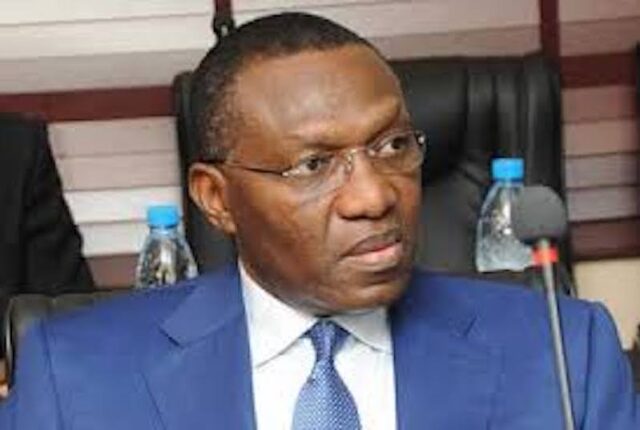
N400m Fraud Allegation: Court Postpones Andy Uba’s Arraignment


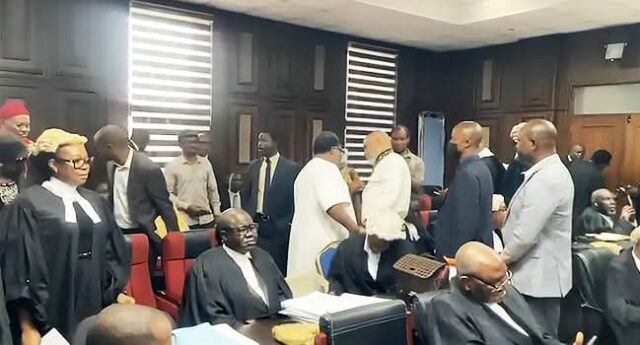
The Federal High Court in Abuja on Tuesday adjourned the arraignment of Senator Andy Uba and his co-defendants in the alleged N400 million fraud case to November 6.

The proceedings, initially scheduled for Uba and Benjamin Etu to enter their plea, could not hold due to the absence of Justice Mohammed Umar, who was reportedly attending to matters in another division.

Justice Umar has now rescheduled the arraignment for November 6.

The judge had previously warned on September 24 that a bench warrant could be issued if Uba failed to appear on October 28.

During the hearing, the prosecution, led by I-G’s counsel Aminu Abdullahi, expressed frustration over Uba’s repeated absences, noting that the ex-lawmaker has not appeared in court since the charge was filed in 2024.

Abdullahi argued that Uba’s absence amounted to disrespect for the court and had stalled the trial.

Uba’s lawyer, C.F. Odiniru, cited his client’s ill-health and requested additional time for him to appear in court.

The charges stem from allegations that Uba, Etu, and Hajiya Fatima (currently at large) conspired in 2022 to defraud Mr. George Uboh of N400 million.

The prosecution claims they misrepresented their ability to secure the appointment of the Managing Director of the Niger Delta Development Commission (NDDC).

The offences are cited under the Advance Fee Fraud and Other Fraud Related Offences Act, 2006.

The prosecution plans to call six witnesses in the case.

Google search engine

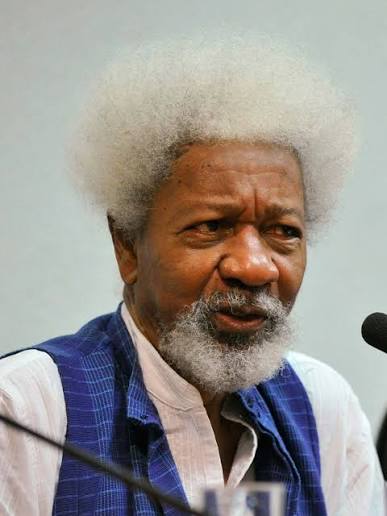
US Revokes Wole Soyinka’s Visa, Bars Him From Travelling


Nobel laureate Professor Wole Soyinka has revealed that the United States has revoked his visa, preventing him from entering the country.

He made the announcement during a media briefing at Kongi’s Harvest Gallery, Freedom Park, Lagos Island, expressing surprise over the development.

Soyinka said he was unaware of any action on his part that could justify the visa revocation.

“I have no visa; I am banned, obviously, from the United States. And if you want to see me, you know where to find me,” he told journalists.

The reason for the revocation remains unclear. Soyinka shared that the US Consulate in Lagos notified him of the action in a letter dated October 23, 2025.

The letter, issued by the Nonimmigrant Visa (NIV) Section, stated that his visa was revoked pursuant to US Department of State regulations.

Expressing confusion, Soyinka said, “I’m still reviewing my past history… I don’t have any criminal record or history that could justify this revocation. I am trying to understand if I have ever misbehaved toward the United States or broken any law.”

Earlier, Soyinka had declined an invitation from the US Consulate for a visa re-interview scheduled for September 11, 2025, which was part of a review for Nigerians holding B1/B2 visas for business or tourism.

He also noted his initial disbelief upon receiving the letter, joking that he thought it might be an advance-fee scam or even an AI-generated notification.

“By the time I realized the letter was genuine, I considered my past interactions with US ambassadors and officials. I’ve always maintained a courteous relationship,” Soyinka said.

Google search engine

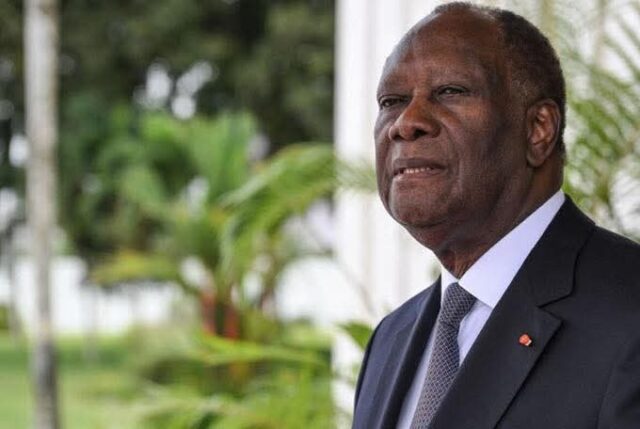
Controversial Election Divides Ivory Coast As 83-Year-Old Ouattara Wins Fourth Term


Ivory Coast’s President, Alassane Ouattara, has secured a fourth term in office, capturing a decisive 89.77 percent of the vote in an election from which his two main rivals were barred, the country’s electoral commission announced on Monday.

Nearly nine million voters were eligible to participate in Saturday’s election in the world’s leading cocoa producer, a nation that has largely remained resilient against coups and jihadist attacks affecting much of West Africa.

Tensions, however, ran high ahead of the polls, and deadly clashes were reported in the days leading up to the election.

Despite this, Ouattara was widely expected to win. Early tallies released on Sunday suggested he was leading with more than 90 percent of the votes.

Voter turnout approached 100 percent in his northern strongholds, while he also led in traditionally pro-opposition areas in the south and parts of Abidjan, the economic hub, where polling stations were largely empty.

Entrepreneur Jean-Louis Billon finished second with just 3.09 percent of the vote, according to commission president Ibrahime Kuibiert Coulibaly, who announced an overall turnout of 50.10 percent, similar to the 2020 election, when Ouattara won 94 percent amid a boycott by major opponents.

This year, Ouattara’s key rivals, former president Laurent Gbagbo and ex-Credit Suisse CEO Tidjane Thiam, were barred from running.

Gbagbo was disqualified due to a criminal conviction, while Thiam was ineligible because of his French nationality.

“Their absence, calls to boycott the election, and the tense pre-election climate foretold low participation in some regions,” said William Assanvo, a researcher at the Institute for Security Studies (ISS).

In Gagnoa, Gbagbo’s former stronghold, Ouattara claimed 92 percent of votes, but turnout was only 20 percent.

The opposition has already rejected the results, declaring Ouattara’s victory illegitimate and calling for fresh elections.

Political analyst Geoffroy Kouao observed that the turnout highlighted two realities: “Supporters of Ouattara turned out in force, while supporters of Gbagbo and Thiam largely stayed away from the polls.”

Billon also acknowledged the low turnout in certain areas but congratulated Ouattara on his victory.

Other candidates on the ballot, including former first lady Simone Ehivet Gbagbo, had little chance of advancing to a second round due to limited party support and financial resources.

Ahead of the vote, calls for protests by the opposition triggered violence, leaving at least eight people dead and nearly two dozen injured across around 200 polling stations.

Authorities imposed nighttime curfews in several areas and deployed 44,000 security personnel nationwide.

Presidential elections in Ivory Coast have historically been marked by tension and unrest.

Ouattara first assumed power following the 2010–2011 post-election crisis against Laurent Gbagbo, which resulted in over 3,000 deaths.

On Monday, normalcy returned to Abidjan, after the capital remained unusually quiet over the weekend.

Pro-Ouattara newspaper Patriote praised the vote as “a calm election,” while opposition daily Notre Voie described it as “an election reflecting a divided country.”

Google search engine

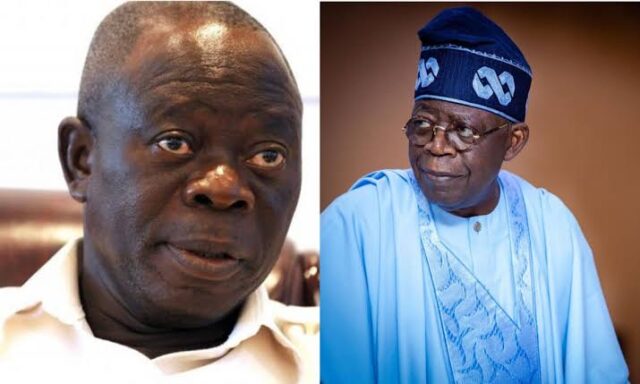
Direct Military, Paramilitary To Wear Locally Made Uniforms, Oshiomhole Tells Tinubu


Senator Adams Oshiomhole has urged President Bola Tinubu to issue a directive compelling the military and other paramilitary organisations to patronise locally made uniforms, saying such a move would boost job creation and revive Nigeria’s dying textile industry.

Speaking on Monday in Kaduna at the 37th Annual National Education Conference of the National Union of Textile, Garment and Tailoring Workers of Nigeria (NUTGTWN), Oshiomhole lamented the continued importation of foreign fabrics by government institutions despite the nation’s capacity to produce them locally.

“If we wear what we produce and produce what we wear, we can employ 20 million Nigerians,” he said. “That is the real meaning of putting Nigeria first.”

The conference, themed “Industry, Labour and National Development,” drew labour leaders, policymakers, and industry stakeholders from across the country.

During the event, the union renamed its five-storey headquarters in Kaduna, formerly known as the Textile Labour House, as the Adams Oshiomhole Textile Labour House in honour of the former Edo State governor, who served as the union’s Secretary-General over four decades ago.

Oshiomhole called on the president to match rhetoric with concrete action by strengthening local industries through deliberate government patronage.

“As Commander-in-Chief, the President should direct that the Nigerian Army, Navy and Air Force wear only uniforms produced and sewn in Nigeria,” he declared to loud applause from thousands of textile workers.

He recalled the golden era of Kaduna’s textile industry, when over 27,000 workers were employed across multiple shifts, blaming its collapse on “reckless government policies” and “unguarded trade liberalisation.”

“Those factories didn’t die of old age; they were murdered by bad policies,” he said.

“When we joined the World Trade Organization, we surrendered our right to protect our industries and jobs.”

The former Nigeria Labour Congress (NLC) president praised the late Premier of Northern Nigeria, Sir Ahmadu Bello, for his foresight in establishing the Kaduna Textile Mills in the 1950s, a move that, according to him, gave dignity to labour and reduced dependence on imported goods.

“Our leaders then knew it made no sense to export cotton and import clothes. That vision created jobs and built communities,” Oshiomhole added.

He linked the collapse of industries to rising insecurity, unemployment, and social unrest.
“When people had jobs, nobody cared about religion. Today, with factories shut and millions idle, we have produced anger, not cotton,” he lamented.

Commending President Tinubu’s foreign exchange reforms, Oshiomhole said they had curtailed the excesses of “emergency billionaires” who profited from currency arbitrage.

“Before Tinubu, people made money without effort, just with a phone call. Now, those distortions are being corrected,” he said.

He urged workers to remain committed to the fight for decent wages and fair treatment, describing the struggle as an act of patriotism.

“Don’t ever apologise for fighting for dignity. The primary purpose of government is the welfare of citizens, not the profit of business,” he stated.

Reaffirming his loyalty to the labour movement, Oshiomhole concluded, “I remain a labour man for life. From age 18, I’ve known no other calling. I will keep fighting until Nigeria returns to the path of production, not importation.”

Google search engine

N4.49bn Fraud Case: Ganduje, Wife’s Trial Stalled Again


The ongoing corruption trial involving the immediate past National Chairman of the All Progressives Congress (APC), Dr. Abdullahi Umar Ganduje, his wife Dr. Hafsat Umar Ganduje, and six others, suffered another setback on Monday at the Kano State High Court.

The Kano State Public Complaints and Anti-Corruption Commission (PCACC) had filed an 11-count charge against the defendants over alleged bribery, conspiracy, and diversion of public funds amounting to several billions of naira.

Those standing trial alongside the former Kano State governor and his wife include Abubakar Bawuro, Umar Abdullahi Umar, Jibrilla Muhammad, Lamash Properties Limited, Safari Textiles Limited, and Lasage General Enterprises Limited.

The case, which was scheduled for the prosecution to open with witness testimony, was stalled after the defendants’ counsel declared their unpreparedness to proceed.

Earlier, Adeola Adedipe (SAN), lead counsel to the state government, informed Justice Amina Adamu Aliyu that the prosecution was ready to present its witnesses, who were already seated in court.

However, defence counsel Lydia Oluwakemi-Oyewo, representing Ganduje, his wife, and son, objected to the commencement of the hearing, claiming that her clients were not properly served with the notice of hearing.

She subsequently filed a motion on notice urging the court to stay proceedings, arguing that the matter was already before the Court of Appeal.

Similarly, other defence lawyers, Chief M. N. Duru (SAN) for the 3rd defendant, Sunusi Musa (SAN) for the 5th, Abubakar Ahmad for the 6th, and Abdulrazaq A. Ahmed for the 8th, informed the court of their pending applications for stay of proceedings and preliminary objections.

They all maintained that the trial could not proceed until those motions were heard.

In response, prosecution counsel Adedipe urged the court to dismiss the applications, accusing the defence of deliberate delay tactics meant to frustrate the trial.

He appealed to the court to allow the case to proceed concurrently with the pending motions, suggesting that rulings on the motions could be deferred until the substantive matter concluded.

Justice Aliyu, however, disagreed, ruling that all preliminary objections must be resolved before the substantive trial could commence.

She also dismissed the defence’s request for a stay of execution, stating that the court lacked grounds to halt proceedings in the absence of a direct order of reference.

The judge subsequently adjourned the case to November 26, 2025, for the hearing of all pending applications.

Google search engine

2027: Get The Law Right And Even Losers Will Congratulate Winners – INEC Boss Pledges To Reduce Pre-election Court Cases


The Chairman of the Independent National Electoral Commission (INEC), Prof. Joash Amupitan, SAN, has pledged to prioritise the reduction of pre-election litigations as Nigeria prepares for the 2027 general elections.

Amupitan, who recently assumed office as INEC’s sixth substantive chairman following his swearing-in by President Bola Tinubu, said cutting down the volume of electoral disputes would be one of his administration’s major goals.

Speaking on Monday at the 56th Annual National Conference of the Nigerian Association of Law Teachers (NALT), held at the University of Abuja, Amupitan disclosed that over 1,000 pre-election cases were filed before the 2023 elections, a situation he described as unhealthy for the political and judicial systems.

He emphasised that stronger internal party democracy, adherence to electoral laws, and early dispute resolution mechanisms were key to preventing such litigations.

“If political parties follow their constitutions, comply with the Electoral Act, and uphold the Nigerian Constitution, pre-election litigations will drastically reduce,” Amupitan stated.

“My desire is that if we get the law right, even losers will congratulate winners. The law should be used as a tool for change, not conflict.”

The INEC boss urged the National Assembly to strengthen the country’s electoral legal framework to promote fairness and transparency in future polls.

He noted that while fewer pre-election cases might not please some legal practitioners, the reform would enhance the credibility of elections and reinforce public trust in the democratic process.

Amupitan described his tenure’s legal reform agenda as a step toward ensuring that elections reflect “the genuine will of the people.”

The conference, themed “Law, National Development and Economic Sustainability in a Globalised World,” brought together law teachers, jurists, policymakers, and students from across the country.

Amupitan, who attended the event with his wife, Prof. Yemisi Amupitan, commended the association for its role in promoting legal scholarship and mentoring young academics.

“This is a gathering of brilliant minds. I urge young law lecturers to uphold integrity and professionalism because the future of justice, democracy, and the rule of law depends on them,” he said.

Also speaking, Prof. John Akintayo, President of NALT and Dean, Faculty of Law, University of Ibadan, stressed that effective legal frameworks were essential for inclusive growth and national stability.

He noted that in a globalised world, aligning domestic laws with international best practices while protecting national interests was vital for sustainable development.

“The law must not merely react to change but anticipate and shape it, ensuring development anchored on justice, equity, and the rule of law,” Akintayo said.

Conference Chairman and Dean, Faculty of Law, University of Abuja, Prof. Uwakwe Abugu, revealed that plenary sessions at the event would explore topics such as agriculture and food security, artificial intelligence, biotechnology, and legal reforms.

Google search engine

Marginalisation Rekindled Biafra Movement – Dele Momodu Backs Calls For Kanu’s Release


Media entrepreneur and publisher of Ovation International, Dele Momodu, has joined growing calls for the release of detained Indigenous People of Biafra (IPOB) leader, Nnamdi Kanu.

In a post shared on his verified X (formerly Twitter) account on Tuesday, the former presidential aspirant urged the Federal Government to address the root causes of separatist agitations in Nigeria’s South-East.

Momodu accompanied his post with a clip from one of Kanu’s previous broadcasts, recorded shortly before his controversial repatriation from Kenya by Nigerian security operatives.

He argued that the Biafra movement stemmed from what he described as “decades of marginalisation and deprivation” experienced by the Igbo people.

“Shortly before his abduction from Kenya by the Nigerian government, Mazi Nnamdi Kanu made this thought-provoking broadcast in which he philosophised about the reasons he and his supporters became radicalised,” Momodu wrote.

The veteran journalist criticised those who condemn Kanu and his supporters without, in his view, understanding the historical and political factors driving the agitation.

“I have taken time to listen to his critics and discovered that most of them jumped to conclusions without proper analysis of why the agitation for Biafra became reignited and attractive after the pogroms that claimed millions of lives and destroyed properties in the 1960s and ’70s,” he said.

Momodu also quoted Kanu as saying that the “continuing marginalisation of the Igbo and deprivation accorded some of the most energetic and vibrant brains in Africa and globally rekindled the Biafra sentiment.”

He warned that any attempt to silence or eliminate Kanu would not end the separatist movement, stressing that the crisis required political rather than legal or military intervention.

“Attempts by enemies of Kanu, including his own kinsmen, to exterminate him will never solve the problem. The Igbo struggle goes beyond legalese, it requires serious political reconfiguration, and urgently too,” he stated.

While clarifying that he does not condone violence, Momodu advised the government to meaningfully engage the South-East through inclusion and opportunity.

“I will never support violence. But any sensible government will keep the geniuses of the South-East very busy with productive engagements, instead of this rabid hatred,” he added.

Google search engine

MOST COMMENTED

- Advertisement -
Google search engine