Home Blog Page 217

How Dokpesi Helped Scuttle Obasanjo’s Third-Term Bid – Oshiomhole
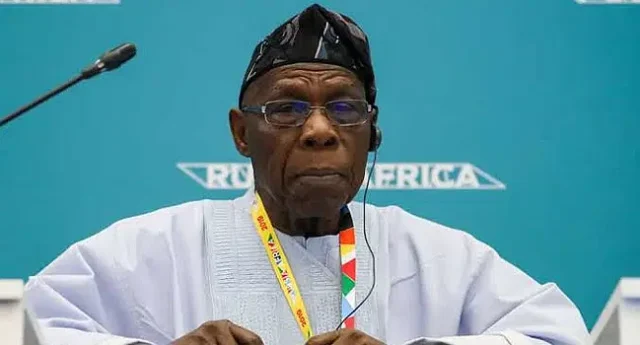
 

Minister of Regional Development, Abubakar Momoh and former Edo State Governor, Adams Oshiomhole, have credited the late media mogul, Raymond Dokpesi, with playing a decisive role in thwarting former President Olusegun Obasanjo’s third-term agenda.

The duo spoke in Abuja at the 2nd Raymond Aleogho Dokpesi Diamond Lecture, jointly organised by DAAR Communications and the Nigerian Institute of Public Relations (NIPR), themed “Communication and Development.”

Momoh recalled that during the controversial bid to amend the Constitution to allow Obasanjo a third term, Dokpesi used a mix of personal persuasion and media influence to mobilise opposition and defend democracy.

“Many have taken credit for stopping the third term, but Dokpesi deserves special recognition,” Momoh said.

“As a lawmaker then, I remember him calling me personally, saying, ‘You are my brother. Work with your people to make sure it doesn’t succeed.’”

He explained that the AIT and Raypower FM founder quietly reached out to legislators, warning them of the dangers of constitutional manipulation and urging resistance against the plan.

Oshiomhole, who now represents Edo North in the Senate, recounted that Dokpesi made his media platforms freely available for open debate, enabling lawmakers and citizens to discuss the issue transparently.

“Dokpesi used his station to promote national dialogue, not to attack the country,” Oshiomhole said.

“AIT broadcast National Assembly sessions live, allowing Nigerians to hold their representatives accountable. That transparency helped stop the third-term bid.”

He noted that Dokpesi’s approach demonstrated how media could serve national interest, not partisanship.

“My only complaint, which I told him before his passing, was that he gave his station to a political party that didn’t reciprocate his loyalty,” Oshiomhole added.

Also speaking, Nasarawa State Governor Abdullahi Sule praised Dokpesi’s integrity and lamented what he described as rising sycophancy in Nigerian politics, where leaders face flattery in public but criticism in private.

President of the NIPR, Dr. Ike Neliaku, described Dokpesi as a visionary and pathfinder who democratized access to information and gave voice to ordinary Nigerians.

“For Dr. Dokpesi, communication was not just about media; it was about meaning, connecting truth to people, citizens to leaders, and nations to the world,” Neliaku said.

 

Google search engine

Madagascar Withdraws Citizenship Of Ousted President Andry Rajoelina


Madagascar’s transitional government has revoked the Malagasy citizenship of former President Andry Rajoelina, according to a decree published Friday, just ten days after his ouster in a military takeover.

The official gazette announced that Rajoelina’s nationality was withdrawn on the grounds that he had acquired French citizenship in 2014, a fact that, under Malagasy law, disqualifies him from holding dual nationality.

Local media outlets published images of the decree, which quickly circulated online.

The move effectively bars Rajoelina, who was impeached on October 14 after fleeing the country amid weeks of anti-government protests, from contesting in any future elections.

French broadcaster RFI reported that the decree’s authenticity was confirmed by officials close to the new prime minister, Herintsalama Rajaonarivelo, who signed the order.

Rajoelina, a former disc jockey turned politician, has faced criticism over his handling of the country’s political and economic crises.

Google search engine

PDP North-West Leaders Reject Turaki’s Endorsement As Consensus National Chairman


Leaders of the Peoples Democratic Party (PDP) in the North-West zone have distanced themselves from the reported endorsement of former Minister of Special Duties, Tanimu Turaki (SAN), as the region’s consensus candidate for the party’s national chairmanship ahead of the November convention.

At a press briefing in Abuja, the PDP’s National Organising Secretary, Umar Bature, speaking on behalf of stakeholders from the zone, dismissed the endorsement as unilateral and illegitimate.

Earlier in the week, the Chairman of the PDP National Convention Organising Committee and Adamawa State Governor, Ahmadu Fintiri, had announced that Turaki was adopted as the consensus choice of northern leaders and governors.

However, he noted that any aspirant dissatisfied with the decision was still free to contest.

Bature, however, stated that the North-West had not held any meeting to arrive at such a decision, stressing that the region would soon present its own preferred candidate.

“The North-West has not met to agree on that position. We are the zone to which the national chairmanship has been zoned, and it is unfair for others to decide for us,” Umar Bature, PDP National Organising Secretary.

He emphasized that consensus decisions must arise from consultation and inclusion, not unilateral declarations.

“Consensus is made through consultation. We were neither consulted nor carried along before the announcement,” he said.

Bature also accused certain party leaders of sidelining key stakeholders from the North-West, warning that the region would resist any attempt at imposition.

“We believe we are the strongest zone in the PDP. The attitude of our leaders made us take this position. We disagree with the governors’ endorsement, and we will nominate our own candidate,” he added.

Among those present at the briefing were former National Secretary Ibrahim Tsauri, Mustapha Lamido (son of former Jigawa State Governor Sule Lamido), Isah Ashiru Kudan (the PDP’s 2023 Kaduna governorship candidate), and several other zonal leaders.

At its 102nd National Executive Committee (NEC) meeting in August, the PDP had zoned its 2027 presidential ticket to the South and the national chairmanship to the North, which was later micro-zoned to the North-West.

Google search engine

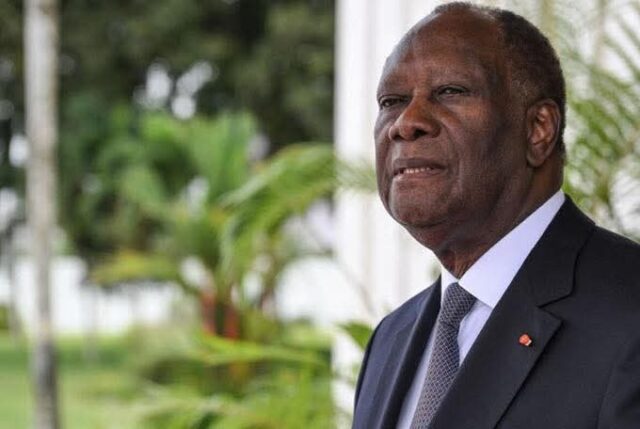
President Ouattara Eyes Fourth Term As Ivory Coast Votes Amid Opposition Shutout


Ivorians head to the polls today in a presidential election widely expected to hand incumbent President Alassane Ouattara a fourth term, following the exclusion of several major opposition figures.

Ouattara, 83, has led the world’s top cocoa producer since 2011, overseeing a decade of economic growth that has strengthened Ivory Coast’s role as a West African powerhouse.

His party, the Rally of Houphouëtists for Democracy and Peace (RHDP), is seeking a clear victory in the first round to avoid a runoff.

Nearly nine million registered voters are casting their ballots between 8 a.m. and 6 pm local time, choosing from five candidates.

However, analysts predict little suspense in the outcome.

“It’s hard to imagine any surprises, given that the main opposition leaders have been sidelined,” said Gilles Yabi, founder of the West African think tank Wathi, in an interview with AFP.

Two of Ouattara’s most prominent rivals, former president Laurent Gbagbo and ex-Credit Suisse CEO Tidjane Thiam, were barred from contesting the election.

Gbagbo was disqualified due to a criminal conviction, while Thiam was ruled ineligible after acquiring French nationality.

Their respective parties have condemned the electoral process as unfair and urged supporters to protest.

In recent days, at least four people, including a police officer, have died in sporadic unrest, and an electoral commission office was set ablaze earlier this week.

Authorities have banned public demonstrations, sentencing dozens to prison for “disturbing public order.”

Roughly 44,000 security personnel have been deployed nationwide to prevent further violence, particularly in opposition strongholds in the south and west.

A night-time curfew remains in effect across the Yamoussoukro region.

During his final campaign rally on Thursday, Ouattara urged citizens to remain vigilant and peaceful.

“I ask you to monitor your neighborhoods closely. We must protect Ivory Coast,” he said.

The head of the Independent Electoral Commission, Ibrahime Kuibiert Coulibaly, acknowledged tensions but expressed hope that “there will be more fear than harm.”

Former president Gbagbo, meanwhile, denounced the vote as a “civilian coup d’état”, accusing the government of staging an “electoral robbery.”

He offered no clear guidance to his supporters on whether to participate in the election.

Voter participation is likely to vary sharply by region.

Analysts expect strong turnout in the pro-Ouattara north but apathy in southern and western areas loyal to Gbagbo and Thiam.

The remaining four contenders, Jean-Louis Billon, Simone Ehivet Gbagbo, Ahoua Don Mello and Henriette Lagou, lack major party backing, limiting their reach.

Billon, a 60-year-old former trade minister, seeks to revive the once-dominant Democratic Party.

Former first lady Simone Gbagbo, 76, aims to consolidate her ex-husband’s political base, while Mello, a leftist engineer with pro-Russian leanings and Lagou, a centrist who garnered less than one percent in 2015, round out the field.

Ouattara first assumed power after the 2010-2011 post-election crisis that left over 3,000 people dead.

His administration touts a record of economic stability and security gains, despite sporadic jihadist attacks along northern borders.

Critics, however, say that the benefits of growth have been uneven, with rising living costs squeezing many Ivorians.

More than 1,200 election observers, including 251 from ECOWAS and the African Union, are monitoring Saturday’s vote. Official results are expected early next week.

Google search engine

President Ouattara Eyes Fourth Term As Ivory Coast Votes Amid Opposition Shutout


Ivorians head to the polls today in a presidential election widely expected to hand incumbent President Alassane Ouattara a fourth term, following the exclusion of several major opposition figures.

Ouattara, 83, has led the world’s top cocoa producer since 2011, overseeing a decade of economic growth that has strengthened Ivory Coast’s role as a West African powerhouse.

His party, the Rally of Houphouëtists for Democracy and Peace (RHDP), is seeking a clear victory in the first round to avoid a runoff.

Nearly nine million registered voters are casting their ballots between 8 a.m. and 6 pm local time, choosing from five candidates.

However, analysts predict little suspense in the outcome.

“It’s hard to imagine any surprises, given that the main opposition leaders have been sidelined,” said Gilles Yabi, founder of the West African think tank Wathi, in an interview with AFP.

Two of Ouattara’s most prominent rivals, former president Laurent Gbagbo and ex-Credit Suisse CEO Tidjane Thiam, were barred from contesting the election.

Gbagbo was disqualified due to a criminal conviction, while Thiam was ruled ineligible after acquiring French nationality.

Their respective parties have condemned the electoral process as unfair and urged supporters to protest.

In recent days, at least four people, including a police officer, have died in sporadic unrest, and an electoral commission office was set ablaze earlier this week.

Authorities have banned public demonstrations, sentencing dozens to prison for “disturbing public order.”

Roughly 44,000 security personnel have been deployed nationwide to prevent further violence, particularly in opposition strongholds in the south and west.

A night-time curfew remains in effect across the Yamoussoukro region.

During his final campaign rally on Thursday, Ouattara urged citizens to remain vigilant and peaceful.

“I ask you to monitor your neighborhoods closely. We must protect Ivory Coast,” he said.

The head of the Independent Electoral Commission, Ibrahime Kuibiert Coulibaly, acknowledged tensions but expressed hope that “there will be more fear than harm.”

Former president Gbagbo, meanwhile, denounced the vote as a “civilian coup d’état”, accusing the government of staging an “electoral robbery.”

He offered no clear guidance to his supporters on whether to participate in the election.

Voter participation is likely to vary sharply by region.

Analysts expect strong turnout in the pro-Ouattara north but apathy in southern and western areas loyal to Gbagbo and Thiam.

The remaining four contenders, Jean-Louis Billon, Simone Ehivet Gbagbo, Ahoua Don Mello and Henriette Lagou, lack major party backing, limiting their reach.

Billon, a 60-year-old former trade minister, seeks to revive the once-dominant Democratic Party.

Former first lady Simone Gbagbo, 76, aims to consolidate her ex-husband’s political base, while Mello, a leftist engineer with pro-Russian leanings and Lagou, a centrist who garnered less than one percent in 2015, round out the field.

Ouattara first assumed power after the 2010-2011 post-election crisis that left over 3,000 people dead.

His administration touts a record of economic stability and security gains, despite sporadic jihadist attacks along northern borders.

Critics, however, say that the benefits of growth have been uneven, with rising living costs squeezing many Ivorians.

More than 1,200 election observers, including 251 from ECOWAS and the African Union, are monitoring Saturday’s vote. Official results are expected early next week.

Google search engine

Assaulted Corps Members In Viral Video Drag Anambra Govt To Court, Demand N1bn Compensation


Six members of the National Youth Service Corps (NYSC) have filed a ₦1 billion lawsuit against the Anambra State Government over alleged assault and unlawful detention by operatives of the state’s vigilante group, Agunechemba.

The corps members; Jennifer Elohor, Greatness Oyeh, Eze Ikenna, Anighoro Godspower, Feyisara Amore and Chimenum Wonodi instituted the suit before the Federal High Court, Awka Division, through their counsel, Cyrus Onu.

The plaintiffs named the Anambra State Government, Governor Chukwuma Soludo, the State Attorney-General, and the Agunechemba Vigilante Group as first to fourth respondents in the suit, marked FHC/298/2025.

Their action followed a viral video circulated in August, which showed armed vigilante operatives invading the corps members’ lodge, assaulting them, and accusing them of being internet fraudsters.

One of the victims, Jennifer Elohor, was reportedly beaten and stripped naked despite presenting her NYSC identity card.

In their petition, the corps members are seeking ₦1 billion in general damages for the alleged physical, emotional, and psychological trauma they suffered.

They are also asking the court to declare their arrest, detention, and torture as unlawful, unconstitutional, and a violation of their fundamental human rights.

Additionally, they are demanding a written public apology from the respondents, to be published in at least two national newspapers and one Anambra-based daily.

Google search engine

Profile Of The Igbo Man Appointed As Chief Of Air Staff By President Tinubu


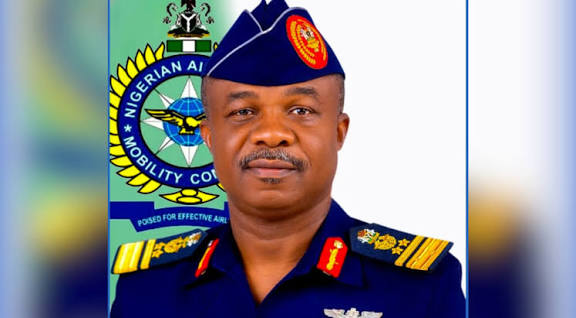
Air Vice Marshal Sunday Kelvin Aneke, the 23rd Chief of Air Staff (CAS), was born on 20 February 1972 in Makurdi, Benue State, and hails from Udi Local Government Area, Enugu State.

He is the son of Air Warrant Officer (Rtd) Sylvester and Mrs. Ngozi Aneke.

His early education was at Army Children School, New Cantonment ‘A’, Kaduna (1976–1982), and Government College, Kaduna (1982–1987).

He joined the Nigerian Defence Academy as part of the 40th Regular Combatant Course and was commissioned into the Nigerian Air Force as a Pilot Officer on 10 September 1993.

Aneke holds a B.Sc. in Physics, a Postgraduate Diploma in Management from the University of Calabar, and two Master’s degrees, one in International Affairs and Diplomacy from Ahmadu Bello University, Zaria, and another in Political Economy and Development Studies from the University of Abuja.

He also earned a Professional Certificate in Aviation Safety Management from Embry-Riddle Aeronautical University, Florida, and is currently pursuing a PhD.

Aneke has attended prestigious military institutions, including the Armed Forces Command and Staff College, Jaji, where he completed both Junior and Senior Staff Courses, and the United States Air War College, Maxwell Air Force Base, Alabama, where he earned a Master’s in Strategic Studies.

Throughout his career, he has held key command, instructional, and policy positions, including Director of Policy, Director of Safety, Deputy Director of Operations at NAF Headquarters, Command Operations Officer at Tactical Air Command, and Deputy Commandant of the Nigerian Defence Academy.

Before his appointment as CAS, he served as Air Officer Commanding, Mobility Command, Yenagoa, where he enhanced air mobility, improved joint force integration, and strengthened strategic responses in multi-domain operations.

An accomplished pilot, Aneke has over 4,359 flying hours and is type-rated on multiple aircraft, including the Air Beetle 18, Dornier 228, Citation 500, Falcon 900, Gulfstream V, Gulfstream 550, and Hawker 4000.

His operational experience spans domestic and international theatres, from Operation Restore Hope in the Niger Delta to United Nations peacekeeping missions in the Democratic Republic of Congo (MONUC), where he served as Chief of Air Operations, Kindu Region.

He has played a key role in enhancing intelligence, surveillance, and reconnaissance (ISR) capabilities for counter-insurgency operations.

Decorated with numerous honours, including GSS, DSS, GSM, FCM, Psc, MSc, MIAD, MPEDS, and USAFWC, Air Vice Marshal Aneke is recognized as a visionary leader, professional aviator, and officer of integrity.

His strategic foresight, calm demeanor, and results-oriented leadership have earned him respect across the Nigerian Armed Forces.

He is married to Mrs. Ngozi Enderline Aneke, and they have three sons: Chukwuebuka Kelvin, Ifeanyichukwu Brian, and Uchechukwu Jason.

Google search engine

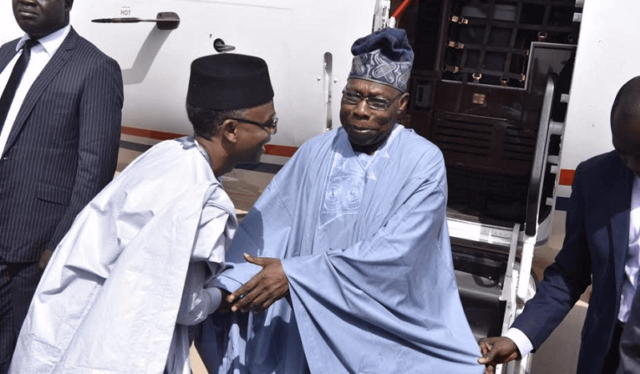
BREAKING: Obasanjo Reveals Why He Rejected El-Rufai As His Successor


Former President Olusegun Obasanjo has disclosed that he declined to endorse former Kaduna State Governor Malam Nasir El-Rufai as his successor when leaving office in 2007.

El-Rufai served under Obasanjo first as Director-General of the Bureau of Public Enterprises (BPE) and later as Minister of the Federal Capital Territory (FCT) from 2003 to 2007. At the end of Obasanjo’s tenure, he instead backed the late President Umaru Musa Yar’Adua.

Speaking in Abeokuta, Ogun State, during the second edition of the Ajibosin Platform symposium themed “Importance of Leadership in Governance,” Obasanjo revealed that former Minister of Aviation, Osita Chidoka, had pushed for El-Rufai as his successor.

“He was pushing when I was leaving government that his friend, El-Rufai, should be brought in as my successor,” Obasanjo said, addressing Chidoka directly.

Obasanjo explained his decision to decline the recommendation: “I did not yield to the pressure. Later, he [Chidoka] said, ‘I suggested this person, why didn’t you agree?’ I said El-Rufai needs to mature. You remember?”

He added that years later, Chidoka acknowledged Obasanjo was right.

Despite rejecting the recommendation, Obasanjo praised Chidoka, El-Rufai, and other officials for their “special attributes,” which he credited as driving forces of his administration.

On the symposium’s theme, Obasanjo stressed that character, exposure, experience, and proper training define effective leadership.

“It’s only in politics that there is no training in leadership. Even among armed robbers, I was told there is apprenticeship. That’s not good enough,” he noted.

Delivering the keynote address, Chidoka criticized the culture of excuses in Nigerian politics.

“Leadership finds its true measure not in speeches or charisma but in the systems it leaves behind. Moral conviction must translate into the everyday machinery of governance, rules, routines, and institutions that make competence predictable and corruption difficult,” he said.

He urged accountability through national dashboards, strong institutions, and regular performance tracking.

The convener of the symposium, Aare Olanrewaju Bakinson, emphasized the importance of ethical leadership and governance in shaping society.

Among the attendees were Senator Shuaibu Salis (Ogun Central), the Olowu of Owu Kingdom, Oba Saka Matemilola; the Olota of Ota, Oba Adeyemi Obalanlege; and former Ogun First Lady, Mrs. Olufunsho Amosun.

Google search engine

Coup Rumours: Clarify Sack Of Service Chiefs, Tell Nigerians The Truth – ADC To Tinubu


The African Democratic Congress (ADC) has called on President Bola Ahmed Tinubu to provide a clear explanation for the sudden dismissal of the country’s Service Chiefs, saying the move has fueled speculation and unease within the security sector.

In a statement issued on Friday in Abuja by its National Publicity Secretary, Bolaji Abdullahi, the party noted that although the President has the constitutional authority to appoint and remove service chiefs, the timing of the reshuffle, coming amid rumours of an attempted coup, demands transparency.

“While we acknowledge that the President, as Commander-in-Chief, reserves the power to make such changes as he deems fit, we are concerned that this decision comes in the wake of widespread rumours of an attempted coup,” the statement read.

The ADC expressed dismay that most of the officers affected by the changes were appointed less than two years ago.

“Nearly all the Service Chiefs who have been removed were appointed only about 28 months ago, and the current Chief of Defence Staff himself was elevated just a year ago from Chief of Army Staff,” the party noted.

“Such sweeping changes carry serious implications for military stability and therefore must have strong justification.”

The ADC said the Federal Government owes Nigerians a “categorical and transparent explanation” to dispel rumours and protect democratic confidence.

“The government’s reaction to the coup rumours has been inconsistent and confusing, when clarity was most needed,” the statement said.

The opposition party further warned that the shake-up could deepen public anxiety rather than calm it.

“This kind of near wholesale change in the leadership of the armed forces, if not well explained, will only encourage more speculation and conspiracy theories,” it added.

Citing worsening insecurity across the country, the ADC accused the Tinubu administration of losing focus on national security priorities.

“Insecurity continues to spread, terrorists are regrouping in some regions, while bandits dominate others. Yet, this change in military leadership does not appear to be about improving security. Instead, it seems driven by regime politics,” the statement said.

Google search engine

Nnamdi Kanu’s Younger Brother, Lawyer, Others Granted Bail


A Kuje Magistrate Court in Abuja has granted bail to Omoyele Sowore, publisher of Sahara Reporters, and Aloy Ejimakor, counsel to Nnamdi Kanu, leader of the Indigenous People of Biafra (IPOB).

The duo, along with Prince Emmanuel Kanu, Nnamdi Kanu’s younger brother and ten other protesters, were arrested during the #FreeNnamdiKanuNow demonstration held in Abuja on October 20.

Magistrate M. A. Bello, presiding over the case, ordered their release on bail set at ₦500,000 each, with additional conditions including the submission of their National Identification Numbers (NINs), three-year tax clearance certificates, and international passports.

They are facing charges of unlawful assembly and public disturbance in connection with the protest, which called for the immediate release of Kanu, who is currently standing trial for terrorism-related offences.

The arrests drew widespread condemnation from civil rights groups and members of the legal community, who described the action as an attempt to suppress peaceful protest.

Sowore, a long-time pro-democracy activist and former presidential candidate, was reportedly arrested while showing solidarity with Kanu at the Federal High Court premises in Abuja.

Google search engine

MOST COMMENTED

- Advertisement -
Google search engine