Home Blog Page 246

INEC Boycotts PDP’s Convention As Four Governors Storm Ibadan
 

Four governors of the Peoples Democratic Party (PDP) have arrived in Ibadan, Oyo State, as the party pushes forward with its national convention despite a Federal High Court order suspending the exercise.

The South-West chairman of the PDP, Kamorudeen Ajisafe, confirmed the presence of the governors of Bauchi (Bala Mohammed), Zamfara (Dauda Lawal), Adamawa (Ahmadu Fintiri), and Oyo (Seyi Makinde).

The PDP is currently split between factions loyal to Minister of the FCT Nyesome Wike and acting Chairman Umar Damagum.

The crisis escalated after former Jigawa State governor Sule Lamido went to court, alleging he was denied the opportunity to purchase a nomination form for the national chairmanship.

On Friday, Justice Peter Lifu of the Federal High Court in Abuja ordered the PDP to suspend the convention and barred INEC from supervising it until Lamido was allowed to contest.

The court emphasized the party’s duty to enable members to pursue leadership positions and mandated that Lamido be allowed to campaign before any convention proceeds.

This ruling came in the wake of a similar order by Justice Lifu on November 11, 2025, which also restrained the PDP from holding the convention.

Lamido’s lawyers argued that ignoring the court order would violate the party constitution and deny him his rights.

However, a conflicting order from the Oyo State High Court in Ibadan on November 3 permitted the convention to proceed and instructed INEC to monitor it.

Ajisafe, citing the Ibadan High Court ruling, insisted preparations were 98% complete and the convention would go on as planned.

Delegates from multiple states, including Lagos, FCT, Bauchi, Akwa Ibom, Ebonyi, and Delta, were already at the venue by Friday night.

Security was visibly tight, with an Armoured Personnel Carrier stationed at the entrance.

Adamawa PDP Chairman Hamza Madagali also visited the venue to assess readiness.

Sources within INEC confirmed that the commission would not monitor the convention, citing adherence to the FCT High Court ruling.

Although a press statement was initially prepared to clarify its position, it was later withdrawn.

Sule Lamido, speaking on Channels TV Politics Today, blamed the crisis on PDP governors, saying that he could not attend the convention without undermining the court order that protected his rights.

Lamido accused the governors of seeking a party they could control, while singling out Governor Seyi Makinde as the only one acting honorably.

Party chieftain Bode George dismissed claims of a crisis and defended the convention, accusing Lamido of missing the official form collection deadline.

Conversely, Wike called on the party to respect the Federal High Court ruling, emphasizing that an ex parte order from Ibadan could not override a substantive judgment.

The PDP’s Board of Trustees (BoT) had set up a reconciliation committee, which recommended postponing the convention until all aggrieved parties were accommodated.

Despite the advice, the NWC and the PDP Governors’ Forum pressed ahead.

Former Senate President Bukola Saraki warned that proceeding under current conditions could irreparably damage the party and recommended forming an all-inclusive caretaker committee.

The party is operating under two rival factions, raising concerns about its stability ahead of the 2027 elections.

Governors Bala Mohammed, Makinde, and Muftwang accused Wike of destabilizing the party, while the NWC defended its disciplinary actions against some officers accused of taking instructions from Wike.

A BoT report highlighted deep mistrust between the governors and the NWC, citing cancelled state congresses, shifting loyalties, and ambitions for 2027 as major sources of conflict.

It urged adherence to party supremacy, constitutional discipline, and the formation of a caretaker committee, warning that conflicting court orders could prevent INEC from monitoring the convention.

Despite these warnings, the PDP went ahead with the Ibadan convention, leaving questions about its internal cohesion and the impact on the party’s 2027 election prospects.

Google search engine

Court Dismisses Suit Challenging Tinubu’s Emergency Rule In Rivers


A Federal High Court in Port Harcourt has dismissed a suit filed by the civil society group, Initiative for Freedom, Conflict Prevention and Social Integration, challenging President Bola Tinubu’s declaration of a state of emergency in Rivers State.

The suit sought to question Tinubu’s authority to suspend Governor Siminalayi Fubara, his deputy Ngozi Odu, and members of the Rivers State House of Assembly, as well as his appointment of Vice Admiral Ibok-Ete Ibas (retd.) as Sole Administrator of the state.

In March 2025, Tinubu had declared a six-month state of emergency in Rivers State, suspending the governor and his deputy while appointing Ibas to manage the affairs of the state during the period.

The plaintiffs asked the court to declare the actions ultra vires, illegal, and inconsistent with Section 305 of the 1999 Constitution.

Ruling on the matter on Friday, Justice Muhammad Turaki held that the plaintiffs lacked locus standi because Governor Fubara was not a party to the case.

He described the suit as largely an academic exercise and declined to address the substantive issues.

Speaking after the hearing, the plaintiffs’ lawyer, Amegua Lezina, said they would review the judgment to determine their next steps.

“The court’s decision was based solely on the fact that the governor was not joined in the suit. The merits were not considered. We will study the ruling and, if necessary, proceed to the Court of Appeal,” Lezina stated.

Meanwhile, the court adjourned a separate suit by the same group, which challenged the National Assembly’s ratification of Ibas’ appointment, to January 23, 2026, for judgment.

Another case by the organisation regarding the appointment of the Chairman and members of the Rivers State Independent Electoral Commission was adjourned to December 5, 2025, for adoption of processes.

Google search engine

ISWAP Ambush Leaves Four Nigerian Security Personnel Dead In Borno

This handout photo courtesy of the US Department of Defense taken on December 14, 2021 shows the US Army conducting live fire tests of the Army Tactical Missile System (ATACMS) at the White Sands Missile Range in New Mexico. - US President Joe Biden has authorized Ukraine to use long-range American missiles, such as ATACMS, against military targets inside Russia, a US official told AFP on condition of anonymity, confirming media reports. (Photo by John Hamilton / DoD / AFP) / RESTRICTED TO EDITORIAL USE - MANDATORY CREDIT "AFP PHOTO / JOHN HAMILTON / US DEPARTMENT OF DEFENSE" - NO MARKETING NO ADVERTISING CAMPAIGNS - DISTRIBUTED AS A SERVICE TO CLIENTS


Jihadists affiliated with the Islamic State West Africa Province (ISWAP) ambushed a patrol team of Nigerian security forces in Damboa, Borno State, killing two soldiers and two members of the Civilian Joint Task Force (CJTF), security sources confirmed on Saturday.

According to military officials and a regional security report, ISWAP fighters attacked a convoy of troops, CJTF volunteers, and local hunters travelling on motorcycles in the area on Friday.

The assailants reportedly opened fire using heavy weapons, triggering a fierce gun battle.

A senior military officer, who requested anonymity, said:

“We lost two soldiers and two CJTF members in the ambush by ISWAP terrorists.”

The attack was reportedly targeted at a patrol led by a brigade commander.

A UN situation report seen by AFP also confirmed the fatalities, noting that 17 motorcycles were seized by the militants.

While the document initially indicated that several soldiers, including the commander, were unaccounted for, the commander eventually returned to the brigade headquarters in Damboa, about 90 km from Maiduguri.

The ambush highlights ISWAP’s continued threat in the region.

The group has recently escalated attacks on military positions using rocket-propelled grenades and suicide drones.

Despite ongoing clashes with rival faction Boko Haram, ISWAP retains significant operational capacity in parts of Borno and around Lake Chad.

ISWAP splintered from Boko Haram in 2016 over ideological disagreements and has since grown to become a dominant jihadist faction.

However, it has come under pressure recently: intelligence sources report that Boko Haram fighters killed nearly 200 ISWAP members in an attack near Lake Chad on Sunday.

The wider insurgency in northeastern Nigeria has claimed over 40,000 lives and displaced around two million people since 2019, spilling into neighbouring Niger, Chad, and Cameroon.

Amid ongoing security challenges, Nigerians continue urging President Bola Tinubu to intensify military operations against insurgent groups.

Meanwhile, Information Minister Mohammed Idris said the Federal Government is holding talks with the United States following a recent military threat issued by U.S President Donald Trump, adding that ongoing diplomatic engagement is helping ease tensions.

Google search engine

Benin Parliament Approves Extension Of Presidential Term To Seven Years

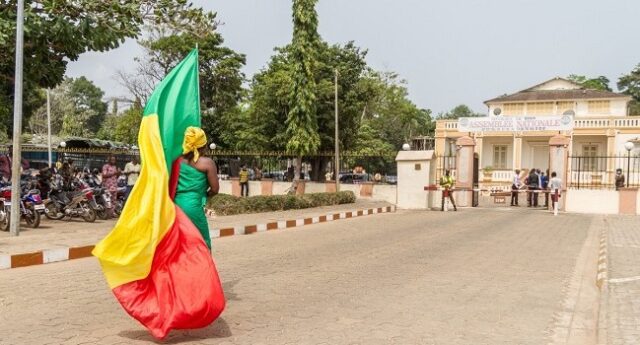
(FILES) A demonstrator carries the national flag in front of the Beninese National Assembly in Porto Novo on April 4, 2017. - Benin's judicial authorities announced on September 25, 2024 the arrest of the commander of the Republican Guard, a former minister and a businessman, on suspicion of planning a ‘coup d'état’. (Photo by YANICK FOLLY / AFP)


Benin’s National Assembly on Saturday passed a constitutional amendment increasing the presidential term from five to seven years, while maintaining the existing two-term limit.

The reform package also includes the creation of an upper chamber of parliament.

President Patrice Talon, who has been in power since 2016, is expected to leave office next April after completing his second five-year term, bringing his total time in office to a decade.

His preferred successor, Finance Minister Romuald Wadagni, is widely viewed as the frontrunner in the upcoming April 2026 election.

The amendment sailed through the legislature with 90 votes in favour and 19 against, signalling strong backing within the ruling coalition.

Under the new constitutional arrangement, the proposed senate will have at least 25 members.

Some will be appointed directly by the president, while others will serve ex-officio, including former presidents of the country.

Google search engine

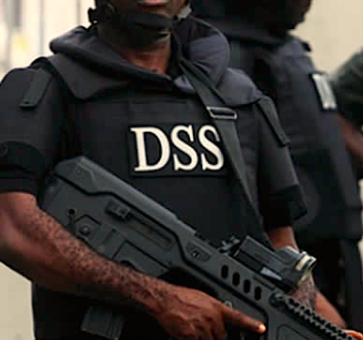
DSS Re-Arrests Ansaru Operative Behind 2022 Uromi Bank Robberies


The Department of State Services (DSS) has re-apprehended Abdulazeez Obadaki, the alleged mastermind of the deadly 2022 bank raids in Uromi, Edo State.

According to the agency, Obadaki had been on the run since escaping during the Kuje Medium Security Custodial Centre jailbreak in 2022.

He is also linked to the attack on Deeper Life College in Okene, Kogi State, where multiple people were shot.

His recapture comes almost three months after National Security Adviser Nuhu Ribadu announced the arrest of two senior leaders of the Ansaru terrorist organisation.

In an earlier briefing, Ribadu identified the previously arrested figures as:

  • Mahmud Muhammad Usman (Abu Baraa/Abbas/Mukhtar) – described as the self-proclaimed Emir of Ansaru and coordinator of several terrorist sleeper cells nationwide. Security agencies believe he has overseen major kidnappings and armed robberies used to fund terrorist activities.
  • Mahmud al-Nigeri (Mallam Mamuda) – Abu Baraa’s deputy and head of the “Mahmudawa” cell operating around Kainji National Park, stretching from Niger and Kwara States into Benin Republic. Ribadu noted that Mamuda received training in Libya from 2013 to 2015 under North African jihadist instructors, specialising in weapons handling and IED construction.

The NSA had revealed that both men had long been on Nigeria’s most-wanted list due to their roles in numerous attacks on civilians, security agencies, and strategic facilities.

Their alleged operations include:

  • The 2022 Kuje prison break
  • The attack on a Niger uranium facility
  • The 2013 abduction of French engineer Francis Collomp in Katsina
  • The 2019 kidnapping of Alhaji Musa Umar Uba, the Magajin Garin Daura

Obadaki’s re-arrest adds to the series of recent breakthroughs security agencies claim to have made against the Ansaru network.

Google search engine

Passengers Stranded As Oyo Govt Closes Bus Terminals For PDP Convention


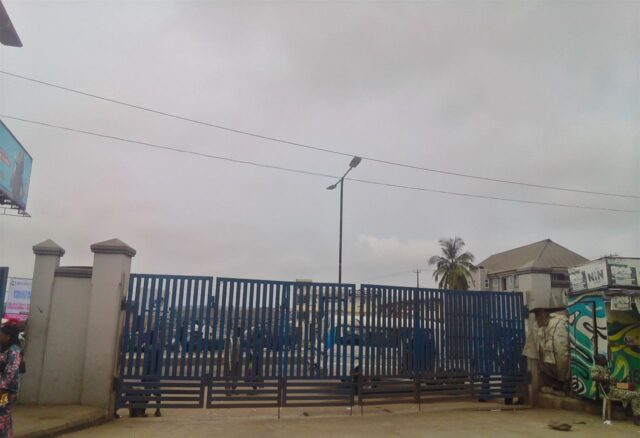
A large number of travellers in Ibadan were left stranded on Saturday after major bus terminals across Oyo State were shut down due to the Peoples Democratic Party (PDP) national convention taking place in the city.

The two-day convention, already embroiled in legal disputes after two separate court rulings attempted to halt it, proceeded under the Umar Damagum-led faction, which relied on a counter-judgment from an Oyo State High Court permitting the event to go ahead.

When DAILY GAZETTE visited major inter-state transport hubs such as Iwo Road, Challenge, and Ojoo, all the terminals were locked, preventing weekend passengers from making trips to destinations like Osun, Kwara, and Niger states.

Saturdays are typically the busiest travel days, but the facilities remained inaccessible.

Transport operators told the newspaper that the closure likely originated from the leadership of the Park Management System (PMS), which Governor Seyi Makinde established following a leadership crisis in the National Union of Road Transport Workers (NURTW).

The NURTW is currently fighting to regain authority over the parks.

At Iwo Road, terminal workers and drivers could be seen wearing caps with “PDP convention” printed on them. Frustration was high among motorists who depend on daily income.

Kazeem, a commercial driver, expressed anger:

“So because politicians want to gather and talk, the whole city must suffer? What about those of us who survive on daily work?”

Another driver at the Ojoo terminal, Muri, said the managers closed the parks of their own accord to show support for the governor as host of the PDP convention.

Google search engine

Army Confirms Ambush On Troops In Borno, Denies Claims Of Commander’s Kidnap


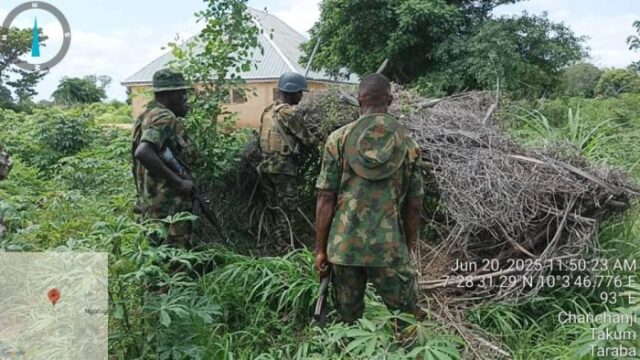
The Nigerian Army has acknowledged that soldiers from the 25 Task Force Brigade in Borno State were attacked in an ambush by insurgents, but dismissed circulating reports alleging that the brigade commander was abducted.

In a statement released by Appolonia Anele, Acting Director of Army Public Relations, the ambush occurred as troops were returning from a successful operation in the Sambisa Forest.

According to the statement, the patrol team, which included soldiers and members of the Civilian Joint Task Force (CJTF), came under intense enemy fire in the Wajiroko–Azir Multe axis of Damboa LGA.

The Army confirmed that two soldiers and two CJTF members were killed during the confrontation.

Anele explained that the team was led by Brigadier General M. Uba, Commander of the 25 Brigade, who along with his troops fought back decisively, overwhelming the attackers with superior firepower and compelling them to retreat.

“The Army categorically debunks the false reports alleging that the Brigade Commander was kidnapped. The public should disregard this misinformation,” the statement emphasised.

The Army expressed condolences to the families of the fallen personnel, praising their bravery and sacrifice.

Chief of Army Staff, Lieutenant General Waidi Shaibu, paid tribute to the troops, acknowledging their resilience in one of the toughest conflict zones in the country.

He described their courage as a reminder of the daily risks faced by military personnel working to keep Nigeria secure.

Sources told DAILY GAZETTE that the remains of the two CJTF members were transported to Maiduguri where they were buried.

Google search engine

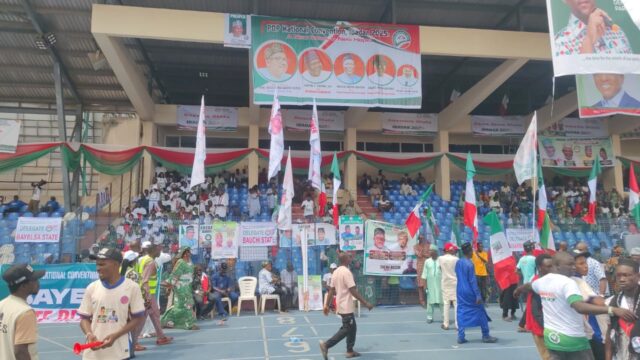
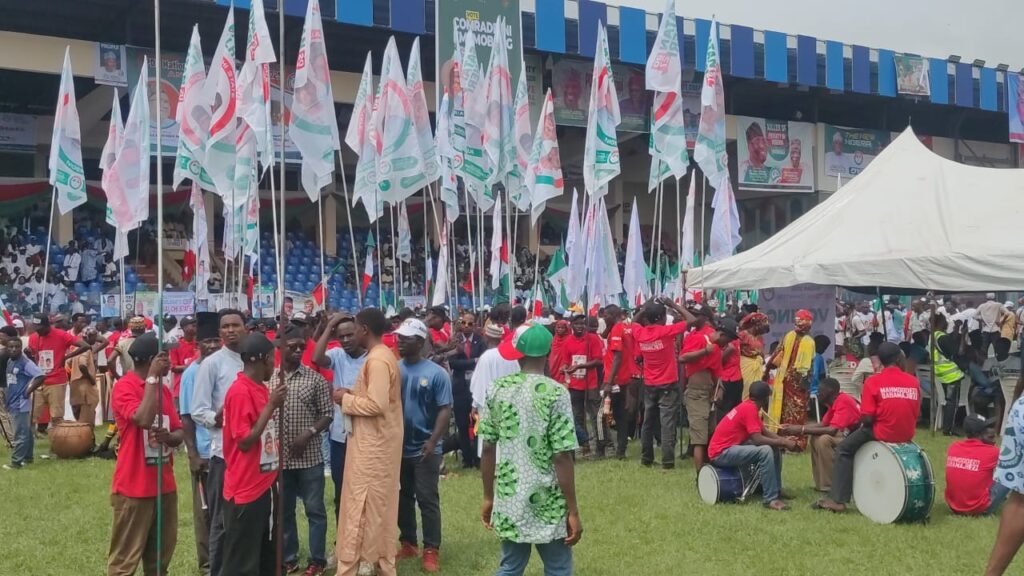
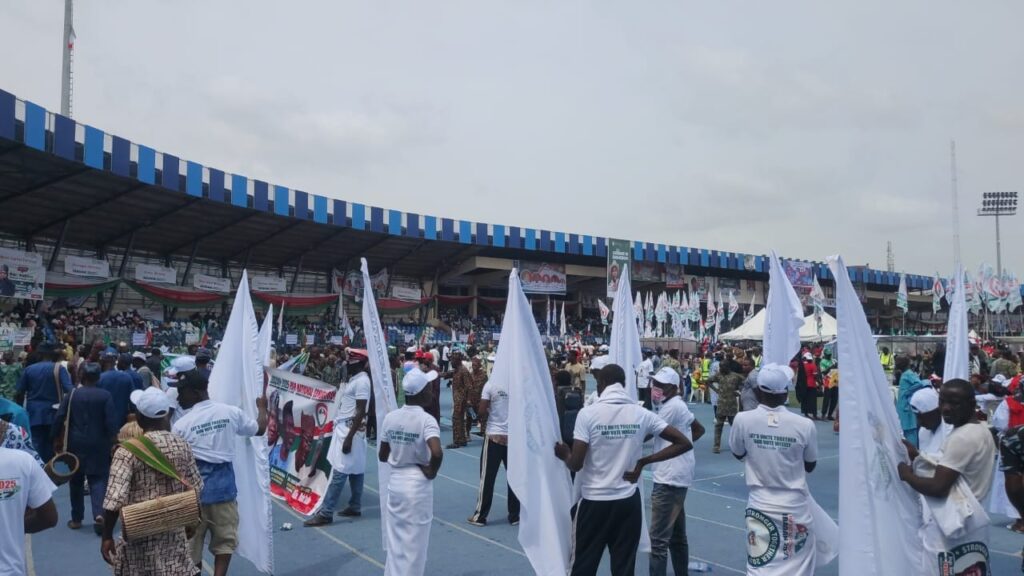
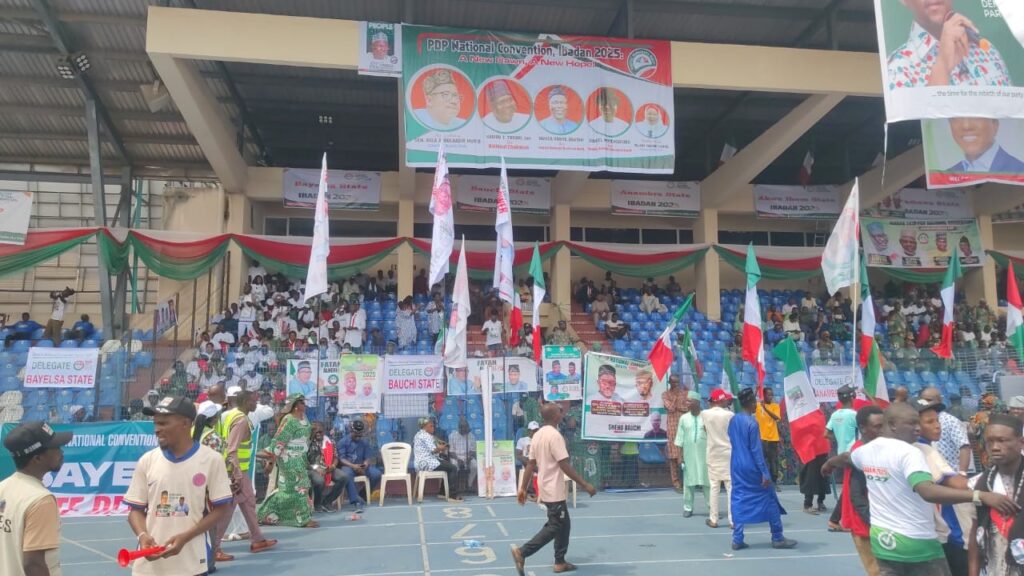
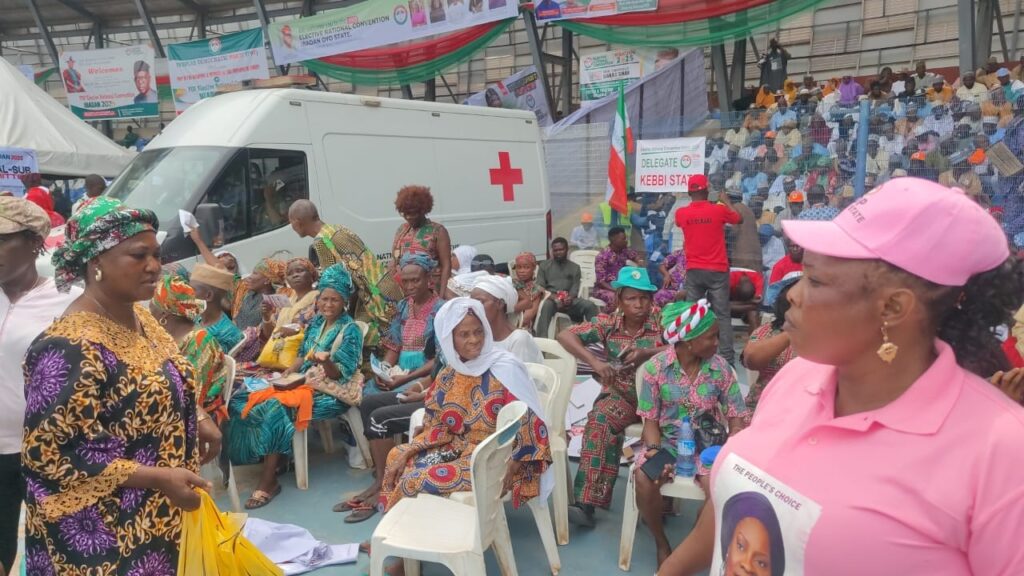
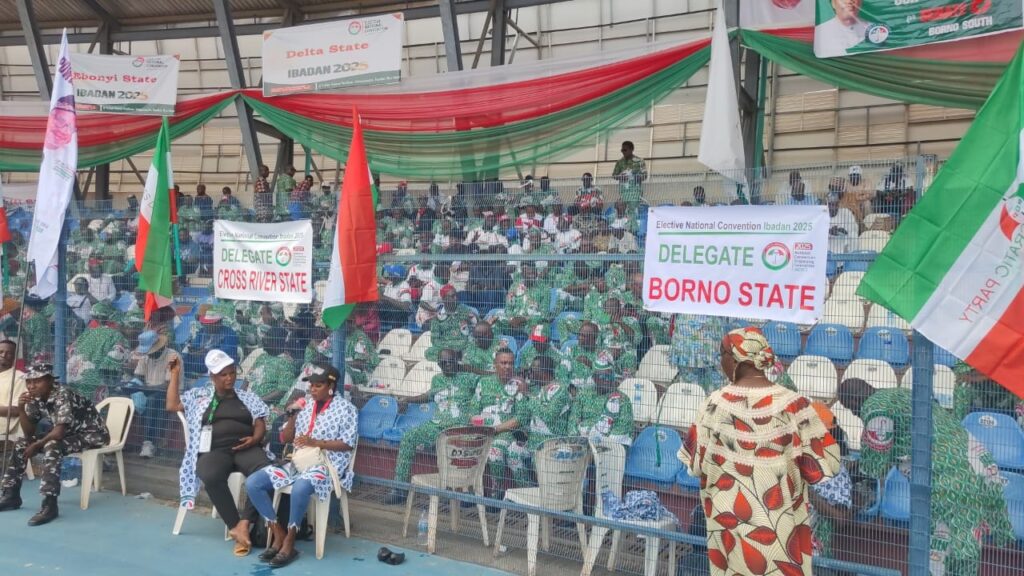
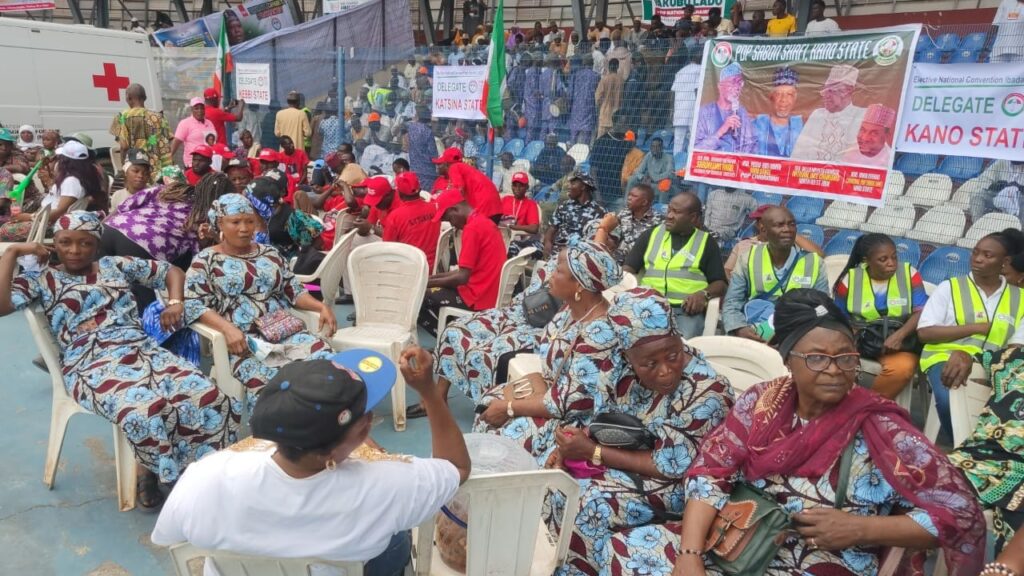
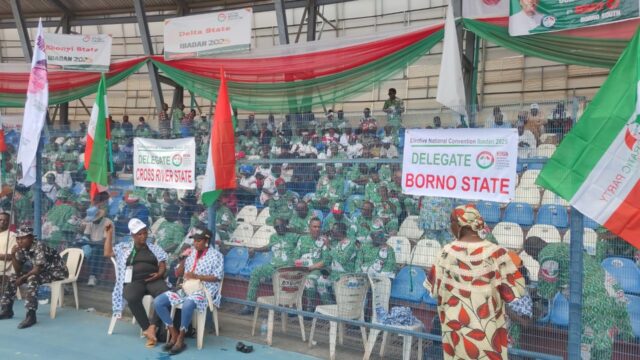
See Images From Ongoing PDP Convention In Ibadan


The Lekan Salami Stadium, Adamasingba, venue of the Peoples Democratic Party (PDP) 2025 convention, is bubbling with activities.

Delegates from different states have converged on the stadium for the event.

Despite legal hurdle, the PDP had vowed not to halt its convention.

Below are some pictures from the venue:

Google search engine

2026 Budget: Governor Sani Allocates N100 Million To Each Of Kaduna’s 255 Wards


Governor Uba Sani of Kaduna State has announced that each of the state’s 255 political wards will receive ₦100 million in the 2026 draft budget, marking a historic move toward direct grassroots funding.

Speaking at a special town hall meeting for the public presentation of the budget on Friday, the governor explained that the decision was shaped by citizens’ feedback from last year’s consultations.

Many residents highlighted severe developmental gaps in rural communities, including the fact that 12 out of 23 Local Government Areas had not received even one kilometre of road construction in 12 years.

“The ₦100 million per ward allocation ensures that communities themselves identify, prioritize, and implement projects that matter most to them,” Sani said.

“This includes feeder roads, water supply schemes, health facilities, farm-to-market links, security infrastructure, and community economic programmes.”

The governor emphasized that decisions on how the funds are used will no longer be dictated from above.

He cited the water sector as an example, where budget allocations were increased from ₦10 million to ₦100 million following citizens’ demands, showing that community input directly shapes development priorities.

Sani also highlighted ongoing state projects, including extensive road construction across LGAs, many at 90–95% completion, such as: 24 km inter-community roads, 35 km in Sanga, 22.5 km in Soba, 24.7 km in Zangon Kataf and 14.2 km in Igabi.

These projects are set to complement the ward-level allocations and ensure equitable development.

Health and Agriculture Initiatives
According to the governor, citizen consultations have also guided investments in health, making Kaduna the only state in Nigeria to upgrade all 255 primary healthcare centres from level 1 to level 2, earning recognition as the best PHC system in the Northwest.

Renovation and equipping of 16 general hospitals are also aligned with ward-specific needs, with nine already completed.

On agriculture, wards with significant farming populations will receive targeted interventions funded by the ₦100 million allocation.

This complements ongoing initiatives such as the distribution of nearly 900 trucks of fertilizer and Kaduna’s recent $250 million agro-industrial investment deal, aimed at boosting market access, value addition, and rural incomes.

Kaduna’s skill development programs, currently enrolling 90,000 youths under the Federal Government’s TX training initiative, will also benefit from ward-level funding, enabling communities to sponsor vocational and digital skills programs.

Major transportation projects, including a planned BRT system and 44 km light rail, are expected to strengthen local economies, improve mobility, and enhance security coordination.

Governor Sani stressed that the philosophy behind the ₦100 million per ward is fairness, equity, and inclusion, emphasizing that development should reach every community, regardless of political affiliation, origin, or religion.

“The 2026 budget is your budget, and the ₦100 million is for the people to decide, not the government to dictate,” he said.

Google search engine

Conflicting Judgments Are Part of Legal Growth, Not Judicial Failure – Judicial Institute Administrator


The Administrator of the National Judicial Institute (NJI), Justice Babatunde Adejumo, has stated that conflicting court judgments in Nigeria should not be interpreted as a sign of judicial collapse, but rather as a natural outcome of a dynamic legal system.

Speaking at an interactive session ahead of the 2025 All Nigerian Judges’ Conference in Abuja, the former President of the National Industrial Court said differing outcomes in similar cases arise from judges’ individual assessments of facts, evidence, and the law.

“Judges deliver judgments based on the facts and evidence before them,” he explained.

“Even in the United States, one of the world’s most established judicial systems, state courts frequently reach different conclusions on similar legal issues.”

According to him, such divergences are healthy for legal development and are ultimately harmonised through the appeal process, culminating at the Supreme Court.

“When courts deliver conflicting decisions on the same matter, the appellate courts exist precisely to resolve them. Whatever the Supreme Court finally decides becomes binding on all other courts,” he said.

However, Justice Adejumo cautioned that while judges of coordinate jurisdiction are not bound by one another’s rulings, it would amount to judicial rascality for a lower court to contradict the decision of a superior court.

“Once the Supreme Court has spoken, no division of the Court of Appeal or any lower court should issue a contrary ruling,” he warned.

“At best, they may offer clarity where interpretation is needed.”

He proposed stronger procedural safeguards to discourage parallel filings, suggesting that litigants should be made to swear an affidavit confirming that the same matter has not been initiated in another court, a breach of which, he said, would constitute perjury.

Justice Adejumo also reflected on his three decades on the Bench, recalling how the National Industrial Court evolved into a superior court of record.

“When I took office in 2003, the NIC had only two divisions, Lagos and Abuja, and 123 staff,” he said.

“Through persistent advocacy, we secured the National Industrial Court Act, 2006, and later championed a constitutional amendment that elevated the court’s status.”

The amendment, endorsed by the National Assembly and 33 states, placed the NIC as the fourth-highest court in Nigeria’s hierarchy and granted its president full membership of both the National Judicial Council and the Federal Judicial Service Commission.

“Judges Do Not Manufacture Evidence”

Seeking to dispel misconceptions about the judiciary, he emphasised that judges decide cases strictly on facts, evidence, witnesses, law, and precedent.

“A judge does not embark on a voyage of discovery,” Adejumo said.

“In criminal matters, guilt must be proved beyond reasonable doubt. Any doubt must be resolved in favour of the accused. It is better for 100 guilty people to go free than for one innocent person to be wrongly convicted.”

Justice Adejumo reaffirmed his commitment to strengthening judicial education, describing the NJI as the “heartbeat of the Nigerian Judiciary” and a forum that brings together judges, lawyers, journalists, and the public to enhance justice delivery.

He expressed confidence that the 2025 All Nigerian Judges’ Conference would deepen professional knowledge, improve standards, and reinforce public trust in the justice system.

Google search engine

- Advertisement -
Google search engine

MOST COMMENTED