Home Blog Page 258

Coup Plot: Panic In Abuja Over Alleged Move To Topple President Tinubu
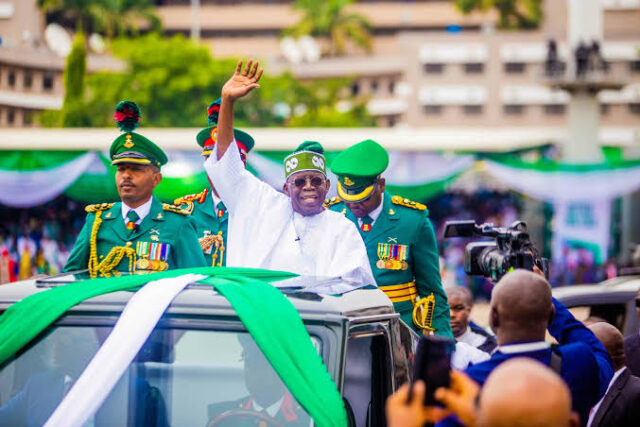
 

In recent days, speculation about a potential military coup in Nigeria has made headlines and gone viral on social media.

The rumours suggested that middle-ranking military officers were plotting to overthrow President Bola Tinubu, citing this as the reason the government cancelled the Independence Day parade on October 1.

However, the Defence Headquarters swiftly dismissed these claims.

In a public statement, the military explained that the parade was cancelled to allow the president attend “a strategic bilateral meeting” and to enable the armed forces to maintain focus on internal security threats like terrorism and banditry.

The statement also addressed the alleged arrest of 16 military officers, clarifying that they were part of a routine internal investigation to maintain professionalism within the ranks, not part of any coup attempt.

Contrary to the speculation, President Tinubu was actively engaged in public duties during the lead-up to Independence Day.

He attended the coronation of the Olubadan of Ibadan on September 26, commissioned projects in Imo State on September 30 and returned to Lagos to deliver a national address on October 1.

These public appearances directly contradict the idea that he was avoiding public events out of fear of a coup.

While Nigeria’s coup rumour was ultimately false, the global political climate offers insight into why such speculation finds fertile ground.

Recent data from the Varieties of Democracy Project reveals that autocracies now outnumber democracies worldwide, with 91 autocratic regimes compared to 88 democracies.

Even more telling: nearly 72% of the global population now lives under autocratic governments, the highest percentage since 1978.

This means that interest in authoritarian alternatives is not a uniquely Nigerian problem, it’s part of a broader global trend.

A quick analysis of Google Trends shows that Nigerians began searching about coups on October 1, the same day the parade was cancelled.

Queries like “first coup in Nigeria” and “military coup in Nigeria” spiked, particularly in Kaduna and Edo States.

Interest in coup-related topics surged again between October 6 and 13, following news of the military takeover in Madagascar.

Interestingly, interest in the coup topic even overtook public attention around Joash Amupitan, the newly-appointed INEC Chairman, despite his appointment being a major national story.

I lived through Nigeria’s military regimes in the 1990s. I remember the fear, the silence and the deep instability they brought.

So I have no nostalgia for military rule. But that’s my lived experience, not that of most Nigerians.

With a median age of 18, over 60% of Nigerians have only known democracy.

They didn’t live through coups. So when the economy worsens, insecurity spreads and governance fails to deliver, it’s not hard for some to begin romanticizing military alternatives.

What these rumours really reveal is a trust gap. Many citizens no longer believe that democracy is working for them.

Hunger, joblessness, insecurity, and rising inequality are making people ask: “Can anything be worse than this?”

Until the government begins to restore trust, by delivering security, jobs, and justice, rumours like this will keep resurfacing.

Nigeria doesn’t just need to dismiss coup rumours; it needs to prove that democracy works. Not just for the elite, but for the everyday citizen struggling to survive.

The military may be staying in the barracks, but the deeper question is: Do Nigerians still believe in democracy? Unless government action begins to match public needs, every rumour of a coup will echo louder than the last.

Rumours fade. But the reasons behind them remain, until they are addressed head-on.

Google search engine

Stop Airport Officials From Begging Travelers, Senator Tells Keyamo


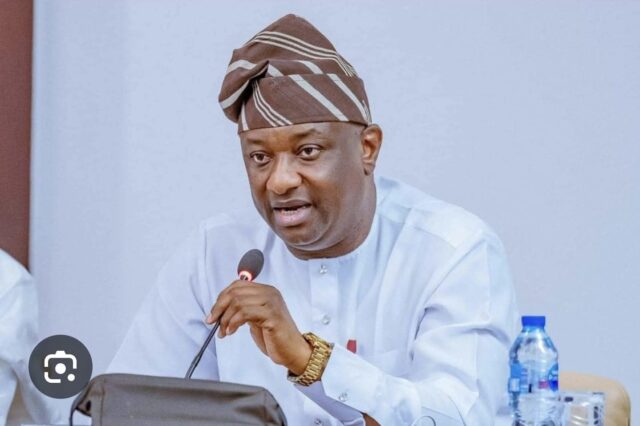
A softer drama unfolded in Abuja on Monday when Senator Osita Izunaso (Imo West) urged the Minister of Aviation and Aerospace Development, Festus Keyamo, to intervene in what he described as “embarrassing” conduct by airport agency personnel who allegedly solicit money or attention from travellers.

Speaking after the inaugural meeting of the Accommodation Sub‑Committee ahead of the upcoming global event Nigeria is hosting, the senator focused on airport terminals and how they reflect the country’s image before international visitors.

“Honourable minister, a lot has been said about what you are doing at the airport. When you arrive now you just carry your bag and move in. Good work! That is fantastic.”

“But you also have to look at the personnel. You will always hear ‘Your boys are here, Sir!’ or ‘We’re greeting you, Sir !’.  This does not depict a very good image of our country.”

Izunaso criticised the excessive greetings and inferred demands for tips by officials with customs, immigration and other agencies at airports.

“There is a way they look at you that makes you know they are asking for something more than just doing their job,” he said.

He further highlighted how major access points such as Bussy Water Works Road, Ogoja Road and Afikpo Road were nearly free of traffic due to reduced park operations and public transport as visitors refrained from using them.

However, the President of the Nigerian Institute of Public Relations (NIPR), Dr. Ike Neliaku, offered a more positive view, citing recent improvements.

“I returned from South Africa and came back through the international airport … I want to confirm there is a lot of improvement,” he said.

In support of these remarks, Minister of Information and National Orientation, Mohammed Idris, commended Keyamo’s leadership, affirming the transformation of the country’s entry and exit points as “truly unprecedented.”

Likewise, the Comptroller‑General of the Nigeria Customs Service, Bashir Adeniyi, explained that technological upgrades, including passport scanning and automated gates, have reduced human contact and expedited processing times.

Closing his remarks, Keyamo pledged to ensure that when Nigeria hosts the 2026 World Public Relations Forum, arriving guests will receive world‑class welcome standards.

“We are going to be ready at our entry point … to ensure all those invited receive a very good welcoming atmosphere,” he pledged, noting a VVIP department for international guests is already in the works.

Google search engine

Governor Adeleke Reacts To Claims Of Leaving PDP For APC


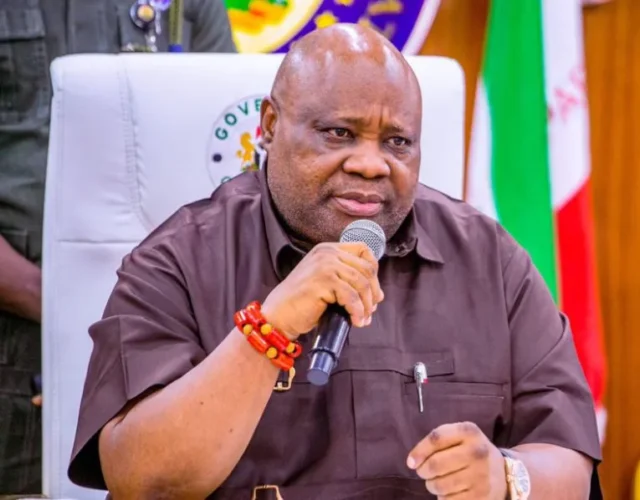
Governor Ademola Adeleke of Osun State has firmly denied speculation that he is planning to defect to the All Progressives Congress (APC), reaffirming his loyalty to the Peoples Democratic Party (PDP).

Speaking to journalists in Abuja following the inaugural meeting of the PDP Convention’s Accommodation Sub-Committee, Adeleke dismissed rumours of defection and described the internal challenges within the PDP as normal family affairs.

“We are meeting and resolving our issues internally. It is a family affair. We do not want anyone outside to add sugar, pepper, or salt to the matter,” he said, stressing that the PDP remains united and capable of handling its internal matters.

Adeleke, who serves as Deputy Chairman of the upcoming PDP National Convention scheduled for November 15 and 16, also chairs the party’s Accommodation Committee.

He assured that preparations are on track, saying, “We just concluded our inaugural meeting, and everyone was present. We’ve resolved everything necessary to ensure the convention runs smoothly.”

Addressing the recent wave of defections from the PDP, the Osun governor downplayed their significance, stating that party membership is a matter of personal choice.

However, he emphasized that the defections have not weakened the party.

“We still have strong membership and widespread support across Nigeria. I am not worried,” he stated confidently.

Reacting to claims that his association with friends in the APC indicates a possible defection, Adeleke explained:

“I’m a very civilised person. If I have friends in the APC and they invite me to a wedding or social function, I will attend. That doesn’t mean I’m joining them.”

He concluded by reaffirming his commitment to the PDP’s principles and future success:

“The PDP doesn’t rely on propaganda. We are focused on unity, structure, and growth. By God’s grace, our convention will be successful, and the PDP will emerge stronger.”

Google search engine

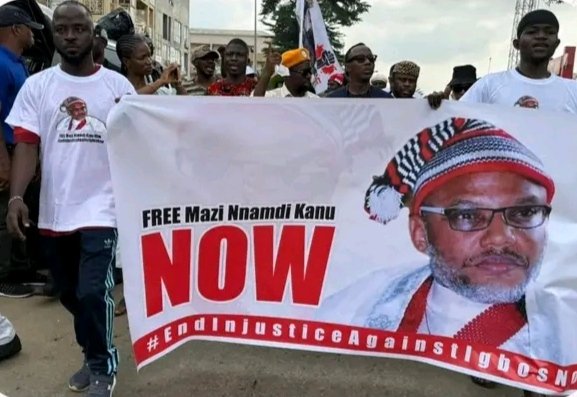
Why We Tear-gassed #FreeNnamdiKanu Protesters – Police


The Nigeria Police Force has justified its use of tear gas to disperse demonstrators in Abuja demanding the release of Mazi Nnamdi Kanu, leader of the Indigenous People of Biafra (IPOB), drawing sharp criticism from international rights group Amnesty International.

The protest, which took place across parts of the Federal Capital Territory (FCT) including Maitama, Jabi, and the high-security Three Arms Zone, was organised to call for Kanu’s release from prolonged detention by the Department of State Services (DSS).

Tensions escalated when protesters attempted to march toward the Three Arms Zone, home to the Presidential Villa, the National Assembly, and the Court of Appeal. Police officers responded by firing tear gas to disperse the crowd

Amnesty International Nigeria swiftly condemned the police response, describing it as an infringement on the constitutional right to peaceful assembly.

In a statement posted on its official X (formerly Twitter) account, the organisation said:

“Amnesty International receives disturbing reports of attempts to crack down on peaceful protests holding in Abuja, calling for the release of Nnamdi Kanu.”

“People must be allowed to freely exercise their right to peaceful protest.
Any act capable of undermining freedom of assembly is illegal and portrays unacceptable intolerance of peaceful dissent.”

The group urged the Nigerian government to uphold both domestic and international human rights obligations, citing the Nigerian Constitution, the African Charter on Human and Peoples’ Rights, and the International Covenant on Civil and Political Rights.

They further called for an immediate halt to any form of intimidation or crackdown against protesters and advised the authorities to engage constructively with the demonstrators’ grievances.

In response to the backlash, the Force Public Relations Officer, CSP Benjamin Hundeyin, defended the police’s actions.

In a post on his X handle, he said the police acted within the law and cited an existing court order restricting protests near certain high-security zones.

“Police tear-gassed protesters attempting to approach Aso Villa in clear contravention of a court order restricting protesters from the Villa, National Assembly, Force Headquarters, Court of Appeal, Eagle Square, and Shehu Shagari Way,” Hundeyin stated.

“We are the country’s foremost law enforcement agency. We carried out our mandate.”

‘We did not block the road but cleared it after protesters obstructed it, to ensure other Nigerians could move freely.”

Nnamdi Kanu has been in DSS custody since June 2021.

He is facing multiple terrorism-related charges before the Federal High Court in Abuja.

Google search engine

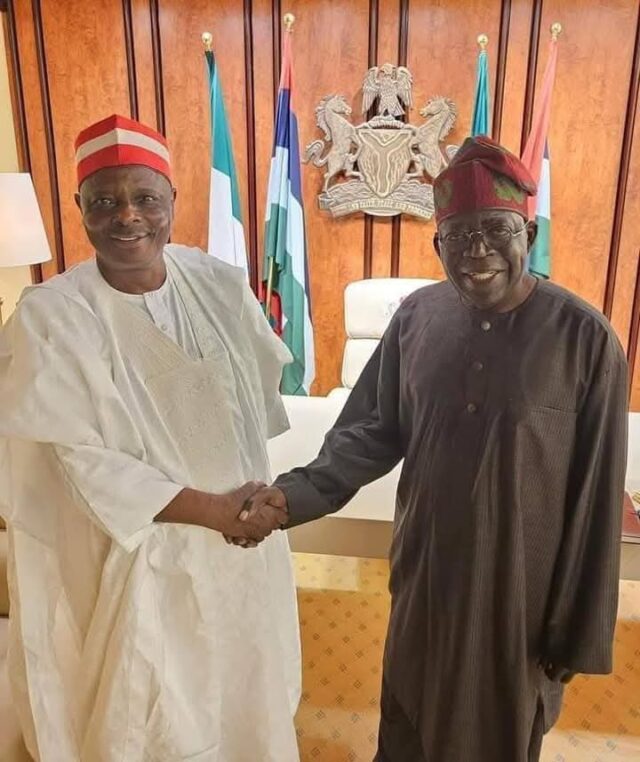
Kwankwaso Is An Ally Within Progressive Fold – Tinubu


President Bola Ahmed Tinubu has extended warm birthday greetings to Senator Rabi’u Musa Kwankwaso, describing him as a longstanding ally and a key figure within Nigeria’s progressive political movement.

In a message commemorating Kwankwaso’s 69th birthday, President Tinubu noted that despite the senator’s departure from the All Progressives Congress (APC), his political ideology remains firmly rooted in progressive values.

According to a statement issued by Bayo Onanuga, Special Adviser to the President on Information and Strategy, Tinubu also congratulated Kwankwaso’s family, supporters, and associates as they marked the occasion.

The President acknowledged Kwankwaso’s numerous contributions to Nigeria’s governance and development, citing his leadership in several high-profile roles, including as Deputy Speaker in the short-lived Third Republic, two-term Governor of Kano State, Minister of Defence, and current Senator for Kano Central.

He praised Kwankwaso’s continued popularity in northern Nigeria, particularly Kano State, crediting it to his grassroots, people-centered approach to politics, which mirrors the legacy of late northern icons like Mallam Aminu Kano and Alhaji Abubakar Rimi.

“Senator Kwankwaso remains a friend and ally. We served together in the National Assembly in 1992 and later governed our respective states in 1999. We also collaborated in founding the APC,” Tinubu said.

“Though he later left to form the New Nigeria Peoples Party (NNPP), his ideals still reflect the core of progressive politics.”

President Tinubu wished Kwankwaso continued good health and many more years of service to the nation.

Google search engine

Olanipekun Urges Suspension Of Constitution Amendments, Calls For Referendum


Senior Advocate of Nigeria and former President of the Nigerian Bar Association, Wole Olanipekun, has called on the National Assembly to halt all ongoing efforts to amend the 1999 Constitution, urging instead for a complete overhaul through a national referendum.

Speaking on Monday at the 13th Convocation Lecture of Afe Babalola University, Ado Ekiti (ABUAD), Olanipekun argued that the current constitution, imposed by the military in 1999, no longer serves the needs of a modern Nigeria.

His lecture was titled “Nigeria Yesterday, Today and Tomorrow: Imperative of a Sober and Definitive Recalibration.”

“The National Assembly should suspend any further amendment of the 1999 Constitution,” he said.

“What Nigeria needs is not another round of patchwork, but a homegrown constitution that reflects the will and uniqueness of its people.”

Olanipekun insisted that the current constitution has lost its legitimacy and relevance, describing it as a “military albatross” that was never subjected to public input or consent.

He advocated for a new, negotiated constitution that would lay the foundation for a truly democratic and inclusive society.

He recommended a transitional phase from now until 2031, during which Nigeria could consolidate previous constitutional reform efforts, such as reports from past national conferences, and prepare a new document through wide consultation and consensus.

“Elections should still hold during the transition period,” he explained, “but with the clear understanding that by May 29, 2031, Nigeria must begin operating under a new constitution.”

Highlighting Section 14(2)(a) of the 1999 Constitution, which states that sovereignty belongs to the people, Olanipekun argued that only a national referendum can legitimately determine the country’s political and constitutional future.

He emphasized that a referendum should decide key issues such as the structure of the National Assembly (whether full or part-time), their tenure and remuneration, and whether the current federal arrangement should be retained or reconfigured.

“The National Assembly cannot organize this referendum. You cannot be a judge in your own case,” he said.

“The federating units must take the lead in determining the process and framework.”

Beyond constitutional issues, Olanipekun also criticized Nigeria’s political culture, particularly the frequent defections between parties.

He called for greater commitment to political ideology and principles, urging parties to be more than just vehicles for power.

He praised President Bola Tinubu for his consistency in remaining with one political party through years of opposition, saying Tinubu’s loyalty should be a model for others.

“Membership in a political party should not be a picnic. It must be based on commitment to ideology, policies, and programmes,” he noted.

Olanipekun warned against the continued creation of new states, arguing it only weakens the federating units and strengthens an already overbearing central government.

“The more states are created, the more the centre becomes powerful, while the units lose autonomy,” he said.

“It’s time for states to take the lead in restructuring and stabilising Nigeria.”

In his remarks, the founder and Chancellor of ABUAD, Aare Afe Babalola (SAN), commended Olanipekun for delivering a “thorough and well-researched” lecture, aligning it with his own long-standing call for a new constitution to address Nigeria’s systemic challenges.

Google search engine

ADC Suspends South-South Vice Chairman Over Alleged Anti-Party Activities


The African Democratic Congress (ADC) has announced the suspension of its South-South National Vice Chairman, Dr. Usani Uguru Usani, citing allegations of misconduct.

This decision was reached following a meeting of the Cross River State Chapter’s State Working Committee (SWC) held on October 15, 2025.

In a statement released Monday in Abuja and signed by the State Publicity Secretary, Hon. James Otudor, the party said Dr. Usani’s actions were found to be in violation of the ADC constitution.

According to the statement, the SWC thoroughly reviewed multiple petitions and internal reports that accused Dr. Usani of engaging in anti-party behavior, disobeying party leadership and committing acts considered harmful to the unity and public image of the ADC.

The party clarified that the suspension will stand while a full investigation is carried out by the appropriate disciplinary bodies within the party structure.

Additionally, the Cross River chapter raised concerns over the recent appointment of Ms. Jackie Wayas as Deputy National Publicity Secretary.

The SWC criticized the lack of consultation with state leadership prior to her appointment and claimed Ms. Wayas had failed to engage with party structures in the state since assuming office.

The committee alleged that her conduct and allegiance were not in alignment with the values and unity of the party in Cross River.

As a result, it urged the national leadership to reconsider her appointment and replace her with a capable, media-savvy individual with a proven track record of loyalty to the ADC and its principles.

The SWC also expressed reservations about certain members of the Coalition Movement who had publicly declared their intention to join the ADC but had not completed the party’s formal registration process months later.

While acknowledging that party registration is ongoing, the committee warned that it would not tolerate members with dual loyalties or affiliations with other political platforms.

It noted that some coalition figures had attended ADC strategic meetings only to later assume caretaker roles in their previous parties.

The statement concluded by directing all coalition leaders and aspiring members to finalize their registration at their respective ward levels within seven days, by Saturday, October 25, 2025, or risk exclusion from any leadership or decision-making roles within the party.

Google search engine

Man In Court For Allegedly Selling Son’s House Without Consent


A Shari’a Court in Danbare, Kano State, has brought charges against a man identified as Malam Shaddadu for allegedly selling a house belonging to his son without his approval.

The son, Muhammad Shaddadu, informed the court that his father had earlier purchased two tricycles for his half-brothers.

Tragedy struck when one of them was attacked and killed by hoodlums who also made away with his tricycle.

According to Muhammad, his father blamed him for the incident, took legal action against him, and he was eventually remanded in prison.

He added that he was later acquitted of all charges by the court.

Upon regaining his freedom, Muhammad returned home only to discover that his father had sold his house, reportedly believing he would never return.

When the case was presented in court, Malam Shaddadu denied the allegation and pleaded not guilty.

Presiding over the case, Judge Malam Munzali Idris Gwadabe noted that the issue appeared to be a domestic dispute.

He then referred the matter to the Court of Arbitration in an effort to mediate and reconcile both parties.

Google search engine

#FreeNnamdiKanu Protest Grounds Economic Activities In Ebonyi


Ebonyi State experienced a total shutdown on Monday as residents observed a stay-at-home protest in support of the call for the release of the detained leader of the Indigenous People of Biafra (IPOB), Nnamdi Kanu.

Though no formal protest marches were held, the impact was felt across the state as economic and social activities came to a standstill. Banks, schools, government offices, markets, eateries and shopping centres remained closed, while motor parks also suspended operations.

DAILY GAZETTE gathered that only a few commercial motorcycles and tricycles were seen operating, mainly around the city centre.

Most roads were deserted, including major routes like Bussy Water Works Road, Ogoja Road, Afikpo Road, Gunning Street, and the Ezzama/Oshiri/Onicha/Okposi/Uburu axis.

Despite the absence of unrest, security personnel were deployed to strategic points across the state to maintain order.

However, they later withdrew after observing that residents were peaceful and simply observing the protest indoors.

When DAILY GAZETTE reporter visited parts of Abakaliki, the state capital, the streets were nearly empty, with few pedestrians and minimal traffic.

Shops were shuttered and the usually bustling city appeared quiet and subdued.

Speaking to journalists, the Commander of the Ebonyi State Neighbourhood Watch, Mr. Victor Chibuoyi, praised residents for their peaceful conduct.

He acknowledged the right to peaceful protest but warned against allowing such actions to escalate into violence.

He added that security operatives under his command were stationed across the state to monitor the situation and ensure nothing disrupted the public order.

Google search engine

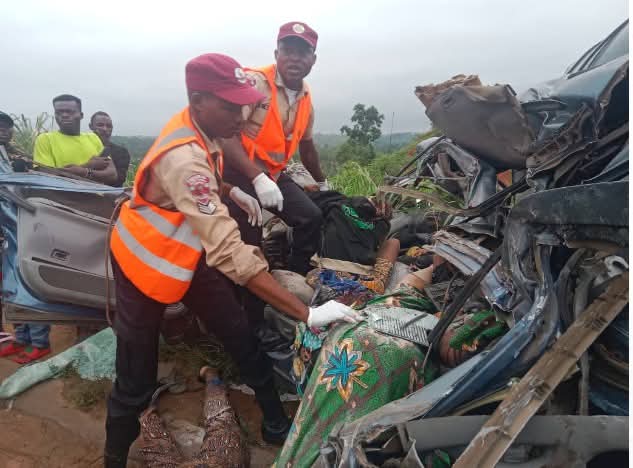
21 Dead, 144 Injured In Anambra Road Accidents – FRSC


At least 21 people have lost their lives and 144 others have sustained injuries in various road accidents across Anambra State from January to October 2025, according to the Federal Road Safety Corps (FRSC).

The FRSC Sector Commander in Anambra, Bridget Asekhauno, disclosed this during a press briefing on Monday to launch the 2025 Ember Months public safety campaign.

This year’s theme is “Take Responsibility for Your Safety: Stop Distracted Driving.”

Asekhauno revealed that the fatalities and injuries resulted from 57 recorded crashes, with overspeeding identified as the leading cause.

“As part of our 2025 Ember Months campaign, we’ll be organizing a motorcade rally, particularly around parks, to raise awareness among drivers and passengers. We will also host a town hall meeting to engage stakeholders, including other traffic agencies,” she said.

She further explained that FRSC officers undergo daily briefings and regular training to maintain high standards.

“Deviant behavior from some officers does not reflect the lack of training, every organization has its exceptions,” she added.

While delivering the address of Corps Marshal Shehu Mohammed, Asekhauno noted that the campaign’s theme targets unsafe road practices by drivers, which have historically contributed to high crash rates.

The Corps Marshal, in his message, highlighted disturbing figures from the last “Operation Zero” safety campaign (Dec 15, 2024 – Jan 15, 2025), where 432 deaths and 2,070 injuries were recorded from 533 crashes.

He listed major crash causes including driver fatigue, Overloading, Transporting passengers in cargo vehicles and Carrying fuel in plastic containers.

“The human factor, especially driver behavior, remains the single most significant element in determining road safety,” he stressed.

The FRSC chief also acknowledged the increase in travel and traffic during the Ember Months, typically the year’s last quarter, which often sees a spike in accidents and fatalities.

He thanked the media for supporting road safety awareness efforts and pledged continued collaboration to reach more road users.

This update follows an earlier FRSC report stating that 3,433 people died and 22,162 were injured in 6,858 reported road crashes across Nigeria between January and September 2025.

Google search engine

MOST COMMENTED

- Advertisement -
Google search engine