Home Blog Page 260

Group Urges INEC To Rebuild Trust Through Anambra Gov’ship Poll
 

A civic advocacy group, the International Society for Civil Liberties and Rule of Law (Intersociety), has called on the new Chairman of the Independent National Electoral Commission (INEC), Prof. Ojo Amupitan, to use the upcoming November 8 governorship election in Anambra State as a turning point to restore public trust in Nigeria’s electoral system.

In a statement issued in Enugu, Intersociety noted that electoral credibility in Nigeria has steadily declined since the return to civilian rule in 1999.

The group argued that no INEC chairman in the democratic era has matched the standards set by Prof. Humphrey Nwosu, who oversaw the acclaimed 1993 presidential election.

According to the statement signed by Intersociety’s chairman, Emeka Umeagbalasi, the country’s electoral processes have suffered due to poor leadership and alleged manipulation under successive INEC administrations.

“Nigeria has yet to produce a consistently competent and credible electoral umpire since 1999,” Umeagbalasi stated.

“In contrast, the military-era electoral bodies showed better professionalism, especially under Prof. Humphrey Nwosu, who remains the most effective electoral commission chairman in Nigeria’s history.”

The group was especially critical of the last three INEC chairmen.

Prof. Attahiru Jega (2010–2015) was accused of overseeing a voter register allegedly riddled with underage and non-Nigerian entries, especially in northern Nigeria, while systematically excluding eligible voters in the south based on ethnic and religious bias.

Prof. Maurice Iwu (2005–2010) was alleged to have maintained a voter roll filled with fictitious entries, including inanimate objects, human skulls, studio photos, and even images of foreign nationals.

Prof. Mahmood Yakubu (2015–2025) was described as presiding over the “worst-managed elections” since Nigeria’s return to democracy, despite having access to modern digital tools and innovations that could have transformed the voting process.

“Prof. Yakubu had the advantage of modern technologies like electronic transmission of results and biometric verification, yet these tools were either misused or not implemented effectively,” the group added.

Intersociety stressed that with the exit of Prof. Yakubu, Nigeria now has an opportunity to rebuild confidence in its electoral system, starting with the Anambra governorship election.

The group called on Prof. Amupitan to demonstrate impartiality, professionalism, and a genuine commitment to free and fair elections.

“This election must be a benchmark for a new era. It is time for INEC to reclaim its integrity and deliver credible outcomes that truly reflect the will of the people.”

Google search engine

Gov Mbah Building Structures And Systems For Development In Enugu By Chinweuba Eze


In furtherance of government’s intervention in the microeconomic indices Enugu state government under the leadership of Governor Peter Mbah has built and repaired over 293 roads statewide in places and areas the government has never seen intervention before.

From the abandoned Emene roads to Umuchu street, to coal camp roads to Emeka Ebili to Mbanugo to Achara layout to Odudukoko are filled with expansion of infrastructure and upgrading of road networks which has kept caterpillar parts owners busy. Caterpillar owners have expanded their businesses by buying new machines.

The government due to the over 2000 projects ranging from 260 smart schools, 260 type 2 health centres and 260 farm estates has swallowed over 1500 caterpillar machines, over 20,000 workers thus boosting local economic activities across the state.

The government has invested in the microeconomic level putting money into the local economy and helping productive ventures and skilled workforce to earn higher wages.

A typical caterpillar owner rents an excavator or a dozer for over 300,000 per day and an operator makes 20,000 per day(8 hours of work).

The government through these projects in agriculture with over 52000 farmers and over 1000 extension workers expected to be busy boosting food security in 260 farm estates, state owned industries revived and in production, road construction with state owned asphalt plant built and in use, 260 smart school constructions, 8 new technical and vocational education training (TVET) schools and estate development from both government and private sector has improved the microeconomic indices of the populace with estimated 3 million people expected to move into the state in the next 4 years.

This led Enugu State to grow its internally generated revenue to over 180 billion this year which shows there is a high level of productivity going on in the coal city state.

The Enugu State government is establishing the structure and systems that will leapfrog Enugu from a civil service state to an economic hub.

The government is getting Enugu ready to be on a sound pedestal as the nation is migrating from a revenue sharing economy to a tax paying economy from January where every kobo of government is spent wisely and the people demand accountability and support which the government is providing through the citizens charter.

Enugu is building a smart economy and a smart city which will be ready to access the skill set our new educational system is building. Enugu is fast becoming an economic hub and tech capital of Nigeria.

Enugu will become a billion dollar self reliant sub national economy. A modern smart city is emerging.

The government is getting Enugu ready to be on a sound pedestal as the nation is migrating from a revenue sharing economy to a tax paying economy from January 2026 when the new national tax laws will take effect where every kobo of government is spent wisely and the people demand accountability and support which the government is providing through the citizens charter. Enugu is building a smart economy and a smart city which will be ready to access the skill set our new educational system is building.

Enugu is fast becoming an economic hub and tech capital of Nigeria. Enugu will become a billion dollar self reliant sub national economy. A modern smart city is emerging.

Enugu State is taking shape. The government is not claiming perfection. Far from it. They are promising 100 percent effort and commitment to excellence in governance. The sacrifices being made by all are appreciated.

Ndi Enugu are beckoned to support the government, bring their businesses home, protect our common assets and the government of Governor Peter Mbah is committed to use every fibre of their being to give a better future to all irrespective of who they are or where they live.

Ndi Enugu tomorrow is here.

Google search engine

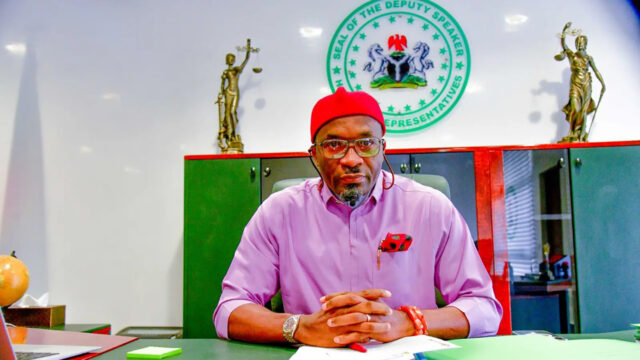
Reps Deputy Speaker Declares War On Governor Otti, Vows To Defeat Him In 2027


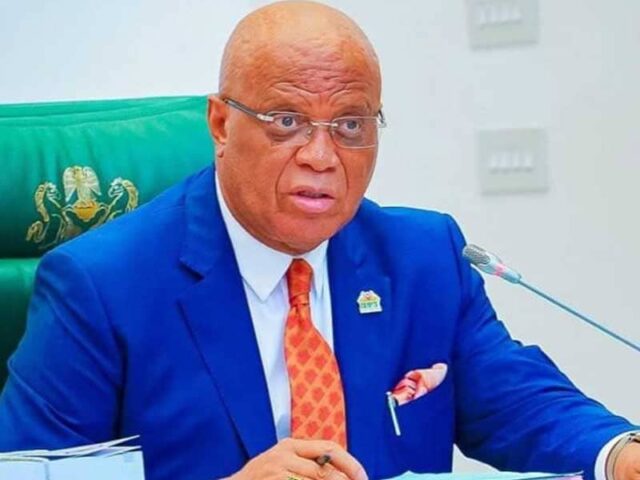
Deputy Speaker of the House of Representatives, Rt. Hon. Benjamin Kalu, has declared that the All Progressives Congress (APC) is determined to unseat the Labour Party-led administration of Governor Alex Otti in Abia State come 2027.

Addressing a massive rally of APC supporters at the Abia Hotel in Umuahia, Kalu, a prominent member of the APC-led federal government, stated that the party is laying the groundwork for a decisive political takeover in the next election cycle.

“We have come to take over. There is no going back. APC will take over Abia so that what comes from Abuja will be more impactful,” Kalu said to a cheering crowd brought in from the state’s 17 local government areas.

He described the event as a preparatory rally ahead of a larger statewide mobilisation on December 29, 2025, which will reportedly feature a visit from President Bola Ahmed Tinubu.

The president, whose planned visit in early October was postponed, is expected to attend the December event in a show of support for the party’s growing presence in the state.

Kalu emphasized that the APC’s mission is to “rescue” the state, criticizing Governor Otti’s use of federal allocations, which he claimed range between ₦38 billion and ₦40 billion monthly.

He alleged that past governors achieved more with less.

“Abia has done well, but not enough. The people deserve better from a government receiving this level of funding,” he said.

In a swift and strongly worded response, Ferdinand Ekeoma, Special Adviser on Media and Publicity to Governor Alex Otti, dismissed Kalu’s remarks as “misleading” and “uninformed.”

“Benjamin Kalu needs tutorials more than he needs a microphone,” Ekeoma stated in a press release titled “Governance in Abia: Benjamin Kalu Needs Tutorial More Than He Needs a Microphone.”

He challenged the figures cited by Kalu, noting that Abia’s total FAAC allocation for the year-to-date (January–August 2025) stands at ₦125 billion, far below the annualized total that would result from monthly ₦38 billion allocations.

Ekeoma further argued that inflation, currency devaluation, and rising import costs have significantly eroded the real value of federal allocations.

He also highlighted substantial reforms introduced under Otti’s leadership, including raising the minimum wage from ₦30,000 to over ₦70,000, doubling the state workforce from 31,000 to over 67,000 verified staff, excluding newly hired teachers, and restoring dignity to thousands of previously marginalized workers.

“Thousands of Abians were denied salaries for years under past administrations. Governor Otti’s administration has brought them into the fold and is paying them fairly,” Ekeoma said.

He questioned Kalu’s silence during the tenure of previous PDP administrations when many of these issues persisted, accusing him of political opportunism.

Google search engine

Japan Faces Political Turmoil As Ruling Coalition Falls Apart


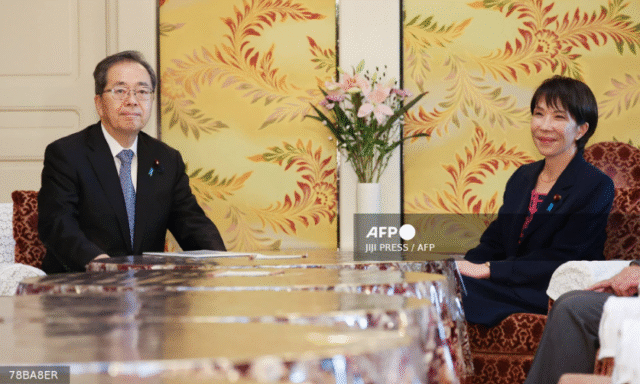
Japan plunged into political uncertainty on Friday after the Komeito Party withdrew from its decades-long coalition with the ruling Liberal Democratic Party (LDP), throwing the country’s leadership succession into disarray.

The dramatic move comes less than a week after Sanae Takaichi was elected as LDP president, positioning her to become Japan’s first female prime minister.

However, with Komeito pulling out, her confirmation by parliament is now in jeopardy.

Komeito’s exit ends a political partnership that has anchored Japanese politics for nearly 25 years.

The announcement sent shockwaves through financial markets, with the yen sliding against the dollar and the Nikkei index closing 1% lower.

“We’ve decided to take a step back and dissolve our alliance with the LDP for now,” Komeito leader Tetsuo Saito told reporters.

“There’s been a lack of transparency and cooperation, particularly around critical issues like the recent slush fund scandal. We cannot, in good faith, support Ms. Takaichi’s nomination for prime minister under these circumstances.”

One of Komeito’s main grievances was Takaichi’s unsatisfactory response to the LDP’s slush fund scandal, which has sparked public outrage and contributed to the coalition’s weakened position in parliament.

Komeito has also reportedly grown uneasy with Takaichi’s conservative stance, especially her past visits to the controversial Yasukuni Shrine, which honors Japan’s war dead, including convicted war criminals.

These visits have historically angered China, South Korea, and even drawn concern from Washington.

Although some media outlets suggest Takaichi may skip the shrine visit during the upcoming autumn festival (October 17–19), it’s unclear whether this will ease tensions.

Takaichi, 64, a staunch conservative often compared to Margaret Thatcher, had recently won a runoff election against the younger, more progressive Shinjiro Koizumi, 44. Her victory was seen as a win for the party’s traditionalist wing.

She was expected to succeed Shigeru Ishiba, who stepped down after his government lost its majority amid public frustration over rising inflation and the ongoing LDP corruption scandal.

Despite the fallout, Komeito says it will continue to support pending budget proposals and previously agreed legislation, signaling that some level of cooperation may remain.

Google search engine

Gov. Umo Eno Signs N695bn Supplementary Budget Into Law


Akwa Ibom State Governor, Pastor Umo Eno, has signed a N695 billion supplementary budget into law for the 2025 fiscal year.

The bill, recently passed by the Akwa Ibom State House of Assembly, aims to bolster the implementation of key government programmes and projects across the state.

Following the signing ceremony at Government House, Uyo, the Governor reiterated his administration’s commitment to transparency, accountability, and people-oriented governance.

“I appreciate the leadership and members of the House of Assembly for their prompt passage of this important bill,” Eno stated.

“This supplementary budget further energizes us to deliver on our promises and meet the needs of our people with integrity and purpose.”

To expedite project delivery, the governor also announced the immediate release of N60 billion to contractors whose Interim Payment Certificates (IPCs) have been approved.

The move is aimed at accelerating ongoing infrastructure and development projects across various sectors.

In response, the Speaker of the State Assembly, Hon. Udeme Otong, praised the governor’s leadership and governance style, describing it as inclusive and impactful.

“We’ve never seen such a thorough delivery review in Akwa Ibom. It’s giving us clear insights into the progress of government efforts. This is what true oversight looks like,” the Speaker remarked.

The signing of the supplementary budget reflects the state government’s drive to ensure robust budget performance and improved service delivery for Akwa Ibom residents.

Google search engine

APC Swears In Enugu Caretaker Committee Amid Internal Restructuring


The All Progressives Congress (APC) has officially sworn in a new caretaker committee for its Enugu State chapter, following the dissolution of the previous executive over internal wrangling and persistent factional disputes.

DAILY GAZETTE reports that the swearing-in ceremony, which took place at the party’s national secretariat in Abuja, marks a fresh chapter for the APC in the state as it seeks to reposition itself ahead of upcoming political realignments and potential defections.

The newly inaugurated caretaker committee is headed by Dr. Ben Nwoye, a former state chairman of the party, who has been tasked with stabilizing the chapter and leading reconciliation efforts.

Also sworn in was Dr. Eugene Odoh, a former Speaker of the Enugu State House of Assembly, who will serve as the committee’s secretary.

Other members of the committee include Ambassador Fidelia Njeze, Comrade Petercash Chime, Dr. (Mrs.) Oby Ajih, Dr. Chidozie Nwafor, and Engr. Emma Eke.

Google search engine

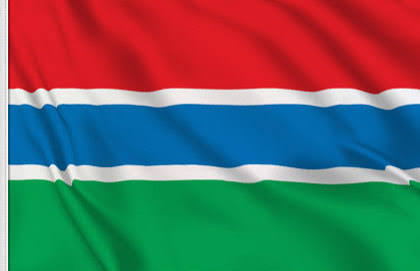
Gambia Announces Date For 2026 Presidential Election


The Gambia will hold its next presidential election on December 5, 2026, according to an announcement made Thursday by the country’s electoral body.

The declaration comes as President Adama Barrow’s decision to run for a third term continues to stir political tension both domestically and internationally.

President Barrow, who first took office in 2016 after defeating longtime ruler Yahya Jammeh, sparked surprise earlier this year when he confirmed plans to seek re-election.

While The Gambia’s 1997 constitution allows a third term, many Gambians had expected Barrow to step aside after two terms, particularly given his earlier commitment to constitutional reform.

Barrow’s original victory raised hopes for democratic renewal, including the introduction of presidential term limits.

A proposed constitution, drafted after his election, sought to limit future presidents to two five-year terms.

However, in 2020, Barrow’s allies in parliament rejected the draft due to a retroactive clause that would have barred him from contesting again.

A second version, which excluded the retroactive rule, was submitted four years later but also failed to pass in July 2024.

The president’s decision to run again under the National People’s Party (NPP) has been met with growing criticism.

Opposition leaders and civil society groups argue that Barrow is betraying the democratic promises he once championed.

Last month, the opposition United Democratic Party (UDP) formally named seasoned politician Ousainou Darboe as its presidential candidate for 2026.

Darboe, a prominent figure in Gambian politics, previously served as vice president and foreign minister under Barrow before their political split.

Despite criticism, Barrow remains the frontrunner in the upcoming election, largely due to a fragmented opposition landscape that has yet to form a united front.

Joseph Colley, chairman of The Gambia’s Independent Electoral Commission (IEC), confirmed the election schedule at a press briefing.

The presidential election is set for December 5, 2026, with parliamentary elections to follow on April 10, 2027.

The December 5 date aligns with the electoral calendar outlined in the current constitution and is consistent with previous voting cycles.

Google search engine

Governor Mbah’s Infrastructure In Action: From Vision Boards To Construction Site By Evang. Richard N


In the dynamic landscape of governance and development, the ability to translate vision into tangible outcomes stands as the hallmark of true leadership.

This is precisely what Governor Peter Ndubuisi Mbah of Enugu State has exemplified through his ambitious and results-oriented infrastructural agenda.

From conceptual blueprints to the humming sounds of machinery across project sites, Mbah’s administration has moved decisively from planning to implementation, demonstrating that visionary leadership is not about rhetoric but about visible, measurable progress.

Governor Mbah’s infrastructural drive is anchored on a bold vision to make Enugu State the most attractive destination for investment, business, and living in Nigeria.

His administration’s master plan – spanning roads, bridges, housing, water and power supply, healthcare, and education, was not merely drawn up for political showmanship. Rather, it was developed as a comprehensive framework to reposition Enugu as a modern, economically viable, and livable State.

The governor’s philosophy of disruptive innovation has reshaped how projects are conceived and executed, emphasizing speed, transparency, and sustainability.

One of the most striking hallmarks of Mbah’s infrastructure revolution is his emphasis on road construction and connectivity. Recognizing that infrastructure is the backbone of economic growth, Mbah’s administration has embarked on an unprecedented road development initiative that connects urban centers with rural communities.

Key roads within Enugu metropolis such as the New Market- Enugu – Abakpa dualization, the Opi – Nsukka – Adani corridor, and the ongoing reconstruction of major township roads, have been upgraded to modern standards.

These projects are not just easing mobility; they are expanding trade routes, opening new markets, and reviving local economies across the State.

Beyond roads, Mbah’s infrastructural vision extends into the realm of water supply and urban renewal.

His administration’s flagship “Water for All” initiative, aimed at restoring 24-hour potable water supply in Enugu metropolis, reflects a determined effort to address one of the most persistent urban challenges.

Within months of assuming office, Mbah’s government revitalized key water schemes like the Ninth Mile 24/7 Water Project, installing new transmission pipelines and treatment plants.

The successful reactivation of these systems has already begun to deliver steady water flow to several parts of Enugu, fulfilling one of his earliest campaign promises and proving that meticulous planning can yield swift, practical results.

In the educational and healthcare sectors, infrastructure under Mbah has taken on a transformative dimension.

The administration’s investment in modern classroom blocks, smart schools, and digital learning hubs has redefined the learning environment across the State. Similarly, healthcare infrastructure is being revitalized through the renovation of general hospitals, establishment of primary healthcare centers, and equipping of facilities with modern technology.

These efforts aim not only to improve access to services but to create environments where innovation and excellence can thrive.

Another notable dimension of Mbah’s infrastructure in action is his commitment to urban renewal and housing development.

Through partnerships with private developers and public institutions, new housing layouts, industrial parks, and civic centers are springing up across Enugu State. The goal is to build modern, well-planned communities that reflect the aesthetics and efficiency of a 21st-century city.

Urban renewal projects in places like Independence Layout, GRA, and the new Enugu Smart City are being executed with sustainability in mind, integrating eco-friendly materials, proper drainage systems, and green spaces.

What sets Mbah’s infrastructure approach apart is his insistence on transparency, accountability, and efficiency. His administration has introduced a digital project-tracking system, ensuring that citizens can monitor progress and hold contractors accountable.

The governor’s frequent on-site inspections also symbolize a hands-on leadership style that prioritizes results over rhetoric.

By engaging local contractors and artisans, he is not only stimulating economic activity but also building local capacity for sustainable development.

From vision boards in government offices to construction sites bustling with cranes and workers, Mbah’s infrastructural vision is visibly reshaping the physical and economic landscape of Enugu State.

Each project represents more than concrete and steel, it represents jobs, opportunities, hope, and a renewed belief in governance that delivers.

In conclusion, Governor Peter Mbah’s infrastructural strides are a testament to what purposeful leadership can achieve when vision meets execution.

His ability to transform plans into projects, and projects into progress, has placed Enugu on a new trajectory of development.

The roads, water systems, schools, and hospitals being built today are not just physical structures, they are symbols of transformation, resilience, and the promise of a prosperous Enugu State where dreams conceived in vision boards are realized on construction sites. Mbah’s infrastructure in action is not just about building Structures; it is about building the Future.

Google search engine

Forensic Institutes Petition Enugu Attorney General, Demand Prosecution Of Ex-Minister Uche Nnaji Over Alleged Certificate Forgery


Two leading advocacy groups, the Chartered Institute of Forensics and Certified Fraud Investigators of Nigeria (CIFCFIN) and the Citizens Advocacy for Social and Economic Rights (CASER), are urging law enforcement authorities to investigate and prosecute former Minister of Innovation, Science and Technology, Uche Nnaji, over allegations of certificate forgery.

Nnaji resigned from office earlier this year following a report by PREMIUM TIMES which revealed discrepancies in his academic credentials.

However, the groups say resignation is not enough, calling instead for full legal accountability.

In a statement released Thursday, Dr. Iliyasu Gashinbaki, Chairman of CIFCFIN’s Governing Council, warned that the increasing cases of forgery in public office signal a dangerous trend enabled by institutional failure and lack of deterrence.

He urged the federal government to restore integrity in governance by launching a nationwide forensic audit of credentials for civil servants, ministers, and public officials, an initiative CIFCFIN says it is prepared to lead.

“We must choose between impunity and accountability. Prosecuting offenders is the first step. Otherwise, we continue to build on a foundation of deception,” the statement read.

Meanwhile, CASER’s Executive Director, Frank Tietie, said his organisation had submitted a formal petition to the Attorney General of Enugu State, calling on him to prosecute Nnaji under Section 211 of the 1999 Constitution, which empowers state AGs to initiate criminal proceedings for offences under state law.

Tietie criticised what he described as federal inaction in the case, accusing national agencies of “dragging their feet” for political reasons.

“When federal bodies fail to act, states must step up. This is not political; it’s about restoring the rule of law and ensuring no one is above it,” he said during a press briefing in Abuja.

PREMIUM TIMES had earlier reported that the University of Nigeria, Nsukka (UNN) disclaimed the Bachelor of Science degree claimed by Nnaji. According to UNN’s Vice-Chancellor, Prof. Simon U. Ortuanya, Nnaji was admitted in 1981 but never completed his studies or graduated from the institution.

In a further blow to the former minister’s credibility, the National Youth Service Corps (NYSC) also stated it could not verify the authenticity of the discharge certificate Nnaji had presented, describing it as “strange” to their records.

As pressure mounts, attention now shifts to both state and federal authorities to determine whether criminal proceedings will follow.

Advocacy groups insist that anything short of prosecution would undermine efforts to uphold integrity in public service.

Google search engine

BREAKING: Venezuela’s Opposition Leader Wins Nobel Peace Prize, Trump Misses Out


Venezuelan opposition leader and pro-democracy activist Maria Corina Machado has been awarded the 2025 Nobel Peace Prize, the Norwegian Nobel Committee announced on Friday.

Machado was recognised for her relentless advocacy for democratic freedoms in Venezuela and her efforts toward a peaceful transition from authoritarian rule to democracy.

“She has been a unifying voice in a fractured opposition movement, standing firm against an oppressive regime while her country faces a deep humanitarian and economic crisis,” said Jorgen Watne Frydnes, Chair of the Nobel Committee, during the announcement in Oslo.

The committee praised Machado’s personal courage, noting that she has remained in Venezuela despite grave threats to her safety and periods of living in hiding over the past year.

“Her choice to stay and fight for democratic reform has inspired millions across Latin America,” Frydnes added.

Former U.S. President Donald Trump, who began his second term in January, had openly expressed his desire to win the prize, claiming credit for various conflict resolution efforts globally.

However, Nobel observers said his “America First” policies and self-promotion were at odds with the values enshrined in Alfred Nobel’s 1895 will, which emphasizes peace, diplomacy, and human rights.

“His chances were never serious,” noted an Oslo-based analyst ahead of the prize announcement.

The Nobel Peace Prize, awarded exclusively in Oslo, comes with a gold medal, a diploma, and a $1.2 million cash award.

The official ceremony will be held on December 10, marking the anniversary of Alfred Nobel’s death in 1896.

Last year’s Peace Prize went to Nihon Hidankyo, a Japanese grassroots group of atomic bomb survivors advocating against nuclear weapons.

On Thursday, the Nobel Prize in Literature was awarded to Hungarian author Laszlo Krasznahorkai, acclaimed for his postmodern explorations of despair and dystopia.

The final Nobel award this year, for Economics, will be announced on Monday.

Google search engine

MOST COMMENTED

- Advertisement -
Google search engine