Home Blog Page 263

Abba Kyari Says Undeclared Assets Belonged To Late Father
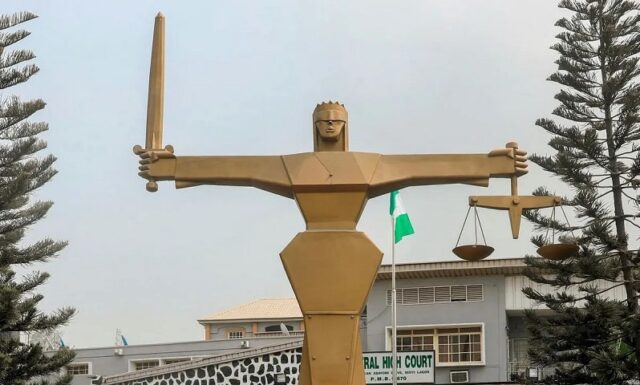
 

Suspended Deputy Commissioner of Police Abba Kyari has told the Federal High Court in Abuja that he fully declared all personal and spousal assets in accordance with the law, insisting that some properties cited by the National Drug Law Enforcement Agency (NDLEA) belonged to his late father.

Kyari made the claim on Wednesday while testifying before Justice James Omotosho during the continuation of his trial on alleged non-disclosure and concealment of assets.

The NDLEA is prosecuting Kyari, along with Mohammed Kyari and Ali Kyari, on a 23-count charge bordering on failure to declare assets, money laundering, and unlawful conversion of funds.

According to the agency, the defendants allegedly disguised ownership of several multi-million-naira properties and converted proceeds contrary to the NDLEA Act and the Money Laundering (Prohibition) Act, 2011.

The prosecution had earlier called 10 witnesses and tendered about 20 exhibits to support its case before closing its evidence.

The defendants subsequently filed a no-case submission, which the court dismissed on October 28, ruling that a prima facie case had been established, and ordering them to open their defence.

Justice Omotosho clarified that the ruling did not amount to a conviction, stressing that the accused persons remain presumed innocent until proven guilty beyond reasonable doubt.

While being cross-examined by NDLEA counsel Sunday Joseph, Kyari said some of the assets listed by the prosecution were inherited family properties in Maiduguri, Borno State, which belonged to his deceased father.

“My late father owned over 20 houses, which he left to his 30 children. Some of those properties were later sold to fund his medical treatment before his death,” Kyari told the court.

“I couldn’t declare my father’s properties as personal assets because they belong to the entire family. Only when my share is allocated can I include it in my declaration.”

He added that the NDLEA failed to produce certified title documents to prove ownership, citing Section 128 of the Evidence Act, which he said requires certified true copies of state land documents for such proof.

Kyari also explained that the large sums found in his bank accounts were official operational funds received during his time as head of the Intelligence Response Team (IRT) and earlier as commander of the Special Anti-Robbery Squad (SARS).

He said the money came from the police and several state governments for approved operations.

According to him, some transfers made to his relatives were loan repayments.

“We often used our own funds to execute urgent operations because police funding was delayed by bureaucracy. So, when funds were later released, I reimbursed family members who had lent me money,” he stated.

Kyari admitted that he initially refused to fill the NDLEA asset declaration form until his lawyers were present.

“Yes, I said I would not make a statement without my lawyers. One of the officers later warned me it was an offence not to fill the form,” he added.

Justice Omotosho said the court would address the legal issue of whether family-owned property can be included in an individual’s asset declaration during final submissions.

Following the session, the NDLEA counsel requested time to obtain additional bank records for further cross-examination.

The court adjourned the matter until November 12, 2025, for continuation of trial.

Google search engine

US Lawmakers Seek Sanctions On Miyetti Allah, Others Over Alleged Religious Freedom Abuses


The United States House of Representatives has called on the Departments of State and Treasury to impose targeted sanctions on individuals and groups in Nigeria, including the Miyetti Allah Cattle Breeders Association of Nigeria (MACBAN) and Miyetti Allah Kautal Hore, over alleged violations of religious freedom.

Details of the resolution, H. Res. 860, were obtained on Wednesday from the official website of the US Congress.

The measure was introduced on Tuesday by Representative Christopher Smith, with Representative Paul Huizenga as co-sponsor.

The move comes days after US President Donald Trump declared Nigeria a “Country of Particular Concern” (CPC) in a post on Truth Social, warning that Washington could consider military action if the Nigerian government fails to halt the alleged persecution of Christians.

The bipartisan resolution praises Trump’s action and cites multiple reports by NGOs and media sources alleging persistent attacks on Christians and other religious minorities in Nigeria.

“For over a decade, Islamic terror organisations have carried out mass murder, rape, kidnappings, and other atrocities targeting mostly Nigerian Christians and non-Fulani moderate Muslims,” the document reads in part.

The lawmakers also referenced testimonies before the US House Foreign Affairs Committee earlier this year, including that of Father Remigius Iyhula and Bishop Wilfred Anagbe, who reported intimidation and targeted killings of Christians in Benue State.

Supporters of the resolution argued that redesignating Nigeria as a CPC would give the US stronger diplomatic leverage to press for accountability and protection of religious minorities.

“The State Department and Treasury should impose targeted sanctions, including visa bans and asset freezes, under the Global Magnitsky Act and other frameworks,” the resolution proposed.

It specifically mentioned Miyetti Allah Cattle Breeders Association of Nigeria (MACBAN), Miyetti Allah Kautal Hore, and Fulani ethnic militias operating in Benue and Plateau states among groups to be placed on the Entities of Particular Concern list under the International Religious Freedom Act.

The lawmakers also urged the US government to condition future foreign assistance to Nigeria on clear progress in protecting religious freedoms and prosecuting perpetrators of sectarian violence.

“The State Department should provide humanitarian aid directly to faith-based organisations supporting internally displaced persons in Nigeria’s Middle Belt,” they added.

The resolution further requests an audit of recent US security and development assistance to Nigeria to ensure alignment with human rights goals.

If approved by the House Foreign Affairs Committee and Judiciary Committee, the measure would signal strong congressional backing for Trump’s position and could pave the way for additional legislative or executive actions.

Meanwhile, the Federal Government of Nigeria has rejected the US designation, describing it as a misrepresentation of the country’s complex security situation.

Mohammed Idris, Minister of Information and National Orientation, told journalists in Abuja on Wednesday that terrorism and violent crimes in Nigeria were not religiously motivated.

“Nigeria faces long-standing security challenges that have affected both Christians and Muslims alike,” he said.

“Any narrative suggesting that the Nigerian government is complicit in religious persecution is based on misinformation or faulty data.”

Idris stressed that the government remains committed to tackling insecurity and protecting all citizens regardless of faith or ethnicity.

Google search engine

INEC Acknowledges PDP’s Suspension Of National Secretary Anyanwu, Three Others


The Independent National Electoral Commission (INEC) has formally received the resolution of the National Working Committee (NWC) of the Peoples Democratic Party (PDP) confirming the suspension of Senator Samuel Anyanwu, the party’s National Secretary, and three other principal officers.

The other suspended officials include Captain Umar Bature, the National Organising Secretary; Kamaldeen Ajibade (SAN), the National Legal Adviser; and Okechukwu Osuoha, the Deputy National Legal Adviser.

The acknowledgment was contained in a letter sent to INEC following the PDP’s emergency Board of Trustees (BoT) meeting held on Wednesday, November 5, 2025.

Last Saturday, the PDP announced the one-month suspension of the four national officers over alleged anti-party activities and subsequently referred them to the National Disciplinary Committee for further investigation.

The party said the officials would cease to perform their duties during the suspension period.

“During this period of suspension, the quartet will cease to function in their respective capacities,” the PDP stated.

The communique added that, in line with the PDP Constitution (as amended in 2017), Hon. Arc. Setonji Koshoedo, the Deputy National Secretary, will serve as acting National Secretary, while the National Director of Legal Services will oversee the party’s legal department.

In its official correspondence, the PDP NWC informed INEC that the decision was taken at its 608th emergency meeting, after deliberating on what it described as “continued anti-party activities” by some national officers despite previous warnings.

“The NWC, pursuant to the provisions of Sections 57(3), 58(1)(a), (b), (c), (h), and 59(1) of the PDP Constitution (as amended in 2017), suspends the following national officers for one month and refers them to the National Disciplinary Committee for further action,” the letter read in part.

The letter listed the affected officials as:

  1. Senator Samuel Anyanwu – National Secretary
  2. Hon. Umar Bature – National Organising Secretary
  3. Barr. Kamaldeen Ajibade (SAN) – National Legal Adviser
  4. Barr. Okechukwu Osuoha – Deputy National Legal Adviser

It further stated that during the suspension, Hon. Arc. Setonji Koshoedo would act as National Secretary, while the National Directors of Legal Services and Organisation would manage their respective directorates.

The letter was signed by key party officials, including:

  • Amb. Umar Iliya Damagum, Acting National Chairman
  • Amb. Taofeek Arapaja, Deputy National Chairman
  • Hon. Arc. Setonji Koshoedo, Deputy National Secretary
  • Hon. Yayari Ahmed, National Treasurer
  • Dr. Woyengikuro Ambrose Daniel, National Financial Secretary

“While thanking you for your usual cooperation, please accept the assurances of the National Working Committee’s highest regards,” the letter concluded.

Google search engine

PDP Crisis Deepens As Damagum Petitions IGP, Accuses Anyanwu Of Invading Party Headquarters


The leadership crisis within the Peoples Democratic Party (PDP) has taken a new turn as the party’s acting national chairman, Umar Damagum, has petitioned the Inspector-General of Police (IGP), Kayode Egbetokun, accusing Samuel Anyanwu, the party’s suspended national secretary, of leading a violent invasion of the PDP national secretariat in Abuja.

In the petition dated October 3, 2025, Damagum alleged that Anyanwu stormed the party headquarters with armed thugs in an attempt to install a factional leadership, describing the incident as “a brazen assault on the party’s integrity.”

According to the letter, the invasion was allegedly supported by Nyesom Wike, the Minister of the Federal Capital Territory (FCT), and involved several suspended officials, including Abdulrahman Mohammed (Vice-Chairman, North Central), Kamaldeen Ajibade (National Legal Adviser), Okechukwu Osuoha (Deputy Legal Adviser), and Umaru Bature (National Organising Secretary).

“To our utmost shock, on Monday, November 3, 2025, the suspended Senator Samuel Anyanwu violently invaded the national secretariat of our party with thugs mobilised by his aides, Arthur Bruno, Emmanuel Okoronkwo, and one Chidiebere Egwu, brandishing dangerous weapons including guns, knives, and cutlasses,” the petition read.

“They broke into offices, unleashed violence, fired tear gas, assaulted journalists, and disrupted official activities.”

Damagum said a female staff member fainted from tear gas inhalation but was later revived, while three others; Terna Tergba, Cecilia Ukwayi, and Innocent Ezekiel were hospitalised for injuries sustained during the attack.

He added that the assailants attempted to forcefully install Abdulrahman Mohammed as the acting national chairman and that police officers attached to the FCT command failed to stop the invasion.

Efforts by DAILY GAZETTE to reach Anyanwu for comment on Wednesday morning were unsuccessful, as he declined to speak on the allegations.

The latest confrontation follows the declaration by Abdulrahman Mohammed on Monday, when he proclaimed himself acting national chairman of the PDP at the party headquarters, an action widely viewed as a challenge to Damagum’s authority.

Mohammed was accompanied by a crowd of supporters who demanded Damagum’s resignation.

The PDP crisis intensified last weekend when Damagum’s National Working Committee (NWC) announced the suspension of Anyanwu, Ajibade, Osuoha, and Bature for alleged anti-party activities.

The suspension was announced by Debo Ologunagba, the PDP spokesperson, following an emergency NWC meeting in Abuja.

In a swift countermeasure, the Anyanwu-led faction, reportedly backed by Wike, suspended Damagum and five other national officers, including Ologunagba, Taofeek Arapaja (Deputy National Vice-Chairman, South), Daniel Woyenguikoro (National Financial Secretary), Sulaiman Kadade (National Youth Leader), and Setonji Koshoedo (Deputy National Secretary).

The faction then appointed Abdulrahman Mohammed as acting national chairman, claiming its action was necessary to restore “legitimacy and order” within the PDP’s national leadership.

Google search engine

NIS To Launch Single-Use Emergency Passport For Nigerians Abroad


The Nigeria Immigration Service (NIS) has unveiled plans to introduce a new Single Travel Emergency Passport (STEP) to replace the existing Emergency Travel Certificate (ETC) for Nigerians stranded abroad.

The Comptroller-General of Immigration, Kemi Nanna Nandap, announced the initiative during the Joint Thematic Meeting of the Khartoum, Rabat, and Niamey Processes, which Nigeria co-hosted in collaboration with the Government of France.

According to Nandap, the new document is part of the Service’s ongoing reforms aimed at strengthening identity management, improving border governance, and aligning Nigeria’s immigration systems with global best practices.

“The forthcoming Single Travel Emergency Passport (STEP) will enable Nigerians abroad to return home safely in a secure and verifiable manner,” Nandap stated.

“This initiative underscores our commitment to efficient service delivery and robust identity protection.”

The new passport will serve as a temporary, single-entry travel document for Nigerians overseas whose regular passports have been lost, stolen, or expired.

It will be issued exclusively at designated Nigerian embassies and consulates and will remain valid only for travel back to Nigeria.

Nandap explained that the move reflects the NIS’s broader modernization efforts, which include the adoption of digital identity solutions, improved data integrity, and enhanced cross-border coordination.

Delivering a keynote address titled “Insights on Prevention and Protection as Strategic Pillars to Effective Law Enforcement and Prosecution Responses,” Nandap also spoke about the Service’s wider reform agenda.

She said the NIS is intensifying efforts to combat migrant smuggling and human trafficking by strengthening inter-agency collaboration, enhancing border surveillance systems, and building capacity among officers.

The Khartoum–Rabat–Niamey meeting brought together representatives of key migration stakeholders, including the National Commission for Refugees, Migrants and Internally Displaced Persons (NCFRMI), NAPTIP, ECOWAS, African Union (AU), European Union (EU), and delegates from African and European countries.

Reaffirming Nigeria’s commitment to regional and international migration dialogues, the NIS said it will continue to align its policies and operations with global standards to promote safe, orderly, and regular migration.

Google search engine

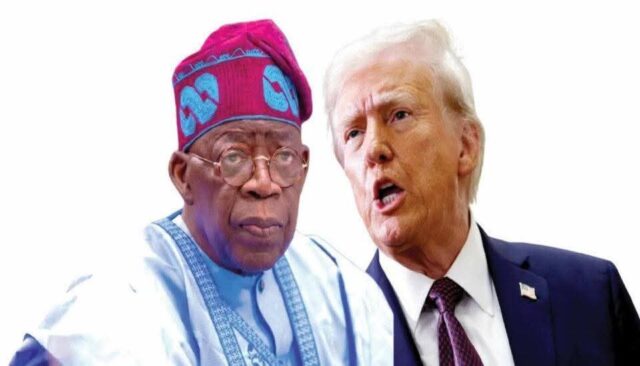
Show Understanding Of Nigeria’s Security Situation – FG Tells Trump


The Federal Government has appealed to United States President Donald Trump to approach Nigeria’s security situation with “understanding and context,” following his recent comments accusing the Nigerian authorities of overseeing a genocide against Christians.

Speaking at a press briefing in Abuja on Wednesday, the Minister of Information and National Orientation, Mohammed Idris, urged Washington to consider Nigeria’s diversity and ongoing efforts to restore peace and stability.

“We call on our American friends and partners to approach the Nigerian situation with an understanding of its complex realities,” Idris said.
“Nigeria is a vast, multi-ethnic, multi-religious nation making significant strides in economic reforms and in strengthening its security architecture.
We believe constructive engagement is the most effective way to achieve peace and stability, not only in Nigeria, but anywhere in the world.”

The minister added that Nigeria remains open to dialogue, partnership, and support from the United States and other allies in confronting shared global security concerns.

Reaffirming the government’s commitment to combating insecurity, Idris said the administration of President Bola Tinubu has made measurable progress against terrorism, banditry, and kidnapping.

He cited a recent Global Terrorism Index report showing that terrorist attacks in Nigeria had fallen to their lowest level in over a decade.

“This is not Nigeria saying it; the international community has confirmed it,” he noted.

“In the last eight months alone, our military neutralised over 592 terrorists in Borno State, freed more than 11,200 hostages, and secured the surrender of 124 insurgents who handed over over 11,000 weapons.”

Idris said the Federal Government has invested millions of dollars in modern security equipment and expanded military operations nationwide.

He praised President Tinubu for increasing defence spending and showing “the political will to defeat terrorism and restore national peace.”

Highlighting progress in the North-West, the minister revealed that sustained air and ground offensives have led to the death or surrender of several notorious bandit leaders, including Ali Kachalla, Boderi, and Halilu Sububu.

“In Zamfara and Kaduna alone, 11,250 hostages have been rescued. Only this August, over 400 armed bandits were intercepted and killed while attempting to attack a community in Zamfara,” Idris said.

Trump had, on Friday, described the killing of Christians in Nigeria as a “mass slaughter,” claiming the faith was facing an “existential threat.”

“Thousands of Christians are being killed. Radical Islamists are responsible for this mass slaughter,” Trump said in a statement.
“The United States cannot stand by while such atrocities are happening.”

He directed Congressman Riley Moore and House Appropriations Chairman Tom Cole to investigate the matter, declaring Nigeria a “country of particular concern.”

“When Christians, or any such group, are slaughtered like is happening in Nigeria, something must be done,” Trump added.
“We stand ready, willing, and able to save our great Christian population around the world.”

The Nigerian government, however, insists that the security situation is improving and warns that inflammatory rhetoric could undermine international cooperation in addressing terrorism and religiously motivated violence.

Google search engine

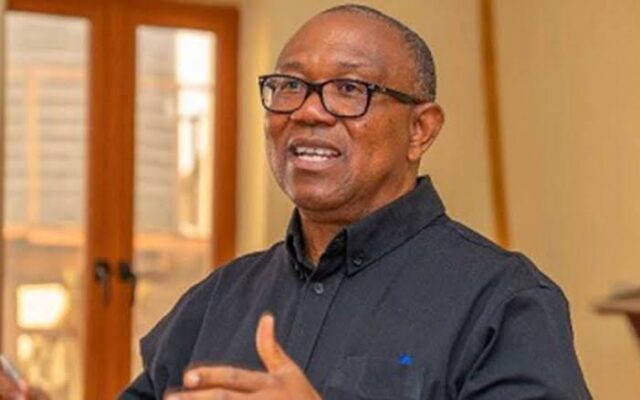
Anambra Gov’ship: Obi Urges Peaceful, Credible Poll


Former Anambra State governor and 2023 Labour Party presidential candidate, Mr Peter Obi, has appealed to residents and political actors in the state to ensure a peaceful, transparent, and credible governorship election scheduled for Saturday, November 8, 2025.

Speaking with journalists at his home in Agulu, Anaocha Local Government Area, Obi urged voters to come out in large numbers to exercise their democratic rights responsibly.

“My interest in this Anambra 2025 governorship election is a peaceful process before, during, and after the exercise,” Obi said.

“I want a peaceful, free, and fair election. This election is for Ndi-Anambra, and whoever wins, wins for the development of our state.”

The former governor, who is also a major political figure in the South-East, emphasized that political ambition should never come before the peace and stability of the state.

He urged candidates and their supporters to conduct themselves lawfully and respect the rule of law.

Obi acknowledged his cordial relationship with the leading candidates, Governor Chukwuma Soludo of the All Progressives Grand Alliance (APGA), Prince Nicholas Ukachukwu of the All Progressives Congress (APC), and his party’s candidate, Chief George Moughalu of the Labour Party (LP).

“All the contestants, including the incumbent governor, Prof. Soludo, and other aspirants, are my friends,” he said.

“But I will vote for the candidate of my party. I also encourage every eligible voter to go out and peacefully vote for the candidate of their choice.”

Obi further called on the Independent National Electoral Commission (INEC) and security agencies to maintain professionalism, neutrality, and transparency throughout the electoral process.

Meanwhile, INEC has reaffirmed its readiness for the poll.

The Commission’s Chairman, Prof. Joash Amupitan, announced during a stakeholders’ meeting in Awka that more than 24,000 ad hoc staff and 540 journalists have been accredited for the exercise.

Amupitan said the electoral body has concluded all necessary preparations, including logistics, training, security coordination, and a recent mock accreditation exercise conducted across the three senatorial districts.

According to INEC, 16 candidates representing 16 political parties will contest the election, as Governor Soludo seeks re-election under the platform of APGA.

Google search engine

Senate Approves 14-Year Jail Term For Sexual Harassment In Schools


The Nigerian Senate has passed a landmark bill prescribing up to 14 years imprisonment for educators found guilty of sexually harassing students in tertiary institutions.

The legislation, titled Sexual Harassment of Students (Prevention and Prohibition) Bill, 2025 (HB.1597), seeks to curb the persistent problem of “sex-for-grades” and other forms of sexual exploitation within Nigeria’s higher education system.

Presented for concurrence by Senate Leader Opeyemi Bamidele (APC–Ekiti Central), the bill establishes a comprehensive legal framework to prevent sexual misconduct in academic environments and ensure offenders face strict penalties.

According to Senator Bamidele, the bill aims to safeguard students’ dignity and preserve the sanctity of the educator–student relationship.

“This legislation is designed to protect students from any form of sexual abuse or coercion while upholding ethical standards in our tertiary institutions,” he explained.

Under the new law, anyone convicted of offences listed in Clauses 4 (1)–(3) faces between five and 14 years imprisonment, without the option of a fine.

Those guilty of offences in Clauses 4 (4)–(6) risk two to five years in prison, also without an option of a fine.

The bill defines a range of offences including demanding sexual favours, making unwanted advances, inducing others to commit harassment, and unwelcome touching or gestures.

It further clarifies that consent is not a valid defence in cases involving a student–educator relationship, except where the two are legally married.

Victims, relatives, or any concerned individuals may report cases to the Police or Attorney-General, with copies also submitted to the institution’s Independent Sexual Harassment Prohibition Committee.

The bill also allows victims to seek civil redress for breach of fiduciary duty.

During deliberations, some lawmakers urged that the bill’s scope be widened to address harassment in other sectors.

Senator Adams Oshiomhole (APC–Edo North) argued that such protection should extend beyond schools.

“There is no reason to restrict sexual harassment laws to students. We need a framework that applies across all workplaces,” he said.

However, Deputy Senate President Barau Jibrin, who presided over the plenary, clarified that the bill was up for concurrence since it had already been passed by the House of Representatives, and that existing laws already cover workplace-related harassment.

The bill was subsequently adopted and passed for third reading.

The passage follows years of public outrage and investigative reports exposing sexual exploitation by lecturers in Nigerian universities, notably the 2019 sex-for-grades exposé and comes amid renewed advocacy by women’s rights groups for stronger federal action to protect students and end impunity for perpetrators.

Google search engine

Speaker Obasa’s Son Assumes Control Of Agege LG After Chairman’s Resignation


Hours after Daily Trust published an exclusive report on developments within the Agege Local Government Council, the embattled chairman, Hon. Tunde Azeez, has formally resigned from office, paving the way for Abdul-Ganiyu Vinod Obasa, the vice-chairman and son of the Lagos State House of Assembly Speaker, Rt. Hon. Mudashiru Obasa, to take over as council boss.

The resignation of Azeez, who has reportedly been battling health challenges, comes amid growing controversy and opposition allegations of a “pre-arranged succession plan” orchestrated within the council’s leadership.

Abdul-Ganiyu Obasa has been serving as acting chairman since shortly after Azeez went on medical leave, less than a month after being sworn in on July 26, 2025.

Opposition figures in Lagos have condemned the transition, describing it as evidence of a political script designed to ensure the younger Obasa’s eventual rise to the council’s top seat.

Recall that during the build-up to the July 12 local government elections, the decision of the ruling All Progressives Congress (APC) to field Obasa’s son as its chairmanship candidate sparked protests among some party stakeholders in Agege.

The controversy prompted the substitution of his candidacy with that of Hon. Azeez, while Obasa Jr. was nominated as his running mate.

However, following Azeez’s prolonged illness and absence from public duties, the vice-chairman effectively took charge of council affairs, a situation that has now become permanent following Azeez’s resignation.

Confirming the development, Rotimi Sulaiman, an APC chieftain, said the outgoing chairman’s decision was based purely on health grounds.

“Hon. Tunde Azeez has been unwell for some time, and his choice to step down and focus on his recovery is a wise and responsible one,” Sulaiman stated.

“The new chairman, Abdul-Ganiyu Vinod Obasa, has already shown strong leadership in the past few months. Agege is fortunate to have both men serve in such capacities.”

Despite assurances from APC leaders, opposition parties continue to question the transparency of the succession, describing it as part of a long-planned political strategy within the local government.

Google search engine

Tinubu Declares Emergency On Security Training Institutions As Enugu’s Mbah Leads Overhaul Committee


President Bola Ahmed Tinubu has declared a state of emergency on Nigeria’s police and security training institutions, in a bold move aimed at repositioning the nation’s internal security architecture for greater efficiency and professionalism.

Chairman of the National Economic Council (NEC) Committee on the Overhaul of Police and Other Security Training Institutions, and Governor of Enugu State, Dr. Peter Ndubuisi Mbah, disclosed this in Lagos on Tuesday during the commencement of the committee’s nationwide tour of training facilities.

Governor Mbah said the presidential directive followed deliberations at the 152nd NEC meeting, where President Tinubu expressed deep concern over the deplorable state of police and security training facilities across the country.

“The President recognises that there is a need for bold and urgent steps to be taken to restore the pride, professionalism, and confidence of men and women in the security space,” Mbah stated.

“You cannot expect our men and women who are protecting our communities to be trained in an environment that is inhumane. This is not acceptable. The President saw this as an emergency, and we are treating it with the seriousness it deserves.”

Mbah explained that the committee’s assignment is to produce a comprehensive report within 30 days, detailing actionable steps for rebuilding, equipping, and sustaining the nation’s security training institutions.

The team, which includes Governors Uba Sani (Kaduna), Dapo Abiodun (Ogun), Kefas Agbu (Taraba), Umo Eno (Akwa Ibom), Dauda Lawal (Zamfara), and Abdullahi Sule (Nasarawa), alongside former Inspector-General of Police Usman Baba as Secretary, has divided itself into two subcommittees to cover the northern and southern regions simultaneously.

Mbah further revealed that President Tinubu has already approved the recruitment of an additional 30,000 police personnel, stressing that such a massive recruitment drive requires well-equipped and functional training institutions.

“We cannot use the system of the 20th century to train a modern 21st-century police force,” Mbah added. “They need to be imbued with skills in Artificial Intelligence, Robotics, Mechatronics, and other digital technologies relevant to modern policing.”

Governor Dapo Abiodun of Ogun State, who accompanied Mbah during the tour of the Police Training College, Ikeja, underscored the President’s commitment to urgent reforms, saying the composition of the committee itself was a testament to the seriousness attached to the project.

Commandant of the college, AIG Omolara Oloruntola, commended the federal government for the initiative, lamenting the institution’s infrastructural decay since its establishment in 1949.

She expressed hope that the planned intervention would restore the college’s lost glory.

Google search engine

- Advertisement -
Google search engine

MOST COMMENTED