Home Blog Page 266

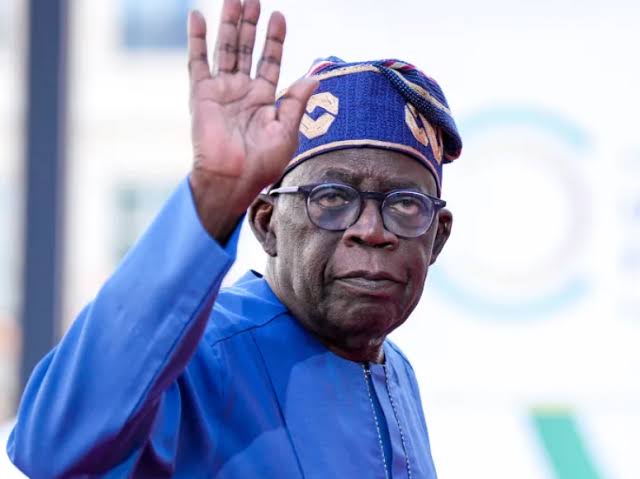
Tinubu Confers CON Honour On Former INEC Chairman, Prof. Mahmood Yakubu


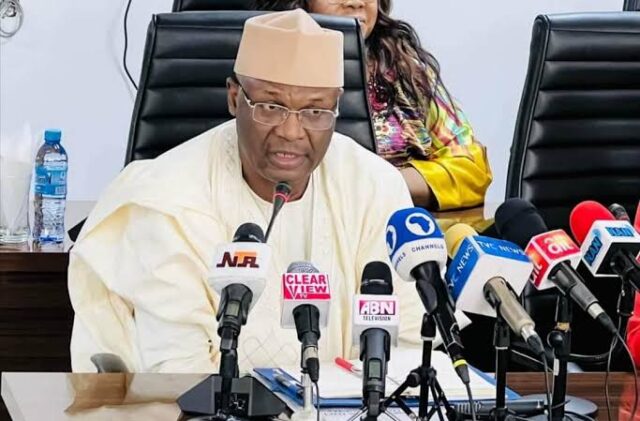
President Bola Ahmed Tinubu has officially accepted the departure of Professor Mahmood Yakubu from his role as Chairman of the Independent National Electoral Commission (INEC), marking the end of his constitutionally permitted two-term tenure.

Prof. Yakubu, who was initially appointed in November 2015, served as the 14th INEC chairman.

His appointment was renewed in 2020 for a second and final five-year term, which has now concluded.

In a statement issued Tuesday by the Special Adviser to the President on Information and Strategy, Bayo Onanuga, President Tinubu expressed gratitude to Yakubu for his decade-long stewardship and contributions to Nigeria’s democratic development, particularly in ensuring the conduct of credible and transparent elections across the country.

As a mark of appreciation, President Tinubu conferred on the outgoing chairman the national honour of Commander of the Order of the Niger (CON).

The president has also directed that May Agbamuche-Mbu, the most senior national commissioner at INEC, assume the role of acting chairman.

She will oversee the commission’s affairs pending the appointment of a substantive successor.

In a letter dated October 3, 2025, Yakubu conveyed his appreciation to the president for the opportunity to serve the nation over the past ten years, saying it was an honour to contribute to strengthening Nigeria’s electoral processes.

Google search engine

Again, UNN Disowns Minister Uche Nnaji’s Certificate In New Letter


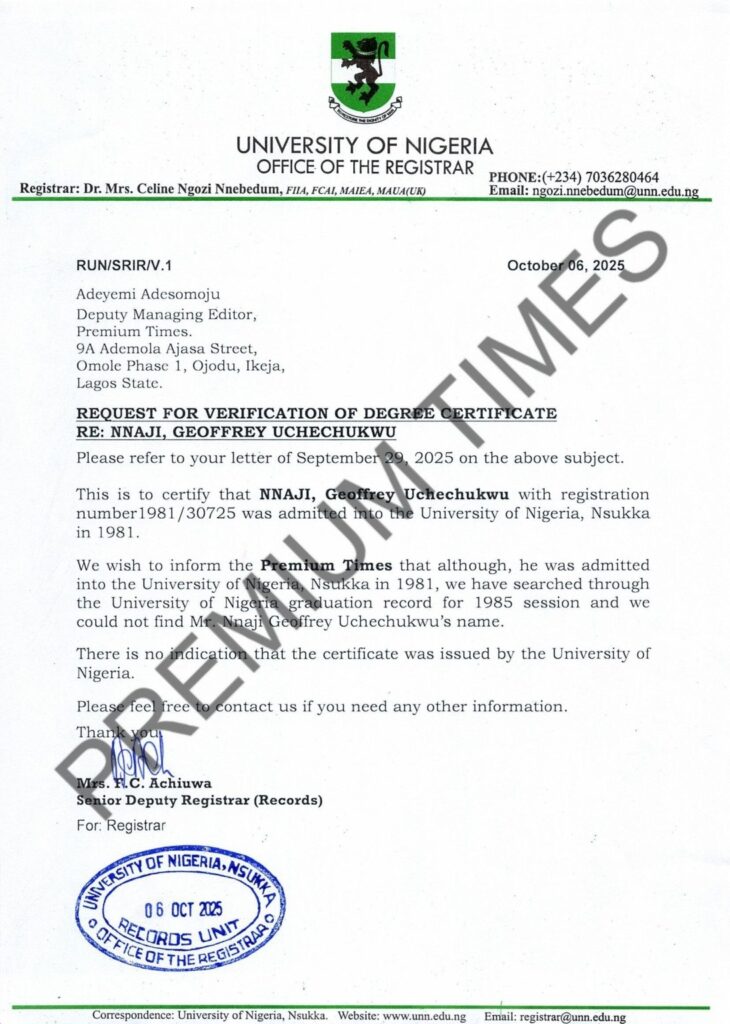
The University of Nigeria, Nsukka (UNN) has once again disowned the Bachelor of Science degree presented by Uche Nnaji, Nigeria’s recently resigned Minister of Innovation, Science and Technology.

In a new letter dated 6 October 2025, the university reiterated that although Mr. Nnaji was admitted in 1981, there is no record of his graduation or of any certificate being issued to him.

The statement was made in response to a Freedom of Information (FoI) request submitted by PREMIUM TIMES and was signed by Senior Deputy Registrar (Records), F.C. Achiuwa, on behalf of the university registrar, Celine Nnebedum.

“We have searched through the University of Nigeria graduation record for the 1985 session and we could not find Mr. Nnaji Geoffrey Uchechukwu’s name,” the letter stated.

“There is no indication that the certificate in his possession was issued by the University of Nigeria.”

This latest letter aligns with an earlier response from the university’s Vice-Chancellor, Prof. Simon Ortuanya, dated 2 October 2025, which also stated that Mr. Nnaji did not graduate from the institution and that no certificate was issued to him.

“From every available record, we are unable to confirm that Mr. Geoffrey Uchechukwu Nnaji graduated from the University of Nigeria in July 1985,” the Vice-Chancellor wrote.

“The University of Nigeria, Nsukka DID NOT and therefore COULD NOT have issued the purported certificate to him.”

This marks the third official communication from UNN discrediting the certificate since May 2025, when the university first clarified to the Public Complaints Commission that there was no evidence of Nnaji’s graduation or certificate issuance.

The current statements also contradict a previous letter dated 21 December 2023, in which Registrar Celine Nnebedum had told People’s Gazette that Mr. Nnaji graduated in July 1985. That claim has since been formally retracted.

The latest developments support a recent investigative report by PREMIUM TIMES, which alleged that Mr. Nnaji forged not only his UNN degree but also his National Youth Service Corps (NYSC) certificate to secure his ministerial nomination in 2023.

Mr. Nnaji resigned from his ministerial role on October 7, 2025, citing political persecution and blackmail amid the growing scandal surrounding his academic credentials.

Google search engine

Why I Resigned As Minister – Chief Uche Nnaji


Chief Geoffrey Uche Nnaji, Nigeria’s Minister of Innovation, Science, and Technology, has officially resigned from President Bola Ahmed Tinubu’s cabinet.

His resignation comes in the wake of mounting allegations related to certificate forgery and claims of political persecution.

The announcement was confirmed in a statement released on Tuesday, October 7, 2025, by the Special Adviser to the President on Information and Strategy, Mr. Bayo Onanuga.

“President Bola Ahmed Tinubu has accepted the resignation of Geoffrey Uche Nnaji, the Minister of Innovation, Science, and Technology, following some allegations against him,” the statement read.

Nnaji, who was appointed in August 2023, submitted a formal resignation letter addressed to the President. In it, he expressed gratitude for the opportunity to serve the nation but said he was stepping down due to what he described as “malicious blackmail and political persecution.”

“I wish to sincerely thank Your Excellency for giving me the rare privilege to serve Nigeria at the federal level,” he wrote.

“However, in light of the malicious blackmail and political persecution I have faced in recent weeks, I have chosen to resign to allow the government to focus on its developmental agenda without distraction.”

The resignation comes amid reports alleging that Nnaji submitted forged academic credentials during his ministerial screening before the Senate.

Media sources had pointed to inconsistencies in his degree certificates, raising doubts about his educational background, allegations Nnaji has repeatedly denied.

Sources say the political pressure intensified following the revelations, leading to calls for his resignation to enable an impartial investigation and minimize potential damage to the administration’s reputation.

President Tinubu, while accepting the resignation, thanked Nnaji for his service and extended his best wishes for his future.

“The President thanks him for his service and wishes him well in his future undertakings,” said Onanuga.

Google search engine

CAC Deregisters National Youth Council Of Nigeria Over Prolonged Crisis, Legal Violations


The Federal Ministry of Youth Development has announced the deregistration of the National Youth Council of Nigeria (NYCN) by the Corporate Affairs Commission (CAC), effective October 6, 2025.

According to the Ministry’s Director of Information and Public Relations, Omolara Esan, the CAC’s decision followed an extensive investigation that revealed an 18-year-long leadership crisis and multiple breaches of the NYCN Constitution and the Companies and Allied Matters Act (CAMA) 2020, especially Sections 833 and 834.

The CAC, citing its powers under Sections 8(1)(c) and 8(1)(d) of CAMA 2020, found that the Council had repeatedly violated governance standards, prompting the Commission to revoke the certificates and formally dissolve all existing leadership, trusteeship, and management claims within the organisation.

In response to the leadership vacuum, the CAC has appointed an Interim Management Committee (IMC) to run the affairs of the Council for one year, beginning October 6.

The Ministry of Youth Development affirmed its full support for this action, recognizing CAC’s statutory authority.

It urged all stakeholders, youth bodies, and partners to cooperate with the IMC to help restore order, legitimacy and unity within the Council.

The Ministry also reiterated its commitment to fostering youth development and institutional reform in line with President Bola Ahmed Tinubu’s Renewed Hope Agenda, which emphasizes transparency, accountability, and national progress.

Google search engine

Tinubu Withholds Assent On Two National Assembly Bills Over Policy Conflicts


President Bola Tinubu has declined to assent to two bills recently passed by the National Assembly, citing concerns that certain provisions could undermine fiscal discipline, contradict existing laws, and set risky precedents for managing public finances.

The President’s letters were read by Senate President Godswill Akpabio during Tuesday’s plenary session.

The bills rejected are the Nigerian Institute of Transport Technology (Establishment) Bill, 2025, and the National Library Trust Fund (Establishment, etc.) Amendment Bill, 2025.

While recognizing the broad objectives of the bills, President Tinubu pointed out that several clauses conflict with federal fiscal and administrative policies.

Regarding the Transport Technology Bill, he criticized provisions introducing new levies, allowing borrowing without adequate regulation, and permitting the investment of public funds in securities.

He warned these measures could create opaque revenue streams and increase the risk of misuse.

Specifically, Tinubu highlighted Section 18(4a), which proposes funding the institute through “One per cent of the freight on every import and export.”

He noted that imposing such a levy without approval from the Federal Executive Council could burden trade and circumvent the national budgeting process.

He also opposed Section 20, which grants the institute authority to borrow up to ₦50 million without presidential consent, describing it as a loophole that could facilitate repeated borrowing just below the threshold to evade oversight.

Sections 21 and 23, which allow investment of government-appropriated funds, were deemed “fiscally dangerous” by the President.

“These provisions, if implemented, would weaken fiscal discipline and create opportunities for financial abuse. For these reasons, I withhold my assent to the bill,” Tinubu stated.

In a separate letter rejecting the National Library Trust Fund Amendment Bill, the President acknowledged the bill’s commendable intentions but noted that several sections conflicted with existing federal laws and policy frameworks.

He pointed out problematic areas including agency funding, taxation of national entities, staff remuneration, and tenure or age limits, describing them as potentially unsustainable and contrary to the public interest.

“For these reasons, I cannot grant presidential assent to the bill in its current form. I urge the Senate to revisit and address the identified concerns,” the letter read.

Following the reading of both letters, Senate President Akpabio praised President Tinubu’s thorough review of legislation and directed relevant committees to revisit and amend the bills accordingly.

“This shows the seriousness with which Mr. President scrutinizes every legislation we pass. It is now our duty to carefully resolve the issues he has raised,” Akpabio stated.

The Senate has since referred the Transport Technology Bill to the Committee of the Whole and the Library Trust Fund Amendment Bill to the Committees on Special Duties and Establishment and Public Service Matters for further examination.

Google search engine

Yakubu’s INEC Legacy: From Tech Reforms To Technical Glitches


On October 7, 2025, Professor Mahmood Yakubu officially stepped down as Chairman of Nigeria’s Independent National Electoral Commission (INEC), ending a transformative and eventful 10-year tenure.

He leaves the commission in the hands of May Agbamuche-Mbu, a legal expert and senior commissioner, who assumes leadership in an acting capacity.

Yakubu made history as the first person to complete two consecutive full terms as INEC chair, overseeing major electoral milestones, including the 2019 and 2023 general elections.

Here are 10 defining moments from his tenure:

  1. A Landmark Second Term Reappointed in 2020 by then-President Muhammadu Buhari, Yakubu became the first INEC chair to serve back-to-back five-year terms, a feat unmatched in Nigeria’s electoral history.
  2. Tech-Driven Innovations: BVAS and IReV Yakubu’s era saw the rollout of major tech reforms, most notably the Bimodal Voter Accreditation System (BVAS) and the INEC Results Viewing Portal (IReV). First piloted in the 2021 Anambra election, these tools were fully implemented during the 2023 general elections, aiming to enhance credibility and transparency in vote accreditation and result dissemination.
  3. Year-Round Voter Registration INEC under Yakubu institutionalized continuous voter registration, allowing eligible Nigerians to register or update their information beyond traditional pre-election windows.
  4. Polling Units Expansion In a move to improve voter access, the number of polling units across Nigeria was significantly increased, addressing long-standing concerns over overcrowding and distance.
  5. Fixed Electoral Calendar Yakubu standardized the electoral timeline: federal elections held on the third Saturday of February, followed two weeks later by state-level polls. This scheduling helped stabilize the electoral process.
  6. Strengthened Stakeholder Collaboration His leadership emphasized transparency and inclusivity, engaging with political parties, civil society groups, international observers, and the media to build confidence in the system.
  7. Embracing Digitalization INEC adopted digital nomination portals, electronic accreditation platforms, and automated result transmission tools—part of a broader push to modernize electoral operations and reduce fraud.
  8. Real-Time Monitoring Systems The commission introduced an Election Monitoring and Support Centre, using data analytics and performance metrics to identify and address real-time issues on election days.
  9. Inclusive Voting Measures INEC under Yakubu prioritized accessibility—providing tools for persons with disabilities, ensuring early access for the elderly, and facilitating participation for internally displaced persons.
  10. Guarding Institutional Autonomy Despite external pressures, Yakubu maintained INEC’s independence, often reiterating the commission’s constitutional mandate and commitment to neutrality.

Yet, his leadership wasn’t without challenges. The 2023 elections were marred by technical glitches, particularly in result transmission.

Allegations of bias and partisanship surfaced frequently, while issues like delayed deployment of materials and security lapses in conflict-prone areas plagued some polls.

Critics also pointed to growing public distrust and voter apathy.

As May Agbamuche-Mbu assumes the reins, the task of restoring public confidence and building on Yakubu’s reforms remains a pressing priority for Nigeria’s electoral future.

Google search engine

Powell Homes And Shelters Ltd Distances Self From Former Staff Over Alleged Misrepresentation


Popular real estate firm, Powell Homes and Shelters Ltd, has warned the public against doing any form of business or transaction with her former staff, Anachuna Somtochukwu Emmanuel.

The Managing Director, Powell Homes and Shelters, Architect Chibuikem Onyekachi Emmanuel, gave the warning on Tuesday in a public notice statement, which he sent to newsmen and also published on the company’s social media handles.

He stated that Anachuna Somtochukwu Emmanuel is no longer the company’s employee and does not represent Powell Homes and Shelters Ltd in any capacity.

He advised members of the public to be vigilant and to always confirm the identity of anyone claiming to act on behalf of the firm through the company’s official communication channels.

Architect Emmanuel explained that the company would not be liable for any dealings or transactions carried out with the said individual, warning that anyone who engages with him does so at their own risk; urging clients and partners to always conduct proper verification before making any financial commitments.

He also assured existing and potential clients that Powell Homes and Shelters Ltd remains committed to protecting the interests of the public by ensuring that only authorised personnel are allowed to conduct business on behalf of the company.

The statement reads,
Public Notice❗❗

The individual above, Anachuna Somtochukwu Emmanuel is not an employee of Powell Homes & Shelters Limited in Enugu or any of her branches.

We advise the public to exercise due diligence and verify all claims of representation through our official communication channels before proceeding with any engagement.

Your vigilance is essential in safeguarding your investments and ensuring you only deal with authorised personnel.

We are not associated with Anachuna Somtochukwu Emmanuel and are not responsible for any activity carried out with him for or on behalf of Powell Homes & Shelters Limited.

Deal with the above Individual at your own risk.

Signed:
Management.

Google search engine

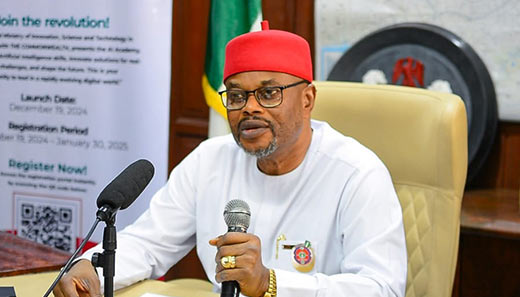
BREAKING: Science And Technology Minister Uche Nnaji Resigns Amid Certificate Forgery Scandal


Uche Geoffrey Nnaji, Nigeria’s Minister of Innovation, Science and Technology, has stepped down from his position following allegations of certificate forgery.

The resignation was confirmed on Tuesday by presidential spokesperson Bayo Onanuga, marking the latest high-profile exit from President Bola Tinubu’s administration.

Though details of the forgery claims have yet to be fully disclosed, the development has sparked renewed concern over the vetting process for public officeholders in the country.

Nnaji’s departure comes at a critical time for the Ministry, which has been championing several national projects in science, research, and digital innovation.

The Presidency has not yet announced a replacement.

Google search engine

Nigeria Seeks $2bn China Loan To Build ‘Super Grid’, End Blackouts


Nigeria is in talks with China’s Export-Import Bank for a $2 billion loan to fund the construction of a new “super grid”, a major power transmission network designed to tackle the country’s long-running electricity crisis.

Minister of Power, Adebayo Adelabu, revealed the plan at an economic summit in Abuja, noting that the grid will serve both eastern and western regions, home to many large businesses and industries.

“This is part of efforts to decentralise power generation and encourage big commercial users, who left the grid due to its unreliability, to return,” Adelabu said.

According to Bloomberg, the Federal Executive Council has approved the loan request, while negotiations with China’s Eximbank are progressing.

Nigeria generates around 13,000 megawatts, but the current national grid can only transmit a third of that, and even that limited supply is unreliable.

Frequent grid failures leave homes and businesses in the dark, forcing many to rely on costly self-generated power.

In contrast, South Africa, with a population just a quarter of Nigeria’s, has over 70,000 megawatts in installed capacity.

Experts estimate that nearly 50% of Nigeria’s electricity consumption now comes from private generators, a costly and unsustainable workaround.

The super grid project is expected to Improve power distribution, especially to industrial hubs, reduce dependence on generators, boost economic activity and investor confidence and part of Tinubu’s Economic Agenda.

The project aligns with President Bola Tinubu’s broader economic reforms, which include Removing fuel subsidies, overhauling tax laws, increasing oil production and introducing new power sector policies.

One such reform allowed electricity providers to raise tariffs for customers with stable power, a move Adelabu says increased revenues by 70% in 2024, with projected earnings of ₦2.4 trillion ($1.6 billion) in 2025, a further 41% increase.

“The new grid is critical to building a reliable power system and restoring confidence in the national electricity supply,” Adelabu added.

Google search engine

Nigerian Senate Passes Bill To Revoke Passports Of Convicted Citizens Abroad For 10 Years


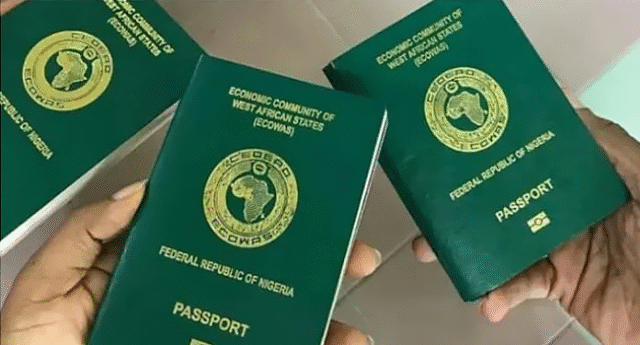
In a decisive move to restore Nigeria’s global image, the Senate has passed a bill mandating a 10-year international passport ban for any Nigerian convicted of crimes in foreign countries.

The legislation, introduced by Senator Abubakar Bello (Niger North), seeks to amend the Passport (Miscellaneous Provisions) Act, imposing stricter penalties on citizens whose actions abroad bring disrepute to the country.

Under the new bill, any Nigerian found guilty of a criminal offence overseas will be barred from obtaining or renewing their passport for 10 years after completing their sentence.

During the debate on the Senate floor, Senator Onawo Ogwoshi, speaking on behalf of the bill’s sponsor, stressed the urgent need to address the reputational damage caused by criminal behavior among Nigerians abroad.

He noted that the green passport, once a proud symbol of national identity, has become the target of suspicion and disrespect at international borders.

“Innocent, law-abiding Nigerians are routinely harassed, denied visas, and unfairly profiled because of the actions of a few individuals. This is nothing short of a national emergency,” Ogwoshi stated.

Lawmakers backing the bill argue that the measure sends a strong message to the international community: Nigeria will not shield its citizens from consequences when they tarnish the nation’s image abroad. Instead, the country is taking steps to hold offenders accountable.

If signed into law, the bill would not only serve as a deterrent but also aim to improve how Nigerian travelers are perceived and treated worldwide.

Google search engine

MOST COMMENTED

- Advertisement -
Google search engine