Home Blog Page 269

Pope Eases Vatican Financial Oversight, Reversing Previous Reforms


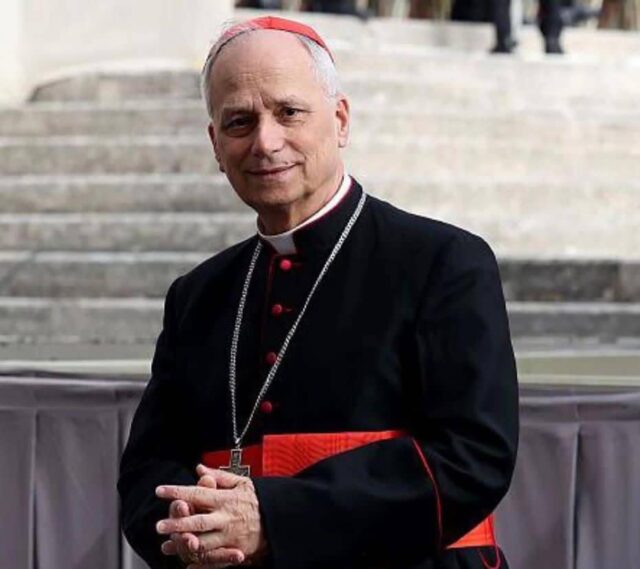
Pope Leo XIV has relaxed Vatican regulations on financial investments, undoing a key reform put in place by his predecessor, Pope Francis.

In a recent “Motu Proprio”, a formal legal directive, the new pope revoked Francis’s 2022 mandate that granted the Institute for Religious Works (IOR), commonly known as the Vatican Bank, sole authority over managing the Holy See’s financial and liquid assets.

Francis had introduced the reform in response to a series of financial controversies, including a problematic London property deal that cast a shadow over the Vatican’s finances.

The latest directive requires that all financial investments align with the Vatican’s investment policy.

It also states that the Administration of the Patrimony of the Apostolic See (APSA), the Vatican’s equivalent of a sovereign wealth fund, should generally utilize the Vatican Bank for managing assets.

However, there is now a notable exception allowing competent Vatican bodies to opt for financial intermediaries located outside the Vatican when deemed more efficient or convenient.

The Vatican has not explicitly explained the reason behind this policy reversal.

Yet, Pope Leo XIV has previously suggested that the Vatican’s financial situation is healthier than many assume.

In a recent interview featured in the book “Pope Leo XIV: Global Citizen, Missionary of the 21st Century,” he downplayed concerns about the Holy See’s liquidity.

“People have made many statements about the Vatican’s financial health, but the crisis is not as severe as portrayed,” he said.

He also acknowledged improvements over the past decade, crediting reforms initiated under Pope Francis.

Vatican expert Ed Condon, editor of the Catholic news outlet The Pillar, noted that Pope Leo’s move signals two things: first, that there is no immediate liquidity crisis in the Vatican, and second, that the pope trusts various Vatican departments to manage their own investment portfolios once again, returning to practices that existed prior to Francis’s reforms.

Google search engine

Tinubu Approves N4 Trillion Bond To Settle Power Generation Debts

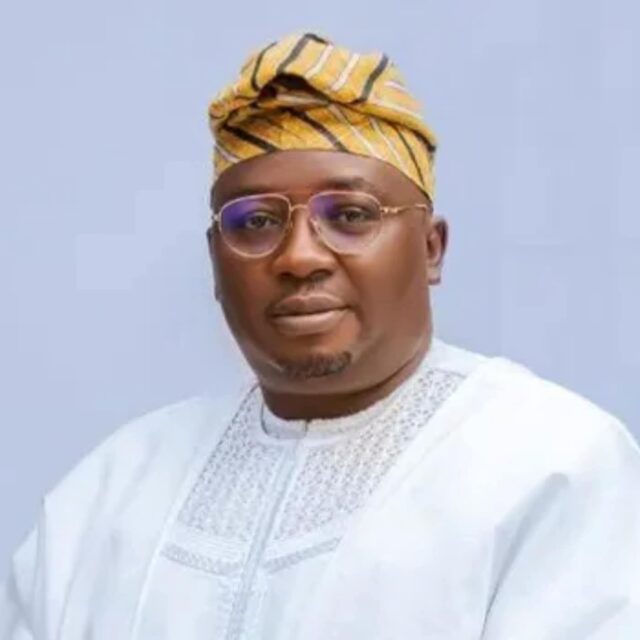
Power Minister, Adelabu

President Bola Tinubu has authorized the issuance of a N4 trillion bond aimed at clearing verified debts owed to power generation companies (GenCos) and gas suppliers, a move designed to stabilise Nigeria’s electricity sector and restore investor confidence.

Minister of Power, Adebayo Adelabu, announced this during the Expert Forum on ‘Uninterrupted Power:

The Industrial Imperative’ held in Abuja by the Nigeria Economic Summit Group. He outlined ongoing reforms under the Federal Government’s Renewed Hope Agenda, targeting a sustainable and commercially viable power industry.

Adelabu explained that the bond is part of a comprehensive financial stabilisation strategy to address longstanding liabilities that have constrained investment and liquidity throughout the power value chain.

“To stabilise the market, Mr. President has approved a N4 trillion bond to clear verified debts owed to GenCos and gas suppliers. Alongside this, we are developing a targeted subsidy framework to protect vulnerable households and pave the way for full commercialisation and a viable industry,” he said.

The minister highlighted a multi-faceted approach to reforming the sector, covering legislation, policy changes, infrastructure development, energy transition, and increased local content.

He also noted positive outcomes from tariff policy reforms, which introduced cost-reflective tariffs for selected consumers, resulting in improved supply reliability and lower energy costs for industries.

Adelabu revealed that sector revenues rose significantly, increasing by 70 percent to N1.7 trillion in 2024 compared to the previous year, with projections to exceed N2 trillion in 2025.

The minister stressed that clearing debts would relieve GenCos and gas suppliers, whose unpaid invoices have long affected generation capacity and operational efficiency.

He further assured that infrastructure initiatives, including the Presidential Power Initiative, are focused on expanding generation and transmission nationwide.

“Under the Presidential Power Initiative Phase Zero, we enhanced transmission capacity and grid stability, adding over 700 megawatts. Phase One contracts have been signed with Siemens Energy, CMEC, Elswedy Electric, and Power China, with financing arrangements underway. This phase aims to add 7,000 MW of operational capacity to the grid,” Adelabu said.

Generation capacity is also increasing with the rehabilitation of existing NIPP plants, unlocking about 345 MW, and the integration of the 700 MW Zungeru Hydropower Plant into the grid.

Adelabu urged stakeholders to back the Federal Government’s reforms, expressing confidence that collaboration with the private sector and development partners will accelerate Nigeria’s progress toward a stable, reliable and industrially competitive power sector.

Google search engine

Church Of Nigeria Rejects Sarah Mullally’s Appointment As Archbishop Of Canterbury


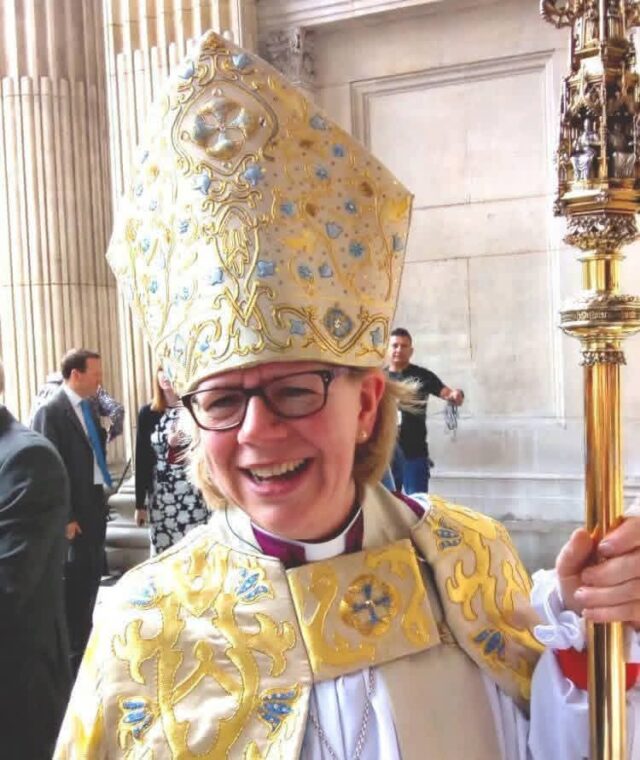
The Church of Nigeria (Anglican Communion) has strongly opposed the appointment of Bishop Sarah Mullally as the new Archbishop of Canterbury.

In a statement issued Monday and signed by Most Rev’d Henry C. Ndukuba, Archbishop, Metropolitan, and Primate of the Church of Nigeria, the decision was described as “devastating” and misaligned with the pressing challenges facing the global Anglican Communion.

Sarah Mullally, 63, became the 106th Archbishop of Canterbury on Friday. She is the first woman to hold the position since the office’s establishment in the late sixth century, leading both the Church of England and the worldwide Anglican community.

She succeeds Justin Welby, who resigned earlier this year amid an abuse scandal.

However, the Church of Nigeria criticized Mullally’s elevation as “double jeopardy,” highlighting her public support for same-sex marriage and the perceived disregard for many Anglicans who oppose female leadership within the episcopate.

The statement read:
This appointment disregards the convictions of the majority of Anglicans who cannot accept female headship in the episcopate. More troubling is Bishop Mullally’s strong endorsement of same-sex marriage, as evidenced in her 2023 speech celebrating the approval of blessings for homosexual unions as a ‘moment of hope for the Church.’”

The Church of Nigeria expressed doubt about Mullally’s ability to heal the divisions caused by the contentious issue of same-sex marriage, which has fractured the Anglican Communion for over two decades.

The statement further noted:
“This election confirms the growing disconnection between the global Anglican community and the leadership of the Church of England, particularly the Archbishop of Canterbury.”

As a member of the GAFCON network, the Church of Nigeria reaffirmed its commitment to upholding scriptural authority, historic creeds, evangelism, and holy living in the face of what it terms a “revisionist agenda.”

The church encouraged its faithful within the Church of England to continue resisting same-sex marriage and other teachings they consider unbiblical, calling them to “contend for the faith that was once delivered to the saints” (Jude 1:3).

Sarah Mullally, a former nurse, acknowledged the “huge responsibility” of her new role last week, expressing a sense of “peace and trust in God to carry me.”

The Church of England counts approximately 20 million baptized members, though regular attendance is estimated at under one million as of 2022.

Mullally’s appointment followed a rigorous selection process overseen by a former MI5 head and was confirmed by King Charles III.

The Anglican Church was established as the state church after King Henry VIII’s split from the Roman Catholic Church in the 1530s.

Mullally was ordained a priest in 2002 and made history in 2018 as the first female Bishop of London.

The Church of England only began consecrating women bishops in 2014, following years of internal conflict.

Google search engine

Aregbesola Labels INEC’s One-Man Control Absurd, Urges Reform


Former Minister of Interior and ex-Governor of Osun State, Rauf Aregbesola, has called for a comprehensive overhaul of Nigeria’s electoral system, particularly the structure and leadership of the Independent National Electoral Commission (INEC).

Speaking at a panel session titled “Innovation in Electoral Technology 2015–2025”, organized by the Electoral Institute for Sustainable Democracy in Africa, Aregbesola warned that Nigeria’s electoral body currently vests too much power in one individual, allowing room for political manipulation.

“The process for appointing those who manage our elections must change,” Aregbesola said.

“As long as that authority rests in one person, there will be no meaningful reform.”

Referencing Soviet leader Joseph Stalin, he added: “Voters matter less than the person who announces the results.”

Aregbesola criticized the centralization of power in the presidency, particularly regarding the appointment of the INEC chairman, noting that such a process undermines electoral neutrality.

“If the main beneficiary of a rigged process is the one nominating the electoral umpire, then the outcome is already prearranged,” he argued.

He proposed that political parties with at least five seats in the National Assembly should have the collective responsibility to nominate INEC leadership, ensuring greater inclusivity, neutrality and public trust.

Admitting that he had previously benefited from Nigeria’s flawed electoral system, Aregbesola emphasized the need for long-overdue structural reform to restore the credibility of elections.

The former governor also urged INEC to strictly comply with the 2022 Electoral Act, especially regarding the transparent deployment of voting technologies.

He stressed the importance of public demonstrations of tools like the Bimodal Voter Accreditation System (BVAS) and the INEC Result Viewing Portal (IReV) ahead of elections.

“Don’t just tell us BVAS will be used, show us. Let the public see it in action. Surprise technical failures on election day undermine confidence,” he cautioned.

He further demanded real-time result transmission and publication, citing countries like India, Brazil and Venezuela as examples of best practices that Nigeria should emulate.

Aregbesola also raised concerns about voter register credibility, pointing to the gap between the 93 million registered voters and the roughly 30 million who participated in recent elections.

He proposed that the INEC voter database be synchronized with the National Identity Management Commission (NIMC) records to eliminate multiple registrations and inflated figures.

To strengthen electoral transparency, he called for party agents and independent observers to be granted closer access to accreditation and result collation processes.

Aregbesola concluded by underscoring that democracy cannot thrive without public trust in the electoral process.

“Without real reforms, we’ll continue recycling flawed elections and disputed outcomes,” he warned.

Google search engine

Certificate Scandal: Gov. Mbah Behind Blackmail Campaign, Minister Nnaji Alleges


The Minister of Science and Technology, Uche Nnaji, has accused Governor Peter Mbah of Enugu State of orchestrating a campaign of blackmail and misinformation regarding his academic qualifications.

Speaking through his Technical Assistant, Dr. Robert Ngwu, at a press briefing in Abuja on Monday, Nnaji alleged that the governor’s actions were motivated by political fear.

According to Ngwu, Mbah is concerned that Nnaji may challenge him in the 2027 Enugu State Governorship election, prompting a smear campaign intended to damage the Minister’s credibility.

Ngwu claimed that the emergence of documents questioning Nnaji’s Bachelor’s degree from the University of Nigeria, Nsukka (UNN) was part of a politically motivated media attack, citing Premium Times as having published “false and malicious” stories based on a questionable university letter.

He pointed out that the letter contradicted an earlier official response from UNN dated December 21, 2023, which confirmed Nnaji’s graduation from the institution in 1985, with a degree in Microbiology/Biochemistry.

“What changed between December 2023 and May 2025 is the political takeover of the university’s leadership,” Ngwu asserted.

“Two card-carrying members of the PDP were appointed first as Acting Vice-Chancellor and then as the substantive Vice-Chancellor.”

He further argued that, according to academic conventions worldwide, the Registrar, not the Vice-Chancellor, is the legitimate custodian of students’ academic records.

Any contradictory move, he said, “is not only a breach of university protocol but also a clear case of political interference.”

Ngwu also revealed that the Minister had applied for his academic transcripts earlier in the year, but despite a court order, the university has failed to release them.

Defending Nnaji’s credibility, Ngwu highlighted the Minister’s long-standing public service record: Former Commissioner for Education in Enugu State for six years, Former Secretary to the State Government (SSG) and Former Director-General of the Nigerian Governors Forum.

He emphasized that Nnaji underwent rigorous background checks by the DSS and other security agencies prior to his ministerial appointment, during which his certificates were thoroughly vetted and cleared.

“We believe this is an orchestrated effort to tarnish the image of a man who has built his reputation over decades,” Ngwu stated.

“Governor Mbah wants a second term and sees Nnaji as a political threat. We have credible information that he plans to join the APC, and sees removing the Minister as a necessary step to secure his political future.”

Ngwu concluded by reaffirming the Minister’s innocence and his commitment to justice, stating, “Except for his brief political outing in 1999 when he won a Senate seat and stepped down for Senator Jim Nwobodo, Nnaji has largely remained in the private sector, until now. His integrity is not in doubt.”

Google search engine

Certificate Scandal: Gov. Mbah Behind Blackmail Campaign, Minister Nnaji Alleges


The Minister of Science and Technology, Uche Nnaji, has accused Governor Peter Mbah of Enugu State of orchestrating a campaign of blackmail and misinformation regarding his academic qualifications.

Speaking through his Technical Assistant, Dr. Robert Ngwu, at a press briefing in Abuja on Monday, Nnaji alleged that the governor’s actions were motivated by political fear.

According to Ngwu, Mbah is concerned that Nnaji may challenge him in the 2027 Enugu State Governorship election, prompting a smear campaign intended to damage the Minister’s credibility.

Ngwu claimed that the emergence of documents questioning Nnaji’s Bachelor’s degree from the University of Nigeria, Nsukka (UNN) was part of a politically motivated media attack, citing Premium Times as having published “false and malicious” stories based on a questionable university letter.

He pointed out that the letter contradicted an earlier official response from UNN dated December 21, 2023, which confirmed Nnaji’s graduation from the institution in 1985, with a degree in Microbiology/Biochemistry.

“What changed between December 2023 and May 2025 is the political takeover of the university’s leadership,” Ngwu asserted.

“Two card-carrying members of the PDP were appointed first as Acting Vice-Chancellor and then as the substantive Vice-Chancellor.”

He further argued that, according to academic conventions worldwide, the Registrar, not the Vice-Chancellor, is the legitimate custodian of students’ academic records.

Any contradictory move, he said, “is not only a breach of university protocol but also a clear case of political interference.”

Ngwu also revealed that the Minister had applied for his academic transcripts earlier in the year, but despite a court order, the university has failed to release them.

Defending Nnaji’s credibility, Ngwu highlighted the Minister’s long-standing public service record: Former Commissioner for Education in Enugu State for six years, Former Secretary to the State Government (SSG) and Former Director-General of the Nigerian Governors Forum.

He emphasized that Nnaji underwent rigorous background checks by the DSS and other security agencies prior to his ministerial appointment, during which his certificates were thoroughly vetted and cleared.

“We believe this is an orchestrated effort to tarnish the image of a man who has built his reputation over decades,” Ngwu stated.

“Governor Mbah wants a second term and sees Nnaji as a political threat. We have credible information that he plans to join the APC, and sees removing the Minister as a necessary step to secure his political future.”

Ngwu concluded by reaffirming the Minister’s innocence and his commitment to justice, stating, “Except for his brief political outing in 1999 when he won a Senate seat and stepped down for Senator Jim Nwobodo, Nnaji has largely remained in the private sector, until now. His integrity is not in doubt.”

Google search engine

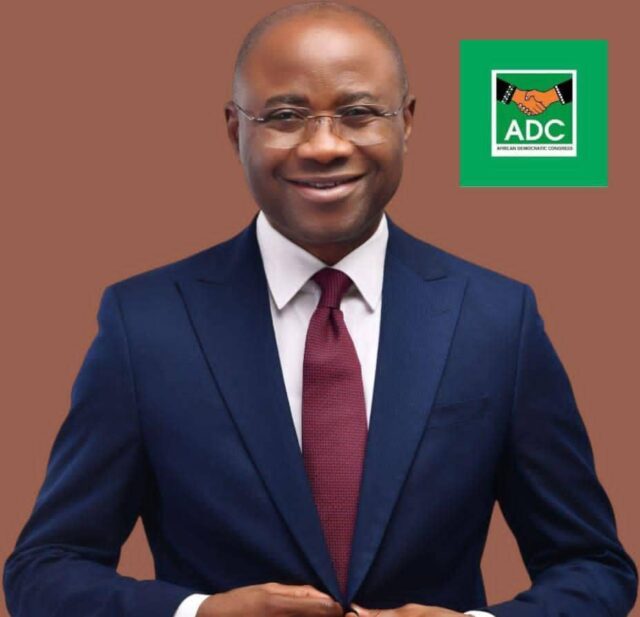
Anambra Gov’ship: I Will End Multiple Taxation, Introduce E-Governance If Elected – ADC Candidate


John Nwosu, the African Democratic Congress (ADC) candidate in the upcoming Anambra State governorship election, has pledged to abolish multiple taxation and overhaul the current revenue collection system if elected on November 8.

Speaking during an online interactive session with members of the Anambra State Association (ASA-USA), Nwosu described the existing revenue system under Governor Chukwuma Soludo’s administration as “crude and unsustainable.”

Nwosu, an Information and Communication Technology (ICT) expert, promised to dismantle the current model, which he said has caused untold hardship to residents and business owners across the state.

He cited the death of Okechukwu Akaname, a former president of the Onitsha Chamber of Commerce, Industry, Mines, and Agriculture, who allegedly died due to complications following an altercation with revenue enforcement agents.

Nwosu said such incidents are unacceptable and would be eliminated under his leadership.

“Multiple taxation is a major issue in Anambra, especially for small business owners and transport operators. I will end it if elected governor,” Nwosu said.

To address the issue, the ADC candidate outlined plans to implement a fully digital, E-government system that will streamline revenue collection and eliminate the need for street enforcers.

According to him, the technology-driven model would reduce corruption, improve transparency, and ensure that taxes are paid in a seamless, traceable manner.

“With an E-government system, we will remove revenue agents from the streets 100 per cent. No one should be harassed in the name of tax enforcement,” he said.

Nwosu also proposed a regional approach in collaboration with the South-East Governors’ Forum.

He suggested introducing a unified, computerized sticker system for transport operators, which would prevent multiple levies across different states in the region.

“Anyone who registers for our E-Transport system will be free from harassment. The sticker will be scannable with a smartphone to verify authenticity. Revenue will be shared—50% to Anambra, and 50% to the other states,” he explained.

Multiple taxation has long been a burden on Anambra’s economy, especially for traders, small businesses, and transport workers.

Business owners often face not only formal taxes from state and local governments but also informal levies and road-side demands from enforcement agents.

Nwosu’s proposal has gained attention for addressing a widespread concern that many say has stifled growth and increased the cost of doing business in the state.

Google search engine

‘Clear Your Name’, Enugu Government Pushes Back At Minister Nnaji Over Certificate Forgery Allegations


The Enugu State Government has distanced itself from the growing controversy surrounding the Minister of Innovation, Science, and Technology, Chief Uche Nnaji, following allegations of certificate forgery.

In a statement released on Monday in Enugu, the Director of Information at the Ministry of Information and Communication, Mr. Chukwuemeka Nebo, categorically denied any involvement by the state government in the scandal, urging the Minister to personally address the allegations.

“The Enugu State Government dissociates itself completely from these allegations. The Honourable Minister must carry his own cross and clear his name before Nigerians, instead of dragging the government into issues that are entirely personal to him,” Mr. Nebo declared.

According to the statement, Chief Nnaji had previously invited journalists to a press conference scheduled for Monday at 2:00 pm, where he was expected to respond to the claims.

However, the Minister failed to appear.

“A large number of Nigerian and international journalists reportedly gathered on the Minister’s invitation to hear directly from him. But rather than appear before them to answer questions and establish his innocence, the Minister absconded, leaving behind proxies who could not withstand the barrage of legitimate questions from journalists,” Mr. Nebo said.

Questioning the Minister’s absence, Nebo added:

“Who can narrate Chief Nnaji’s UNN story better than him? Why invite the media, only to outsource the conference? Why send third parties, who lack the answers to critical questions, if he truly has nothing to hide?”

Nebo then listed a series of pointed questions, suggesting that Nigerians deserve transparent answers from the Minister:

“Did he, for his screening, present a purported degree certificate to the Senate showing that he graduated from the prestigious University of Nigeria, Nsukka (UNN), in July 1985?

“Is it true that he deposed in a Federal High Court filing in Abuja that he was not issued any degree certificate by UNN and, if so, how did he come about the degree certificate he presented to the Senate?

“Is it also true that while he claims to have graduated in July 1985, he applied to the university to retake Virology (Course code: MCB 431) in the September 1985 Supplementary Examination, having failed the course?

“Is it also true that the university, in a November 8, 1985 letter, informed Uche Nnaji that he again failed Virology (Course code: MCB 431) in the Supplementary Examinations, but could register to retake the course in the June 1986 examinations, provided he paid an examination fee of N4.00 (Four naira)?

“Is it true that on January 3, 1986, he again applied to retake the Virology (Course code: MCB 431) examination in June 1986, stating in his letter that the receipt for the payment of the N4.00 (Four Naira) resit fee had been attached?

“Is it true that while he claims to be in possession of a university degree, he only submitted his Secondary School WASC Certificate to the Independent National Electoral Commission (INEC) for his participation in the 2023 governorship election?

“Why did Uche Nnaji’s proxy state at the Abuja press conference that the Minister ‘graduated’, while avoiding stating categorically that he was issued a degree certificate?

“Did he also present a purported NYSC discharge certificate showing that he commenced his national service in April 1985, three months before his supposed graduation, and served until July 1986 — an unusual duration of 13 months instead of the usual 12 months of national service?

“Whereas the CEO of the NYSC at the time he claimed to have undergone the national service was Col. Edet Akpan (January 1984 to December 1987), Uche Nnaji’s NYSC discharge certificate was signed by Col. Animashaun Braimoh, who was NYSC CEO from January 1988 to December 1990.

“Is it true that NYSC certificates issued up till October 1990 had six-digit numbering devoid of alphabetic characters, but Uche Nnaji’s discharge certificate, supposedly issued in 1986, was numbered A231309, which includes the alphabet ‘A’?

“And above all, is it a fact that he deposed to an affidavit in the suit he filed in court that UNN did not issue him any certificate? And if that is the case, Nigerians want to know how he came about the certificate he submitted to the Senate of his own free will in 2023.”

Mr. Nebo concluded by urging the Minister to personally address these issues instead of deflecting blame.

“These are the clarifications Nigerians earnestly yearn for, and Chief Uche Nnaji is urged to brave up to clear his name, if he is truly innocent, rather than trading blames,” he stressed.

Google search engine

CBN Sets N1.2m Daily Limit For POS Agents In New Banking Guidelines


The Central Bank of Nigeria (CBN) has introduced a new operational framework for agent banking, capping the daily cumulative transaction limit for Point-of-Sale (POS) agents at ₦1.2 million.

The revised guidelines aim to strengthen financial stability, enhance consumer protection, and improve oversight of agent operations across the country.

The policy, detailed in a circular dated October 6 and signed by Musa Jimoh, Director of the Payments System Management Department, applies immediately.

However, provisions concerning agent location restrictions and exclusivity will take effect from April 1, 2026.

According to the CBN, the new guidelines seek to set minimum operational standards, Promote financial inclusion, Ensure responsible conduct in the agent banking sector and Improve service delivery.

“The Guidelines aim to enhance agent banking to provide financial services, promote inclusion, encourage responsible market conduct, and improve service quality,” the circular stated.

Transaction Limits:

    • POS agents: ₦1.2 million daily cash-out limit
    • Individual customers: ₦100,000 daily transaction limit
      These caps are designed to prevent abuse, promote transparency, and protect consumers.
  • Dedicated Accounts:
    All transactions must go through designated accounts or wallets tied to the principal financial institution. Using non-designated accounts is a regulatory offence and will attract sanctions.
  • Liability and Sanctions:
    • Agents involved in fraud or misconduct will face personal liability, may be blacklisted, and can have agreements terminated.
    • Institutions in violation risk penalties, including suspension from onboarding new agents, management changes, or licence revocation.
  • Real-Time Transactions:
    All agent operations must use secure, real-time systems to ensure instant settlements and reversals in case of failures.
  • Technology Requirements:
    • POS devices must be geo-fenced to operate only within approved locations.
    • Agents cannot relocate, transfer, or close shop without prior written approval from their principal or super agent.
  • Transparency & Monitoring:
    • Institutions must publish updated lists of all registered agents on their websites and within branches.
    • Super agents must have at least 50 agents across all six geopolitical zones to ensure nationwide coverage.
  • Customer Notification:
    If an agent relocates, a 30-day notice must be displayed at the premises to inform customers.
  • Receipts & Records:
    Every transaction receipt must include the agent’s name and GPS coordinates.
    Records, including audit trails, must be kept for at least five years.
  • Reporting Obligations:
    Financial institutions must file monthly reports to the CBN, covering:

    • Volume and value of transactions
    • Number of active agents
    • Fraud incidents
    • Customer complaints
    • Training records
      Submissions are due no later than the 10th of each month.

“The CBN reserves the right to demand additional data, conduct inspections, and supervise agents or institutions directly as needed,” the circular noted.

Google search engine

Senate To Debate Motion On Alleged ‘Systemic Genocide’ Against Christians In Nigeria


The Nigerian Senate is set to debate a motion on Tuesday addressing growing international claims of “systemic genocide” against Christians in the country.

The motion, titled “Urgent Need to Correct Misconceptions Regarding the Purported ‘Christian Genocide’ Narrative in Nigeria and International Communities”, is sponsored by Senator Ali Ndume (APC, Borno South) and co-sponsored by Senators Sani Musa (APC, Niger East), Aliyu Wamakko (APC, Sokoto North), and Ibrahim Bomai (APC, Yobe South).

Lawmakers are returning from their annual recess, which began on July 23 and this motion is expected to spark a significant conversation on Nigeria’s international image and internal security discourse.

In the motion, the senators urged the Federal Government, especially the Ministry of Foreign Affairs and relevant security agencies, to counter false narratives by adopting a data-driven communication strategy.

This includes publishing verified casualty figures, contextual reports and findings from official investigations into acts of violence and insecurity.

Senator Ndume noted growing concern over what he called the “dangerous misrepresentation” of Nigeria’s security issues, particularly the portrayal of attacks on Christian communities as part of a systematic religious cleansing campaign.

While acknowledging that Christian communities have suffered horrific violence in several regions, Ndume stressed that insecurity in Nigeria affects all citizens, regardless of religious affiliation.

> “Framing the security crisis as a Christian genocide not only distorts reality but also risks deepening sectarian divides and undermining our collective national unity,” he warned.

The motion emphasizes that Nigeria’s security challenges, including terrorism, banditry, insurgency, and communal violence, have impacted both Christian and Muslim populations, as well as other ethnic and religious groups across the country.

Senator Ndume referenced the 1999 Constitution, which mandates the government to protect the lives and property of all Nigerians without bias to religion or ethnicity.

The senators expressed alarm at developments in the U.S. Congress, where efforts are reportedly underway to list Nigeria as a “Country of Particular Concern (CPC)” due to allegations of widespread religious persecution.

They warned that such designations, if based on one-sided or inaccurate reports, could damage Nigeria’s international reputation and diplomatic standing.

To address this, the motion calls for more proactive engagement with international partners, including: U.S lawmakers and government agencies, the Nigerian diaspora, and foreign media and think tanks.

This outreach would be carried out through official briefings and fact-based publications aimed at correcting misconceptions about religious persecution and violence in Nigeria.

Google search engine

MOST COMMENTED

- Advertisement -
Google search engine