Home Blog Page 273

Nnamdi Kanu Files Fresh Motion, Seeks Dismissal Of All Charges


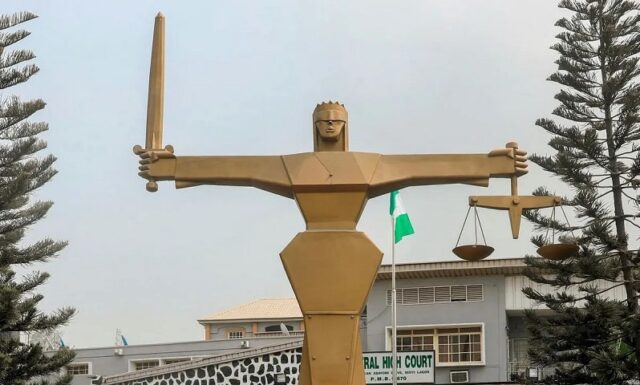
The detained leader of the Indigenous People of Biafra (IPOB), Mazi Nnamdi Kanu, has filed a fresh motion at the Federal High Court in Abuja, requesting the dismissal of all charges against him and his immediate release.

The motion, dated October 30, 2025, and titled “Motion on Notice and Written Address in Support,” asserts that there is no valid charge against him under any existing Nigerian law.

Kanu described the charges before the court as “a nullity ab initio for want of any extant legal foundation.”

Representing himself, the IPOB leader filed the motion under Sections 1(3), 6(6)(b), and 36(12) of the 1999 Constitution, the Evidence Act 2011, and the Terrorism (Prevention and Prohibition) Act 2022.

He argued that the prosecution relied on repealed and non-existent laws, including the Customs and Excise Management Act (CEMA), repealed by the Nigeria Customs Service Act 2023, and the Terrorism Prevention (Amendment) Act 2013, repealed by the TPPA 2022.

Kanu said that reliance on such repealed statutes violates Section 36(12) of the Constitution, which “prohibits trial for an offence not defined under an existing law.”

He therefore asked the court to “strike out the charges in their entirety, insisting they do not constitute any offence known to law.”

Citing the Supreme Court decision in FRN v. Kanu (SC/CR/1361/2022), he maintained that lower courts are bound to take judicial notice of repealed laws under Section 122 of the Evidence Act 2011, adding that failure to do so renders all proceedings void.”

Kanu also argued that some of the alleged offences were committed in Kenya, which he said violates Section 76(1)(d)(iii) of the TPPA 2022, requiring validation by a Kenyan court before such acts can be tried in Nigeria.

He contended that “this omission nullifies the court’s extraterritorial jurisdiction and breaches Article 7(2) of the African Charter on Human and Peoples’ Rights.”

He further stressed that under Sections 1(3) and 36(12) of the Constitution, any law or judicial act inconsistent with the Constitution is void.

Kanu cited previous cases, including Aoko v. Fagbemi (1961) 1 All NLR 400 and FRN v. Ifegwu (2003) 15 NWLR (Pt 842) 113, where convictions based on non-existent laws were nullified.

The IPOB leader urged the court to “direct the prosecution to respond to his motion strictly on points of law within three days and to deliver a ruling on or before November 4, 2025.”

He added that “his application raises only constitutional and legal questions derived from existing laws and therefore does not require an affidavit.”

Google search engine

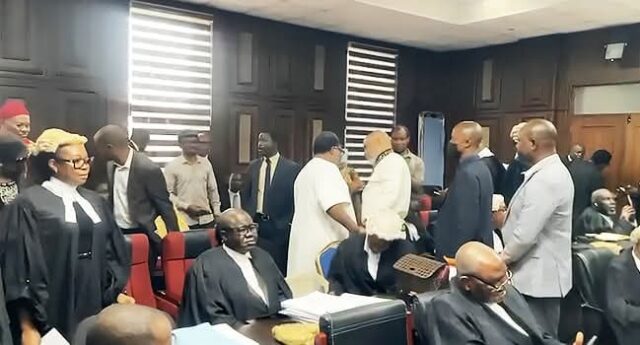
BREAKING: Court Stops PDP National Convention Over Breach Of Rules, Dismisses Preliminary Objections


The Federal High Court in Abuja has stopped the Peoples Democratic Party (PDP) from holding its planned national convention in Ibadan, Oyo State, scheduled for November 15–16.

The ruling, delivered by Justice James Omotosho, followed a case filed by three aggrieved party members who argued that the PDP failed to comply with legal and party requirements.

The court found that the party did not adhere to the provisions of the 1999 Constitution (as amended), the guidelines of the Independent National Electoral Commission (INEC), or its own constitution.

Specifically, the PDP was said to have failed in conducting valid state congresses before moving to hold the national convention to elect officers.

Justice Omotosho ordered the PDP to rectify these procedural lapses and ensure that a statutory 21-day notice is given before any future convention.

The plaintiffs in the suit (FHC/ABJ/CS/2120/2025) are: Hon. Austin Nwachukwu, Imo PDP Chairman, Hon. Amah Abraham Nnanna, Abia PDP Chairman and Turnah Alabh George, PDP Secretary, South-South

The defendants include the Independent National Electoral Commission (INEC), PDP, National Secretary Senator Samuel Anyanwu, National Organising Secretary Umar Baturrle, and national officers Ali Odefa and Emmanuel Ogidi, as well as the National Working Committee (NWC) and National Executive Committee (NEC) of the party.

The court also dismissed preliminary objections filed by the defendants, who had argued that the matter was an internal party affair and outside the court’s jurisdiction.

Details shortly…

Google search engine

Court Orders Remand Of Lawyer, Four Others For Cyberbullying Senator Umar


Justice Rita Offili Ajumogobia of the Federal High Court, Abuja, has ordered that lawyer Ahmed Abdulrahman and four others be remanded at the Force Criminal Investigation Department (FCID), Area 10, Abuja, until November 10.

This follows their arraignment on charges of cyberbullying Senator Shehu Baba Umar.

The defendants, Ahmed Abdulrahman, Daure David, Ishaq Abubakar Muhammed, Abdulrashid Abdullahi Musa, and Nasiru Usman Abubakar, were charged by the Inspector General of Police (IGP) on an 11-count charge including cyberbullying, advance fee fraud, and extortion.

When the charges were read, all five defendants pleaded not guilty.

Counsel for the prosecution, Victor Okoye, requested a trial date and urged that the defendants be remanded at Kuje Prison, Abuja.

Abdulrahman’s lawyer, Affis Matanmi, applied for bail, highlighting that his client is a Supreme Court legal practitioner and would not interfere with the investigation or witnesses.

He also noted that the police had previously granted Abdulrahman administrative bail, which he did not violate.

However, the prosecution opposed bail, arguing that the lawyer had allegedly engaged in additional cyberbullying cases and played a major role in five of the eleven charges.

Okoye emphasized that no legal practitioner should receive special treatment under the law for criminal offenses.

After considering both sides, Justice Ajumogobia ordered the defendants to remain at the Force CID until November 10, allowing Abdulrahman’s lawyer time to file a further affidavit and reply to the prosecution’s counter-affidavit.

In count one, the defendants were accused of conspiring to commit cyberstalking against Senator Umar in 2025, contrary to Section 27(1)(b) and punishable under Section 21(1)(b) of the Cybercrimes (Prohibition, Prevention, etc.) Act 2015 (as amended 2024).

In count three, Abdulrahman allegedly sent a video via his TikTok handle “Kibanna Channel” and YouTube to defame the senator by linking him to sponsorship of banditry.

The act was said to be intended to cause fear and disrupt law and order, violating Section 24(1)(5) of the same Act.

Daure David was accused of attempting to extort N5 million from Senator Umar under the pretense that the money would be used to pay protesters.

Senator Umar, Chairman of the Senate Committee on National Security and Intelligence, had earlier commended security agencies for arresting those behind a coordinated defamatory campaign targeting him.

He urged Nigerians to remain peaceful, verify information before sharing, and focus on societal issues.

“I have always stood for peace and the welfare of our people. I deny these baseless allegations and will continue to work for Bauchi South,” the senator stated.

Google search engine

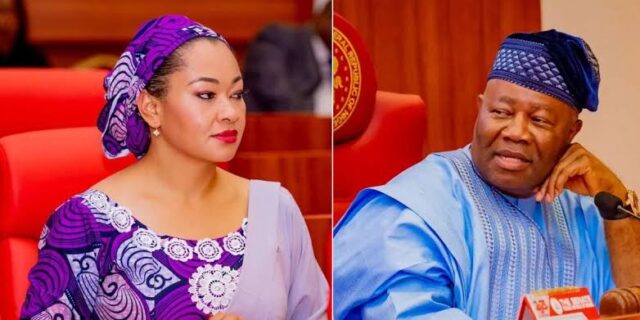
Why I Invited Akpabio, Others To My Project Inauguration – Senator Natasha


Kogi Central Senator, Natasha Akpoti-Uduaghan, has clarified why she invited Senate President Godswill Akpabio and other senators to the inauguration of her constituency projects marking her second year in office, amid speculation about a tense relationship with Senate leadership.

She described the invitation as a customary and procedural practice, noting that such notifications are standard protocol for events involving the National Assembly.

During Thursday’s plenary session, Senate President Akpabio read out Akpoti-Uduaghan’s letter, which formally invited senators to Kogi State for the project inauguration.

The letter stated:
“In marking my second anniversary as a serving senator of the Federal Republic of Nigeria, I wish to invite fellow distinguished senators to join me for the inauguration of projects in Kogi State.”

Akpoti-Uduaghan explained:
“As is customary for announcements of this nature, I submitted the invitation through the presiding officer for the Senate President to read on the floor. I didn’t want it to appear as if I were celebrating in isolation. I am committed to progress and, even with ongoing court matters, I continue to fulfill my duties diligently, following all proper procedures. That notification was part of the process.”

Reflecting on her tenure, she added that six months of her service were lost due to what she described as an “illegal suspension.”

“Some months ago, there was an attempt to declare my seat vacant, but God intervened. Today, we are celebrating two years in office with the inauguration of multiple projects,” she said.

Akpoti-Uduaghan outlined the projects, which include water facilities, streetlights, transformers, police quarters, new primary and secondary schools, and two new markets across Kogi Central Senatorial District.

The senator also announced that the inauguration events would culminate in a mega empowerment program on November 2, during which around 2,000 beneficiaries will receive items such as electric vehicles, deep freezers, gas cookers, sewing machines, shoemaking kits, fishery ponds, and farming tools.

She added:
“We are starting the inaugurations today in Ganaja, Lokoja, with a water project, then moving to Adogo and Jakuta for streetlight projects before concluding in Ihima.”

Expressing gratitude to God and her constituents, Akpoti-Uduaghan said she remains committed to delivering quality representation:

“Even though I lost six months of my tenure, I ensured my constituents did not miss out on the benefits of representation. I worked extra hard to bring the dividends of democracy to them, and I thank God for the courage to continue serving.”

Google search engine

Reforming Enugu’s Tax System: Setting The Record Straight Being A Rejoinder To Rev. Fr. Lawrence Eze’s Article

By Deacon Malachy Chuma Ochie, Ph.D

I read with keen interest the recent article by Rev. Fr. Lawrence Eze titled “Laundering the Tax Image of Enugu Government” in response to an earlier article published by Dr. Justice Chidi.

Rev. Fr. Eze’s piece was an emotive piece, driven, I assume, by a deep concern for the welfare of Enugu citizens.

However, while the Reverend Father’s compassion is undeniable, his arguments rest more on perceptions rather than on verifiable facts.

The result is a passionate but skewed interpretation of Governor Peter Mbah’s tax reforms, which deserve a more objective and contextual understanding.

The first thing to be said is that taxation, by its nature, is never a pleasant subject. No society welcomes taxes with open arms.

Yet, taxation remains the life-blood of every government that genuinely intends to deliver services, develop infrastructure, and uplift its citizens.

The real issue, therefore, is not whether taxes should exist, but whether they are fair, transparent, and properly utilized.

That is precisely where the Mbah administration has charted a new and commendable course.

Before the present government took office, Enugu State’s tax ecosystem was chaotic.

It was characterized by multiple taxation, inefficiency, and the reign of touts and middlemen who extorted traders, artisans, and transporters in the name of revenue collection.

Many citizens were forced to pay levies that never entered government coffers.

The Mbah administration confronted this anomaly by introducing a digital tax system that unified and automated all payment processes. The goal was not to increase taxes but to clean up the system, eliminate leakages, and bring sanity to revenue administration.

It is important to clarify that Governor Mbah has not introduced any new tax regime. What he has done is to enforce existing tax laws more efficiently through digitalization.

The narrative of “new and suffocating taxes” is therefore misleading. The much-talked-about “₦8 million housing tax” is not a general levy on landlords or struggling homeowners as alleged. It applies only to specific high-value developments within designated urban zones and serves as a form of development charge.

In fact, the governor personally directed a 50% downward review of the charge in response to public concerns.

This demonstrates sensitivity to citizens’ needs, not insensitivity.

Fr. Eze’s portrayal of a government bent on squeezing the poor through taxation also misses the broader economic context. Nigeria is going through a difficult macroeconomic phase following subsidy removal and exchange rate liberalization.

These are federal policies whose ripple effects have been felt in all states, Enugu inclusive. To attribute every instance of hardship to state taxes is to misunderstand basic economics.

Inflation, high transport fares, and declining purchasing power are national challenges, not Enugu-specific outcomes of taxation.

Ironically, it is through tax revenue that the Enugu government is able to mitigate some of these federal-induced pains.

The recent upward review of the minimum wage to ₦70,000, the digital skills empowerment for youths, the palliative interventions for transporters and SMEs; all of these initiatives are being funded through internally generated revenue. Without a disciplined tax framework, none of these people-oriented measures would be sustainable.

The notion that government should continually provide services without collecting taxes is economically unrealistic.

What the Mbah administration is building is a culture of fiscal responsibility where every citizen contributes fairly to the development of the state.

It is also a model that promotes equity, where the wealthy pay more and the less privileged are protected.

Market women, for instance, who were once harassed by touts and fake tax agents, now pay their levies directly to the state’s account through digital platforms, often at reduced rates. Property taxes are progressive, not punitive. They target high-value estates and commercial structures, not low-income homes.

Rev. Eze’s critique of the “smart” infrastructure projects such as the Smart Schools and Smart Parks also calls for perspective. These are not vanity projects, as he suggests.

They are part of a deliberate modernization agenda that seeks to position Enugu as a 21st-century economy driven by innovation, technology, and efficiency.

The Smart Schools are designed to transform education by integrating digital learning, science, and vocational training, thereby preparing Enugu’s children for the knowledge economy.

The Smart Parks aim to revolutionize transport infrastructure, enhance urban aesthetics, and create long-term revenue streams for the state.

The argument that such projects do not immediately put food on the table misses the developmental logic of capital investment.

No modern economy grows by handouts alone; it grows through infrastructure that stimulates productivity, attracts investors, and creates jobs.

In fact, the engagement of credible private partners in the Smart Schools project reflects a global best practice in public-private partnerships (PPP).

It is also unfair to dismiss Dr. Justice Chidi’s explanations as “image laundering.” Public enlightenment is an essential component of democratic governance.

Citizens have a right to know how their taxes are used, and government has a duty to explain. There is nothing wrong with articulate advocates explaining reforms and countering misinformation. It becomes worrisome only when such discourse is met with cynicism rather than constructive engagement.

Governor Mbah’s fiscal reforms are anchored on transparency, accountability, and inclusiveness. Enugu State now publishes quarterly budget performance reports, conducts citizen budget sessions, and operates an open access portal for revenue data.

These are not the hallmarks of an opaque administration. Indeed, BudgIT’s 2024 Subnational Transparency Index ranked Enugu among the top five most transparent states in Nigeria. This level of openness should inspire confidence, not suspicion.

At the heart of Mbah’s fiscal vision is economic independence. The governor’s ambition is to grow Enugu’s internally generated revenue to a point where the state can fund its development without over-dependence on federal allocations.

This is what drives the reforms that some have mistaken for insensitivity. The hard truth is that without expanding the tax base and ensuring fiscal discipline, no state can deliver sustainable infrastructure or social welfare.

In assessing any government’s fiscal policy, one must look beyond the noise of the moment to the long-term benefits.

What Governor Mbah is doing is laying the foundation for a financially resilient Enugu State; one capable of building its own future. The pain of reform is temporary; the prosperity it produces is lasting.

Rev. Fr. Eze’s concerns for the poor are noble and shared by many. But the solution is not to halt reforms or demonize taxation.

The solution lies in ensuring that taxes are fair, well-managed, and used for the people’s benefit. That, indeed, is what the Mbah administration is doing.

To call these efforts “image laundering” is to miss the real picture. The real story of Enugu today is that of a government finally bringing order to fiscal chaos, replacing arbitrariness with transparency, and investing the people’s money back into the people’s lives.

It is a story of a state moving from consumption to production, from dependency to sustainability.

Governor Peter Mbah’s tax reforms are not anti-people; they are pro-development. They represent a bold attempt to align Enugu with the fiscal realities of the 21st century.

Those who see only hardship should look again and see the foundation of future prosperity being laid.

Google search engine

Court Sacks Rep Member For Dumping His Party For APC, Orders INEC To Conduct Fresh Election Immediately


The Federal High Court in Abuja has removed Hon. Abubakar Suleiman Gummi, member representing Gummi/Bukkuyum Federal Constituency of Zamfara State, from the House of Representatives for defecting from the Peoples Democratic Party (PDP) to the All Progressives Congress (APC).

Delivering judgment in suit FHC/ABJ/CS/1803/2024, Justice Obiora Egwuatu ruled that Gummi’s defection violated Section 68(1)(g) of the 1999 Constitution (as amended), which mandates elected lawmakers to forfeit their seats if they leave the party on whose platform they were elected, except in cases of a proven division within that party.

The court held that Gummi failed to provide credible evidence of any division within the PDP, dismissing his claim that internal crises at the national and constituency levels forced his defection.

Justice Egwuatu consequently ordered Gummi to vacate his seat immediately and restrained the Speaker of the House of Representatives, Rt. Hon. Tajudeen Abbas, from further recognizing him as a member.

The Independent National Electoral Commission (INEC) was directed to conduct a fresh election within 30 days to fill the vacant seat.

In a strongly worded rebuke, the judge condemned what he described as the “growing culture of political prostitution” among Nigerian politicians.

“It is legally and morally wrong for a politician to abandon the party under which platform he or she was elected and move to a rival party without relinquishing the mandate of the electorates,” Justice Egwuatu stated.

“A politician has no right to transfer the votes of a political party to another. The law must punish such moves by taking away the benefits bestowed upon the decampee politician.”

The court further ordered Gummi to refund all salaries, allowances, and benefits he received from October 30, 2024, to the date of judgment. Proof of the refund must be filed with the court within 30 days.

Additionally, the court awarded ₦500,000 in costs against Gummi, the Speaker, and INEC in favour of the PDP.

The case was filed by the PDP and its Zamfara State Chairman, Jamilu Jibomagayaki, represented by Ibrahim Bawa, SAN.

The judgment has been hailed as a significant affirmation that the electoral mandate belongs to the political party and not the individual, and a clear warning to future defectors.

Google search engine

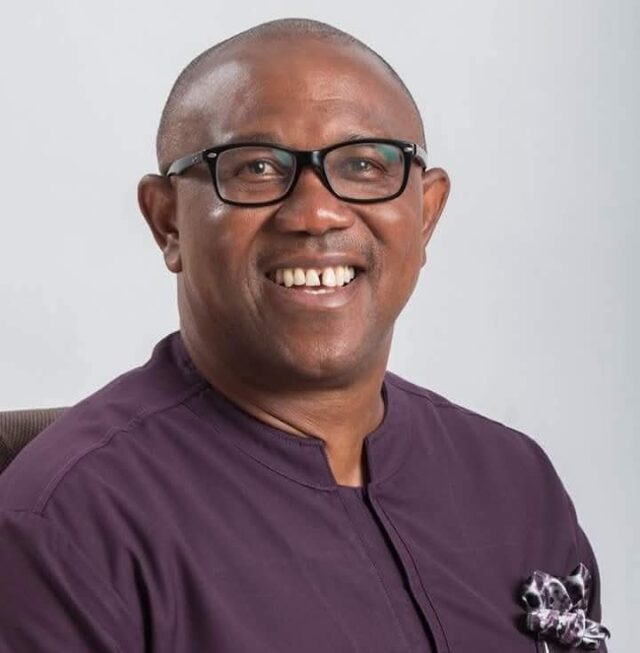
Nigeria Has No Reason To Be Among Hunger-Stricken Nations, Says Obi


Former Anambra State governor and 2023 Labour Party presidential candidate, Mr. Peter Obi, has expressed concern over Nigeria’s ranking among the world’s most hunger-stricken nations, describing the situation as unjustifiable given the country’s abundant agricultural resources and potential.

Speaking on Thursday at the “Food Systems Changemakers’ Conference 2025” in Abuja, organised by Sahel Consulting Limited and its partners, Obi lamented that despite Nigeria’s vast arable land and human capital, millions of citizens continue to suffer from food insecurity.

“Food is a critical component of human existence, and for Nigeria to be listed among the hungriest nations despite our vast resources is very regrettable,” he said.

“We cannot discuss development if our people cannot afford a healthy meal. The agricultural sector remains critical to our future and economic sustainability.”

He stressed the need for greater innovation and investment in agribusiness, noting that Nigeria’s prosperity depends on its ability to harness agriculture as a foundation for inclusive growth.

“Nigeria must innovate to sustain its food systems to meet growing demand,” Obi added.

“We have no reason to be among the most hungry nations when we possess vast uncultivated land and millions of energetic youths who can be empowered to change things.”

Meanwhile, the Federal Government has reiterated its commitment to achieving a $1 trillion economy by 2030, with agriculture identified as a key driver of that goal.

The Minister of Budget and National Planning, Senator Abubakar Atiku Bagudu, disclosed this during the same conference, explaining that the government is reviewing the National Development Plan (2026–2030) to ensure that agriculture receives top priority.

“Mr. President has challenged us to generate a $1 trillion economy by 2030 in an inclusive manner that prioritises agriculture,” Bagudu said.

“Food systems are major drivers of that growth. We are mapping our economic and agricultural potentials across all local governments to build a solid foundation for this target.”

He added that sustainable food systems are central to national development, calling for stronger private sector participation in agricultural transformation.

“We are putting in place policies and programmes that will ensure those who participate in our economy are richly rewarded,” the minister stated.

Also speaking, Mrs. Ndidi Nwuneli, Chief Executive Officer of the ONE Campaign, described innovation as a game-changer for developing resilient food systems in Nigeria.

According to her, entrepreneurs and changemakers have vital roles to play in ensuring food and nutrition security.

“Every Nigerian child deserves a healthy meal and the opportunity to live a full and meaningful life,” Nwuneli said.

“For that to happen, nutritious food must be available, affordable, and accessible. Our food systems must function effectively.”

The conference, themed “Designing for Legacy: Building Resilient and Impact-Driven Food Systems,” brought together policymakers, development partners, private sector leaders, and innovators to discuss strategies for achieving food security and transforming Nigeria’s agricultural landscape.

Google search engine

FULL LIST: 14 Of 18 Associations Meet Documentation Requirements For Registration As New Political Parties, INEC Announces


The Independent National Electoral Commission (INEC) has announced significant progress in the ongoing registration of new political parties, revealing that eight out of 14 pre-qualified associations have successfully completed the submission of all required documents.

This was disclosed in a statement issued in Abuja by Sam Olumekun, INEC National Commissioner and Chairman of the Information and Voter Education Committee, following the Commission’s regular meeting on Thursday.

According to Olumekun, the associations that met the October 18, 2025 deadline for document submission include:

  • All Democratic Alliance (ADA)
  • Citizens Democratic Alliance (CDA)
  • Abundance Social Party (ASP)
  • African Alliance Party (AAP)
  • Democratic Leadership Alliance (DLA)
  • Green Future Party (GFP)
  • National Democratic Party (NDP)
  • Peoples Freedom Party (PFP)

Olumekun recalled that following a briefing session for the 14 pre-qualified associations on September 17, 2025, INEC opened a dedicated online portal for document uploads between September 18 and October 18, 2025.

“Further to the Commission’s earlier update on Thursday, September 11, 2025, regarding the registration of political parties, INEC reviewed the progress made since that announcement during its regular meeting held on Thursday, October 30, 2025,” the statement read.

“As of Saturday, October 19, 2025, eight of the 14 pre-qualified associations had successfully completed the upload of all required information and documentation.”

The Commission is expected to review the submissions before deciding which of the associations will be fully registered as political parties in accordance with the Electoral Act 2022 and INEC guidelines.

Google search engine

Full List Of 16 Military Officers Detained Over Alleged Coup Plot To Overthrow President Tinubu


Fresh details have surfaced regarding the identities of at least 16 Nigerian military officers allegedly linked to the foiled coup attempt of October 1, shedding more light on the ongoing investigation within the armed forces.

According to reports, 14 of the detained officers are from the Nigerian Army, including one Brigadier General, one Colonel, four Lieutenant Colonels, five Majors, two Captains, and one Lieutenant.

The remaining two are officers from the Nigerian Navy and the Nigerian Air Force, a Lieutenant Commander and a Squadron Leader, respectively, both of whom hold ranks equivalent to that of a Major.

Investigations reveal that most of the Army officers belong to the Infantry Corps, while one serves in the Signals Corps and another in the Ordnance Corps.

Many of the detainees reportedly graduated from the 56th Regular Course of the Nigerian Defence Academy (NDA), which ran from September 2004 to October 2008.

Six officers from this course were among the first to be arrested.

Sources further disclosed that 15 of the detained officers hail from the North Central, North East, and North West regions, while one lieutenant comes from the South West.

The alleged coup attempt reportedly aimed to overthrow the government and assassinate key national leaders, including President Bola Ahmed Tinubu, Vice President Kashim Shettima, Senate President Godswill Akpabio, and Speaker of the House of Representatives Tajudeen Abbas, among others.

However, the Defence Headquarters (DHQ) dismissed the reports as false and misleading, maintaining that there was no coup plot and warning against spreading unfounded claims capable of destabilizing national security.

The Presidency also clarified that President Tinubu’s recent reshuffle of the military hierarchy was a routine administrative decision carried out in line with his constitutional powers as Commander-in-Chief of the Armed Forces.

Weeks after the coup scare, President Tinubu made sweeping changes in the military leadership.

He dismissed the Chief of Defence Staff, General Christopher Musa, and appointed General Olufemi Oluyede as his replacement.

In the same move, Major General Waidi Shaibu became the new Chief of Army Staff, Air Vice Marshal Sunday Kelvin Aneke was appointed Chief of Air Staff, and Rear Admiral Idi Abbas took over as Chief of Naval Staff. Major General Emmanuel Undiendeye retained his role as Chief of Defence Intelligence.

While these appointments fueled speculation about links to the alleged coup, the Presidency insisted they were purely administrative and unrelated to any plot.

Military sources say the number of detained officers may have increased as investigations continue.

Reports by Sahara Reporters alleged that, as part of the probe, operatives raided the Abuja residence of former Bayelsa State Governor Timipre Sylva, arresting his brother and former personal assistant.

Sylva, through his spokesperson Julius Bokoru, denied any connection to the alleged coup, stating that he was abroad for medical treatment in the UK and en route to Malaysia for a conference at the time.

Bokoru added that individuals believed to be Defence Headquarters operatives conducted the raid without providing any explanation.

Google search engine

SDP Crisis: Adebayo Has No Plans To Join APC – Wife Clarifies


Mrs. Lilian Adebayo, wife of the former presidential candidate of the Social Democratic Party (SDP), Prince Adewole Adebayo, has debunked reports suggesting that her husband is planning to defect to the All Progressives Congress (APC).

She gave the clarification on Thursday in Abuja while addressing a delegation of SDP state chairmen amid the party’s ongoing leadership tussle and the wave of defections by opposition figures to the ruling party.

Describing the reports as “false and misleading,” Lilian maintained that her husband has remained loyal to the SDP since joining it as a teenager.

“There is absolutely no truth in the claims linking my husband to the APC or any other party,” she said.

“Prince Adewole Adebayo joined the SDP at the age of 19 and has never left. Over the years, he’s had many opportunities to move to other parties like the APC or PDP, but he chose to stay faithful to the SDP. By the grace of God, he will still contest under the same platform in the next election.”

She praised the SDP’s internal dispute resolution process, noting that the party had managed its internal issues more peacefully compared to other political organisations.

“Every political party faces challenges, but the SDP has handled its affairs maturely and responsibly. You don’t hear of the kind of chaos or division that often rocks other parties. Whenever misunderstandings arise, we resolve them amicably,” she added.

Speaking on her husband’s political prospects, Mrs. Adebayo expressed optimism about his chances in the 2027 presidential election, describing him as “youthful, capable, and passionate about Nigeria’s future.”

“I strongly believe he stands a real chance if Nigerians truly want progress. We’ve seen leaders come and go without meaningful change. It’s time the country gave an opportunity to someone young, competent, and committed to national development,” she said.

Her statement follows the recent expulsion of the SDP National Chairman, Alhaji Musa Gabam, and several top officials over alleged misconduct, financial irregularities, and abuse of office.

According to the party’s National Publicity Secretary, Rufus Aiyenigba, the decision to expel the officers came after the adoption of a Disciplinary Committee’s report and a White Paper review of the allegations.

Aiyenigba said the action was taken to “restore integrity, discipline, and order within the SDP,” and that the National Working Committee had unanimously approved the move.

The leadership crisis has fueled speculations that some key figures in the party, including Adebayo, may be considering forming new alliances ahead of the 2027 elections. However, Mrs. Adebayo’s remarks appear to firmly dismiss those rumours.

Google search engine

- Advertisement -
Google search engine

MOST COMMENTED