Home Blog Page 288

Calls Grow For Electoral Reform As INEC Chair’s Tenure Nears End


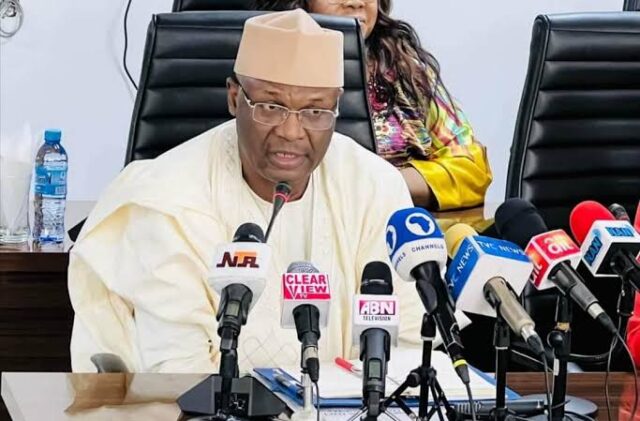
As the tenure of INEC Chairman Prof. Mahmood Yakubu and several National Commissioners winds down ahead of the 2027 general elections, a growing coalition of civil society groups is calling for a radical overhaul of Nigeria’s electoral system, starting with who appoints the INEC leadership.

A joint platform of 17 civil society organisations, including Yiaga Africa, The Kukah Centre, International Press Centre (IPC), and Policy and Legal Advocacy Centre (PLAC), has proposed a comprehensive set of electoral reforms aimed at strengthening the independence, professionalism and transparency of elections in Nigeria.

The proposals were unveiled last week in Abuja during a roundtable where the group released a document titled:

The Citizens Memo outlines 37 key recommendations across 15 strategic objectives, spanning constitutional and legislative changes, as well as shifts in electoral culture.

At the heart of the memo is the demand to remove the president’s sole authority to appoint the INEC Chairman, National Commissioners, and Resident Electoral Commissioners (RECs).

The stakeholders argue that the current system undermines public trust and leaves the electoral body vulnerable to political manipulation.

“The Constitution should be amended to introduce a multi-stakeholder process for INEC appointments,” the memo states, adding that consultation should go beyond the Council of State to include traditional rulers, religious leaders, and civil society.

The group also wants to revamp INEC appointment criteria, stating that the current focus on “non-partisanship and unquestionable character” is insufficient.

Instead, future appointees should also meet professional, gender, age, and health requirements, bringing skills in law, IT, logistics, statistics and communications to the table.

Another demand is for the Constitution to set firm deadlines for appointments to INEC, within 30 days of any vacancy, to avoid unnecessary delays that weaken the Commission’s stability.

The memo extends to the State Independent Electoral Commissions (SIECs), which have long been accused of lacking autonomy.

Recommendations include Removing governors’ control over SIEC appointments, Involving state assemblies and independent panels in selecting SIEC members, Ensuring financial independence by charging their funding to the state Consolidated Revenue Fund as well as expanding SIEC powers to include monitoring primaries, campaigns, and civic education at the local level.

To ease INEC’s burden and improve performance, the memo proposes splitting its responsibilities: Party registration and regulation should go to a new Political Party Commission while Electoral offences prosecution should be handled by a proposed Electoral Offences Commission, independent of the Attorney-General’s office.

Critically, they argue that nolle prosequi powers (used to drop charges) should not apply to electoral offences, citing the need for deterrence and accountability.

To prevent prolonged post-election disputes and ensure that winners emerge before inauguration, the memo recommends:

– Elections be held between 240 and 90 days before the end of the current officeholder’s term (currently 150–30 days).

– Election petitions be resolved within 90 days, down from 180.

– Appeals in pre-election matters should end at the Court of Appeal, especially for state and federal legislative seats.

They also propose ending forum shopping by requiring suits to be filed where the dispute originated.

In a bid to make elections more inclusive, the memo backs Out-of-country voting for Nigerians in the diaspora, Special legislative seats for women as a temporary measure to increase female political participation and Stronger representation of youths and persons with disabilities (PWDs) in the electoral process.

Alongside constitutional reforms, the Citizens Memo also outlines 16 proposed amendments to the 2022 Electoral Act, focusing on practical and procedural improvements.

Key Proposals:

– Allow other legal IDs (e.g. driver’s license, passport) in place of PVCs during voting, given the biometric BVAS system.

– Mandate a public, independent audit of the voter register.

– Introduce early voting for INEC staff, security personnel and journalists.

– Make election info accessible to PWDs (e.g., braille formats, sign language).

– Require INEC to review and adjust polling units every 5 years.

– Strengthen constituency delimitation by introducing a 15% deviation limit.

– Impose sanctions on parties that fail to submit member registers 30 days before primaries.

– Limit last-minute substitution of candidates, except in the event of death.

– Mandate electronic transmission of results, with clear legal provisions and timelines for mock tests of electoral technology.

– Require media fairness, including discounted airtime for women, youths and PWDs.

Clarify liability in media campaign breaches penalizing only the offending media houses, not their executives.

At the roundtable unveiling the memo, speakers including Cynthia Mbamalu (Yiaga Africa), Lanre Arogundade (IPC), Dr. Akin Akingbulu (CEMESO) and Tony Onyima (Paul University, Awka) called on the National Assembly and political leaders to treat the reforms as a national priority.

“Our elections need more than law, they need public trust. And that begins with genuine independence for INEC,” Mbamalu said.

The event, moderated by Ms. Anikeade Funke-Treasure Akintoye, also stressed the need for attitudinal shifts among stakeholders, beyond just legal reforms.

The coalition is now engaging with lawmakers and key institutions to push the memo into the formal amendment process.

With the 2027 elections drawing closer, they argue, the time to act is now.

“We must reform now or risk losing the people’s confidence in democracy altogether,” the Citizens Memo warns.

Google search engine

Police Rescue 4-Year-Old Girl Sold For N3.7m By Child Trafficking Syndicate


The Ondo State Police Command has successfully rescued a four-year-old girl who was allegedly sold for ₦3.7 million by a cross-state child trafficking ring.

According to the command’s spokesperson, SP Ayanlade Olayinka, the rescue marks a significant breakthrough in the ongoing crackdown on human trafficking networks operating across Ondo, Delta, and Anambra States.

The case began when Sunday Kingsley, a resident of Alagbaka Extension in Akure, reported the disappearance of his daughter, Jesinta, who went missing while under the care of her mother, Sunday Happiness.

Initial investigations led to the arrest and arraignment of some suspects before a Family Magistrate Court.

Although those suspects were later granted bail, the child remained missing.

The turning point came when Kingsley spotted a child resembling Jesinta in Asaba, Delta State.

He alerted the authorities, and detectives from the Gender Desk Team of the Ondo Police Command acted swiftly, recovering the child and reuniting her with her family.

During the operation, the police arrested Amaka Chukwuemeka, 30, who allegedly confessed to buying the child for ₦3.7 million.

She reportedly provided investigators with key information about other members of the trafficking network and claimed the child came with forged adoption documents.

Subsequent arrests were made, exposing what authorities described as a “well-coordinated trafficking syndicate” operating across state lines.

SP Olayinka assured the public that investigations are still ongoing to identify and prosecute all individuals involved, including those responsible for producing falsified legal documents.

“Ondo State cannot and will not be a safe haven for child traffickers or any criminal syndicate,” Olayinka stated.

Google search engine

Ganduje Blasts Kwankwaso, Labels Kano Govt ‘Clueless, Wasteful’


Former Governor of Kano State and ex-National Chairman of the All Progressives Congress (APC), Dr. Abdullahi Umar Ganduje, has launched a strong attack on his former political ally, Senator Rabi’u Musa Kwankwaso and the current Kano State Governor, Abba Kabir Yusuf, accusing them of inconsistency and poor leadership.

Speaking at an APC stakeholders’ meeting held in Kano on Thursday, the first such gathering since Ganduje left office, he dismissed recent speculations about Kwankwaso potentially rejoining the APC.

Citing a report by BBC Hausa, Ganduje said Kwankwaso’s previous criticisms of the party discredited any such move.

“We’ve heard the rumours, but we don’t take them seriously,” Ganduje said. “In politics, there’s little difference between a fake cleric and a thief. Kwankwaso once said only a madman would join APC.”

“He even mocked President Tinubu, claiming all he achieved was in Lagos. Now they want to come back. If they return, we’ll welcome them as madmen who have eaten their words.”

When asked about the possibility of reconciling with Kwankwaso and another former governor, Ibrahim Shekarau, Ganduje said it could be considered if unity becomes necessary, adding that all three have leadership experience that could benefit the current administration.

Turning to his successor, Governor Abba Kabir Yusuf, Ganduje was sharply critical, calling his administration directionless and focused on revenge rather than development.

“Unlike him, I didn’t start my tenure by launching probes into my predecessor’s administration,” Ganduje said. “But Governor Yusuf came in with investigations and nothing to show for it.”

“In just six months, they’ve received more federal allocations than I did in eight years. What have they achieved with that money?”

He went further to describe Yusuf’s government as “a government of vendetta, lacking in leadership and filled with confusion,” accusing it of spending public funds wastefully on low-impact projects.

On his own removal as APC National Chairman, Ganduje downplayed the matter, saying it was part of a routine political rotation based on zoning.

Google search engine

Why I Called Olubadan My ‘Elder Brother’ – Obi


Labour Party’s 2023 presidential candidate, Peter Obi, has responded to criticism over his choice of words in a congratulatory message to the newly crowned Olubadan of Ibadanland, Oba Rashidi Adewolu Ladoja.

Obi came under fire on social media after referring to the 81-year-old monarch as his “dear brother” in a post shared on Saturday via his official X (formerly Twitter) account.

Critics argued that his message was inappropriate and disrespectful to Yoruba royal customs, where monarchs are typically addressed as fathers or revered figures.

In his original message, Obi wrote:

“I warmly congratulate my dear brother, Oba Rashidi Adewolu Ladoja, Arusa I, on his installation as the 44th Olubadan of Ibadanland. His ascension to this revered throne is a celebration for the people of Ibadan and a source of pride for the entire Yoruba nation and Nigeria as a whole.”

Reacting to the backlash on Sunday, Obi released a follow-up statement clarifying his intentions.

He emphasized that he meant no disrespect and often uses the term “elder brother” when referring to individuals he holds in high esteem.

“Certainly, no disrespect was intended in my goodwill message to His Royal Majesty. I felicitated with my dear elder brother, the newly crowned Olubadan,” he stated.

Obi noted that his use of “brother” is a personal style he applies even with other respected traditional rulers.

“Those who follow me closely would know I often refer to individuals close to me, and for whom I have deep respect, as ‘dear elder brother.’ For example, I always address His Royal Majesty Igwe Alfred Achebe, Obi of Onitsha, in the same affectionate manner.”

He concluded by urging the public to consider his motives, assuring them that his words stemmed from “untrammelled goodwill” and respect for both tradition and authority.

Google search engine

‘Sanction Netanyahu Instead’, Colombian Minister Slams US Over Visa Ban On President Petro, Defends Palestine Remarks


Colombia’s Interior Minister, Armando Benedetti, has strongly criticized the United States for revoking the visa of Colombian President Gustavo Petro, calling the move unjust and politically motivated.

The U.S government recently revoked President Petro’s visa following what it described as “incendiary remarks” made during a pro-Palestinian rally outside the United Nations headquarters in New York.

Petro had used the opportunity to call for the formation of a “world salvation army” with the goal of liberating Palestine.

“From here in New York, I call on U.S soldiers, do not turn your rifles on humanity. Disobey Trump’s order ! Obey the order of humanity !” Petro declared.

He further likened the struggle to past global conflicts, urging young soldiers from both Israel and the U.S to reject authoritarianism.

Petro had already left the U.S for Bogotá when the visa cancellation was announced. Upon arrival in Colombia, he dismissed the decision, saying:

“I have returned to Bogotá. I no longer have a U.S visa and I don’t care. I’m a free person in the world,” Petro posted on social media, adding that as a dual Colombian and European citizen, he can still travel to the U.S under the Electronic System for Travel Authorization (ESTA).

In a fiery response to the visa revocation, Minister Benedetti questioned the U.S decision and suggested that Israeli Prime Minister Benjamin Netanyahu, not Petro, should have been the real target of such sanctions.

“But since the empire protects Trump, it punishes the only president who had the courage to speak the truth to his face,” Benedetti said.

The controversy has deepened an already tense relationship between Colombia’s first leftist government and the Trump administration.

At the UN General Assembly, President Petro condemned recent U.S airstrikes on boats suspected of transporting drugs in the Caribbean, accusing Washington of using violence to control Latin America rather than curb drug trafficking.

He suggested that innocent Colombians may have been among the victims and alleged U.S complicity with drug cartels, while defending his administration’s approach of persuading farmers to abandon coca farming voluntarily.

In an interview with the BBC, Petro went further, describing the U.S strikes as an “act of tyranny.”

Google search engine

Informants A Greater Threat Than Insurgents – Defence Headquarters


The Nigerian Defence Headquarters (DHQ) has identified informants as one of the greatest threats undermining the military’s operations against insurgency and banditry, especially in the northeastern and northwestern regions of the country.

Brigadier General Tukur Ismail Gusau, Director of Defence Information, made this known during a media engagement in Birnin Kebbi.

The visit was part of a wider directive by the Chief of Defence Staff, General Christopher Musa, aimed at strengthening ties with the media, traditional leaders and the general public to prevent further deterioration of the security situation in the northwest.

According to General Gusau, while the military continues to confront terrorists daily, the activities of informants, who often live within communities and covertly assist insurgents, have become a major stumbling block.

“They are everywhere, in every place. Their presence severely hampers our operations,” he said.

He stressed the importance of public support in the ongoing fight, noting that while the military contributes only about 30% to the counter-insurgency effort, the remaining 70% depends on civilian cooperation.

“Without the support of the people, our mission cannot succeed,” he stated.

Gusau appealed to journalists to help by publishing stories that would uplift the morale of soldiers on the frontline, rather than content that might demoralize them.

He also revealed that, beyond the existing military presence in Kebbi State, there are plans to establish a full brigade to enhance security in the area.

On the issue of surrendered insurgents, Gusau clarified that the army is not involved in brokering peace deals.

However, when agreements are reached through appropriate channels, insurgents surrender themselves to the military.

“So far, 120 fighters have surrendered through the Safe Corridor programme,” he added

Google search engine

Informants A Greater Threat Than Insurgents – Defence Headquarters


The Nigerian Defence Headquarters (DHQ) has identified informants as one of the greatest threats undermining the military’s operations against insurgency and banditry, especially in the northeastern and northwestern regions of the country.

Brigadier General Tukur Ismail Gusau, Director of Defence Information, made this known during a media engagement in Birnin Kebbi.

The visit was part of a wider directive by the Chief of Defence Staff, General Christopher Musa, aimed at strengthening ties with the media, traditional leaders and the general public to prevent further deterioration of the security situation in the northwest.

According to General Gusau, while the military continues to confront terrorists daily, the activities of informants, who often live within communities and covertly assist insurgents, have become a major stumbling block.

“They are everywhere, in every place. Their presence severely hampers our operations,” he said.

He stressed the importance of public support in the ongoing fight, noting that while the military contributes only about 30% to the counter-insurgency effort, the remaining 70% depends on civilian cooperation.

“Without the support of the people, our mission cannot succeed,” he stated.

Gusau appealed to journalists to help by publishing stories that would uplift the morale of soldiers on the frontline, rather than content that might demoralize them.

He also revealed that, beyond the existing military presence in Kebbi State, there are plans to establish a full brigade to enhance security in the area.

On the issue of surrendered insurgents, Gusau clarified that the army is not involved in brokering peace deals.

However, when agreements are reached through appropriate channels, insurgents surrender themselves to the military.

“So far, 120 fighters have surrendered through the Safe Corridor programme,” he added.

Google search engine

Russia Threatens Strong Response To Any Provocation Amid Rising Tensions With NATO


Russia has issued a stern warning of a “decisive response” to any perceived acts of aggression, following comments by former U.S President Donald Trump endorsing the idea of shooting down Russian aircraft that violate NATO airspace.

Speaking at the United Nations General Assembly, Russian Foreign Minister Sergei Lavrov criticized what he described as increasing allegations against Moscow, insisting that Russia has no plans to attack NATO or EU nations.

“Russia is being accused of plotting attacks against the North Atlantic Alliance and EU countries. These claims are baseless. But let me be clear, any act of aggression against Russia will be met with a decisive response,” Lavrov stated.

The warning follows reports from several NATO member states that Russian fighter jets and drones have repeatedly breached their airspace in recent weeks, acts they believe are tests of NATO’s resolve.

In a recent interview, Donald Trump was asked whether NATO allies should shoot down Russian aircraft violating their airspace. He replied bluntly, “Yes, I do.”

This marks a significant shift in tone from Trump, who previously touted his friendly relations with President Vladimir Putin, even inviting him to a summit in Alaska last month, an effort seen by some as an attempt to reintegrate the Russian leader into the global diplomatic community, despite ongoing tensions over the 2022 invasion of Ukraine.

However, Trump has since expressed growing dissatisfaction with Putin, now advocating that Ukraine not only reclaim all occupied territory but potentially push into Russia as well.

Despite the mixed signals from Trump, Lavrov appeared to extend an olive branch, praising the former U.S. president for his seemingly pragmatic approach to foreign policy.

“We recognize in the current U.S administration a willingness to pursue realistic solutions to the Ukrainian crisis and to engage in practical cooperation without ideological bias,” Lavrov said.

Google search engine

Troops Rescue Eight Kidnapped Passengers On Okene–Auchi Road


In a swift joint operation, Nigerian Army troops, working alongside the police and local vigilante groups, successfully rescued eight abducted commuters on the Okene–Auchi Highway in Kogi State.

The abduction occurred on Friday at Tyre Village in Okene Local Government Area, when nine gunmen disguised in military camouflage ambushed a Toyota Hiace bus operated by Big Joe Ventures Ltd, with registration number FUG 13 XY.

The bus was reportedly traveling from Abuja to Benin City, Edo State, with 12 passengers on board when it was intercepted.

The attackers forcefully led the passengers into the nearby bush.

Responding swiftly to distress calls, troops and local vigilantes launched a coordinated operation, engaging the abductors in a firefight.

During the confrontation, security forces recovered ammunition and successfully rescued eight individuals, including the bus driver, all unharmed.

A source familiar with the rescue confirmed that efforts are still ongoing to locate and free the remaining four passengers still held captive.

Security operatives are said to be combing the surrounding forest in search of the kidnappers and their victims.

The incident highlights the growing security challenges on major highways, as well as the importance of rapid response and collaboration between security agencies and local communities.

Google search engine

N3bn Security Vote: YPP Guber Candidate, Soludo’s Aide Clash Over Anambra Insecurity


The Young Progressives Party (YPP) governorship candidate in the upcoming Anambra State election, Sir Paul Chukwuma, has accused Governor Chukwuma Soludo of mismanaging security funds, alleging the state receives about ₦3 billion monthly as security vote despite persistent insecurity.

Speaking during an interview on Arise TV, Chukwuma described the situation as “disturbing,” lamenting that such a significant allocation has not translated into improved safety for citizens of the state.

“Anambra State Government collects in the neighbourhood of ₦3 billion monthly as security vote, yet insecurity continues unabated in our dear state,” he said.

He criticized the Soludo administration’s inability to curtail killings, kidnappings, and other criminal activities, questioning the government’s strategy and political will.

Chukwuma promised that if elected, his government would directly channel security funds into actionable security measures.

The YPP candidate outlined a comprehensive security strategy, including A 24/7 emergency response helpline, Statewide CCTV network linked to a central surveillance hub, Upgraded police infrastructure and well-equipped patrol vehicles, 21 service centres across local governments for vehicle support, Acquisition of drones, firearms, trackers, and other modern policing tools, Training and allowances for police officers with a four-year mandatory service period, as well as Supervised community vigilante groups for neighbourhood security

“These measures are not only achievable but affordable if funds are properly utilised,” Chukwuma stated. “What Anambra needs is a leader who knows what to do and has the courage to do it. I am that man.”

In response, Ejimofor Opara, Senior Special Assistant to Governor Soludo on New Media, dismissed the ₦3 billion figure as fiction, accusing Chukwuma of political grandstanding.

“The alleged ₦3bn monthly security vote is a figment of his imagination. Not to my knowledge,” Opara said.

He accused the YPP candidate of using Governor Soludo’s name for relevance, adding that the administration has made notable progress in the area of security by supporting law enforcement agencies, empowering local vigilantes, and backing coordinated joint security efforts across the state.

Opara maintained that while security challenges persist, Soludo’s government has restored relative peace to areas once under siege.

Meanwhile, on the campaign trail in Mgbakwu, Awka North Local Government Area, Chukwuma identified infrastructure and security neglect as pressing issues in the region.

He noted poor connectivity between communities, network challenges, and insecurity as major concerns, pledging to change the narrative.

“We will ensure all communities in Awka North become accessible,” he said. “We will also resolve the persistent network issues affecting residents.”

He further alleged that Awka North receives between ₦8–9 billion annually in federal allocations, totaling over ₦30 billion since the current administration began, yet the area remains underdeveloped and unsafe.

“Our farmers have been abandoned. Criminals now occupy farmlands. We will support our farmers and help them scale production, including access to export markets,” Chukwuma assured.

Google search engine

MOST COMMENTED

- Advertisement -
Google search engine