Home Blog Page 302

Expect More Opposition Governors In APC Before 2027 – Akpabio To Tinubu
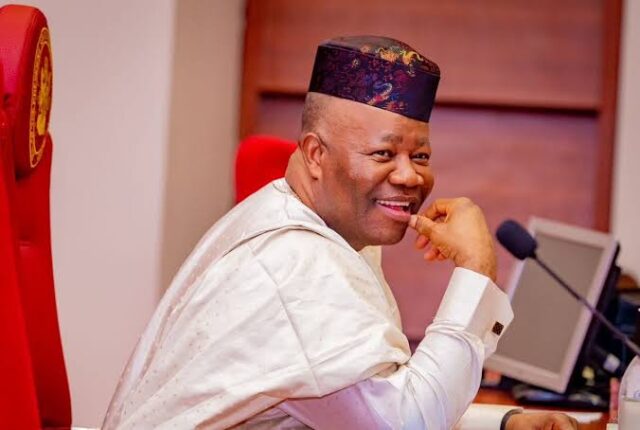
 

Senate President Godswill Akpabio has urged President Bola Ahmed Tinubu to prepare for a new wave of defections from opposition parties into the ruling All Progressives Congress (APC) as the country moves closer to the 2027 general elections.

Speaking in Owerri at the public presentation of a book authored by Imo State Governor Hope Uzodimma titled “Ten Years of Impactful Leadership of the APC Administration in Nigeria” and during the commissioning of projects by President Tinubu, Akpabio said several governors were already finalizing arrangements to join the APC.

The Senate President noted that Nigerians were beginning to witness tangible benefits from Tinubu’s reforms, adding that various sectors, students, farmers, and business communities, were already feeling the impact of the administration’s policies.

“Mr. President, with what you have achieved in the past two years, more opposition governors are on their way to the APC. The results of your policies are speaking for you. Nigerians can see the changes, and those who benefit directly are now testifying,” Akpabio said.

He praised Governor Uzodimma for documenting his decade-long political stewardship, stressing that leaders must take ownership of their achievements or risk having their stories distorted.

According to him, “Progress is not about rhetoric but about visible action. The projects commissioned today reflect quality and purpose, and the people of Imo State have every reason to celebrate their governor’s accomplishments.”

It will be recalled that Governor Umo Eno of Akwa Ibom and Governor Sheriff Oborevwori of Delta State recently dumped the Peoples Democratic Party (PDP) for the APC, a development seen as a boost for the ruling party ahead of the next election cycle.

Google search engine

PENGASSAN Calls Off Strike After Agreement With Dangote Refinery


The Petroleum and Natural Gas Senior Staff Association of Nigeria (PENGASSAN) has suspended its three-day strike following a resolution of its dispute with the management of Dangote Refinery.

The decision was announced on Wednesday at a press briefing by the union’s president, Festus Osifo, after a marathon meeting facilitated by the Office of the National Security Adviser (NSA).

Osifo confirmed that both parties had reached an agreement but cautioned the refinery’s management against violating the terms.

“If the company reneges on this agreement, PENGASSAN will not hesitate to respond,” he warned.

The strike, which began earlier in the week, stemmed from disagreements over the unionisation of some refinery employees.

The standoff had raised concerns over industrial harmony within the country’s energy sector.

With the suspension of the action, operations at the refinery are expected to normalize, though the union emphasized it would closely monitor the company’s compliance with the deal.

Google search engine

4 Everyday Struggles Tinubu Admits Nigerians Are Facing

In his Independence Day address to the nation, President Bola Ahmed Tinubu admitted that his government’s economic reforms have brought “temporary pains” but assured citizens that lasting relief is on the way.

The President acknowledged the daily challenges Nigerians face and outlined how his administration plans to address them.

1. Rising cost of living
Tinubu conceded that inflation and soaring prices are straining millions of households.

“These reforms have come with temporary pains. The biting effects of inflation and the rising cost of living remain a significant concern to our government,” he said.

He promised that measures in agriculture and food security will soon reduce the cost of food and other essentials.

2. Persistent power shortages
The President admitted that inadequate electricity supply continues to hinder homes and industries.

“We do not have enough electricity to power our industries and homes today, or the resources to repair our deteriorating roads, build seaports, railroads, and airports comparable to the best in the world, because we failed to make the necessary investments decades ago,” he explained.

Tinubu said long-term investments are underway to expand power generation and improve critical infrastructure.

3. Neglect of infrastructure
He acknowledged that decades of underinvestment left Nigerians coping with poor roads, overstretched schools, and fragile health systems.

“We must build the roads we need, repair the ones that have become decrepit, and construct the schools and hospitals that will serve our children and our people,” he said.

According to him, government spending is now being redirected to infrastructure projects that will benefit both the present generation and the future.

4. Burden of sacrifice
Tinubu admitted that the removal of fuel subsidy and foreign exchange reforms have intensified hardship but insisted the policies are already beginning to pay off.

“Upon assuming office, our administration inherited a near-collapsed economy. We chose the path of reform. I am pleased to report that we have finally turned the corner. The worst is over. Yesterday’s pains are giving way to relief,” he assured.

The President emphasized that his government’s vision goes beyond figures and policies, noting that he is aware of the pain Nigerians experience daily in their homes, markets, and on the roads.

He pledged that these sacrifices will yield long-term stability and growth.

For many citizens, however, the real measure of his words will be whether the promised relief translates into visible improvements in their everyday lives.

Google search engine

Detaining Nnamdi Kanu Equals Detaining Ndigbo – Ohanaeze To FG


The apex Igbo socio-cultural body, Ohanaeze Ndigbo, has renewed calls for the release of the Indigenous People of Biafra (IPoB) leader, Nnamdi Kanu, warning that keeping him behind bars is symbolic of keeping the entire Igbo nation imprisoned.

Speaking at the grand finale of the 2025 World Igbo Day in Awka, Anambra State, the President-General of Ohanaeze Ndigbo Worldwide, Senator John Azuta Mbatta, represented by his deputy, Prince Okey Nwadinobi, said Kanu’s freedom remained essential to peace, reconciliation, and Nigeria’s stability.

“The earlier Kanu is released, the better for the spirit of reconciliation and for Nigeria to move forward. His agitation for self-determination is constitutional, lawful, and legitimate,” Mbatta declared.

He explained that the World Igbo Day was not only a time to celebrate identity but also to remember victims of historic massacres of Igbo people in Northern Nigeria and to honour those who sacrificed for the dignity of the region.

Anambra State Governor, Prof. Chukwuma Soludo, also underscored the urgency of Kanu’s release, saying his presence was vital for Ndigbo to collectively determine their political future.

“We need Kanu at home so that Ndigbo can sit together, deliberate, and agree on whether to pursue secession or remain in Nigeria. It is time for one united voice, not scattered positions,” Soludo emphasized.

The event chairman, Senator Ned Nwoko, represented by his Special Assistant, renewed his push for the creation of Anioma State, which would bring the Southeast to parity with other major regions by increasing the number of Igbo states to seven.

As part of the celebration, Ohanaeze Worldwide conferred a chieftaincy title on Governor Soludo. He was honoured as Oku Nanye Ife (“the light that gives light”) by Igwe Chidubem Iweka III, the Chairman of the Anambra State Traditional Rulers’ Council and monarch of Obosi, in recognition of his role in hosting the anniversary.

Other traditional rulers including Igwe Bennett Emeka of Umueri, Igwe Chuma Agbala of Uke, and Eze Kingsley Akobundu Nwogu of Oyigbo in Rivers State, alongside Igbo women leader Iyom Josephine Anenih, applauded Ohanaeze for its courage and maturity in guiding the affairs of the Igbo nation.

Google search engine

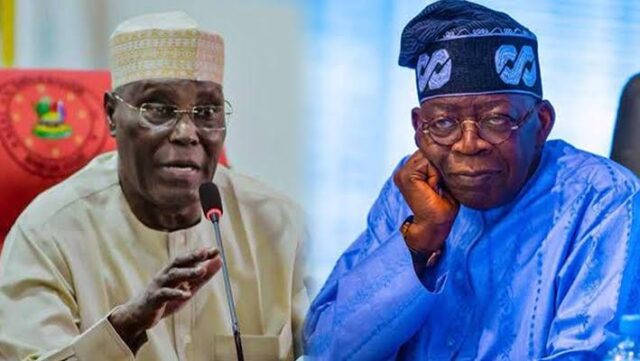
Your Leadership A Failure, Nigerians Suffering In Silence – Atiku Fires Back At Tinubu


Former Vice-President Atiku Abubakar has launched a scathing attack on President Bola Tinubu’s government, accusing it of indifference to the worsening plight of Nigerians as the nation marked its 65th Independence anniversary.

In a statement shared on X on Wednesday, Atiku, the 2023 presidential candidate, said millions of citizens were “reduced to refugees and beggars in their fatherland” despite Nigeria’s vast human and natural resources.

“Hunger is killing Nigerians, bandits are massacring communities, yet President Tinubu and his cabinet stand by, unmoved and uncaring,” Atiku charged.

The former vice-president argued that any government worthy of its mandate must prioritize the security and welfare of its people, insisting Tinubu’s administration had failed in that duty.

He urged Nigerians not to lose faith in democracy, stressing that the ballot box remained their only tool to correct bad governance.

“Oppressed and battered as our people may feel today, they will have the chance to sweep away this inept government at the next polls. That is the power no cabal can take away from the people,” Atiku said.

Reflecting on Nigeria’s journey since independence in 1960, Atiku lamented the nation’s underwhelming progress, describing it as a “giant moving painfully slow on feet of clay.”

He blamed decades of misrule and wasteful governance for the country’s struggles but expressed hope that with visionary leadership, Nigeria could still reclaim its rightful place globally.

Atiku formally left the People’s Democratic Party (PDP) in July 2025, citing irreconcilable differences.

He has since aligned himself with a coalition led by the African Democratic Congress (ADC).
Since assuming office in May 2023, President

Tinubu has implemented sweeping economic reforms, including the removal of fuel subsidies and the unification of foreign exchange rates.

While the policies have triggered inflation and widespread hardship, the government maintains they are necessary foundations for long-term stability and growth.

Google search engine

We Inherited A Dead Economy, But Reforms Already Bearing Fruit – Tinubu


President Bola Ahmed Tinubu has disclosed that Nigeria was on the verge of economic collapse when he assumed office in May 2023, forcing his administration to embark on sweeping reforms.

In a nationwide broadcast to mark Nigeria’s 65th Independence Anniversary on Wednesday, Tinubu described the state of the economy he met as “near-collapsed,” weakened by “decades of fiscal distortions and misalignments” that stunted real growth.

“Upon assuming office, our administration faced a stark reality. We could either continue with business as usual and watch our nation drift further into crisis, or take bold steps to reset the economy. We chose reform,” Tinubu said.

The President defended his controversial policy decisions, including the removal of petrol subsidy and the unification of the foreign exchange market, insisting that both were necessary to restore economic stability.

“For too long, fuel subsidies and multiple exchange rates served only a privileged few, while the majority of Nigerians saw little benefit from our commonwealth. By ending these distortions, we created the foundation for sustainable growth,” he explained.

The removal of subsidy, however, triggered sharp increases in the cost of fuel and basic goods, deepening hardship for millions of Nigerians.

Critics and some economists have accused the government of worsening living conditions, but Tinubu has remained steadfast.

“We chose the path of tomorrow over the comfort of today. Less than three years later, the seeds of those tough but essential choices are beginning to bear fruit,” he insisted.

The President’s Independence Day message comes amid continuing debate over whether the reforms will deliver long-term gains or entrench deeper inequality.

Google search engine

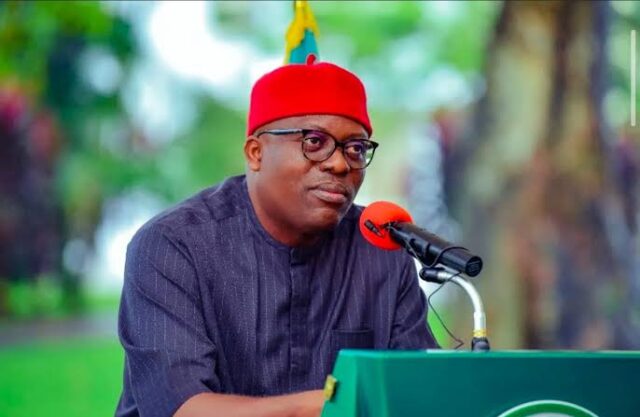
JUST IN: Gov Fubara Sacks All Rivers Commissioners, Others 


Rivers State Governor, Sir Siminalayi Fubara, has officially relieved his cabinet of their duties, bringing an end to the tenure of Commissioners and senior officials affected by the recent Supreme Court decision.

Speaking at a valedictory session in Government House, Port Harcourt, on Wednesday, Fubara expressed gratitude to the outgoing cabinet members for their service and contributions to the state’s progress over the past two years.

The development follows the nullification of their appointments by the Supreme Court, which effectively terminated their tenure.

Fubara, who himself returned to office after the lifting of a State of Emergency declared by President Bola Tinubu, used the occasion to stress the need for unity and collective responsibility in nation-building.

He urged Rivers people and Nigerians at large to support President Tinubu’s efforts at fostering peace, security, and prosperity across the country.

Reaffirming his dedication to the state, the governor pledged to serve with “renewed vigor and commitment,” while also extending warm wishes to Nigerians as the country marked its 65th Independence Anniversary.

Google search engine

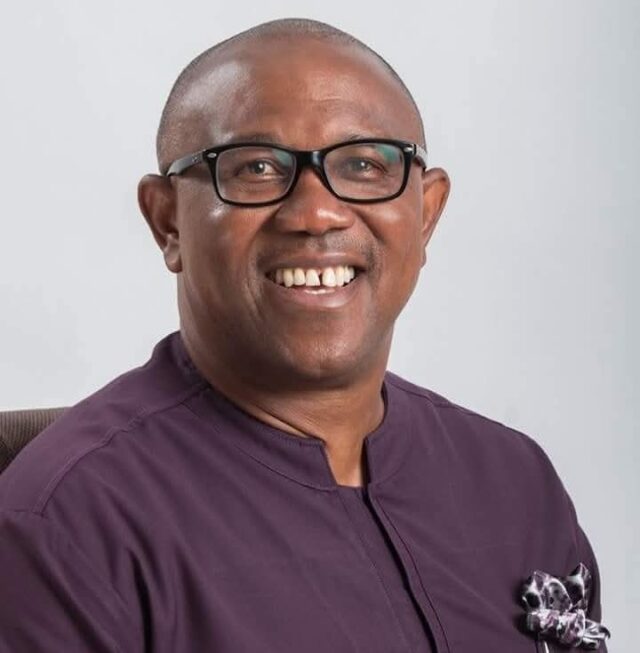
Lagos Govt Takes Obi To The Cleaners, Defends Trade Fair Demolition As Lawful

The Lagos State Government has pushed back against remarks made by former Labour Party presidential candidate Peter Obi regarding the recent demolition of structures at the Trade Fair Complex.

In a statement on Wednesday, Gbenga Omotoso, Commissioner for Information and Strategy, said Obi’s comments amounted to “misinformation and disinformation” intended to mislead the public.

Obi, during a visit to the complex, had praised traders for showing restraint and suggested that the demolished properties had valid approvals. The state, however, insists otherwise.

According to Omotoso, the owners of the affected structures never secured proper planning permits.

“The government offered a general amnesty last year, extended multiple times, to allow them regularise their documents. They ignored it,” he said.

He added that officials from the Ministry of Physical Planning and Urban Development faced hostility when they attempted to inspect the properties.

“They were denied entry, attacked, and the police had to step in to protect them,” Omotoso alleged.

The government also dismissed arguments that the Trade Fair Complex Management Board had authority to approve construction.

While the Board, set up by the Federal Government, manages leases and commercial activity, Omotoso stressed that it cannot authorise physical development without Lagos State approval.

“All developments in Lagos fall under the State’s physical planning laws, in line with the Nigerian Urban and Regional Planning Act of 1992,” he explained.

He cited the 2003 Supreme Court ruling in Attorney-General of Lagos State v. Attorney-General of the Federation, which upheld states’ powers to regulate land use.

Omotoso said the demolitions were carried out lawfully and warned against politicising enforcement.

“The question before us is simple: do we want a state governed by law, or one where emotions and political interests override due process?” he asked.

The government maintained that any construction or alteration without state-issued planning approval remains illegal and liable to demolition.

Google search engine

Nigeria’s Current Account Surplus Hits $5.28bn In Q2 2025, Says CBN

Nigeria’s current account surplus rose to $5.28 billion in the second quarter of 2025, up from $2.85 billion in the first quarter, according to new data released by the Central Bank of Nigeria (CBN).

The apex bank disclosed this in a Frequently Asked Questions (FAQ) update on its official website on Tuesday, noting that the increase reflects stronger external sector resilience and improved foreign exchange inflows.

Alongside the surplus, Nigeria’s external reserves climbed to $43.05 billion as of September 11, 2025, providing 8.28 months of import cover.

“The growth in external reserves serves as a source of confidence to citizens, foreign and local investors, and other economic agents,” the CBN stated.

The bank attributed the improvement to a combination of exchange rate stability, tighter monetary policy, and lower petroleum product prices, which contributed to a more favorable balance of payments outlook.

Between July 14 and September 11, reserves grew by more than $692 million.

The last time reserves approached the current level was September 2019, when they stood at $41.99 billion. By September 25, 2025, reserves had surpassed $42 billion for the first time in over six years.

President Bola Tinubu also highlighted the achievement in his Independence Day broadcast on October 1.

The CBN further explained recent changes to monetary policy. The Cash Reserve Ratio (CRR) for commercial banks was reduced from 50% to 45% to ease liquidity constraints and promote lending.

“The reduction seeks to ease the liquidity burden on commercial banks, thereby providing more room for productive lending and intermediation,” the CBN explained.

To counter excess liquidity from non-Treasury Single Account (TSA) public sector deposits, the MPC imposed a 75% CRR on such accounts.

“This measure ensures that these deposits do not contribute to inflationary pressure, which could undermine the current momentum of disinflation,” the bank noted.

It assured depositors that they will continue to have full access to their funds.

The apex bank also reaffirmed its commitment to balancing inflation control with real sector growth, particularly for small businesses.

“We are using conventional monetary policy tools to anchor inflation expectations while ensuring a stable and robust financial system,” it said.

Policy Rate and Corridor Changes
At its last MPC meeting, the CBN cut the Monetary Policy Rate (MPR) by 50 basis points, lowering it from 27.5% to 27%.

“The MPC lowered the MPR by 50 basis points to 27% in response to the sustained decline in inflation over the past five months and in anticipation of further decline in inflation for the remainder of 2025,” the bank said.

“Also, the reduction in the policy rate by the MPC would help to support economic recovery efforts of the government without undermining macroeconomic stability.”

In addition, the CBN revised the Standing Facilities corridor from an asymmetric +500/-100 basis points to a symmetric +250/-250 basis points around the MPR.

“Standing facilities refer to monetary policy instruments that help the CBN to provide or mop overnight liquidity in the banking system,” the bank explained.

By shifting to a symmetric corridor, the CBN hopes to enhance liquidity management, reduce overnight interest rate volatility, and strengthen interbank market efficiency.

“Overall, this would encourage more active interbank trading and enhance monetary policy transmission,” the statement concluded.

Google search engine

South African Court Convicts Julius Malema On Gun Charges


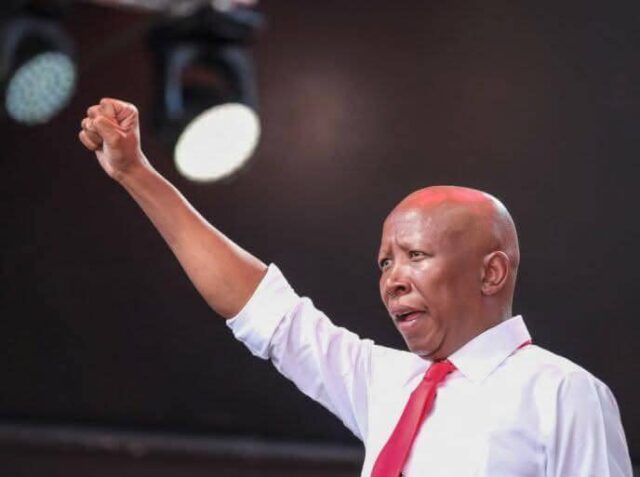
A South African court has found Julius Malema, leader of the radical Economic Freedom Fighters (EFF), guilty of violating gun laws after he fired an assault rifle during a political rally in 2018.

Malema, 44, and his former bodyguard were accused of discharging the weapon into the air at the EFF’s fifth anniversary celebration in the Eastern Cape province.

On Wednesday, the court ruled that his actions amounted to unlawful possession of a firearm, reckless endangerment, and related offences, according to the National Prosecuting Authority.

The conviction carries a possible sentence of up to 15 years in prison. The case has been adjourned until January 23, 2026, for pre-sentencing proceedings.

Malema, known for his fiery speeches and anti-capitalist rhetoric, was present in court when the judgment was delivered. Speaking defiantly to supporters outside the courtroom, he vowed to appeal.

“As a revolutionary, going to prison or death is a badge of honour. We cannot be scared of prison or dying for the revolution,” he declared.

This is not the first time Malema has faced controversy in court. In August, he was convicted of hate speech for remarks at a 2022 rally, where he urged supporters to “never be scared to kill.”

He has also drawn criticism for singing the apartheid-era struggle song “Kill the Boer, kill the farmer,” which many argue incites violence against South Africa’s white minority.

Despite mounting legal battles, Malema remains a polarising figure in South African politics, often praised by his supporters as a fearless voice for economic justice, while detractors accuse him of stoking division and unrest.

Google search engine

MOST COMMENTED

- Advertisement -
Google search engine