Home Blog Page 514

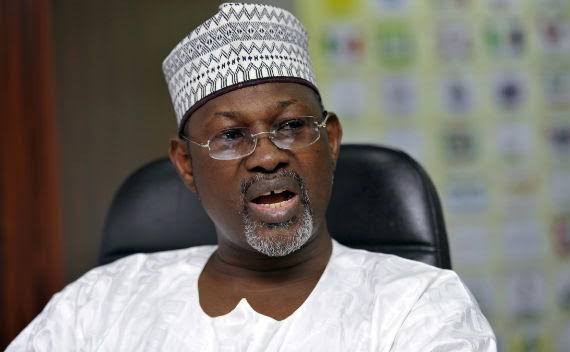
2027: Electronic Transmission Of Results Must Be Mandatory – Prof. Jega


Professor Attahiru Jega, former Chairman of the Independent National Electoral Commission (INEC), has urged that the Electoral Act (2022) be amended to make electronic transmission of election results compulsory in future polls.

Speaking at the Platform Nigeria event, the June 12, 2025 edition organized by The Covenant Nation Global in Lagos, Jega presented a paper titled ‘Required reforms for stronger democratic institutions in Nigeria’.

He emphasized the need to expand the use of technology in elections to boost transparency and accountability.

He referenced the controversies surrounding electronic result transmission during the 2023 general elections, which led to widespread doubt about the presidential election outcome.

Specifically, Jega noted the need to clarify the unclear provisions on electronic transmission.

“For example, remove ambiguity in Section 64 of Electoral Act 2022, in respect of the stages for comparing physical and electronic results.”

“Review appointment process for INEC Chairman, National Commissioners and Resident Electoral Commissioners, remove or minimise executive/presidential influence, so as to further strengthen the independence of the electoral commission,” he said.

Regarding the frequent defections within Nigeria’s political scene, Jega recommended banning cross-carpeting for elected executives and legislators.

He further advocated for empowering INEC at the federal level and State Independent Electoral Commissions (SIECs) at the state level to promptly prepare and conduct by-elections whenever defections occur.

Jega also suggested introducing diaspora voting for eligible Nigerians abroad during presidential elections, along with strict regulation of campaign finances.

This would include establishing an agency to monitor campaign funds and enforce penalties.

Reflecting on Nigeria’s democratic journey, Jega expressed concern over the risk of sliding back into authoritarianism.

He explained, “One of the main challenges Nigeria faces relates to how to prevent reversal to authoritarian rule, ‘in the context of epileptic democratisation, since 1999, when we commenced transition from authoritarian military rule to civil democratic rule.’”

He added, “The governance trajectory we seem to have taken has restrained our country from making serious progress from mere rule by civilians to desirable democratic rule and good democratic governance.”

Jega concluded with a stark warning, “It is regrettable that after such a long time in transition to democratic rule, rather than democratic consolidation, authoritarian reversal is hanging over the country like the sword of Damocles!”

Google search engine

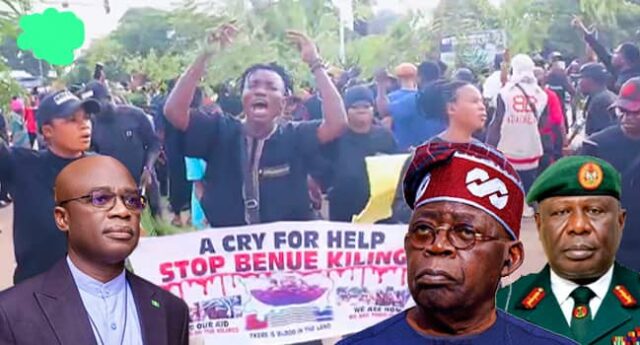
Killings: 17 LGAs Under Siege – Benue Governor Counters FG


Governor Hyacinth Alia has pushed back against claims that the Federal Government has not supported Benue State in tackling the violent attacks by armed groups.

“If he (President Bola Tinubu) didn’t have an understanding of what is going on, he won’t be giving us full support,” Alia said during The Morning Brief programme on Channels Television on Monday.

According to him, “Seventeen local governments out of 23 were under siege and then we fought it down to nine local governments. We fought it down to six and now to three. It came down because of the full support we got from the Federal Government.”

“The last time we had some severe attacks, three security units were assigned to us from the Federal Government. They came in and there was a huge shift. Those who had occupied the spaces in the local governments had to leave,” he added.

Despite this, fresh violence continues to plague the state.

On Friday, June 15, 2025, at least 59 people were killed in a night attack in Yelewata, Guma LGA, among them military and civil defense personnel.

This incident followed deadly assaults in April, where about 60 people were killed in Ukum and Logo LGAs, and another 42 in May in Gwer West LGA.

Pope Leo XIV condemned the “terrible massacre” as “extreme cruelty,” and public frustration has triggered protests and outrage nationwide.

Opposition leaders, Atiku Abubakar and Peter Obi have also criticized the government’s security response, calling for it to fulfill its constitutional role.

Alia expressed condolences to the families of those affected and said the support from the Federal Government was evident in the recent visit by Chief of Army Staff, Lt-Gen Olufemi Oluyede.

On the root of the violence, Alia explained: “Before now, we are talking about the farmer-herder crisis. And now, it graduates from there and became the case where the herders came in but the armed men were amongst them and we tagged them: ‘the armed herders.’

“Now, what we experience generally is that the herds are not being brought but those who are in the frontline carry AK-47 and AK-49. What are their aims? They don’t even come with cows. They attack, they kill and after one or two weeks, and a number of people now come back to occupy.”

He also raised concerns about insider involvement: “It is very possible that members of the state may have been recruited into the external militia. We can’t deny that because one or two names have been mentioned but traditionally, there are some bandits within the territories.

“A thief will not just come into a community unless there is someone within the community who lives nearby,” he noted.

The governor blamed the ongoing threat in part on the state’s porous borders: “We share borders with Cameroon, with Taraba and with Nasarawa,” he said.

“They were not necessarily Nigerians speaking the Hausa we know or the Fulanis. When you come to the axis of Nasarawa.”

“This is where we have a lot of challenges. There are a number of happenings within Nasarawa State and there were routes where these people come in through any time they are shifted out of Benue. What we see now if anyone describes it as a reprisal, we wouldn’t say no to that.”

Alia added that his Nasarawa counterpart, Governor Abdullahi Sule, had shared intelligence about the attackers’ movement.

“The terrorists were coming into his state through Benue. When I told him that the havoc had already been caused at Yelewata in Benue, then he said probably, they came and made a touchdown in Yelewata in Benue and were going back because he said one person was macheted in Nasarawa State.”

Google search engine

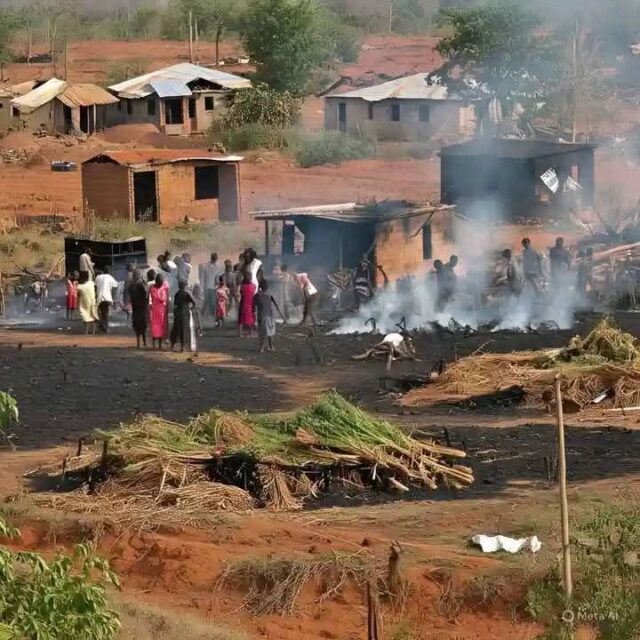
One Family Loses 23 Members As Deadly Attack Ravages Benue Community, Several Others Burnt Alive

Tsegba Gbam Ayua is among the many devastated residents still coming to terms with the brutal attack on Yelewata community in Guma Local Government Area of Benue State.

The assault by armed invaders claimed the lives of scores, including Ayua’s wife and four children.

Still grappling with the overwhelming loss, Ayua shared his harrowing experience and fears of never fully recovering from the trauma.

“I had been displaced from Ayua in Nasarawa State for over two years and was taking refuge with my family in Yelewata. A few days before the incident, I travelled back to Nasarawa to do menial jobs so I could support my family,” he recounted.

He explained the tragic moment he learned about the attack.

“Then, around 11 pm on Friday, I got a call that our host community was under attack. I rushed back early Saturday morning, only to find the worst nightmare of my life. My wife and four children had been burned to ashes inside the market stalls where they were sleeping. Over 100 corpses were recovered in the area.” Ayua said he buried his family the same day and is struggling to accept the tragedy.

Prince Aondona Isaka Ornguga also spoke emotionally about his devastating loss of at least 23 family members during the attack.

Fighting back tears, Ornguga, a former Senior Special Assistant to ex-Governor Samuel Ortom on Local Government Administration, described the scale of devastation on the Internally Displaced Persons (IDPs) in Yelewata, a rural border town between Benue and Nasarawa States.

He said the 23 victims were related to him through his maternal lineage, sharing a poignant recollection

“I spoke with two of the victims, Victor Utim and Mathew Iormba, about three weeks ago. They are my first cousins from Tse Tarbee, my mother’s village. While Utim just wrote JAMB, and we were working on getting admission for him. Iormba told me he went to check his business around there.”

Ornguga lamented the cruel manner of their deaths, “Iormba was a pharmacist.

He had a tall dream, but look at how it all ended for them. And for Utim, this is not what we discussed.”

Mama Victoria Tyobee, a survivor, described her narrow escape.

“We were sleeping when, about midnight, I heard a gunshot, and looking through the window, I saw one of the attackers with a weapon standing right by my house. As I was wondering what to do next, there were sporadic gunshots, and the man fled into the nearby bushes,” she recounted.

“It was after a while that I mustered the courage to step out of the house. I later discovered that my relatives were not so fortunate. We lost three of them. It’s indeed a very sad experience.”

Besides these personal stories, many others remain untold from the horrific event, which began on Friday night and extended into early Saturday morning.

Reports indicate at least 107 people were killed, with many others wounded and receiving treatment in hospitals.

“They burnt people alive, entire families: husbands, wives, and children. It’s already about 107 dead bodies recovered and still counting. Some of the victims had fled previous attacks, only to be slaughtered here,” said one local resident.

Multiple sources confirmed that the attackers doused roadside stalls and makeshift shelters with petrol before setting them ablaze.

The victims were mainly IDPs from communities like Antsa, Dooka, Kadarko, Udei, and Giza, who had sought refuge in Yelewata, trusting the presence of nearby security checkpoints would offer protection.

Matthew Mnyan, a community leader in Yelewata and former acting Chairman of the Benue State Universal Basic Education Board (SUBEB), shared a grim account.

“A single family of 15 was wiped out. Children had their throats slit. Toddlers were killed like animals. It’s heartbreaking.”

Mnyan warned the death toll could surpass 200 as they continued cataloging bodies, including those who died en route to medical care.

Chief Dennis Denen Gbongbon, a prominent farmers’ leader, confirmed that most victims were Tiv farmers and displaced persons.

“These people were already living on the margins. Now they’ve been reduced to ashes. I saw the bodies—many of them burnt beyond recognition,” he lamented.

Eyewitnesses described a terrifying two-hour siege that overwhelmed local youth and police who tried to resist the attackers.

“They came in two groups. While we tried to hold off those advancing from the west, another group attacked from the east and overran us,” one resident revealed.

Meanwhile, a separate attack was reported in Daudu, about a 20-minute drive from Makurdi, where armed herders ambushed military personnel responding to the invasion threat.

The ambush claimed the lives of two soldiers, including a captain, and one Civil Defence personnel. A policeman remains missing.

A Daudu resident, identified only as Ikyott, said security personnel and local youths mounted a timely defense.

“Our youths and soldiers under Operation Whirl Stroke (OPWS) mounted a strong resistance, killing some of the attackers. Unfortunately, some security personnel also lost their lives in the process,” he said.

Guma LGA Chairman Maurice Orwough confirmed the attacks without disclosing fatality numbers, stating many were killed and over 26 hospitalized.

The Special Adviser to the Governor on Security and Internal Affairs, Chief Joseph Har, confirmed the incidents but noted that full details were still being gathered.

“It’s true. I’m aware of the attacks in Yelewata and Daudu. But I’m not on the ground to give the complete picture yet.”

Similarly, Benue police spokesperson DSP Udeme Edet acknowledged the Yelewata attack, confirming tactical teams had been deployed and some attackers neutralised.

“Unfortunately, lives were lost. We are still pursuing the perpetrators,” she said without casualty figures.

Lt. Zubair Ahmad, Public Relations Officer of OPWS, has remained silent on the deaths of security operatives.

The massacre sparked mass protests from youths and civil groups demanding government action.

The first wave of protests began on Saturday evening in Daudu, where demonstrators blocked the Lafia–Makurdi highway for hours.

Security forces, led by OPWS Commander Major General Moses Gara, eventually persuaded them to clear the road.

On Sunday morning, protests escalated as more demonstrators gathered at the Wurukum Roundabout in Makurdi despite heavy security presence, including police, army, NSCDC, and NDLEA operatives, with an Armoured Personnel Carrier stationed at the junction.

By 9:30 am, protesters occupied the roundabout to demand justice, but police fired teargas to disperse them around 11 am, causing chaos with shattered vehicle windows near the new bridge linking North Bank to the city center.

Despite this, protests regained momentum at other Makurdi locations such as Gyado villa and along George Akume Road. Social media activist #VeryDarkMan joined the demonstrations calling for accountability.

Benue State Commissioner of Police Ifeanyi Emenari appealed for calm, urging youths to suspend protests given renewed federal security intervention.

“The Inspector General of Police has taken over the security of Benue State,” he said, adding that special forces had arrived and were actively pursuing bandits.

“We have already made some arrests. The governor has given us all the necessary support.”

However, protests continued as residents demanded lasting solutions to recurring attacks.

Governor Hyacinth Alia condemned the massacre, stating that “nothing should warrant the taking of life.”

His deputy, Barr. Sam Ode, visited the attack site under his directives to assure the community that the government is committed to peace.

Alia, through his Chief Press Secretary Tersoo Kula, emphasized that the state government is engaging federal security agencies, traditional rulers, and stakeholders to strengthen security interventions and provide lasting solutions.

Retired DSS Senior Intelligence Officer John Noah advised a gradual approach to ending insecurity, stressing the importance of traditional institutions engaging youths for sensitization and intelligence gathering.

Following the attack, Benue State Emergency Management Agency (SEMA) Executive Secretary Sir James Iorpuu led efforts to relocate victims to Makurdi.

He credited collaborative support from the Commissioner for Trade and Investment, the Peace Commission’s Director-General, Benue Links, and UNHCR for the evacuation.

“It is with a heavy heart that I welcome you to the International Market emergency camp, established by Benue SEMA to accommodate victims of last night’s brutal assault on Yelewata community,” Iorpuu said.

Operation Whirl Stroke Commander Major General Moses Gara described the attacks as “barbaric and unacceptable,” and outlined plans to reassess troop deployment and develop decisive strategies to stop the violence.

During visits to affected communities, General Gara engaged leaders and stakeholders, assuring them of the military’s commitment.

“Today, I stand not just as a commander, but as a fellow Nigerian who understands your pain and suffering. The Nigerian security establishment is with you. We are not here to observe; we are here to act. We will pursue the perpetrators of these heinous crimes and ensure they face justice,” he stated.

In a statement, OPWS spokesman Lt. Zubairu Ahmad affirmed intensified intelligence gathering, additional troop deployments, and robust operational strategies to prevent further incursions.

Community representative Iorkyaa Emmanuel expressed confidence in the military and pledged the community’s support for sustained security presence to deter future attacks.

President Bola Ahmed Tinubu has directed security chiefs to enforce his earlier mandate to restore peace in Benue State, calling on Governor Alia to initiate reconciliation efforts among communities.

His Special Adviser on Information and Strategy, Bayo Onanuga, said security agencies are now directing operations on the ground.

Describing the massacre as “inhuman and anti-progress,” President Tinubu urged political and community leaders to avoid inflammatory statements that worsen tensions.

Former Vice President Atiku Abubakar condemned the killings as a national emergency and called for immediate investigations by federal and state governments.

Former Senate President Bukola Saraki also decried the attacks, highlighting the tragedy that many victims were already displaced persons living in camps.

Pope Leo also prayed for the victims during the Sunday’s holy mass.

Google search engine

Tinubu Orders Intelligence Deployment To Benue, Urges Governor Alia To Lead Peace Talks


President Bola Ahmed Tinubu has reaffirmed his commitment to ending the persistent violence in Benue State by ordering the nation’s security chiefs to immediately enforce earlier instructions aimed at restoring peace in the troubled region.

In a statement issued by his Special Adviser on Information and Strategy, Bayo Onanuga, the presidency confirmed: “President Bola Tinubu has directed security chiefs to implement his earlier directive to bring lasting peace and security to Benue State.”

The renewed presidential order follows the recent deadly raid on Yelewata community on June 14, which reportedly left over 100 people dead.

The attack, described as one of the bloodiest in recent memory, has sparked outrage across the country and renewed calls for stronger action.

Acting on Tinubu’s directive, security and intelligence teams, including police and military officials, have now been deployed to Benue to oversee operations and reestablish law and order.

The statement further revealed that the president has urged the state governor to take an active role in reconciliation efforts.

“convening reconciliation meetings and dialogue among the warring parties to end the incessant bloodshed and bring lasting peace and harmonious coexistence between farmers, herders, and communities.”

Highlighting the urgency of the situation, the statement added: “President Tinubu renewed his order in the wake of the latest round of reprisal attacks that led to the death of many people.”

“On the president’s directive, intelligence chiefs, the police and the military have arrived in the state to direct security operations and restore sanity.”

Condemning the spate of killings as unacceptable, the president labeled the acts as “inhuman and anti-progress,” urging security agencies to respond quickly and impartially.

He said: “The latest news of wanton killings in Benue State is very depressing. We must not allow this bloodletting to continue unabated. Enough is now enough. I have directed the security agencies to act decisively and arrest perpetrators of these evil acts on all sides of the conflict and prosecute them.”

President Tinubu also appealed to both political and community leaders to avoid inflammatory rhetoric that could exacerbate tensions.

“Political and community leaders in Benue State must act responsibly and avoid inflammatory utterances that could further increase tensions and killings,” he warned.

Addressing Governor Hyacinth Alia directly, the president called on him to embrace leadership through unity and inclusive dialogue.

“This is the time for Governor Alia to act as a statesman and immediately lead the process of dialogue and reconciliation that will bring peace to Benue.”

“Our people must live in peace, and it is possible when leaders across the divides work together in harmony and differences are identified and addressed with fairness, openness and justice,” Tinubu said.

He urged all stakeholders in the conflict to control elements within their groups who provoke violence and retaliation: “rein in those who go out to cause provocations and ignite reprisal attacks.”

International human rights organization Amnesty International condemned the June 14 massacre, asserting that government measures have so far failed to stop the violence.

“The horrifying killing of over 100 people by gunmen that invaded Yelewata from late Friday into the early hours of Saturday shows the security measures government claims to be implementing in the state are not working,” Amnesty said.

The group added that the situation in Benue has become a humanitarian crisis and insisted that the government must “immediately end the almost daily bloodshed in Benue State and bring the actual perpetrators to justice.”

DAILY GAZETTE reported that three security officers were killed and 16 others injured in the Yelewata incident.

The attack forms part of a disturbing pattern; only days earlier, on June 10, three young men were murdered in Edikwu-G’Icho, Apa LGA, while another individual, Sunday Dutse, was ambushed and killed along the Odugbeho-Ogbaulu road in Agatu LGA.

Governor Alia, in a recent interview with Channels Television, painted a grim picture of the situation in the state.

“We are under siege,” he said, adding that the violence was “directed, planned, and executed,” and not merely random clashes.

“We are receiving intel, and 60 to 65 percent of it has proven accurate,” the governor revealed, warning that what the state is facing are “organised acts of terrorism.”

Google search engine

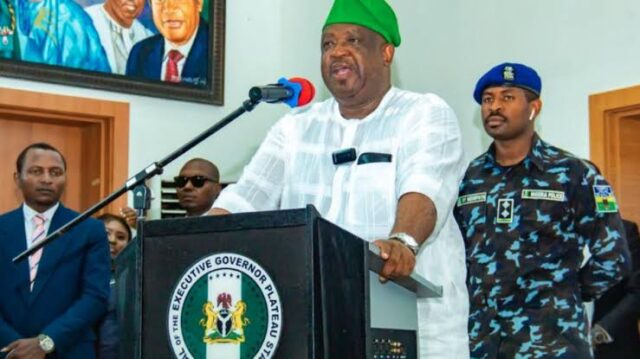
Reports Of My Defection To APC Fake, Misleading – Governor Mutfwang


Plateau State Governor, Caleb Mutfwang, has firmly stated that he has no plans to defect from the People’s Democratic Party (PDP) to the All Progressives Congress (APC), dismissing widespread speculation as unfounded.

His declaration comes on the heels of notable defections within the PDP, including those of Delta State Governor Sheriff Oborevwori and Akwa Ibom State Governor Umo Eno, who recently crossed over to the APC, taking their entire party structures with them.

Amid the realignments, calls from within the APC have surfaced, encouraging Mutfwang to join the ruling party, a push that has heightened political tensions in Plateau State.

Responding to the speculation during a recent media chat, Mutfwang maintained that he remains loyal to the PDP, describing Plateau as a stronghold of the party.

According to him, any shift would amount to turning his back on the people who elected him.

“I haven’t had that conversation [of leaving PDP for APC] with anyone. The media has speculated a lot, but nothing has happened,” Mutfwang said.

He added that certain groups were behind the rumour.

“There are two or three groups peddling that rumour. One group is well-intentioned. They know the APC has never really existed on the Plateau, I say that with every sense of responsibility. They’ve been in government by fraud for the past eight years.”

Reflecting on the 2015 elections, Mutfwang recounted how results were allegedly manipulated.

“In 2015, they didn’t win that election. There was a wave of anger in the PDP that led to anti-party activities, but even then, the APC did not win. I was a local government chairman at the time. We adjourned the coalition at 8 pm to resume the next morning. But by 2 am, when I woke up to urinate, I found that the results had already been declared,” he recalled.

He further asserted that the PDP was the true winner of the 2019 governorship election.

“I remain convinced that the PDP’s late candidate, General Jeremiah Usaini, won the 2019 election, but the shenanigans in the system saw someone else declared.”

Mutfwang also questioned the credibility of the APC’s leadership in Plateau.

“The majority of those who have led APC in Plateau carry a trust deficit. There are genuine APC members who wish we could lend our credibility to them. But Plateau politics doesn’t work like that,” he said.

He emphasized that the PDP still holds popular support across the state.

“The majority of Plateau people have always been PDP, and they remain PDP. Even during the last eight years, some local governments couldn’t conduct elections out of fear of losing.”

Mutfwang reiterated his loyalty to the PDP and the people who supported his emergence as governor.

“That’s why I have always said my political future will be decided by God and the people of Plateau State. Wherever Plateau people go, that’s where we go.”

“For us, this isn’t even a matter for discussion. I am a bona fide member of the PDP. I remain so. And I’m very optimistic that very soon, the PDP crisis will be a thing of the past,” he added.

Addressing the internal issues that had previously rocked the PDP, including the Court of Appeal judgments that resulted in the loss of all legislative seats in the state to the APC, Mutfwang, who also serves on the PDP’s national reconciliation committee, stated that the problems had been resolved and that the party is now united.

Google search engine

APC Secretary Slumps, Dies


Abdullahi Bala, the Ward Secretary of the All Progressives Congress (APC) in Gwargwada, Kuje Area Council of the Federal Capital Territory (FCT), has passed away after collapsing while returning from his farm.

His younger brother, Ibrahim Bala, confirmed the incident, stating that Abdullahi had gone to the farm on Wednesday afternoon with two of his younger siblings and appeared to be in good health.

“Abdullahi had just finished work and was walking back home with two of our brothers when he suddenly slumped. They held him and quickly called someone, who arrived with a motorcycle and rushed him to the hospital,” Ibrahim recounted.

Sadly, he said, Abdullahi was confirmed dead upon arrival at the hospital. The deceased has since been buried in accordance with Islamic rites.

Reacting to the tragic incident, Danladi Abdullahi Galadima, a chairmanship aspirant for Kuje Area Council, expressed deep sorrow over the sudden demise of the party stalwart.

Galadima paid a condolence visit to the late Abdullahi’s family in Gwargwada on Saturday.

He described the late APC secretary as a dedicated and loyal party member.

“I received the news of his death with great shock,” Galadima said.

While consoling the grieving family, he urged them to take solace in faith. “Every soul shall taste death,” he added, quoting from the Qur’an.

He prayed that Allah grants Abdullahi Bala eternal rest and gives his family the strength to bear the loss.

Google search engine

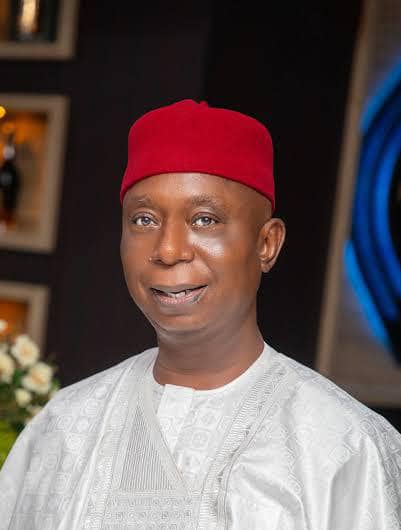
Creation Of Anioma State a Done Deal – Senator Ned Nwoko


Senator representing Delta North Senatorial District, Prince Ned Nwoko, has declared that the creation of Anioma State is practically finalized, assuring stakeholders of the All Progressives Congress (APC) of strong progress.

Speaking on Saturday at his hometown of Idumuje-Ugboko in Aniocha Local Government Area, Senator Nwoko emphasized that significant strides had already been made in the Senate towards the realization of Anioma State.

“We are on course. The technical committee will be inaugurated in Asaba, to help me to work towards actualising the creation of Anioma state,” he said.

Nwoko stated that 75 senators are backing the bill and confirmed that the process had moved past the Senate committee stage.

“If you were at Agbor during APC stakeholders gathering, you heard when the National Chairman of the APC, Alhaji Umar Ganduje said the creation of Anioma State is a done deal.

“We have moved from the committee stage of the process to public hearing coming up in Uyo, Akwa Ibom State. Thereafter, we will come back to the Senate for third reading of the bill for the creation of Anioma State,” the senator assured.

Also lending his support, APC chieftain Chief Emma Ejiofor called on stakeholders to remain united in pursuit of the state creation goal.

He cautioned that any lawmaker from Delta North who refuses to back the initiative could face consequences.

“Any member of the Delta State House of Assembly from the senatorial district who fails to support the cause would face recall by constituents,” he warned.

Adding his voice, Hon. Nicholas Ossai, a former member of the House of Representatives, stressed the importance of collective support for the initiative.

“We must support Senator Ned Nwoko to achieve this feat because when we have our state, we will have more local government areas created, and many other benefits in the new state. Anioma State should be supported by everybody.”

Meanwhile, former Speaker of the Delta State House of Assembly, Hon. Victor Ochei, called for reconciliation and unity within the APC, especially in the build-up to the 2027 elections.

“We are not having a party to divide us. We are having a party to unify and unite everybody. We must unite the party, particularly in Delta North,” Ochei stated.

Google search engine

I Aim To Redefine Governance Through Representation – Rep Member Prof. Nnamchi


Honourable Professor Paul Sunday Nnamchi, representing Enugu East/Isi Uzo Federal Constituency, has pledged his unwavering dedication to people-focused leadership, asserting that his goal is to “redefine governance through quality representation.”

Representing a constituency that spans both rural and urban areas in Enugu State, Prof. Nnamchi acknowledged the substantial challenges his people face, including poverty, deprivation, limited federal presence, and worsening insecurity.

“Some communities, such as Eha-Amufu and Ikem, have been ravaged by banditry attacks, affecting their livelihoods with several of the inhabitants displaced from their ancestral homes and their life-savings destroyed,” he noted.

To confront these difficulties, he said his approach involves collaboration and strategic planning.

“I need to build bridges, engage in compromises, to come up with initiatives and programmes to empower my constituents,” he emphasized.

A core focus of his legislative mission, Prof. Nnamchi revealed, is investing in youth development, particularly through Information and Communication Technology (ICT).

He explained that he has launched several training programs to equip young people with relevant digital skills that can empower them economically.

These programs, he said, aim to make youths self-reliant and entrepreneurial in a changing job market where formal employment is increasingly scarce.

In addition to skill acquisition initiatives, Prof. Nnamchi highlighted his commitment to education by awarding over 200 tertiary education scholarships to students from financially disadvantaged backgrounds.

“Through these efforts,” he said, “I have continued to encourage the youths to take charge of their own futures and create opportunities for themselves and others.”

Reflecting on Nigeria’s 26 years of uninterrupted democracy, he praised the current 10th National Assembly as an institution focused on results.

“The 10th National Assembly is an impact-driven legislature that has refined representative governance as a continuous service to the people and not a one-off political exercise,” he observed.

He further stressed that lawmakers are being encouraged to sponsor bills and motions that foster governance, accountability, economic growth, and uphold public trust.

Addressing the recurring issue of post-election defections, Prof. Nnamchi pointed to deeper systemic flaws within the political landscape.

“When parties focus solely on capturing power rather than cultivating principles, loyalty becomes transactional and governance loses its moral anchor,” he said.

According to him, this absence of ideological depth and political education in party structures leads to instability and public disillusionment.

“This failure erodes public trust and reduces politics to a game of convenience, not conviction,” he warned.

Prof. Nnamchi called for a new perspective, one that prioritizes the meaning of each vote rather than just the voting process itself.

“We must begin to listen not just to the ballots,” he stated, “but to the voices, the hopes, and the mandates that gave them life.”

He emphasized that Nigerian citizens are becoming more politically conscious and are increasingly demanding that their mandates be honored.

“Nigerian people are no longer passive observers of power plays; they are increasingly concerned with where their mandate is best protected, where it is translated into real service, and where it is not betrayed for personal ambition,” he concluded.

“In this era,” Prof. Nnamchi affirmed, “the legitimacy of leadership will rest not in party lines, but in the ability to faithfully steward the will of the people.”

Google search engine

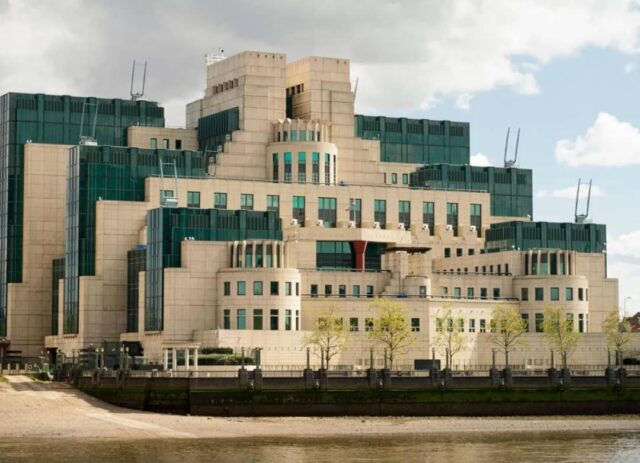
MI6 Names First Female Chief In 116-Year History


In a historic move, the UK’s Secret Intelligence Service, commonly known as MI6, has appointed its first female chief since the agency was founded more than a century ago.

Blaise Metreweli will succeed Sir Richard Moore later this year, becoming the 18th person, and the first woman, to take the helm of Britain’s foreign intelligence service.

Metreweli, 47, has spent over two decades in intelligence, having joined MI6 in 1999.

Currently serving as Director General “Q”, she is responsible for the agency’s cutting-edge technology and innovation, a division that plays a crucial role in shielding the identities of British agents and staying ahead of global surveillance threats, particularly from countries like China.

“I am proud and honoured to have been asked to lead MI6,” Metreweli said in a statement. “MI6 plays a vital role, with MI5 and GCHQ, in keeping the British people safe and promoting UK interests overseas. I look forward to continuing that work alongside the brave officers and agents of MI6 and our many international partners.”

Prime Minister Sir Keir Starmer praised the appointment as “historic,” especially in an era when intelligence work is “more vital than ever.”

Foreign Secretary David Lammy also backed the decision, calling Metreweli the “ideal candidate” to confront rising instability and modern security threats.

Metreweli studied anthropology at the University of Cambridge before entering the intelligence world.

Over her career, she has held senior positions not only in MI6 but also in MI5, the UK’s domestic security agency, focusing extensively on threats in the Middle East and Europe.

In 2024, she was recognised with the Companion of the Order of St Michael and St George (CMG) for her contributions to British foreign policy.

While speaking under the alias “Director K” in a 2021 interview with The Telegraph during her MI5 tenure, she discussed the increasingly complex threat landscape.

“The threats we are looking at primarily exist around protecting government, protecting secrets, protecting our people, so counter-assassination, protecting our economy, sensitive technology and critical knowledge,” she said.

She warned that Russian state activity “remains a threat” and noted that China is “changing the way the world is,” presenting both “amazing opportunities and threats” to the UK.

As MI6 chief, Metreweli will take on the title of “C”, a role named after the agency’s founding head, Captain Mansfield Cumming, who famously signed all correspondence with a green-inked “C.” To this day, MI6’s leader continues the tradition.

The Chief of MI6 reports to the Foreign Secretary and sits on the UK’s Joint Intelligence Committee, working with leaders from MI5, GCHQ, and other agencies to analyse threats and advise the Prime Minister.

While spy fiction often romanticises the idea of a “licence to kill,” actual covert operations involving lethal force require authorization under Section 7 of the Intelligence Services Act 1994, a process governed by legal oversight and granted only by the Foreign Secretary.

As she assumes the post, Metreweli will confront a rapidly evolving threat landscape.

MI6 continues to face challenges from adversaries including Russia, China, Iran, and North Korea, whose cooperation in global destabilisation efforts has grown.

Beyond geography, the digital age is also changing the nature of espionage. As more intelligence is gathered through satellites and online monitoring, human intelligence, or HUMINT, must adapt to remain effective and relevant.

Outgoing chief Sir Richard Moore, who has led MI6 since 2020, expressed full confidence in his successor.

“Blaise is a highly accomplished intelligence officer and leader, and one of our foremost thinkers on technology,” he said.

“I am absolutely delighted with her appointment. It is truly historic.”

Both Sir Keir and David Lammy offered their thanks to Sir Richard for his years of service, while expressing optimism about the leadership Blaise Metreweli will bring to MI6’s next chapter.

Google search engine

YPP Expels Secretary Over Alleged Misconduct


The Akwa Ibom State chapter of the Young Progressives Party (YPP) has expelled its State Secretary, Kelvin Umoh, citing alleged gross misconduct, blackmail, and actions said to be detrimental to the party’s peace and integrity.

The decision was announced in a communiqué released after a general meeting of the party held on Sunday in Uyo, the state capital.

The meeting, chaired by the Acting State Chairman, Elder Wisdom Udoka, also named Mr. Moses Antigha as the new Acting Secretary.

According to the communiqué signed by Udoka and 125 executive members, the expulsion followed consultations with relevant party organs and was in line with the YPP constitution.

It stated that Umoh had allegedly held “secret meetings with selected members to perpetrate violence during general meetings,” a move seen as a disruption to the party’s progress and internal unity.

The party further accused Umoh of undermining its image by contradicting official decisions in unauthorized media appearances.

“The meeting expressed disappointment with Umoh for publicly contradicting official party decisions through unauthorised media appearances, thereby allegedly bringing the party into disrepute,” the communiqué stated.

Another key issue was Umoh’s alleged refusal to cooperate on critical financial procedures.

“It also frowned at his refusal to sign essential financial documents, including a cheque for the remittance of 10% of funds generated from nomination form sales after the 2024 Local Government Elections, until compelled.”

These actions were described as a breach of party regulations, especially Section 36.7 of the YPP Constitution, which prohibits public disclosure of internal matters, forming parallel structures, and disobedience to party directives.

“In light of these developments, the Young Progressives Party has appointed the Deputy State Secretary, Mr. Moses Antigha, as the Acting Secretary of the YPP Akwa Ibom State Chapter and directed Ambassador Kelvin Umoh to return all party documents and property in his possession to the YPP State Secretariat within 24 hours,” the communiqué added.

Reaffirming his leadership, Udoka called on members to remain steadfast in their commitment to the party’s values and mission.

He described the meeting as “a defining moment in the party’s history, a moment of rebirth, a renewed sense of purpose, and an unwavering commitment to the core ideals of social democracy, inclusive governance, and accountability, which form the foundational pillars of the YPP.”

Google search engine

MOST COMMENTED

- Advertisement -
Google search engine