Home Blog Page 578

FG Seeks Reversal Of Mother Tongue Policy In Primary Schools

The Federal Government has called on stakeholders in the National Council on Education (NCE) to approve the reversal of the policy mandating the use of mother tongue as the medium of instruction from Primary One to Six.

Minister of State for Education, Professor Suwaiba Ahmad, made the appeal on Thursday during the 2025 Extraordinary NCE Meeting in Abuja.

She also urged the council to review the national education policy to limit the use of mother tongue to Early Childhood Care Development and Education (ECCDE) and Primary One.

The NCE had previously endorsed the use of indigenous languages for instruction in the first three years of primary education, a move aimed at preserving local languages and strengthening foundational learning.

The Federal Executive Council (FEC) approved this policy in November 2022.

However, Professor Ahmad highlighted several obstacles to its implementation, particularly in urban areas and multilingual communities.

“Inconsistencies in policy execution mean that in many schools, English is used from the start, contradicting the policy,” she said.

“With over 500 languages in Nigeria, selecting a dominant language in diverse communities is challenging. Additionally, there is a shortage of instructional materials and textbooks in many indigenous languages.”

The Minister of Education, Dr. Tunji Alausa, also addressed the meeting, emphasizing the need to integrate secondary education into basic education, creating a 12-year uninterrupted system.

“By extending basic education to 12 years, students will benefit from continuous learning up to age 16,” he said.

“This will help reduce dropout rates by removing financial and systemic barriers that prevent many students from completing secondary education.”

Dr. Alausa further advocated for converting Federal Science and Technical Colleges (FSTCs) into Federal Technical Colleges (FTCs), aligning education with the demands of a technology-driven economy.

He emphasized that restructuring technical and vocational education (TVET) would help combat youth unemployment by equipping young Nigerians with practical skills.

He also reinforced the government’s push to set 16 years as the minimum age for admission into tertiary institutions, arguing that standardizing entry requirements would improve educational quality.

The meeting brought together education commissioners from the 36 states and the Federal Capital Territory, alongside heads of agencies, international organizations, and the Deputy Governor of Kano State.

Google search engine

No More JSS, SSS In Our School System, FG Adopts 12-Year Basic Education Model

The Federal Government has scrapped the Junior Secondary School (JSS) and Senior Secondary School (SSS) structure in Nigeria, replacing it with a compulsory 12-year uninterrupted basic education model.

This new system will allow students to complete their foundational education before progressing to higher institutions or vocational training.

With this reform, the government is moving away from the current 6-3-3-4 system and adopting a 12-4 structure.

Additionally, it is seeking approval from the National Council on Education (NCE) to set 16 years as the minimum age for entry into tertiary institutions.

The Minister of Education, Dr. Tunji Alausa, made this announcement on Thursday in Abuja during an extraordinary meeting of the NCE, the country’s highest policy-making body in the education sector.

The meeting was attended by education commissioners from the 36 states and the Federal Capital Territory, as well as representatives of agencies under the Education Ministry and development partners.

Dr. Alausa explained that merging secondary education into basic education will ensure continuous learning up to age 16, aligning Nigeria’s system with international best practices.

He emphasized that the reform aims to eliminate financial and systemic barriers that often lead to high dropout rates, thereby ensuring that more students complete their education.

“This policy will provide a standardized curriculum nationwide, offering early exposure to vocational and entrepreneurial skills. It will better prepare students for higher education and employment opportunities,” Alausa stated.

He pointed out that many developed countries follow similar models, ensuring that students acquire a solid foundation before specializing at tertiary levels.

According to him, the reform will enhance Nigeria’s global competitiveness and contribute to national development by equipping young people with relevant skills.

To implement the new system successfully, the government plans to focus on policy reforms, expanding infrastructure, training and recruiting teachers, securing funding, fostering partnerships, and enhancing the curriculum.

Alausa also noted that extending compulsory education to 12 years will have significant economic and social benefits, including reducing child labor and other social vices associated with early school dropouts.

Google search engine

Suspended Ogun Monarch Remanded In Prison Over Alleged Assault

A Magistrate’s Court in Ifo, Ogun State, has ordered the remand of the suspended traditional ruler of Orile Ifo, Oba Abdulsemiu Ogunjobi, at the Ilaro correctional facility.

The embattled monarch was arraigned on a three-count charge of conspiracy, assault, and conduct likely to disturb public peace.

His prosecution followed a viral video that sparked widespread condemnation.

In the footage, Oba Ogunjobi was seen verbally and physically assaulting one of his chiefs, Arinola Abraham, an elderly man.

He accused Abraham of conspiracy, subjected him to public humiliation by making him kneel on the road, and issued threats while boasting about his influence over law enforcement.

In response to the controversy, the Ogun State government had earlier suspended the monarch for six months, citing “uncivil conduct” that was deemed inappropriate for a traditional ruler.

The Commissioner for Local Government and Chieftaincy Affairs, Ganiu Hamzat, stated that the suspension followed an inquiry into the incident, as the government sought to uphold the dignity of the traditional institution.

During his court appearance, Oba Ogunjobi pleaded not guilty to the charges.

However, the Magistrate set his bail at N5 million, with two sureties required to deposit an additional N5 million each. Unable to meet the bail conditions, the monarch was remanded in custody.

The court adjourned the case until March 6 for further proceedings.

Google search engine

President Tinubu Sacks UniAbuja VC, Prof. Maikudi, Hours After Matriculation

Professor Aisha Sani Maikudi has been removed as the Vice Chancellor of the University of Abuja, now officially known as Yakubu Gowon University, just hours after presiding over the institution’s matriculation ceremony.

President Bola Tinubu also dissolved the university’s governing council, led by Air Vice-Marshal Saddiq Ismaila Kaita (Rtd).

The decision was announced in a statement on Thursday by the President’s Special Adviser on Information and Strategy, Bayo Onanuga.

Prof. Maikudi’s short-lived tenure less than six weeks had been marred by controversy.

Last month, 43 professors petitioned President Tinubu, opposing her appointment.

They alleged that the governing council had bypassed university regulations to impose an unqualified candidate on the institution.

In place of Maikudi, the President appointed Professor Lar Patricia Manko as Acting Vice Chancellor for a six-month term.

The statement clarified that Manko would not be eligible to contest for the substantive VC position when it becomes available.

Further restructuring at federal universities was also announced.

Senator Lanre Tejuoso, currently Pro-Chancellor of the University of Agriculture, Makurdi, has been reassigned as Pro-Chancellor of Yakubu Gowon University, while Senator Joy Emordi will replace him in Makurdi.

Additionally, President Tinubu removed Professor Polycarp Emeka Chigbu from his role as Acting Vice Chancellor of the University of Nigeria, Nsukka (UNN), ahead of his tenure’s scheduled end on February 14.

Google search engine

Prof. Ujam Appointed Acting Vice Chancellor Of UNN 

Prof. Oguejiofor Ujam, a renowned scholar in Pure and Applied Chemistry, has been appointed as the Acting Vice Chancellor of the University of Nigeria, Nsukka (UNN).

DAILY GAZETTE reports that until his appointment, Ujam served as the Director of General Studies at the university, where he played a key role in academic administration and curriculum development.

A native of Akegbe-Ugwu in Nkanu West Local Government Area of Enugu State, Prof. Ujam brings extensive experience in research, teaching, and university governance to his new role.

His appointment follows the expiration of the tenure of the previous vice chancellor, as the university prepares for a substantive leadership transition..

The University of Nigeria, founded in 1960, remains one of Nigeria’s foremost institutions of higher learning.

Details shortly…

Google search engine

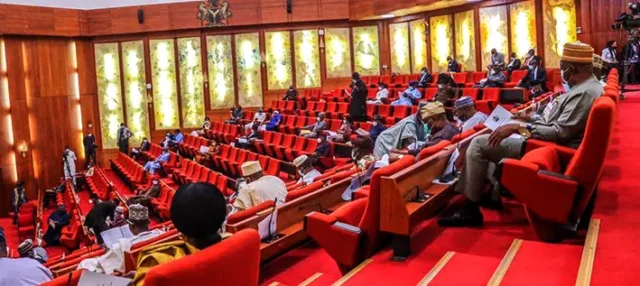
Senate Approves Tinubu’s Request To Sack Three INEC RECs

The Senate has approved President Bola Ahmed Tinubu’s request to formally dismiss the suspended Resident Electoral Commissioners (RECs) of Sokoto, Abia, and Adamawa states.

The affected officials— Ike Uzochukwu (Abia), Hudu Yunusa-Ari (Adamawa), and Nura Ali (Sokoto) were initially suspended by the Independent National Electoral Commission (INEC) in 2023 over allegations of electoral misconduct and irregularities during the general elections.

During Wednesday’s plenary, Senate Leader Opeyemi Bamidele (APC, Ekiti Central) moved the motion to approve their removal, stating that Tinubu’s request aligns with Section 157(1) of the 1999 Constitution (as amended).

Speaking in support of the motion, Senate Minority Leader Abba Moro (PDP, Benue South) said the dismissal would serve as a warning to public officials, reinforcing the government’s stance on accountability.

“This administration has committed to fighting corruption, and this action will deter others in public office from engaging in misconduct,” Moro stated.

Senate Chief Whip Tahir Monguno (APC, Borno North) also emphasized that with 91 senators present, the chamber had surpassed the two-thirds majority required to approve the motion.

“The essence of this motion is to uphold Section 157(1) of the constitution and safeguard the integrity of public institutions,” Monguno said.

The motion was adopted following a voice vote led by Senate President Godswill Akpabio.

In reaction to the development, Yiaga Africa, a civic organization focused on electoral reforms, urged the Senate to improve its confirmation process for INEC appointments to ensure thorough screening of nominees.

Yiaga Africa’s Executive Director, Samson Itodo, stressed the need for future INEC appointments to prioritize competence, impartiality, and integrity.

“These cases highlight the importance of selecting qualified and non-partisan individuals for INEC roles. We urge the President to ensure that future appointments strictly adhere to constitutional standards to maintain INEC’s credibility and effectiveness,” Itodo stated.

Google search engine

Tinubu Okays 65 Years Retirement Age For Doctors, Healthcare Workers

President Bola Ahmed Tinubu has approved an increase in the retirement age for doctors and other healthcare workers from 60 to 65 years.

The National Publicity Secretary of the Nigerian Medical Association (NMA), Dr. Mannir Bature, disclosed this in a statement on Wednesday in Lagos.

He noted that the Coordinating Minister of Health and Social Welfare, Prof. Muhammad Pate, has been directed to formally present the approval to the Council on Establishment through the Office of the Head of Service for finalization.

According to Bature, the policy shift was announced during a high-level meeting between Prof. Pate, NMA President Prof. Bala Audu, and other key stakeholders in the health sector.

Also present were representatives from the Medical and Dental Consultants Association of Nigeria (MDCAN), the National Association of Nigerian Nurses and Midwives (NANNM), and the Joint Health Sector Unions (JOHESU).

Discussions at the meeting focused on the progress made regarding the welfare of medical professionals in Nigeria.

Prof. Pate confirmed that the arrears from the adjustment of the Consolidated Medical Salary Structure (CONMESS) have been secured, and disbursement to beneficiaries will begin soon.

Additionally, President Tinubu approved corrections to the consequential adjustments for both CONMESS and the Consolidated Health Salary Structure (CONHESS), which resulted from the implementation of the new minimum wage.

The minister assured stakeholders that the process to effect these corrections is at an advanced stage and will provide significant relief to healthcare workers.

As part of ongoing reforms, approval has also been granted for the implementation of new tariffs for healthcare service providers.

This is expected to benefit members of the Association of Nigerian Private Medical Practitioners and Nurses (ANPMPN), ensuring better financial sustainability for private healthcare providers.

The minister expressed appreciation for the patience and collaboration of stakeholders and reaffirmed the Federal Government’s commitment to improving the welfare of healthcare professionals.

He emphasized the importance of collaboration in strengthening Nigeria’s health sector.

Participants at the meeting reiterated their commitment to advocating for healthcare workers and ensuring the full implementation of key reforms.

The NMA has long championed an increase in the retirement age of healthcare workers as a strategy to mitigate brain drain, enhance knowledge transfer, and improve the quality of healthcare delivery.

Nationwide strikes by various health unions over the non-implementation of CONMESS and CONHESS had previously disrupted the sector, making this policy shift a significant step in addressing longstanding concerns.

Google search engine

ICPC Recovers N20 Billion Ghost Worker’s Pension Deductions

The Independent Corrupt Practices and Other Related Offences Commission (ICPC) has recovered over N20 billion in pension deductions linked to ghost workers in 2024.

ICPC Chairman, Dr. Musa Aliyu, disclosed this on Wednesday in Abuja during a breakfast meeting with members of the Nigerian Guild of Editors.

He revealed that the commission also arrested individuals who manipulated the federal government’s payroll by inserting names of their associates.

Aliyu explained that while pension deductions for legitimate workers are remitted to Pension Fund Administrators (PFAs), deductions from ghost workers remain unallocated, creating a financial loophole.

“Any deduction made on ghost workers does not go to any Pension Fund Administrator. It remains unclaimed, and that was the N20 billion we recovered,” he said.

Through extensive investigations, the commission identified individuals responsible for the fraudulent payroll entries, including a case where a public officer placed his wife, son, and in-law on the government’s payroll. Shockingly, one of the listed beneficiaries was a 15-year-old boy.

“We arrested him. These are some of the challenges we are addressing, and we are committed to preventing this from happening again,” Aliyu stated.

In addition to the pension fraud recovery, the ICPC chairman revealed that the commission blocked the diversion of approximately N50 billion by some public officials in 2023.

Aliyu called for stronger legal measures to deter corruption, emphasizing that those found guilty should not profit from their crimes.

He suggested that convicted individuals be required to repay the full amount stolen, with interest, and be barred from holding public office for up to 10 years.

He also urged Nigerians to stop celebrating corrupt individuals, stating that societal glorification of fraudulent wealth has contributed to deep-rooted corruption.

Reaffirming the ICPC’s commitment to transparency and accountability, Aliyu pledged to strengthen the agency’s operations and deepen its collaboration with the media to enhance the fight against corruption.

Google search engine

BREAKING: Kidnapped Anambra House Of Assembly Member, Justice Azuka, Found Dead

The body of Justice Azuka, the lawmaker representing Onitsha North 1 Constituency in the Anambra State House of Assembly, has been found near the Second Niger Bridge.

Azuka, a member of the Labour Party, was kidnapped on December 24, 2024, along Ugwunaobankpa Road in Inland Town, Onitsha, while heading home for Christmas.

His abduction was reportedly carried out by armed men in a swift operation lasting less than five minutes.

Confirming the discovery on Thursday, the spokesperson for the Anambra State Police Command, Tochukwu Ikenga, stated that a joint security team made the grim find during a routine patrol.

“In the early hours of today, February 6, 2025, during a mission to rescue Hon. Azuka, the Joint Security Team, comprising Police and Anambra Vigilante Group (AVG) operatives, regrettably discovered his lifeless body near the Second Niger Bridge,” Ikenga said.

He added that security personnel have taken control of the area and that efforts are ongoing to track down those responsible for the lawmaker’s death.

Azuka had recently reclaimed his mandate after a court ruling overturned the victory of Douglas Egbuna of the Peoples Democratic Party (PDP), who was initially declared the winner of the 2023 election.

Authorities have yet to release further details on the circumstances of his death, but investigations are ongoing.

Google search engine

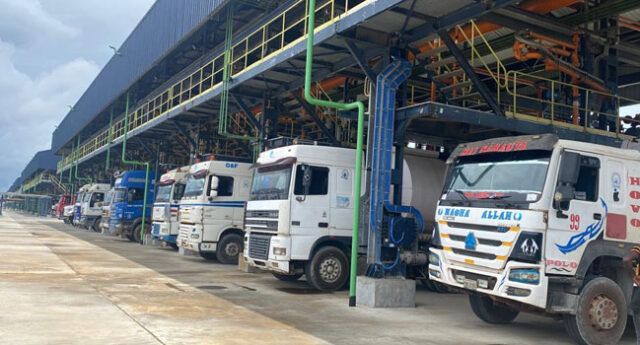
Dangote Refinery Begins Fuel Exports To Saudi Arabia, Expands Capacity To 550,000 BPD

The Dangote Petroleum Refinery has marked a significant milestone by exporting two cargoes of jet fuel, totaling approximately 130 million liters, to Saudi Arabia.

This development aligns with the Organisation of Petroleum Exporting Countries’ (OPEC) earlier projections that the 650,000-barrel-per-day refinery could reshape global crude and product markets.

Aliko Dangote, President of the Dangote Group, described the latest fuel export as a realization of the company’s strategic goals.

The move also signals Nigeria’s growing ambition to position itself as a refining hub, particularly in the Middle East, amid the decline of refining operations in some Western nations.

In December 2023, the Nigerian National Petroleum Company Limited (NNPCL) announced the sale of Port Harcourt’s Low Sulphur Straight Run fuel oil (LSSR) to Gulf Transport and Trading Limited, a Dubai-based firm, further reinforcing Nigeria’s push into the international fuel market.

Following a visit by the Nigerian Economic Summit Group (NESG) to Dangote Fertiliser Limited and the refinery in Ibeju Lekki, Lagos, Dangote revealed that output at the facility has now reached 550,000 barrels per day.

“We are achieving the ambitious targets we set, and I am pleased to confirm that we have successfully exported two cargoes of jet fuel to Saudi Aramco,” Dangote said.

He emphasized the critical role of the private sector in national development, arguing that Nigeria’s economic challenges could be mitigated through increased employment and industrial growth.

Dangote also challenged the idea of unrestricted free markets, pointing out that major economies like the United States and China actively protect their domestic industries to safeguard jobs and promote self-sufficiency.

Drawing an example from Benin Republic, he noted that the country restricts cement imports to protect its local industries, even though his Ibese cement plant is only 28 kilometers away.

“The President of Benin is a personal friend, yet they refuse to allow imports to protect their local industries, most of which are grinding plants,” he stated.

Dangote further stressed the benefits of a thriving private sector for the Nigerian government, noting that 52 kobo of every naira generated by Dangote Cement goes directly to government revenue.

Despite his company’s success, Dangote acknowledged the significant hurdles of setting up industries in Nigeria, particularly the high cost of investment due to inadequate infrastructure.

NESG Chairman, Niyi Yusuf, commended Dangote’s efforts, describing the refinery as a game-changer for Nigeria’s economic aspirations.

“For Nigeria to reach its $1 trillion economy target, major investments are required, particularly from the private sector. This refinery, along with the fertiliser plant, petrochemical complex, and associated infrastructure, is a monumental step toward that goal,” Yusuf said.

He also highlighted the role of local industries in driving Nigeria’s industrialization and supporting the growth of small and medium-sized enterprises (SMEs).

Google search engine

MOST COMMENTED

- Advertisement -
Google search engine