Home Blog Page 598

Just In: DSS Summons Leaders Of Federal Workers Forum Over Protests Against Non-Payment Of Wage Awards
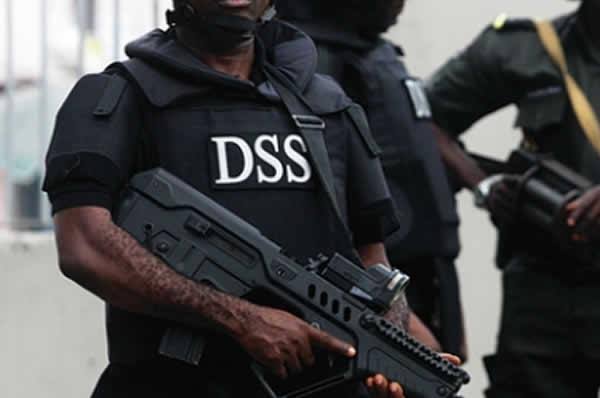
 

The Department of State Services (DSS) has summoned the leadership of the Federal Workers Forum (FWF) following a wave of protests over the non-payment of wage awards and poor welfare conditions under the administration of President Bola Tinubu.

Comrade Andrew Emelieze, National Coordinator of the FWF and former Chairman of the Trade Union Congress (TUC) in Oyo State, confirmed the development in a statement released on Tuesday.

He noted that the invitation by the secret police was in response to the group’s role in organising the recent #FederalWorkersProtest, including campaigns tagged #OccupyFederalSecretariat and #ShutDownAllFederalSecretariat.

In the statement obtained by SaharaReporters, Emelieze asserted the group’s determination to honour the invitation without fear or hesitation.

“We are not in any way intimidated, we have no regrets and if we have to do it again, we will not hesitate.”

“We have no apologies and we remain committed to freeing our people from servitude. We shall proceed to honour the invitation with profound conviction that we have a just course,” he declared.

The activist also called on members of the FWF, the general public, and the media to stay vigilant in case of any developments.

“We are informing all members of the Federal Workers Forum, the public and the mass media to take note in case things come up the other way.”

Reiterating the group’s stance, Emelieze said: “Once more, we have no regrets and we are not in any way moved. We shall honour the invitation and we will never be intimidated.”

“All that we have said and done is in the open and it is in the public interest, justice and humanity. Our voices must be heard, we shall keep on keeping on and never surrender.”

He urged members to maintain their resolve and continue with the protests until their demands are met.

“We urge our members to remain resolute and continue with the protest until the workers are free from exploitation,” he added.

FWF had embarked on an indefinite nationwide strike over the federal government’s failure to pay five months’ worth of outstanding wage awards.

The strike began last Tuesday in Ibadan, the Oyo State capital, with hundreds of federal workers staging a protest at the federal secretariat.

During the demonstration, both Emelieze and the group’s Secretary General, Comrade Itoro Obong, addressed journalists, recalling that the federal government had been issued a 21-day ultimatum which expired without any response.

“As earlier agreed, we the federal workers in Nigeria commence an indefinite protest nationwide today, 22nd April, 2025, to press home our demands for justice for federal government workers in Nigeria,” they declared.

Google search engine

More Than Half Of Tinubu’s Ministers Have No Business With Governance, Says Former Presidential Adviser


Dr. Hakeem Baba-Ahmed, former Special Adviser on Political Matters to the Vice President, has delivered a scathing critique of President Bola Tinubu’s administration, stating that more than half of the president’s ministers “have no business managing an administration tasked with improving security, livelihoods, or public trust.”

In an interview with Arise TV on Monday, Baba-Ahmed painted a troubling picture of the inner workings of the presidency, citing the president’s detachment and lack of communication with key personnel.

He revealed that during his 18 months serving in the Presidential Villa, he only saw President Tinubu three times and only at the mosque.

“I never had the chance to sit down and talk with President Tinubu. I think part of the problem is that Tinubu never had time for people like us. I don’t think he had time for a lot of people working for him,” he said.

Expressing disappointment with the administration, Baba-Ahmed described the president as “really and genuinely isolated.”

He warned that this distance from his team and the Nigerian people undermines the government’s ability to respond effectively to national challenges.

“The bottom line is, he ought to be available for the people he trusted and worked for him. And that’s the problem for the country, not for him,” he added.

He questioned the quality of the counsel being offered to the president, citing a glaring disconnect between government insiders and the realities facing ordinary citizens.

“If you hear people who are close to him speak about Nigeria, you will hear as if they’re living in different worlds. That is the most frustrating thing for me,” he said.

Baba-Ahmed also addressed speculation around the role of Vice President Kashim Shettima, dismissing reports that the VP had been sidelined.

“No, I didn’t see any of these… If the president feels that the office of the vice president is not that important in the administration and we have seen that many times basically, that was what I met,” he explained.

He traced the underutilization of the vice presidency to a structural flaw in the system, noting that the role lacks clearly defined functions.

Despite working closely with Vice President Shettima, Baba-Ahmed argued that mere proximity to power was not sufficient.

“We work in the Villa and we go home and meet the people, and we know how the country is how desperate people are, the difficult lives, the insecurity. People are losing hope, asking what is the value of this democracy,” he said.

Baba-Ahmed called for a generational shift in leadership.

In an open letter, he urged President Tinubu not to seek re-election in 2027 but to instead support younger, more dynamic Nigerians.

“Step aside not for your opponents, but for a new generation of Nigerians who can carry the nation forward with fresh energy and ideas,” he wrote.

“It would be a masterstroke if you and your party yielded the field to new voices and new leadership. That way, you could catalyse a peaceful, historic transformation and inspire a new political culture rooted in merit, unity, and progress.”

He further advised the president to focus less on electoral politics and more on his legacy.

“You hold what your opposition lacks: the power to reduce the harshness of life for the average Nigerian. Use it well. Watch 2027, yes, but don’t become consumed by it,” he urged.

Criticizing the president’s “Renewed Hope Agenda,” Baba-Ahmed described it as “a set of campaign promises” with no clear execution plan.

He emphasized that although Tinubu inherited a struggling economy and a weary population, he had failed to turn the early goodwill of his presidency into impactful leadership.

While distancing himself from current political coalitions, Baba-Ahmed signaled a deep dissatisfaction with the current political terrain and called for a fresh direction in Nigerian leadership.

Google search engine

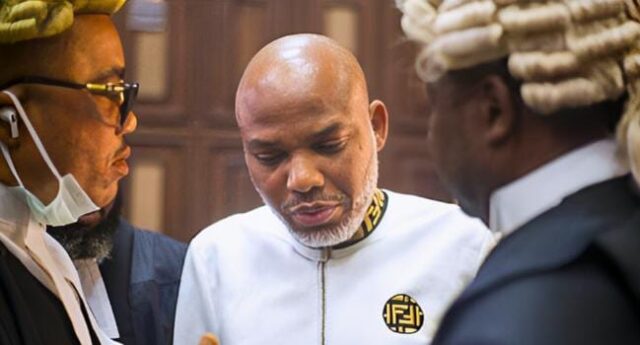
Nnamdi Kanu: Court Okays FG’s Request For Witnesses To Testify Behind Screens


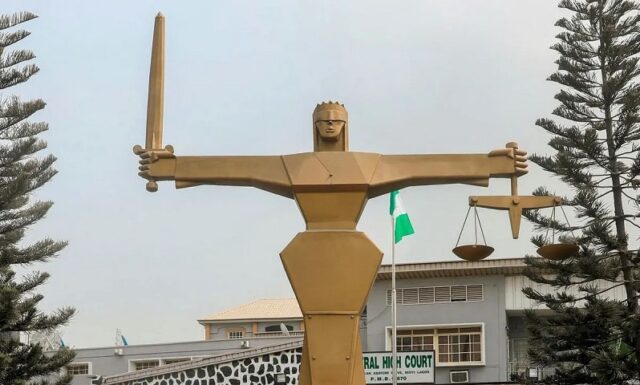
The trial of Nnamdi Kanu, leader of the Indigenous People of Biafra (IPOB), resumed on Tuesday at the Federal High Court in Abuja, with a significant development in the proceedings.

Justice James Omotosho, who presided over the case, granted the Federal Government’s application for its witnesses to give testimony behind screens.

The decision, according to government counsel Adegboyega Awolowo, stems from concerns about the sensitive nature of the case and the need to ensure the security of the witnesses.

“We had earlier filed an ex parte application for the witnesses to testify behind screens due to the nature of the case and for security reasons,” Awolowo explained to the court.

At the hearing, lead defence counsel Kanu Agabi informed the court that his team consisted of 22 lawyers.

However, Justice Omotosho maintained that he would not allow more than the 13 names previously listed.

The defence team saw the addition of four senior advocates: Audu Nunghe, Joseph Akubo, Emeka Etiaba, and Onyechi Ikpeazu, further strengthening Kanu’s legal representation.

Google search engine

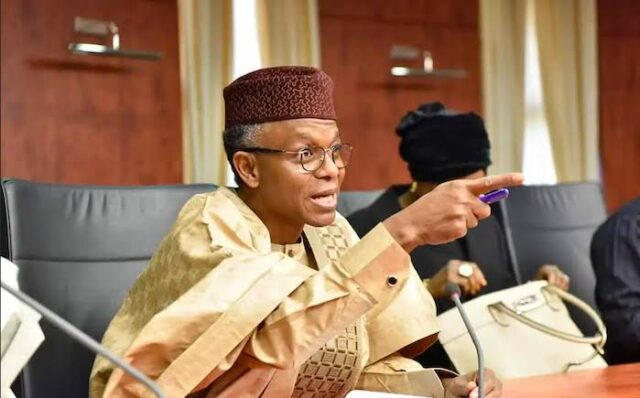
2027: If Nigerians Reject You, No Endorsement Or Number Of Governors Can Save You – El-Rufai Tells Tinubu


Former Kaduna State Governor Nasir El-Rufai has asserted that President Bola Ahmed Tinubu’s chances in the 2027 elections depend entirely on the Nigerian people, not the backing of state governors.

Speaking during a media chat with journalists in Kano State on Monday, El-Rufai, who recently defected from the All Progressives Congress (APC) to the Social Democratic Party (SDP), emphasized that grassroots support, not political endorsements, will determine electoral outcomes.

“President Tinubu can mobilise all the state governors, but if Nigerians reject him, it is over,” he declared.

El-Rufai argued that the opposition coalition being formed is focused on creating a viable people-driven alternative, rather than relying on influential political figures.

“We are trying to offer Nigerians a real alternative, something different from what they have seen before,” he said.

Highlighting the power of the electorate, he added: “A governor has only one vote. Nigerians have many more votes than one governor or even 36 governors combined.”

His remarks come amid heightened speculation following recent meetings among top opposition figures, including former Vice President Atiku Abubakar’s visit to ex-President Muhammadu Buhari.

Although these moves sparked merger rumours, the PDP Governors’ Forum has denied any formal coalition plans.

Reacting to the forum’s rejection of the alliance, El-Rufai maintained that their movement was never anchored on such partnerships.

“The fact that one governor from the PDP has defected means nothing. We are not counting on governors to win elections. We are counting on the people,” he stated.

“It doesn’t matter if you gather all the governors together; if the people of Nigeria say they are not with you, it is over,” he reiterated.

He cited Tinubu’s 2023 performance in Lagos as a case in point. “The president had a sitting governor in Lagos and still lost Lagos. So, what is the real value of a governor?” El-Rufai asked.

Reflecting on his own political experience, he said: “I was the governor of Kaduna State. I fought hard to deliver President Tinubu in my state, but I lost. That taught me a hard lesson — that elections are ultimately decided by the people, not by political figures.”

The former governor clarified that while names like Atiku and Peter Obi have been mentioned as possible candidates, the coalition’s priority for now is platform-building.

“Our focus now is not on selecting candidates. It is on building the platform first,” he said.

“We have told all those with presidential aspirations: put aside your ambitions for now. Join us as equal members and help us build a credible alternative,” El-Rufai explained.

“If and when all opposition groups come under the SDP, we will have that conversation. But for now, we must work together to build something Nigerians can trust.”

He also stressed that Nigeria’s crisis transcends regional or ethnic lines.

“I no longer care where the president comes from. I want a candidate who can offer real solutions to Nigeria’s problems and excite Nigerians enough to come out and vote,” he stated.

“We are facing an existential crisis. It is not about North or South anymore. It is about survival, unity, and progress. Whoever can deliver that — wherever they come from — will have my support.”

On the question of merging with the PDP, El-Rufai was unequivocal.

“From the beginning, our intention was never to merge with the PDP. We have been very clear about that,” he said.

“The PDP is a spent force. It is a party targeted for destruction, and, frankly, it has almost succeeded.”

He emphasized the coalition’s goal of creating a fresh political force.

“We are not looking at political parties that are already ravaged by internal conflicts. We are building something fresh, something that will inspire hope,” El-Rufai said.

“When Nigerians look at the faces involved, they will hopefully say: ‘Yes, maybe this time it will be different.’ That is the goal, and it is ongoing.”

Explaining the choice of the SDP as their platform, he said “Our objective is not to merge political parties. We have been through that before, and we know how long and complicated that process is.”

He added that the SDP was selected after evaluating parties unlikely to be deregistered by INEC.

“As you know, INEC now has the power to deregister parties without any elected member at the state Assembly level. We assessed the ones that cannot be deregistered and concluded that the SDP ranked highest. It has pedigree, it has history, but it still needs building.”

According to El-Rufai, the real challenge lies in organizing the party from the ground up.

“Forming a party is easy. Building a party, registering members, holding congresses, building leadership from the polling unit to the national level is the real work.”

He concluded with a warning against past political mistakes “What destroyed previous parties in Nigeria is a lack of internal democracy and the stranglehold of godfathers. We want to eliminate that.”

“The APC started with hope, but it became controlled by one or two people. We want a party that no one owns, where everyone has a voice.”

Google search engine

Eight Dead, Six Injured In Anambra Tanker-Bus Collision


A fatal accident on Sunday night at Ukpo Junction along the Nteje–Awka Road in Anambra State has left eight people dead and six others injured, according to the Anambra Sector Command of the Federal Road Safety Corps (FRSC).

Confirming the tragic incident to journalists in Awka on Monday, Sector Commander Mrs. Joyce Alexander said the collision involved a Mack tanker without a registration number and a Toyota Hiace bus with registration number EKP375XM.

Alexander explained that based on preliminary investigations and eyewitness reports, the bus was traveling from Abakaliki to Onitsha when the crash occurred.

“The bus was speeding and overtook dangerously before colliding with the tanker, which was heading towards Awka on a single carriageway,” she told the News Agency of Nigeria.

The impact of the head-on collision claimed eight lives — four males and four females — and left six others injured, including two men and four women.

Alexander noted that a rescue team from Nteje responded swiftly to the scene.

“The rescue team from Nteje attended to the injured victims, transporting them to the hospital for treatment. They took the bodies of the deceased to Jerusalem Mortuary in Nteje after confirmation by a doctor,” she said.

Following the incident, the Sector Commander also visited the injured survivors at Regina Caeli Hospital and Chukwuemeka Odumegwu Ojukwu Teaching Hospital in Awka to assess their condition and extend support.

She used the opportunity to remind motorists of the dangers of speeding and reckless overtaking, urging road users to exercise caution to avoid further tragedies.

Google search engine

My Interest In Education Purpose-Driven, Not Political – Governor Mbah


Governor of Enugu State, Dr. Peter Mbah, has reiterated that his commitment to education stems from a clear sense of purpose rather than political motives.

He stated this yesterday in Enugu during the inauguration of the University of East London (UEL) Alumni Network Nigeria, where he also received commendation from fellow alumni for his developmental strides.

Speaking at the event, which featured a keynote address themed “Reshaping Nigeria’s Future: The Role of Alumni in Education, Governance, and Security,” Mbah emphasized the transformative power of education in societal development.

“My special interest in education is not happenstance,” he declared. “It is driven by a deep purpose, not politics or any quest for acclaim.”

Highlighting his administration’s policies, Mbah noted that Enugu is on the threshold of an educational renaissance, anchored by the Smart Green Schools initiative introduced under his leadership.

He further underscored the state’s budgetary commitment to the sector.

“We consistently allocate about one-third of our yearly budget to education because I strongly believe that education is the game-changer for any society.” he said.

Earlier in the day, the leadership of the UEL Alumni Network Nigeria paid a courtesy visit to the governor, who is also an alumnus of the institution.

The group praised his performance as governor and expressed willingness to partner with his administration to realize its bold vision for the state.

Present at the event were the Director of Media, Albert Onabe; Financial Secretary, Mohammed Suleiman; President, Prof. Issa Abdulraheem; Secretary, Ambrose Nwodoh; Assistant Secretary, Miss Elizabeth Paul; Auditor, Ibrahim Mannir Yari; and Director of Publicity, Dr. Alex Akwaeze.

Google search engine

Court Convicts Two Soldiers, One To Die By Hanging For Murder, Another Jailed For Robbery In Enugu

A General Court Martial (GCM) sitting at the Headquarters of the 82 Division, Nigerian Army, Enugu, has sentenced Private Adamu Mohammed to death by hanging for the murder of his girlfriend, Miss Hauwa Ali.

The court also convicted another soldier, Private Abubakar Yusuf, and sentenced him to 10 years imprisonment for robbery.

The verdicts followed a thorough trial process, during which the soldiers were arraigned for murder and robbery respectively.

In a statement issued by Lt. Col. Jonah Unuakhalu, Acting Deputy Director, Army Public Relations, 82 Division, it was revealed that the General Court Martial was inaugurated on February 18, 2025, by the General Officer Commanding (GOC) 82 Division, Major General Oluyemi Olatoye.

The 11-member panel was tasked with handling cases of military personnel accused of serious offences that could not be summarily tried.

While delivering judgment, the President of the GCM, Brigadier General Sadisu Buhari, said the court found Private Adamu Mohammed guilty of murdering Miss Hauwa Ali, a crime punishable under Section 106 (a) of the Armed Forces Act, Cap A20 LFN 2004.

“Given this, the GCM has determined that the accused soldier, 21NA/80/6365 Private Adamu Mohammed, is hereby sentenced to death by hanging for the charge of murder,” Brigadier General Buhari declared.

He explained that the judgment was unanimous and based on a careful review of the facts, the accused’s career and service record, as well as the plea for leniency presented by the defence.

However, Brigadier General Buhari emphasized that “in the interest of societal decorum and justice for the deceased, the law had to be applied to its fullest.”

In a related judgment, Private Abubakar Yusuf was convicted of robbery at a mall within Enugu.

He was found guilty under Section 107(1)(b) of the Armed Forces Act, Cap A20 LFN 2004.

“However, due to the inability of the GCM to reach a unanimous decision required to impose the maximum mandatory punishment prescribed under Section 107(2) of the Armed Forces Act, Cap A20 LFN 2004, the GCM, relying on the provisions of Section 140 (3) of the Armed Forces Act, hereby sentences the accused soldier, 23NA/85/12116 Private Abubakar Yusuf, to 10 years imprisonment,” the GCM President announced.

He added that the court had considered the plea in mitigation from the accused and his counsel but upheld the sentence in the interest of discipline and the image of the Nigerian Army.

The Nigerian Army, in its statement, reaffirmed its commitment to upholding the highest standards of ethics and professionalism.

It stressed that while the misconduct of a few does not represent the institution’s core values, swift and decisive actions are always taken to ensure accountability.

“The Army remains dedicated to maintaining discipline within its ranks, protecting the integrity of its operations and fostering trust and confidence among the people it serves,” the statement concluded.

Google search engine

FULL LIST: 51 Nigerian Universities, Others Illegally Deducting From Student Loan Fund


At least 51 tertiary institutions in Nigeria have come under scrutiny for alleged illegal deductions and mismanagement of funds from the Nigerian Education Loan Fund (NELFUND), in what has become a growing controversy surrounding the implementation of the student loan scheme.

According to investigations by The Guardian, these institutions reportedly deducted amounts ranging from N3,500 to N30,000 from each student’s loan disbursement.

This practice, described as exploitative, has triggered widespread outrage among students and civil society advocates.

While NELFUND and the National Orientation Agency (NOA) jointly condemned the deductions, they also criticized the affected schools for lacking transparency—particularly their failure to notify students of disbursed loans or provide clear breakdowns of institutional fees.

Named among the institutions involved are Modibbo Adama University (MAU), Yola; Yaba College of Technology (YABATECH); Lagos State University of Education (LASUED); Ladoke Akintola University of Technology (LAUTECH); University of Nigeria, Nsukka (UNN); Ahmadu Bello University (ABU), Zaria; University of Port Harcourt; Obafemi Awolowo University (OAU), Ile-Ife; and Bayero University, Kano (BUK), among others.

Students shared personal accounts of being charged above the approved fees.

At the University of Jos (UNIJOS), for instance, the approved institutional fee was N130,000, but students received disbursements ranging from N145,000 to N150,000, leaving discrepancies of N10,000 to N20,000. At the Federal University of Lafia, the discrepancy amounted to N28,500 per student.

Similar cases were reported at other institutions.

“UNN has still not refunded the school fees from last session. Many students applied for the loan but ended up paying school fees independently. UNN received the money from NELFUND and kept silent,” said Malvin Okeke, a student.

Other students echoed similar frustrations.

Baruwa Razak of Olabisi Onabanjo University (OOU) questioned why already-paid tuition was withheld, while Joshua Ali from UNIJOS claimed that refund requests submitted since January had gone unanswered.

At Taraba State University, student Davo alleged that out of the N120,000 loan disbursed, only N57,000 was refunded, with no explanation for the remaining N63,000.

In Calabar, students reportedly had to pay N12,000 to obtain a ‘fees payment invoice’ before qualifying for refunds.

Parents have also expressed dismay.

“Before the payment of my son’s NELFUND-approved loan at the start of the ongoing semester, FUTA mandated the students to pay at least 40 per cent of their school fees to be able to access the portal for registration. Three months after NELFUND payments, FUTA has yet to refund us,” lamented Sunday Adedeji.

Modibbo Adama University confirmed it received double payments affecting about 300 students.

Spokesperson Muhammad Nur noted that this was a nationwide issue and stated, “Physical verification was required to ensure accuracy and avoid inconsistencies.”

Similarly, FUTA admitted the double payments, explaining that disbursement was split between two accounts, one of which had yet to be linked to the school’s Remita platform.

“Another reason for the slight delay in disbursement is that the fund was released in two tranches… The newly created account is yet to be linked to our payment platforms on Remita,” said Adegbenro Adebanjo, Director of Corporate Communications.

YABATECH, on the other hand, dismissed the allegations, asserting that the amount received is still under verification by the Central Bank of Nigeria.

“We urge students to be patient. Payment will be made in due course,” said spokesperson Adams Adekunle.

The broader issue, however, may be systemic.

NELFUND Managing Director Akintunde Sawyer warned that the current practices, if unaddressed, could erode the integrity of President Bola Tinubu’s student loan vision.

He stated, “Withholding critical financial information from students is unethical and a direct violation of the principles upon which NELFUND was established.”

He further emphasized that failure to hold institutions accountable would sabotage efforts to promote equitable and inclusive access to higher education.

NOA added that it had uncovered unethical practices through reports from its state directorates.

“The NOA feedback showed how specific institutions have deliberately delayed payments to successful applicants for personal financial benefit, in connivance with some banks,” the agency stated.

Critics have since called for reform. Omole Ibukun of the Creative Change Centre described the situation as a betrayal of trust: “This is a betrayal of the principles of accountability and transparency that should be taught by example at our ivory towers… The concealment of this financial information will lead to many students dropping out.”

Ibukun proposed the formation of student oversight committees and urged legal action against guilty institutions.

“All the institutions guilty of this crime must refund the double payments,” he insisted.

The National Association of Nigerian Students (NANS), through its President Olushola Oladoja, announced an ongoing investigation.

“We are engaging with NELFUND and relevant stakeholders to get to the root of the matter,” he confirmed.

With over N50 billion disbursed to 300 public tertiary institutions, stakeholders are calling for a shift in the disbursement model—proposing that funds be paid directly to students to eliminate institutional interference and ensure accountability.

Google search engine

Court Of Appeal Redeploys Justices Nationwide, Retains Wike’s Wife In Abuja, Reassigns Awka And Gombe Appeals


The Court of Appeal has announced a major reshuffling of its Justices across divisions in the country.

The posting list, titled “Posting of Honourable Justices As At 22nd April, 2025,” and signed by M. B. Dongban-Mensem, President of the Court of Appeal, was released on Monday.

According to the document, Justices are expected to report to their new divisions by May 5, 2025.

In the new arrangement, Hon. Justice Y. Nimpar has been posted to the Lagos Division as the Presiding Justice. Other Justices in Lagos include Hon. Justice J. E. Ekanem, Hon. Justice F. A. Ojo, Hon. Justice D. Z. Senchi, Hon. Justice P. A. Bassi, Hon. Justice N. U. Okaisabor, Hon. Justice P. T. Kwahar, Hon. Justice Abdulazeez M. Anka, and Hon. Justice U. Onwosi.

For the Kaduna Division, Hon. Justice O. A. Otisi is to serve as Presiding Justice, alongside Hon. Justice A. O. Obaseki-Adejumo, Hon. Justice A. M. Bayero, Hon. Justice S. O. Nwaka Gbagi, and Hon. Justice M. S. Hassan.

In Ibadan, Hon. Justice B. A. Georgewill will head the Division as Presiding Justice, supported by Hon. Justice Ebiowei Tobi, Hon. Justice K. I. Amadi, Hon. Justice B. F. Zubairu, and Hon. Justice Fadawu Umaru.

The Enugu Division will have Hon. Justice J. O. K. Oyewole as Presiding Justice, with Hon. Justice M. Mustapha, Hon. Justice I. W. Jauro, and Hon. Justice Zainab B. Abubakar also assigned.

Hon. Justice B. G. Sanga will preside over the Benin Division, joined by Hon. Justice Y. A. Bashir, Hon. Justice L. A. Ganiyu, and Hon. Justice Asma’u Ojuolape Akanbi.

In Jos Division, Hon. Justice M. O. Bolaji-Yusuf is posted as Presiding Justice, with Hon. Justice I. A. Andenyangtso, Hon. Justice P. O. Affen, and Hon. Justice A. A. Akinyemi forming part of the team.

Hon. Justice O. E. Williams-Dawodu will lead the Port Harcourt Division as Presiding Justice, with Hon. Justice M. I. Sirajo, Hon. Justice H. A. Laja Balogun, and Hon. Justice Ishaq M. Sani.

For Abuja, Hon. Justice H. A. Barka will serve as Presiding Justice. Justice Eberechi S. Nyesom-Wike, wife of the Minister of the Federal Capital Territory, Nyesom Wike, has been retained in Abuja. Other Justices listed for the Abuja Division include Hon. Justice B. B. Aliyu, Hon. Justice A. I. Banjoko, Hon. Justice A. B. Mohammed, Hon. Justice O. E. Abang, Hon. Justice D. U. Okorowo, and Hon. Justice O. O. Oyewumi.

In the Kano Division, Hon. Justice M. A. Danjuma has been posted as Presiding Justice with Hon. Justice B. M. Ugo, Hon. Justice O. Goodluck, and Hon. Justice A. R. Mohammed.

Hon. Justice U. Onyemenam will preside over the Calabar Division, supported by Hon. Justice M. Danjuma, Hon. Justice L. B. Lawal-Akapo, and Hon. Justice Eleojo Eneche.

Ilorin Division has Hon. Justice R. M. Abdullahi as Presiding Justice, along with Hon. Justice G. O. Kolawole and Hon. Justice Abdu Dogo.

For the Owerri Division, Hon. Justice A. A. Wambai will serve as Presiding Justice with Hon. Justice S. A. Bola, Hon. Justice M. L. Abubakar, and Hon. Justice Ntong F. Ntong.

At the Sokoto Division, Hon. Justice M. L. Shuaibu is posted as Presiding Justice, alongside Hon. Justice A. M. Talba, Hon. Justice Abdullahi M. Liman, and Hon. Justice Victoria T. Nwoye.

Yola Division will have Hon. Justice F. O. Oho as Presiding Justice, with Hon. Justice P. A. Mahmoud, Hon. Justice O. A. Adegbehingbe, and Hon. Justice N. O. Dimgba.

Hon. Justice I. O. Akeju will serve as Presiding Justice in the Ekiti Division, accompanied by Hon. Justice A. M. Lamido and Hon. Justice J. E. Inyang.

In Akure, Hon. Justice O. F. Omoleye will lead as Presiding Justice, with Hon. Justice P. C. Obiorah and Hon. Justice H. R. Shagari assigned.

The Makurdi Division will be presided over by Hon. Justice T. O. Awotoye, with Hon. Justice B. I. Gafai, Hon. Justice A. Waziri, and Hon. Justice N. I. Afolabi supporting.

Hon. Justice O. O. Daniel-Kalio is appointed Presiding Justice for the Asaba Division, alongside Hon. Justice J. G. Abundaga, Hon. Justice U. A. Musale, Hon. Justice A. M. Mainoma, and Hon. Justice Olukayode A. Adeniyi.

In Maiduguri, Hon. Justice A. A. B. Gumel will serve as the Presiding Justice with Hon. Justice U. A. Ogakwu and Hon. Justice R. O. Ayoola.

The posting list also highlighted that Awka and Gombe Divisions would no longer have independent panels for appeals. Instead, appeals from Awka will be determined in either the Enugu or Asaba Divisions, while appeals from Gombe will be handled in Maiduguri.

Additionally, it was noted that Hon. Justices of the Ilorin Division “shall sit for one week each month at the Ibadan Division,” while “Hon. Justices of Ekiti Division shall also sit for one week each month in Akure Division.”

Despite the redeployments, the posting emphasized that special panels already set up would proceed with their sittings as scheduled.

Justices are expected to assume duty in their newly assigned divisions no later than May 5, 2025.

Google search engine

Cardinals Set May 7 For Conclave, Say New Pope Must Confront Abuse Crisis


Catholic cardinals agreed on Monday to begin the conclave to elect a new pope on May 7, identifying clerical sexual abuse as one of the most urgent challenges awaiting Pope Francis’s successor.

The so-called “Princes of the Church” under the age of 80 will gather in the Sistine Chapel to select the next leader of the world’s 1.4 billion Catholics.

The date was confirmed during a meeting of cardinals of all ages early Monday, just two days after Pope Francis’s funeral.

Francis, aged 88, died on April 21, a day after a final public appearance during Easter celebrations at Saint Peter’s Square.

At the meeting, cardinals outlined the key issues facing the Church, citing “evangelisation, the relationship with other faiths (and) the issue of abuse,” according to a Vatican statement.

“There was talk of the qualities that the new pontiff must possess to respond effectively to these challenges,” it added.

Following Francis’s death, all 252 cardinals were called back to Rome, although only 135 are eligible to vote in the conclave.

Many of the electors, drawn from across the globe, do not know each other well.

To build familiarity, they held four “general congregations” last week.

Cardinal Gualtiero Bassetti, 83, former head of the Italian bishops’ conference, noted a positive spirit.

“There was a beautiful fraternal atmosphere,” he said.

“Of course, there may be some difficulties because the voters have never been so numerous and not everyone knows each other,” he told Italy’s Corriere della Sera newspaper.

Meanwhile, the Vatican closed the Sistine Chapel on Monday to prepare it for the secret ballot, which will unfold under Michelangelo’s famous frescoes.

As speculation swirls over who might emerge as the next pope, Spanish Cardinal Jose Cobo noted the unpredictability of this conclave.

“I believe that if Francis has been the pope of surprises, this conclave will be too, as it is not at all predictable,” he said in an interview with El Pais published on Sunday.

Francis was buried on Saturday during a funeral ceremony that drew a crowd of about 400,000 people, including world leaders, royalty, and ordinary faithful.

On Sunday, an estimated 70,000 mourners visited his marble tomb in the Santa Maria Maggiore Basilica in Rome, in tribute to the “pope of the poor,” who chose a resting place outside the Vatican walls.

Italian Cardinal Pietro Parolin, who served as Francis’s Secretary of State, is seen by many as a leading contender to succeed him.

British bookmakers William Hill place him slightly ahead of Filipino Cardinal Luis Antonio Tagle and Ghana’s Cardinal Peter Turkson.

Other names in the mix include Bologna’s Archbishop Matteo Zuppi, Guinea’s Cardinal Robert Sarah, and Pierbattista Pizzaballa, the Latin Patriarch of Jerusalem.

The cardinals have flagged the Catholic Church’s ongoing sexual abuse crisis as a pressing issue for the next pontiff to confront.

Francis implemented a series of reforms to address clerical abuse, but many victims’ groups believe he fell short, and scandals continue to emerge globally.

The challenge remains acute, particularly in African and Asian nations where discussions of abuse are often taboo.

Even in Europe, countries like Italy have yet to launch full independent investigations into allegations.

While Francis’s vision of a more compassionate Church won him admiration, his reforms — especially around issues of governance and outreach — angered conservatives, notably in the United States and Africa.

Roberto Regoli, professor of Church history and culture at the Pontifical Gregorian University in Rome, told AFP that unity would be a key consideration in the cardinals’ decision.

“We are in a period in which Catholicism is experiencing various polarisations, so I don’t imagine it will be a very, very quick conclave,” he said.

Still, Bassetti predicted the election “will not be long.”

Though about 80 percent of the cardinal-electors were appointed by Francis, their loyalties are not guaranteed to align with his vision.

Many are young and participating in their first conclave.

The voting will be highly secretive, governed by ancient traditions and strict rules. Four votes will be held each day — two in the morning and two in the afternoon — until one candidate secures a two-thirds majority.

Less than half of the voting cardinals are European.

Cardinal Dieudonne Nzapalainga from the Central African Republic emphasized the need for a truly global pope.

“The future pope must have a universal heart (and) love all the continents. We must not look at colour, at origin, but at what is proposed,” he told Italy’s Il Messaggero.

“We need a courageous leader, a bold one, capable of speaking forcefully, of holding the helm of the Church steady even in storms… offering stability in an era of great uncertainty.”

For many faithful, the hope is for continuity in compassion and reform.

Patrizia Spotti, a 68-year-old Italian pilgrim visiting Rome for the 2025 Jubilee, told AFP that she hoped for “a pope like Francis.”

“It was a difficult time for Catholicism,” she said.

“Churches are empty and the Church itself has made mistakes — all the scandals with the children,” she added, referring to the widespread revelations of clerical abuse.

Google search engine

MOST COMMENTED

- Advertisement -
Google search engine