Home Blog Page 6

2027: INEC Deadline Expires As Pantami, Adebutu, Gwarzo Face Uncertain Political Future

The political future of former Minister of Communications and Digital Economy, Isa Ali Pantami, former Ogun State governorship candidate Oladipupo Adebutu, and Kano State governorship candidate Aminu Gwarzo has become uncertain following the expiration of the deadline for political parties to report discrepancies in the preliminary list of candidates for the 2027 elections.

The Independent National Electoral Commission (INEC) had fixed October 24 as the deadline for parties to submit complaints over discrepancies in the preliminary list, which was published on October 10.

The development comes amid disputes involving the Peoples Democratic Party (PDP) and the Nigeria Democratic Congress (NDC), both of which have challenged the exclusion of their respective candidates, insisting that they complied with the requirements for nomination.

The controversy follows a September 24 Supreme Court judgment affirming the obligation of political parties to submit their membership registers to INEC within the prescribed period and use the registers for primaries and other internal electoral processes, in line with the Electoral Act 2026.

INEC reportedly relied on the judgment in preparing its final list of governorship candidates.

The PDP has maintained that its governorship candidates in Gombe and Ogun states fulfilled the necessary requirements.

The party has engaged the electoral commission over the omissions and is considering further legal action.

On October 15, the party filed an affidavit at the Federal High Court Registry in Abuja challenging the exclusion of Pantami and Adebutu and seeking their reinstatement on the candidates’ list.

Afolabi Orekoya, Director of Media for the Ladi Adebutu Campaign Organisation, said the necessary procedures had been completed, expressing optimism that Adebutu’s name would be included in an updated list.

Similarly, the Ogun State PDP Chairman, Abayomi Tella, described Adebutu’s omission as an error and expressed confidence that INEC would address the matter.

In Gombe State, an aide to Pantami said the former minister would pursue all available legal options.

According to the aide, Pantami’s legal team had already contacted INEC in an effort to resolve the dispute.

Pantami emerged as the PDP’s governorship candidate following a court-ordered rerun of the party’s primary on September 29.

His name had appeared on INEC’s provisional list published on August 29 but was missing from the final list released in October.

The NDC has also raised concerns over the exclusion of its Kano State governorship candidate, Gwarzo, and his running mate, Mustapha Rabiu Kwankwaso.

The party said it had communicated with INEC regarding the omissions but had yet to receive a definitive response.

Amid the controversy, the National Association of Achievers Movement (NAAM) has called on INEC to explain the basis for excluding the three candidates.

The group also demanded clarification on the criteria used to determine which candidates were included in the final list, particularly where questions had reportedly been raised about aspects of their nomination processes.

NAAM said the electoral commission must demonstrate transparency, fairness and consistency in applying electoral laws across political parties.

It, however, clarified that its intervention was not an endorsement of the automatic reinstatement of the excluded candidates or a call for the disqualification of those already listed.

Rather, the association said it was seeking a clear explanation of the legal and factual grounds for INEC’s decisions, stressing that transparency was essential to public confidence in the electoral process.

Google search engine

NDC Leaders Pocketed N9 Billion From Nomination Forms Alone – Sowore


The presidential candidate of the African Action Congress (AAC), Omoyele Sowore, has accused leaders of the Nigeria Democratic Congress (NDC) of generating ₦9 billion from the sale of nomination forms while allegedly operating the party from their private residences.

Sowore also criticised the NDC’s presidential candidate, Peter Obi, accusing him of moving between political parties ahead of elections without a genuine commitment to dismantling Nigeria’s established political order.

The AAC candidate made the allegations in a statement posted on X, where he accused the NDC and Obi of exploiting public dissatisfaction with the government rather than pursuing what he described as the liberation of Nigerians.

Describing the NDC leadership as opportunistic, Sowore alleged that those behind the party had collected billions of naira from nomination forms despite lacking what he considered a credible political structure.

“The same opportunists and packaged political frauds who made ₦9 billion from selling nomination forms while running a political party from their living rooms,” he wrote.

Sowore also accused Obi of using political platforms primarily during election seasons to redirect public anger without confronting the underlying problems in Nigeria’s political system.

He described the former Anambra State governor as an unprincipled politician who, in his view, changes political affiliations without demonstrating a willingness to challenge the existing establishment.

“This is the problem with unprincipled politicians like Peter Obi, who rent political parties every election season, not to liberate Nigerians,” Sowore stated, alleging that such manoeuvres were intended to divert public anger and avoid a more radical challenge to the system.

The AAC presidential candidate further alleged that Obi and his allies were more interested in controlling the opposition than mounting a decisive challenge to President Bola Tinubu’s administration.

“They don’t oppose Tinubu; they simply don’t want anyone to oppose him strongly enough to bring his disastrous reign to an end. Their politics is about managing opposition, not confronting the system,” he said.

Sowore also accused supporters of Obi and other political figures of attempting to discredit critics and shift public attention away from the country’s fundamental social, economic and political challenges.

He specifically mentioned Osun State Governor Ademola Adeleke and Abia State Governor Alex Otti, alleging that they had contributed to narratives that distracted Nigerians from the issues he raised.

“But we cannot be fooled,” Sowore declared, insisting that the politicians he criticised were delaying what he described as the liberation of the country.

He also referred to a remark attributed to Datti Baba-Ahmed, Obi’s running mate in the 2023 presidential election, in which Tinubu was reportedly described as their “favourite uncle”.

Obi contested the 2023 presidential election under the Labour Party but has since moved to the NDC ahead of the 2027 general election.

Sowore’s comments come amid increasing political realignments among opposition figures as parties and prospective candidates position themselves for the 2027 presidential contest.

Google search engine

Obama Slams Trump Over Iran War, Rising Living Costs Ahead Of US Midterm Elections

Former United States President Barack Obama has criticised President Donald Trump over the war involving Iran and the rising cost of living, urging voters to support Democratic candidates in the November 3 midterm elections.

Obama made the remarks on Saturday during campaign rallies in Ohio and Michigan, where he rallied support for Democratic candidates seeking to challenge Republicans for key positions in Congress.

The Democrats are hoping to regain control of one or both chambers of the US Congress, currently dominated by Trump’s Republican Party.

Obama, who remains popular among Democratic supporters, accused the Trump administration of making poor decisions that have worsened economic conditions and heightened uncertainty across the country.

Speaking in Cleveland, Ohio, where he campaigned for former Democratic Senator Sherrod Brown, Obama described the war involving Iran as unnecessary.

“The current president chose to make a series of bad decisions,” he said. “Most importantly, he decided to start an unnecessary war that nobody asked for.”

The conflict has contributed to a surge in oil prices, with Iran effectively blocking the strategically important Strait of Hormuz following attacks against the country.

Obama also criticised what he described as two years of chaos, cruelty, corruption and incompetence under the Trump administration, urging voters to use the midterm elections to demand a change in direction.

“After two years of chaos and cruelty and corruption and incompetence, the likes of which we have not seen in the modern era, you get a chance to say, ‘Enough is enough,’” he said.

“We are voting for change right here in Ohio.”

In Michigan, Obama campaigned for Abdul El-Sayed, a Democratic Senate candidate from the party’s progressive wing, who is facing a competitive contest against Republican Mike Rogers.

He also highlighted the prospect of El-Sayed working alongside Democratic Senator Elissa Slotkin, who is not seeking re-election this year.

“You got a Muslim man, you got a Jewish woman fighting for you in the United States Senate. That’s something, Michigan, you can be proud of,” Obama said.

Trump subsequently attacked Obama in a post on his Truth Social platform on Sunday, describing the former president as “grossly incompetent” and urging Michigan voters to support Rogers.

Trump also criticised the 2015 nuclear agreement negotiated under Obama’s administration, which provided Iran with sanctions relief in exchange for restrictions on its nuclear programme.

The Republican president withdrew the United States from the agreement during his first term and reimposed sweeping sanctions on Tehran.

Western countries have accused Iran of pursuing nuclear weapons, an allegation Tehran denies, insisting that its nuclear programme is intended for civilian purposes.

With early voting already underway in Ohio and Michigan, Obama encouraged voters to cast their ballots without delay.

“Don’t procrastinate, don’t equivocate,” he told supporters.

In Ohio, Brown is seeking a political comeback against incumbent Republican Senator Jon Husted, while the governorship is being contested by Democrat Amy Acton and Republican Vivek Ramaswamy, a former presidential candidate.

Polling cited in the report suggests Democrats have a slight advantage in the state’s major contests, although the races remain competitive.

Obama also mocked Trump’s renovation projects in Washington, including work on the National Mall’s Reflecting Pool, plans for a White House ballroom and the gold-coloured decorations installed in the Oval Office during his second administration.

“He’s got the White House looking like Saddam Hussein opened a Cheesecake Factory,” Obama said.

The November 3 midterm elections are expected to be consequential for both parties, with polling suggesting Democrats have a stronger opportunity to regain control of the House of Representatives than the Senate.

Google search engine

2027: ‘No Opposition in Our Markets’, Enugu Traders Back Mbah’s Re-Election

Traders across Enugu State have declared support for Governor Peter Mbah’s re-election bid, citing his administration’s market infrastructure projects, efforts to end the Monday sit-at-home disruption and policies aimed at improving the business environment.

The traders, under the umbrella of the Enugu State Market Amalgamated Traders Association (ESMATA), made their position known on Friday during a meeting between the governor and chairmen and secretaries of more than 50 markets across the state.

Speaking on behalf of the association, its president, Chief Chinwuba Igwesi, said traders across the 17 local government areas were satisfied with several interventions by the administration and were prepared to support Mbah’s second-term ambition.

Igwesi particularly commended the restoration of normal commercial activities on Mondays, saying the illegal sit-at-home order had previously forced traders to shut their shops and suffer significant financial losses.

He said the return of regular trading had created opportunities for businesses to recover lost income and improve commercial activities across the state.

The ESMATA president also praised the government for providing transformers to markets experiencing electricity challenges, asphalting internal market roads, installing solar-powered streetlights and constructing toilet facilities.

He listed the provision of utility vehicles to market leaders, appointments of market representatives into government positions and pilgrimage opportunities for some traders among the administration’s other interventions.

According to Igwesi, Mbah’s background in business has helped him understand the difficulties traders face and informed policies intended to strengthen commercial activities.

On taxation, he dismissed concerns about a general increase in taxes, explaining that the government had consolidated taxes into a unified account.

He said traders were willing to fulfil their tax obligations because they could see development projects being executed across the state.

Igwesi also credited the governor’s directive requiring contractors to patronise local suppliers for construction materials, where available, with increasing business for local merchants and retaining more economic activity within Enugu.

He further praised the administration’s investments in healthcare, recounting a visit to the state’s international hospital project, which he said had impressed him with its scale and ambition.

Declaring the association’s political position ahead of the 2027 governorship election, Igwesi said the governor’s performance would be a major factor in the traders’ support.

“When the time comes, your work will speak for you,” he said, adding, “No opposition in Enugu State.”

Mbah unveils cargo terminal, China trade plans
Responding, Governor Mbah thanked the market leaders for their support and promised to sustain and expand his administration’s development programmes if re-elected.

He announced plans to establish a cargo terminal at the Akanu Ibiam International Airport in Enugu to improve the movement of goods and connect local businesses to international markets.

The governor also disclosed plans for direct cargo operations between Enugu and China, which he said would commence soon and enable traders to import goods more directly and at lower costs.

Mbah said the initiative would improve access to international supply chains, reduce logistical difficulties and create fresh opportunities for traders and other businesses in the state.

He also highlighted the ongoing construction of the International Market at Idodo, describing the project as part of his administration’s broader strategy to expand commercial infrastructure and attract investors.

According to him, the market would provide additional opportunities for traders while supporting the growth of the state’s commercial sector.

The governor identified the International Conference Centre (ICC), Enugu, as another strategic investment intended to restore the state’s position as a major destination for conferences, business meetings and other national events.

He said hosting such events would generate economic benefits for hotels, restaurants, transport operators, traders and other service providers.

Mbah further emphasised that security remained essential to attracting investors and visitors, assuring the traders that his administration was working to create an environment in which businesses could operate safely.

Governor targets $30bn economy
Reaffirming his economic ambitions, Mbah said he was working towards growing Enugu State’s economy from an estimated $4 billion to $30 billion through increased productivity, infrastructure development, investment and support for local enterprises.

He assured the traders that their concerns would remain central to his administration’s policies, noting that his experience in business had given him an appreciation of the challenges associated with sourcing goods, meeting financial obligations and sustaining livelihoods.

The meeting was attended by the Senior Special Assistant to the Governor on Market Liaison, Hon. Chinedu Mbah; the Senior Special Assistant to the Governor on Security, Mr Vincent Onyeaboor; and the Special Adviser to the Governor on Political Matters, High Chief Frank Anioma.

Google search engine

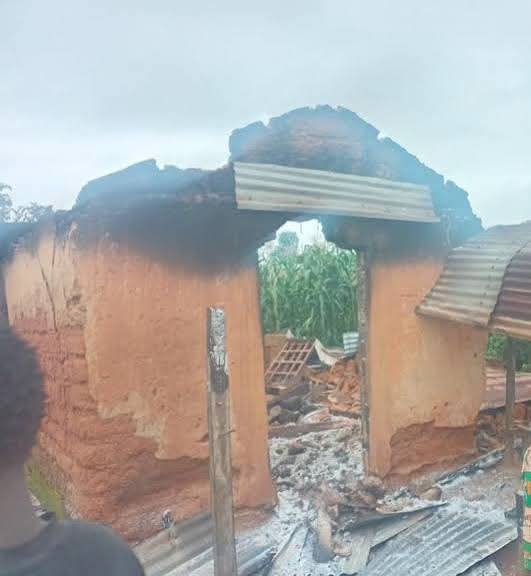
Taraba Massacre: Survivors Count Over 20 Bodies After Gunmen’s Attack

Survivors of a deadly gunmen attack on Binnari community in Taraba State have said they counted more than 20 bodies after the assailants left, although the police reported that 10 bodies had been recovered as of Friday evening.

The attackers, who reportedly arrived on motorcycles, stormed the rural community shortly after Friday prayers, opening fire on residents and forcing many to flee for safety.

Two residents, Isiyaku Musa and Sa’idu Nuhu, gave accounts of the attack to the Agence France-Presse (AFP) on Saturday, describing the panic that engulfed the community.

“People were running in different directions to escape the attack. Nobody knew where it was safe to go,” Musa said.

Nuhu said residents began counting the dead after the attackers withdrew from the area.

“After the attackers left, we counted more than 20 bodies, and some people were still missing,” he told AFP.

The discrepancy between the figures provided by residents and the police left the final death toll unclear as of Saturday.

A community leader, Malam Abubakar Saifullahi, said the gunmen arrived on about 50 motorcycles, with two men riding on each motorcycle, before launching the assault.

According to him, the attackers looted shops and carted away cash, food items and other provisions. They also reportedly took motorcycles abandoned by residents fleeing the violence.

The incident adds to concerns over persistent insecurity in parts of northern Nigeria, where armed groups frequently attack rural communities, abduct residents for ransom and steal property.

Although northeastern Nigeria has endured a prolonged insurgency involving jihadist groups, Taraba and other parts of central Nigeria have also experienced attacks attributed to criminal gangs commonly referred to as bandits.

The gangs often target communities in remote areas where security forces face operational challenges.

Reacting to the incident, Amnesty International Nigeria criticised the authorities over what it described as the failure to protect vulnerable rural communities and bring suspected perpetrators of attacks to justice.

“The Nigerian authorities continue to leave rural communities in some parts of the north at the mercy of gunmen that are repeatedly commit atrocities with impunity,” the rights organisation said.

It added that the continued failure to prosecute those responsible for such attacks was encouraging further violence.

Meanwhile, the Nigerian military announced separately on Saturday that it had killed 15 suspected terrorists in an air strike in Borno State.

Nigeria has battled a jihadist insurgency since Boko Haram launched its uprising in 2009, while armed criminal gangs have continued to pose security challenges in several northern and central states.

Google search engine

Court Begins E-Filing As Digital Case Management System Takes Effect

The Ekiti State High Court has commenced the adoption of a digital case management system, with electronic filing becoming effective from October 22, 2026, in a move aimed at reducing delays, improving efficiency and strengthening access to justice.

Governor Biodun Oyebanji said the introduction of the Nigeria Case Management System (NCMS) would help eliminate bottlenecks associated with manual court procedures and promote faster and more efficient justice delivery.

He spoke at the official launch of the platform for the Ekiti State High Court in Ado-Ekiti, describing the development as a significant step towards modernising the state’s judicial system.

The governor, who was represented by the Acting Solicitor-General and Permanent Secretary of the Ministry of Justice, Gbemiga Adaramola, SAN, said the initiative represented more than the introduction of new technology, describing it as a fundamental shift towards a more efficient and digitally driven justice system.

According to him, a reliable and efficient judiciary is essential for economic development, social stability and investor confidence.

“When our administration outlined our multi-pillar agenda for shared prosperity, we recognised that a stable, predictable and highly efficient judicial system is the bedrock of economic growth, social peace and investor confidence,” Oyebanji said.

He added that integrating the state’s court operations into the nationwide digital platform demonstrated his administration’s commitment to innovation and good governance.

The governor also commended the Chief Judge of Ekiti State, Justice Lekan Ogunmoye, and other judicial officers for their efforts towards improving court administration and embracing technological reforms.

He said the electronic filing application would reduce bureaucratic delays and make judicial procedures more accessible and predictable for lawyers and litigants.

The Speaker of the Ekiti State House of Assembly, Adeoye Aribasoye, also praised the initiative, saying it would simplify the filing of cases and reduce the risk of court documents being misplaced.

Aribasoye noted that the state legislature had adopted paperless operations and live broadcasts of plenary proceedings as part of its own digital transformation efforts.

He said the executive and judicial arms were similarly embracing technology to improve public service delivery.

Earlier, Ogunmoye explained that the state judiciary had taken steps towards digital transformation through the inauguration of its Standing Committee on Information and Communication Technology (ICT) Policy Implementation on July 5, 2021.

He said the committee was established to develop a comprehensive ICT policy for the judiciary, including the deployment of the NCMS electronic filing portal.

According to the chief judge, a stakeholders’ conference on the enrolment and onboarding of the High Court onto the platform was held on February 9, 2026, paving the way for its official launch.

Ogunmoye said the system would integrate electronic filing, case registration, scheduling, tracking and general case management, helping to reduce paperwork and improve the handling of court proceedings.

He added that the platform would make justice more accessible while aligning the state judiciary with global technological developments.

However, the chief judge stressed that an appropriate legal framework was necessary to ensure the effective and sustainable operation of the system.

He observed that the Ekiti State Administration of Criminal Justice Law 2014, as amended, the Ekiti State Administration of Civil Justice Law 2019, and the High Court of Ekiti State (Civil Procedure) Rules 2020 did not specifically provide for electronic filing of court processes.

The legal gap, he explained, made it necessary to issue practice directions establishing a framework for the new arrangement.

Ogunmoye announced that the Adoption and Deployment of the Nigeria Case Management System (NCMS) in Criminal and Civil Proceedings 2026 Practice Directions would take effect on October 22, 2026.

Under the new provisions, he said, only documents received and stored through the High Court’s NCMS electronic filing portal would constitute proper court records for new cases filed from the effective date.

He added that copies of the practice directions would be available at the High Court library for a token fee.

The chief judge expressed appreciation to Governor Oyebanji for providing an enabling environment for the judiciary to discharge its responsibilities.

He also acknowledged the contributions of the Chief Judge of Borno State and Chairman of the Judiciary Information Technology Policy Committee, Justice Kashim Zannah, OFR, alongside judges, magistrates, registrars, ICT personnel, administrative staff and members of the Bar who contributed to the initiative.

Google search engine

Preparations In Top Gear As Prof. Anigbo Delivers ESUT’s 61st Inaugural Lecture

Preparations are in top gear at the Enugu State University of Science and Technology (ESUT), Agbani, ahead of the institution’s 61st inaugural lecture, to be delivered by Professor Leonard Chinaedum Anigbo.

The lecture, scheduled for Thursday, November 5, 2026, at 11am, will take place at the Dr. Peter Mbah Auditorium, ESUT, Agbani, with the Vice-Chancellor, Professor Aloysius-Michaels Okolie, hosting the academic event.

Professor Anigbo, a Professor of Educational Measurement and Evaluation in the Department of Mathematics and Computer Science Education, will speak on the topic: “Resuscitating a Fainting Nation Through Integrity in the Assessment of Future Leaders: The Crises of Examination Malpractice and the Path to National Renewal.”

The lecture is expected to examine the implications of examination malpractice for the credibility of educational qualifications, the integrity of assessment systems and the quality of future leaders.

By focusing on the relationship between credible assessment and national development, Professor Anigbo is expected to draw attention to the need for transparency, fairness and accountability in evaluating students’ academic performance.

Examination malpractice remains a major concern in the education sector, with its consequences extending beyond individual students to the credibility of certificates, the standard of education and public confidence in institutions responsible for producing future professionals and leaders.

The inaugural lecture will also provide an academic platform for reflecting on the responsibilities of educators, examination bodies, school administrators, policymakers and other stakeholders in safeguarding the integrity of assessment.

As one of the university’s established academic traditions, the inaugural lecture series provides professors with an opportunity to present their scholarship, share research insights and contribute to discussions on issues of academic and public importance.

It will attract members of the university community, academics, students and other stakeholders interested in education, leadership and national development..

Google search engine

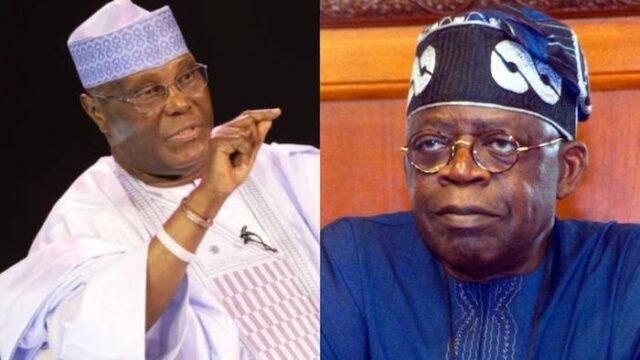
‘Bola, Own Up To The Misery You Caused Nigerians’, Atiku Fires Back At Tinubu


Former Vice President and African Democratic Congress (ADC) presidential candidate, Atiku Abubakar, has challenged President Bola Tinubu to accept responsibility for the economic hardship facing Nigerians rather than blaming opposition parties for hunger and poverty.

Atiku described Tinubu’s allegation that the opposition was responsible for the country’s economic difficulties as an attempt to evade accountability for the consequences of his administration’s policies.

He argued that the president could not implement policies that worsened living conditions and subsequently blame his political opponents for drawing attention to the hardship.

Atiku’s position was conveyed in a statement issued in Abuja by Phrank Shaibu, Director of Strategic Communications of the ADC Presidential Campaign Council.

In the statement, the former vice president questioned Tinubu’s attempt to associate the opposition with the country’s economic challenges, insisting that Nigerians knew which party had controlled the federal government in recent years.

“Mr President, blaming the opposition for hunger is either delusion or a staggering case of political amnesia,” Atiku said.

He noted that the APC had governed Nigeria for eight years before Tinubu assumed office, adding that the ruling party had remained in power for another three and a half years under the current president.

According to him, the country’s economic difficulties cannot be separated from the policies and decisions of successive APC-led administrations.

“The hardship your administration has brought upon Nigerians is real. You cannot deny it by blaming others,” he said.

Atiku also criticised Tinubu over the reported commissioning of the Abuja-Kaduna Expressway before its completion, arguing that ceremonial events could not substitute for the delivery of functional infrastructure.

He maintained that the president should address public concerns about the condition of the economy rather than make statements that, in his view, disregarded the daily struggles of ordinary Nigerians.

The ADC presidential candidate further questioned the administration’s handling of petrol subsidy removal and the depreciation of the naira, citing the increase in the exchange rate from about ₦471 to the dollar to approximately ₦1,329.

He also referenced a World Bank estimate that 63 per cent of Nigerians would be living below the national poverty line in 2026, using the projection to challenge the government’s economic performance.

Atiku raised additional questions about public expenditure, including the reported ₦7.13 trillion recorded under energy security in 2024 and ₦11.2 trillion in NNPC pipeline-related spending.

He called for greater transparency regarding the expenditure and the projects or services delivered in return.

The former vice president also questioned what he described as a $12.4 billion gap flagged in Nigeria’s external accounts for the first half of 2026, as well as $22.5 million reportedly paid in other charges relating to an Abu Dhabi financing facility.

He argued that the government owed Nigerians explanations on these matters, insisting that questions about public finances should not be dismissed through political accusations.

Beyond the economy, Atiku accused the administration of failing to adequately address persistent insecurity, citing killings, kidnappings and the displacement of communities across the country.

He said Nigerians were more concerned about the government’s response to these challenges than its attempts to blame the opposition.

“You cannot govern for three years, make life harder, and then blame others for describing the hardship,” he said.

Atiku added that the 2027 presidential election would provide Nigerians with an opportunity to assess Tinubu’s performance in office.

According to him, the electorate would judge the administration by its impact on household finances, businesses and community security rather than by its campaign rhetoric.

He concluded that the president should focus on addressing the country’s challenges and explaining his administration’s record instead of attributing public dissatisfaction to opposition criticism.

Google search engine

2027 Presidency: The Odds Against Tinubu

President Bola Tinubu remains a formidable contender in the 2027 presidential election, but his control of the federal machinery does not make him invincible.

Despite the advantages of incumbency, mounting economic discontent, opposition manoeuvres and the possibility of a united opposition could complicate his re-election bid.

One of the mistakes opposition politicians have repeatedly made is underestimating Tinubu’s political resilience.

Rather than relying solely on criticisms of his administration, they must convince Nigerians that they have credible alternatives to his policies, particularly those that have attracted widespread public dissatisfaction.

At present, the All Progressives Congress (APC) appears better positioned organisationally than its rivals, having unveiled its campaign structure while opposition parties continue to grapple with questions of leadership, alliances and strategy.

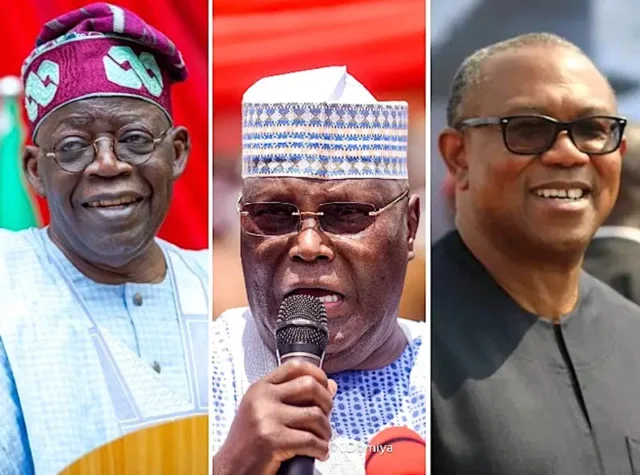
However, the political equation could change significantly if former Vice President Atiku Abubakar of the African Democratic Congress (ADC) and Peter Obi of the Nigeria Democratic Congress (NDC) agree to work together on a joint presidential ticket.

Such an arrangement could bring together two substantial political constituencies.

Obi commands considerable support in the Southeast, parts of the South-South and among young and urban voters, while Atiku possesses longstanding political networks and influence in sections of Northern Nigeria.

In the 2023 election, opposition votes were divided among the Peoples Democratic Party (PDP), Labour Party (LP) and New Nigeria Peoples Party (NNPP), a fragmentation that helped shape the final outcome.

A credible coalition could reduce that fragmentation and create a more direct contest with Tinubu.

Under Nigeria’s constitutional framework, a presidential candidate must secure the highest number of votes and at least one-quarter of the votes cast in at least two-thirds of the states and the Federal Capital Territory, subject to the applicable constitutional interpretation.

Neither Obi nor Atiku can assume that his existing support base alone will guarantee victory.

The central difficulty, however, would be determining who leads the proposed alliance.

An Atiku-led ticket could alienate some Obi supporters, particularly those who regard the former Anambra governor as the face of political reform and generational change.

Conversely, an Obi-led ticket could encounter resistance from established northern political interests that favour a return of presidential power to the North.

Atiku’s age, political experience and longstanding presidential ambition could further complicate negotiations over a subordinate position.

Meanwhile, New Nigeria Peoples Party leader Rabiu Kwankwaso could find himself marginalised if the leading opposition figures settle on a bilateral arrangement without accommodating his political interests.

Ultimately, political alliances are rarely determined by ideology alone. Personal ambition, regional calculations, bargaining power and the distribution of offices could determine whether the opposition achieves the unity it needs.

The emergence of the G-100 coalition of anti-Tinubu political forces represents another development worth watching.

Although joint committees and other mechanisms may help manage competing interests, persuading influential politicians and their loyalists to accept compromises remains a formidable challenge.

Even if opposition leaders reach an agreement at the national level, translating it into a functioning electoral coalition across the states may prove considerably more difficult.

Political parties that are negotiating together in Abuja often remain fierce competitors in their respective states.

Rivalries over governorship tickets, legislative seats and local party structures could undermine national agreements, particularly where one party is expected to surrender an advantage to accommodate another coalition partner.

Such disagreements can produce resistance from state executives, parallel political arrangements and defections that weaken the coalition before election day.

The defection of former Deputy Senate President Ovie Omo-Agege from the APC to the NDC illustrates how internal party disagreements and ticket calculations can influence political realignments.

Having left the APC in May 2026, Omo-Agege is expected to contest the Delta Central Senatorial District seat under the NDC platform in 2027.

His political movement underscores a broader reality: party loyalty is often tested when personal ambition and the distribution of electoral opportunities collide.

Regional considerations could prove equally decisive in negotiations over a joint presidential ticket.

Some northern political interests may prefer Obi to step aside for Atiku, while many of Obi’s supporters would resist any arrangement that relegates him to the vice-presidential position.

For these supporters, Obi represents more than an individual presidential aspirant; he embodies their demand for a different approach to governance and political leadership.

The political landscape also presents competing regional ambitions.

Tinubu remains a major contender in the Southwest, while Obi commands a significant following in the Southeast.

Atiku retains political networks in the Northeast, and other aspirants are seeking to consolidate their influence in different parts of the country.

The challenge for the opposition is to reconcile these interests without allowing regional calculations to overshadow the broader objective of defeating the incumbent.

Another variable in the 2027 contest is the possibility that regional tensions could be exploited to weaken opposition unity.

Political rhetoric that encourages distrust between the Yoruba and Igbo communities could undermine efforts to build a broad coalition across the South.

If rival political camps become preoccupied with ethnic competition, they could inadvertently strengthen forces that benefit from a divided opposition.

Such manoeuvres, whether deliberate or incidental, would make it more difficult for opposition leaders to mobilise support across regional boundaries.

Nigeria’s political history demonstrates that alliances built around narrow ethnic or regional interests can struggle to produce national consensus.

While regional identity remains an important factor in electoral calculations, the country’s economic and governance challenges require solutions that extend beyond ethnic affiliations.

Northern political and civic leaders also face questions about their response to longstanding social problems, including mass poverty, educational deprivation and the Almajiri system.

These challenges require sustained policy attention rather than becoming convenient talking points during election seasons.

Similarly, inflammatory rhetoric that appears to justify reprisals, ethnic cleansing or the displacement of communities cannot be excused as ordinary political strategy.

Such narratives risk deepening existing divisions and creating consequences that outlast the election itself.

The responsibility rests on political leaders across the country to resist provocations and focus on issues that directly affect citizens’ lives.

The Yoruba and Igbo, like other Nigerian communities, have enduring social, commercial and cultural connections that should not be sacrificed to the ambitions of competing political elites.

Elections will come and go, but Nigerians will continue to share the same country and confront many of the same national challenges.

The outcome of the 2027 presidential election could depend significantly on whether the opposition contests as a collection of separate political forces or succeeds in establishing a credible alliance.

In the first scenario, Tinubu and the APC could benefit from a fragmented opposition.

Even if the president’s popularity declines in some constituencies because of economic hardship, divided opposition votes could give the ruling party a significant advantage, provided it secures the constitutionally required geographical spread.

Incumbency, party organisation, access to established political networks and a coordinated campaign could all work in Tinubu’s favour.

The second scenario would emerge if major opposition figures, including Obi, Atiku and Kwankwaso, or a broader coalition of opposition parties, agreed on a common strategy and presented a ticket capable of attracting support across regional and demographic boundaries.

Such an arrangement could combine Obi’s appeal among younger and urban voters with Atiku’s northern political networks and other coalition partners’ electoral strengths.

However, the outcome would depend on the credibility of the agreement, the willingness of supporters to accept the eventual candidates and the coalition’s ability to translate endorsements into actual votes.

A united opposition would not automatically guarantee victory.

It would still need a coherent policy programme, an effective nationwide campaign and the capacity to meet the constitutional requirements for winning the presidency.

Nevertheless, a credible coalition could transform the election into a much closer contest and increase the possibility of an opposition victory.

Depending on the final distribution of votes and the constitutional requirements, the election could also produce a situation requiring a further ballot.

Tinubu should not be dismissed as an easy opponent. His political experience and the advantages of incumbency make him a formidable candidate. But neither should the opposition assume that his position is unassailable.

The president’s prospects will be influenced by the state of the economy, public perceptions of his administration, the effectiveness of his campaign and the ability of his opponents to present a compelling alternative.

For the opposition, the real test is whether its leaders can put collective electoral interests ahead of personal ambition.

A coalition that cannot resolve the question of who leads it may never progress beyond negotiations and public declarations.

If the opposition remains divided, it could hand Tinubu an advantage without requiring him to win over every dissatisfied voter.

If it unites around a credible candidate and a convincing programme, it could significantly alter the political calculations.

The choice before the opposition is therefore clear: negotiate a workable alliance capable of challenging the incumbent or risk entering the election as separate contenders whose combined support may still prove insufficient to secure victory.

Google search engine

2027: 80% Of Our Candidates Couldn’t Afford Nomination Forms – NDC


The Nigeria Democratic Congress (NDC) has disclosed that about 80 per cent of its candidates for the 2027 elections could not afford to purchase the party’s expression of interest forms, blaming the situation on widespread poverty and hunger in the country.

The party’s National Publicity Secretary, Osa Director, disclosed this in a statement on Saturday, explaining that the development had affected the party’s finances.

According to him, the NDC had to issue the forms free of charge to candidates who could not afford them.

“Our finances would have been more robust. However, contrary to speculations in the public domain, and due to the level of poverty, hunger and deprivation in the country occasioned by the rudderless APC and its amorphous economic policies, about 80% of our candidates could not afford the Expression of Interest forms,” Director said.

He accused the ruling All Progressives Congress (APC) of worsening the economic hardship faced by Nigerians through what he described as ineffective economic policies.

The spokesperson, however, did not disclose the identities of the candidates who received the forms without payment.

Director also announced that the party would present its statement of account at its third National Executive Committee (NEC) meeting scheduled to hold in Abuja on Monday.

He said the National Treasurer, John Odey, would release the accounts as part of the party’s commitment to transparency and accountability.

“This is in deference to our avowed commitment to the principles of transparency and accountability,” he said.

The NDC spokesperson challenged other political parties, particularly the APC, to adopt similar measures in managing and disclosing their finances.

The party is also expected to unveil its National Campaign Council (NCC) at the meeting.

Director explained that the council would cover campaigns for the presidential, National Assembly, governorship and State Houses of Assembly elections.

He added that candidates would be presented with their respective Certificates of Return.

Describing the party as prepared for the forthcoming elections, Director said the NDC was ready to offer Nigerians what he called altruistic leadership.

Google search engine

MOST COMMENTED

- Advertisement -
Google search engine