Home Blog Page 637

Tunisian Opposition Trial Resumes Under Heavy Security, Six Defendants On Hunger Strike
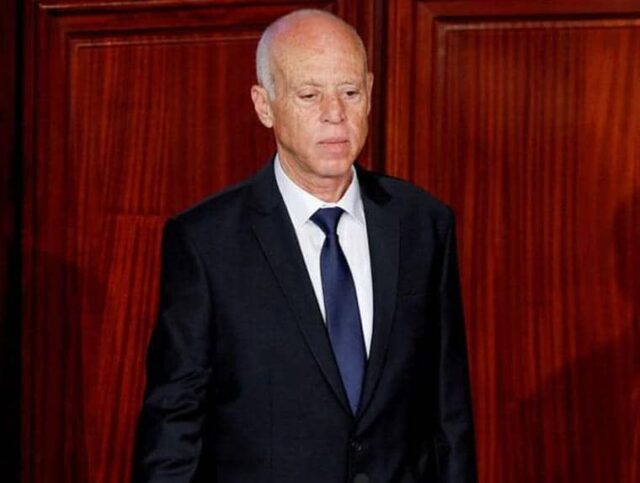
 

Dozens of opposition figures in Tunisia returned to court on Tuesday under heavy security measures, even as six of the detained defendants continue their hunger strike to protest being barred from attending in person.

Foreign diplomats observed the proceedings for around 40 high‑profile accused, including activists, lawyers and media personalities known for their criticism of President Kais Saied.

Saied, who consolidated power with a sweeping takeover in 2021, faces growing international concern over a perceived rollback of democratic freedoms in the country that once emerged as the Arab Spring’s lone success story.

The defendants stand charged with offences such as “plotting against the state security” and “belonging to a terrorist group,” accusations that carry potentially severe penalties, including the death sentence.

When the trial first opened on March 4, Tunisia’s judiciary ruled that the defendants could only join hearings remotely.

Six of them—among them jurist Jawhar Ben Mbarek and former Ennahdha party leader Abdelhamid Jelassi—have since refused food until they are permitted to attend court sessions in person, their legal team said.

One of their lawyers, Abelaziz Essid, argued in court: “The defence asks that the hearing be suspended and the accused be brought before their lawyers. We cannot make our arguments under these conditions and we refuse to be false witnesses.”

An AFP correspondent reported that checkpoints and uniformed guards surrounded the courtroom entrance in Tunis.

Representatives from France, Canada, Germany, the Netherlands and the European Union were admitted, but local non‑governmental organisations were turned away, and only one family member per defendant was allowed inside.

Ahmed Nejib Chebbi, head of the National Salvation Front and himself named in the case, dismissed the charges as “wild fabrications.”

Defence lawyers added that some accused are alleged to have maintained contacts with foreign diplomats—contacts that the authorities have deemed suspicious.

Several defendants were detained in February 2023 after Saied publicly branded them “terrorists.”

Others, including Chebbi, remain free pending trial, while some have fled abroad, according to the defence committee.

Human Rights Watch has condemned the proceedings as a “mockery” based on “abusive charges.”

In February, Rached Ghannouchi, the 83‑year‑old leader of Ennahdha, received an additional 22‑year prison sentence for plotting against state security. Ennahdha has long been the main opposition party to Saied’s administration.

Last month, the United Nations called on Tunisian authorities to end “the pattern of arrests, arbitrary detentions and imprisonment of dozens of human rights defenders, lawyers, journalists, activists and politicians.” Tunisia’s foreign ministry rejected the UN’s statement with “astonishment” and accused it of “inaccuracies.” “Tunisia can give lessons to those who think they are in a position to make statements,” it said.

 

Google search engine

Community Leaders Deny Agreement To Return Izzi IDPs, Urge NBC To Restore Colonial Boundary Beacons


Community leaders in Ukelle have rejected reports that they agreed to the return of Izzi internally displaced persons (IDPs) from Ebonyi State to Cross River State, warning that the misinformation could inflame an already tense situation.

The denial comes amid a lingering boundary dispute and communal clashes between the Izzi of Ebonyi and the Ukelle of Cross River.

Rt. Hon. Mom Olom, a former member of the Cross River State House of Assembly, and Isaac Okpokpo, speaking for the Ukelle Ka‑Calabar Forum, said a recent radio report by Amaechi Odo falsely claimed that the two communities had settled on returning IDPs.

They insisted the report misrepresented the outcome of a meeting convened by the Cross River/Ebonyi Youth Peace Development Movement on March 27, 2025.

The statement read in parts: “At a meeting of the Izzis and Ukelle communities held on March 27, 2025, at the instance of the Cross River/ Ebonyi Youth Peace Development Movement, chaired by Barr. Paschal Nwenyi, it was resolved that both parties would not rest on our oars until lasting peace is enthroned.

“We further resolved that the next meeting be held at the instance of both chairmen of Izzi and Yala Local Government Areas to demonstrate commitment to the pursuit of peace in their domain because of their apparent nonchalant attitude. The meeting was scheduled for the 17th of April 2025 at Mfuma South Ukelle.

“But rather than reflect what truly transpired, the reporter, Ameachi Odo, reported that the meeting was intended to finalise an agreement on the return of the Izzi IDPs to Ukelle land. The report was false, misleading and capable of engendering a feud, as he proposed to gratify his pay master.

“We, therefore, seize this medium to put the record straight that this was never contemplated since we lack the power to grant such a weighty request. Our position, therefore, is to approach the peace matter with utmost decorum, to gradually engage the process at the community, local government and state levels till the National Boundary Commission (NBC) has done the tracing and replacement of removed beacons at the known colonial boundary lines, as succinctly captured by items 6th and 15th of the inaugural communiqué of the peace movement of September 19th 2019 at Abakaliki.”

They went on to resolve: “Consequently, rising from an emergency meeting of Ukelle ka‑Calabar forum, the administrative headquarters of Ukelle Worldwide, on the 30th of April 2025, we accordingly resolved that there would be no more such community meetings till further notice, as such meetings tend to inflame tempers and generate needless tension.”

Separately, Mom Olom insisted there was no call for a new boundary between Cross River and Ebonyi states, pointing to the colonial‑era line from the taperal point of Akparata down south to Ijegibom.

“I’m calling on the National Boundary Commission to do the needful, retrace and replace the beacon stones that have been removed so that at the end of the day, both parties can talk. If they decide to remain in Cross River State, it will be the decision of the local government and the state, but for us as a people, we cannot make such a decision,” he said.

Olom noted that before Ebonyi State was created, the Izzi people acknowledged their Igbo heritage and agreed to coexist with the Ukelle despite the new state boundaries.

The long‑standing dispute has claimed lives and destroyed property worth millions of naira over the years.

Google search engine

NIMASA Unveils Strategy For Home‑grown Shipping In Nigeria’s Seaborne Trade


The Nigerian Maritime Administration and Safety Agency (NIMASA) has made the development of indigenous shipping its top priority, aiming to deepen Nigerian participation in both domestic and international seaborne trade.

Director General, Dr. Dayo Mobereola announced this on Friday during his keynote at NIMASA’s Special Day, held as part of the 36th Enugu International Trade Fair, which opened on April 4.

Speaking through Deputy Director of Strategic Development Mr. Umar Mohammed, Dr. Mobereola urged private investors and consortiums to partner with NIMASA and capitalise on the burgeoning opportunities in Nigeria’s blue economy, especially within maritime transport.

He explained that this focus is fully aligned with the Federal Government’s Renewed Hope Agenda and designed to foster inclusive economic prosperity through job creation.

Dr. Mobereola outlined the agency’s integrated approach to building a stronger maritime sector, saying:

“In these regard, NIMASA management has adopted the system approach that provides for integrated development strategy.

The priority is on simultaneous investment in the development of critical components of the maritime transport system (shipping services).

These are innovative shipbuilding building scheme for fleet acquisition by indigenous operators; establishment of National Carrier Line to partake in the affreightment of Nigeria’s international seaborne trade to reduce the huge economic distortions caused by the non-involvement of Nigerian carriers.

The Agency has also established additional Maritime Academies for production of globally competitive seafarers; and implementation of Public Sector Cargo Support Programme to create captive freight market for indigenous carriers.”

He went on to note that this strategy will also “facilitate market access for indigenous carriers, who may not stand any chance to compete favorablely with the more established foreign carriers that have dominated Nigeria’s seaborne trade over the years.”

He added, “All these objectives are being pursued through partnership with the private sectors.”

Dr. Mobereola praised Governor Peter Mbah of Enugu State and Chief Odeiga Jideonwo, President of the Enugu Chambers of Commerce, for providing a platform that encourages citizen engagement in trade and investment.

Earlier in the day, Chief Jideonwo remarked that “NIMASA has remained alive to her responsibilities and role in the promotion of business and economic development; hence using the platform of business concourse like the Enugu International Trade Fair to reach out and interact with the business community.”

Google search engine

Enugu: Isiuzo LGA Hails Edeoga As He Rejoins PDP, Says 2023 Struggle Was About Equity, Inclusion, Fairness


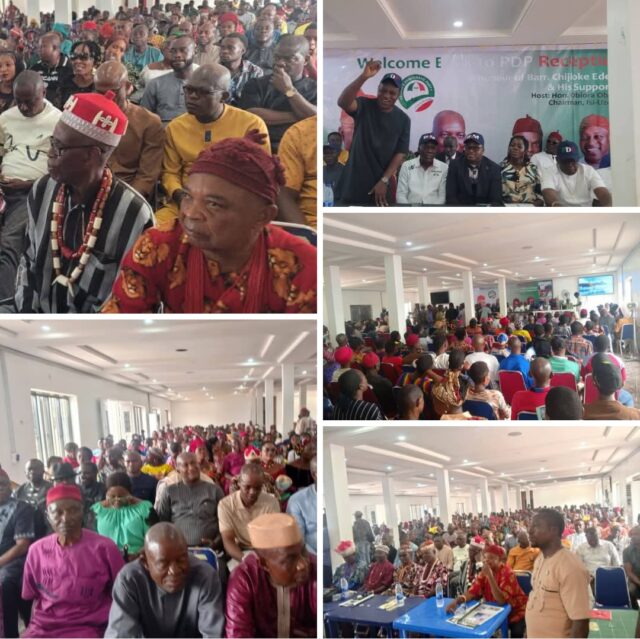
The political atmosphere in Isi-Uzo was charged with celebration as Hon. Barr. Chijioke Edeoga, former Labour Party governorship candidate in the 2023 elections, was warmly received back into the Peoples Democratic Party (PDP) at a grand event organized in his honour.

The reception, hosted by the Executive Chairman of Isi-Uzo Local Government, Hon. Barr. Obiora Obeagu, drew an impressive gathering of political heavyweights, stakeholders, and supporters from across Isi-Uzo and beyond.

Notably present were members of the PDP State Working Committee, led by the State Chairman, Dr. Martins Chukwunweike.

In his address, Edeoga expressed deep gratitude to the council boss for the honour and praised Governor Peter Mbah for playing a vital role in facilitating his return to the PDP, describing the Governor as a leader with a refined and visionary mindset.

He also commended Dr. Chukwunweike for his diplomatic efforts and commitment in managing the process of his return, noting that it required exceptional leadership and political maturity.

Reflecting on the 2023 governorship race, Edeoga reiterated that his campaign was rooted in the principles of justice, fairness, and political inclusion.

He highlighted his past efforts in promoting equitable power-sharing arrangements within the Enugu East/Isi-Uzo federal constituency—particularly the rotation of the House of Representatives seat, which he said fostered peace and a sense of belonging among the people.

He urged the PDP leadership to uphold the values of equity and ensure that Isi-Uzo remains fully represented in the political affairs of the state.

Google search engine

2027: Southeast Elders Back Tinubu For Second Term


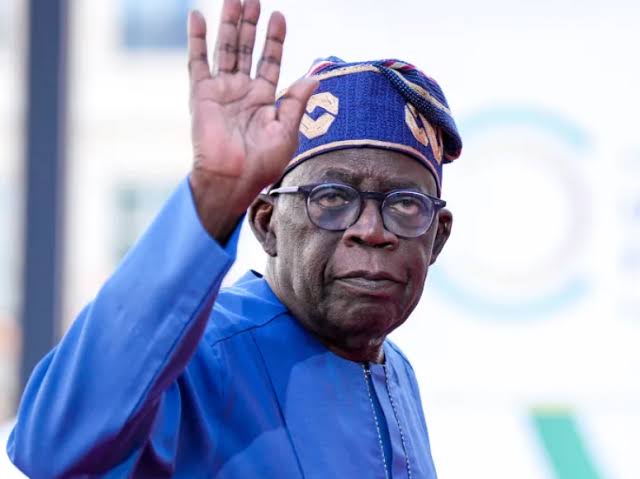
The South-East Elders Alliance for Tinubu 2027 has urged Nigerians to rally behind President Bola Tinubu’s re-election campaign, asserting that the region has significantly benefited from his leadership.

Following a meeting held on Wednesday, the Enugu North Senatorial District chapter of the group issued a communique highlighting their position.

The document sited by DAILY GAZETTE was co-signed by the group’s National Coordinator, South East, Humphrey Nsofor, and Deputy National Coordinator, Damian Opata.

They praised Tinubu’s administration for inclusivity and recognition of the Southeast in key federal appointments.

“Under the leadership of President Bola Ahmed Tinubu, Professor Iliyasu Usman was the first Igbo Imam of the Central Mosque, Abuja. Professor Usman is of Nsukka Igbo extraction,” the communique noted.

They also pointed to another significant appointment: “The appointment of Dr Mrs Amaka Onu as Board Member, Federal Polytechnic, Jigawa State.”

The elders stated that these gestures reflect Tinubu’s commitment to national unity and regional equity.

They, however, called on the President to take the lead in pushing for constitutional reforms that would allow the creation of additional states in Nigeria.

“We plead with Mr. President to originate and forward to the National Assembly, the bill amending the constitutional provisions to create more states in Nigeria,” the group said.

Security also featured in their recommendations.

“In this regard, we suggest that the President should seriously consider the idea of setting up a Digital Response Arm / Unit within the Nigerian security system,” they added.

Concluding their statement, the elders called for nationwide support for Tinubu’s second-term bid.

“Finally, we plead with all Nigerians to support President Tinubu for a second term, come 2027. This would enable him to complete the Southern mandate of eight years. We believe that this would reduce acrimony in the choice of presidential candidates for the 2027 presidential elections,” the statement said.

Google search engine

Kano Blasphemy Law Violates Global Human Rights Standards – ECOWAS Court Rules


The Community Court of Justice of the Economic Community of West African States (ECOWAS) has delivered a landmark ruling declaring sections of Kano State’s blasphemy laws to be in violation of Nigeria’s international human rights obligations.

In the case Incorporated Trustees of Expression Now Human Rights Initiative v. Federal Republic of Nigeria (ECW/CCJ/APP/41/23), the court held that certain provisions within Kano’s legal framework infringed on freedom of expression rights guaranteed under both regional and global human rights instruments.

The case, filed by the Incorporated Trustees of Expression Now Human Rights Initiative—a Nigerian human rights NGO—challenged blasphemy laws that it said had triggered serious human rights violations.

The group cited multiple instances of arbitrary arrests, prolonged detentions, and even death sentences imposed on individuals accused of blasphemy.

The NGO also raised concerns over vigilante-style justice, claiming some individuals were murdered by mobs following accusations of blasphemy, with the Nigerian state allegedly failing to protect citizens’ fundamental rights to life, religious freedom, and expression.

In its verdict, the ECOWAS Court affirmed its authority to hear the matter under Article 9(4) of its protocol, which empowers it to address human rights breaches across member states.

While it dismissed the claims relating to the rights to life and religious freedom—stating these could not be pursued through public interest litigation—the court allowed the claims on freedom of expression to proceed.

The judges found that two central blasphemy provisions under Kano State law did not meet international standards.

Specifically, Section 210 of the Kano Penal Code was deemed too vague, lacking the legal clarity necessary to define what qualifies as a religious insult.

The court also invalidated Section 382(b) of the Kano State Sharia Penal Code Law (2000), which prescribes the death penalty for insulting the Prophet Muhammad.

The panel ruled this punishment to be “excessive and disproportionate” in a democratic context.

Though the court acknowledged states’ rights to uphold public order and religious respect, it ruled that the laws in question failed to meet the international legal standards of “legality, necessity, and proportionality” as required under Article 9(2) of the African Charter on Human and Peoples’ Rights and Article 19 of the International Covenant on Civil and Political Rights (ICCPR).

On the allegations of government inaction in preventing mob violence linked to blasphemy claims, the court concluded that the evidence presented—mostly media reports—did not meet the threshold for admissible proof.

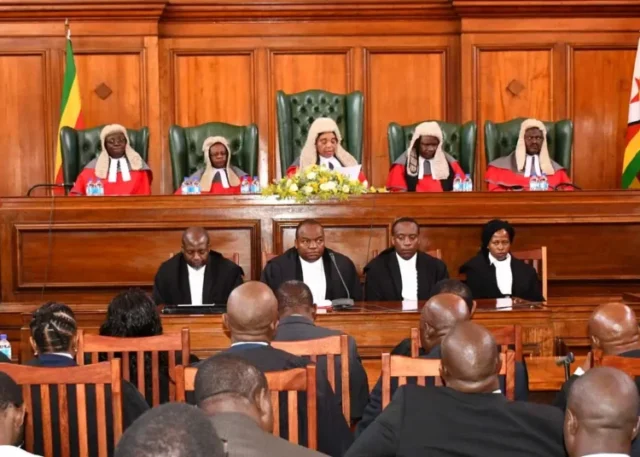
The decision was handed down by a three-member panel of ECOWAS justices: Hon. Justice Ricardo Cláudio Monteiro Gonçalves (Presiding Judge), Hon. Justice Sengu Mohamed Koroma, and Hon. Justice Dupe Atoki (Judge Rapporteur).

Google search engine

‘Bring Back Our Fubara’: Rivers Women Demand Governor’s Reinstatement


Hundreds of women took to the streets of Port Harcourt on Friday, calling for the immediate reinstatement of suspended Rivers State Governor Siminalayi Fubara and his deputy, Ngozi Odu.

Gathering first at Isaac Boro Park, the demonstrators—who identified themselves as mothers and wives—marched along Aba Road to the Government House, carrying placards that read, Bring back Fubara,”

“Save our democracy,” “Is the law different for Rivers State?” and “God of justice, arise for Rivers State.”

Chanting protest songs, the women made a direct appeal to President Bola Tinubu to reverse the suspension of the governor and restore democratic structures in the state.

“We are a peaceful people and do not deserve this kind of injustice. The governor has been doing his job despite the distractions. What is happening now is not democracy,” one of the protesters told Channels Television.

The protestors denounced what they described as an “unconstitutional military rule masked as a state of emergency,” insisting that the people of Rivers State deserve governance rooted in democratic principles.

Leaders of the protest, while speaking with Channels Television, maintained that the ongoing political crisis had not deterred Fubara from fulfilling his duties.

They expressed frustration over what they perceive as a coordinated attempt to undermine the will of the electorate.

“We are here to defend our votes and the sanctity of our democracy. This is beyond Fubara; it’s about justice and the future of Rivers State,” one of the leaders said.

They emphasized that their demonstration was not politically motivated, but rather a stand for justice, peace, and the rule of law.

Women of all ages participated, ensuring the protest remained peaceful throughout.

Fubara, his deputy, and members of the state’s House of Assembly were suspended amid an ongoing political crisis that has rocked the oil-rich state.

In response, President Tinubu appointed Ibok-Ete Ibas as sole administrator to oversee the state’s affairs.

Google search engine

Convicted Niger State Official Reinstated Weeks After Bribery Sentence, Receives Full Salary While ‘In Prison’


Umar Farouk, a Deputy Director in the Niger State Ministry of Land Transportation, who was recently convicted for collecting a N11 million bribe, has reportedly been reinstated to his civil service position just two weeks after being sentenced to seven years in prison.

Investigation uncovered that despite the Niger State High Court’s judgment against Farouk, he was discreetly released from custody and has resumed his role in government, continuing to receive full salary and benefits during what was supposed to be his incarceration.

“How the case came up was that when I wanted to collect a contract from them, he demanded a bribe. When he was sentenced to seven years imprisonment, I was relieved. But just two weeks later, I discovered he was out of prison,” the contractor who filed the initial petition told newsmen.

“When he was released after two weeks, the people concerned protested. They were sad; why would someone go to prison and be released within two weeks and even reinstated into the civil service? The protest led to his suspension, but after that, nothing else happened.”

“He is back working now like nothing happened. I was the one who filed the petition that led to his conviction. I’m shocked the government did not let him serve his sentence,” he added.

According to insiders, Farouk’s name was quietly added to a list of 104 inmates granted a pardon by the former administration of Governor Abubakar Sani Bello. However, this inclusion is believed to have been manipulated.

“Because they wanted to free him, they had to free 104 inmates alongside him. His name was smuggled into the document,” a source within the Niger State civil service alleged.

“This was orchestrated by a former Commissioner of Justice. The governor at the time was not even aware.”

Another source within the Ministry of Transportation confirmed, “During his time in prison, the government did not stop his salaries. He was being paid. Now he is back on the payroll as if nothing ever happened.”

SaharaReporters’ findings show that in the final week of his administration in 2023, Governor Bello pardoned 24 convicts and paid N20 million in fines for 80 others to facilitate their release.

It is alleged that this move was engineered by the Attorney General and Commissioner for Justice at the time, Nasara Danmallam—a close associate of Farouk.

“This was done between a former commissioner and Umar Farouk. They used to do these dirty deals together. That’s why they didn’t let him suffer in prison,” said another insider.

When reached for comment, Farouk confirmed his return to public service but denied any wrongdoing in the process of his release.

“I was not smuggled out of the prison, I was out of the prison by a process, not illegally,” he said.

When asked for details on that process, he declined to elaborate.

“Go and meet my superior, the State Head of Service. You know I am under someone,” he stated.

Hadiza Idris Kuta, the current Commissioner for Transport, also confirmed Farouk’s reinstatement.

“I also investigated the matter. I was told the man was out of prison because he was pardoned. That was done by the past government,” she said.

“I know he is reinstated into the civil service but he is no longer in my ministry.”

She refused to disclose what position Farouk now holds in the civil service.

Farouk’s initial conviction stemmed from a prolonged trial prosecuted by the Independent Corrupt Practices and Other Related Offences Commission (ICPC).

He was charged in 2020 with multiple counts of gratification and abuse of office for accepting N11 million from a contractor in exchange for awarding a state contract.

“The accused person is standing trial on a 7-count charge for the offences of gratification by an official and using office or position for gratification contrary to Sections 8(1)(a)(ii) and 19 of the Corrupt Practices and Other Related Offences Act 2000,” the judgment read.

“I find the accused person guilty as charged on all counts… Accordingly, the convict is sentenced to imprisonment for 7 years for each of the offences in counts 1, 2, 3, 4, 5 and 6.”


Google search engine

Russia, US Swap Prisoners In Effort To Strengthen Bilateral Ties


A Los Angeles-based ballet dancer who was recently released by Russia in a prisoner swap safely arrived in the United States on Thursday night, marking the second such swap under President Donald Trump as both Moscow and Washington work to rebuild their strained relationship.

Ksenia Karelina, a dual US-Russian citizen who had been convicted of “treason” in Russia for a $50 donation to a pro-Ukraine charity, landed at Joint Base Andrews shortly before 11:00 PM local time Thursday (0300 GMT). Karelina was warmly greeted by several loved ones, including her boyfriend, South African boxer Chris van Heerden, who cheered and shouted, “Welcome home!” as they embraced.

In exchange, the US freed Arthur Petrov, a Russian-German national who had been accused of illegally exporting US-made electronics to companies supplying the Russian military.

The swap took place at an airport in Abu Dhabi, where a dozen individuals dressed in suits were reportedly present, as shown in video footage shared by Russia’s FSB security service.

Trump has worked to reset relations with Moscow since assuming office, despite the sharp decline in US-Russia ties following Russia’s invasion of Ukraine.

Trump remarked that Karelina’s case had been brought to his attention by the president of the UFC, a mixed martial arts organization, and that the United States then requested Russian President Vladimir Putin’s assistance in securing her release.

“She is now out, and that was good. So we appreciate that,” Trump said during a cabinet meeting, adding, “We hope that we’re going to be able to make a deal relatively soon with Russia and Ukraine to stop the fighting. It’s so senseless.”

The video from FSB showed Petrov aboard a plane after his release, where he described having not slept for two days but made no other complaints.

Petrov, arrested in Cyprus in 2023 and subsequently extradited to the US, had been facing up to 20 years in prison.

CIA Director John Ratcliffe was heavily involved in the negotiations with Russian intelligence and other international partners, according to a CIA spokesperson.

Ratcliffe thanked the UAE for facilitating the exchange, noting that while this was a positive development, there were still other Americans being wrongfully detained in Russia.

“We see this exchange as a positive step and will continue to work for their release,” the spokesperson stated.

The State Department also raised the case of Stephen Hubbard, a British teacher who was detained by Russian forces during their invasion of Ukraine.

Hubbard is accused of being a mercenary, a charge the US disputes.

“We continue to work to free Mr. Hubbard and all other Americans unjustly detained,” said State Department spokeswoman Tammy Bruce.

As the prisoner swap occurred, US and Russian officials met in Istanbul to discuss restoring embassy staffing levels, which had been reduced due to mutual expulsion of diplomats.

The State Department reported that Washington renewed concerns about Moscow’s prohibition of US citizens working in US missions in Russia, while both countries also sought to formalize an agreement on banking access for diplomats despite US sanctions.

Karelina, 33, was serving a 12-year sentence for donating to a pro-Ukraine charity.

She was arrested in January 2024 while visiting family in Yekaterinburg, Russia, and charged with “treason” for allegedly aiding Ukraine’s military.

However, Karelina and her supporters argue that her donation was only to a US-based humanitarian group.

Petrov, on the other hand, was accused of illegally exporting US electronics for military purposes, violating sanctions imposed on Russia over the ongoing war in Ukraine.

Earlier this year, in February, following a call between Presidents Putin and Trump, Russia released Kalob Wayne Byers, a US citizen arrested for carrying cannabis edibles at Moscow’s airport.

Similarly, in early February, the US and Russia swapped teacher Marc Fogel for Russian computer expert Alexander Vinnik.

The largest US-Russia prisoner exchange since the Cold War occurred on August 1, 2024, when several journalists, including Evan Gershkovich from The Wall Street Journal, and dissidents held in Russia were exchanged for alleged Russian spies detained in the West.

Google search engine

Police Rescue Kidnapped Ebonyi Govt Official, Apprehend One Suspect


The Coordinator of Ngbo Central Development Centre in Ohaukwu Local Government Area of Ebonyi State, Blessing Adagba, who was abducted by gunmen last Thursday, has been rescued after spending five days in captivity.

Adagba was taken from her hometown, Okposhi Eheku community, by unidentified gunmen.

Her release was confirmed on Wednesday evening during a phone interview with Channels Television by the Ebonyi State Police Public Relations Officer, SP Joshua Ukandu.

Ukandu attributed her freedom to the swift intervention and coordinated efforts of officers and men of the Nigeria Police Force in the state.

“The victim was released Tuesday night. During the tracking of the suspects, after the release of the victim, we were able to arrest one of the syndicates,” he stated.

He further expressed optimism that the arrest would aid in dismantling the entire kidnap gang.

“We hope that the arrest of suspect will help our men in fishing out the rest of the gang,” Ukandu added.

Police investigations are ongoing to apprehend the remaining members of the criminal group.

Google search engine

MOST COMMENTED

- Advertisement -
Google search engine